Hemingway’s Iceberg Theory
Ernest Hemingway’s theory of omission does not mean leaving readers confused. It means knowing the whole story, showing the part that carries its weight, and letting evidence do the work of explanation.
- A theory of informed omission in which the writer understands the full situation but shows only the actions, details, and words needed for readers to feel its larger meaning.
- Iceberg Theory, Iceberg Principle, Theory of Omission
- 1932
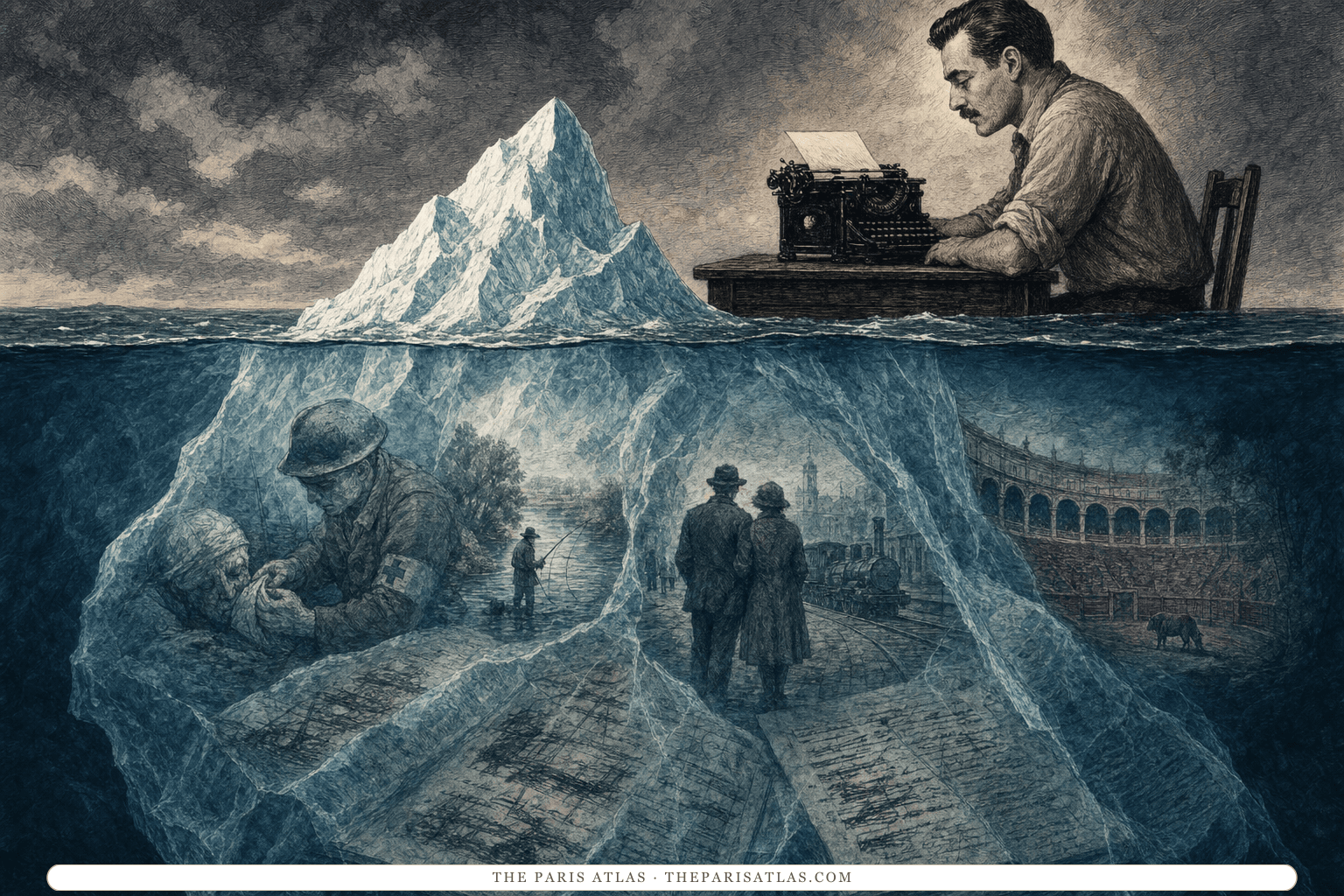
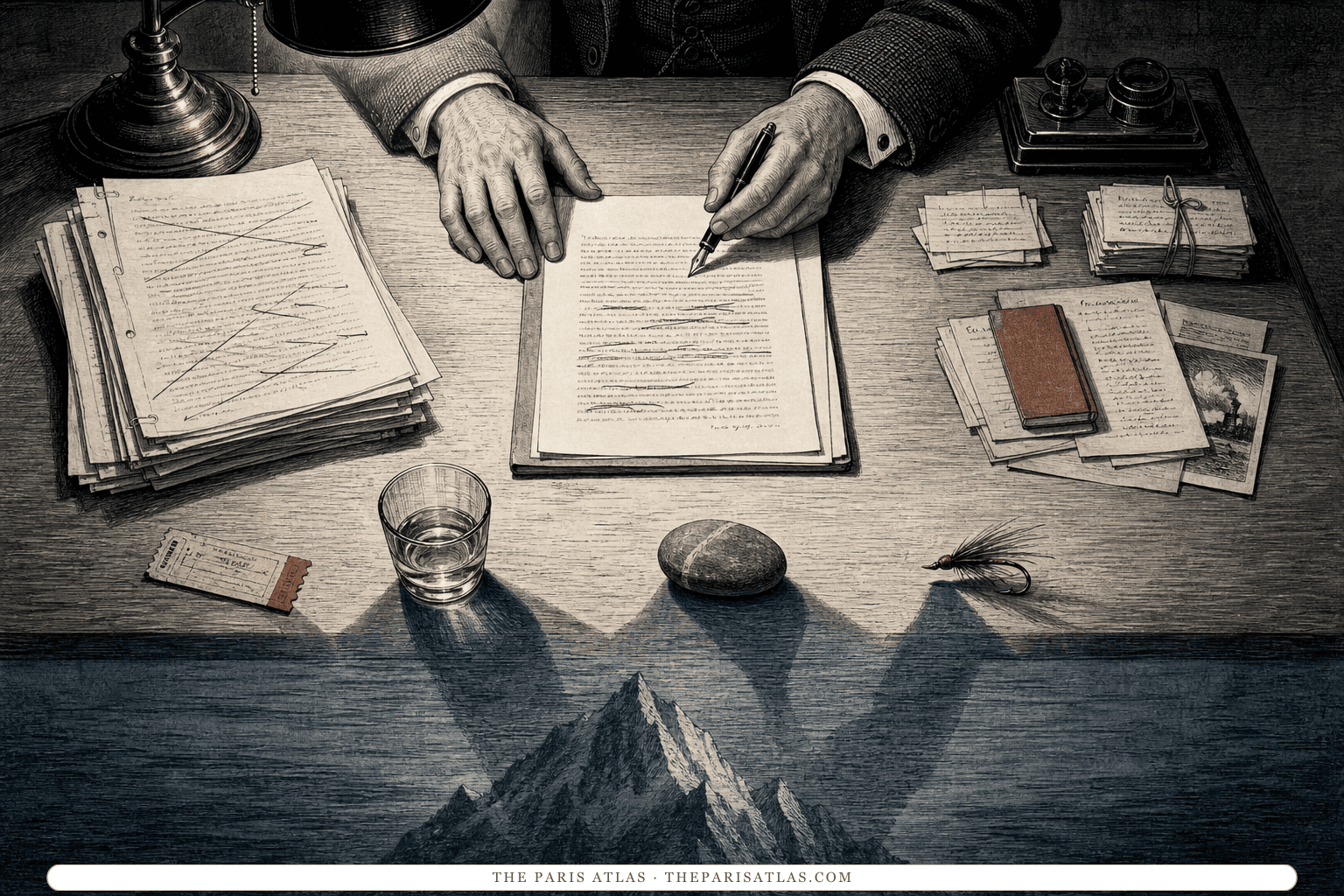
The short definition: Ernest Hemingway believed a writer could leave important facts unstated when the writer understood those facts completely and placed enough evidence on the page for readers to feel their force. The visible story is the small part above water. The writer’s knowledge, the characters’ history, and the meaning carried by their actions form the larger part below it.[1][2]
This is often called the iceberg theory, the iceberg principle, or the theory of omission. It is not a command to make every sentence short, remove all explanation, or force readers to guess. Hemingway’s condition matters: the writer must know what has been left out. An accidental gap is simply a gap.
The dignity of movement of an ice-berg is due to only one-eighth of it being above water.
Where the iceberg idea comes from

Hemingway set out the metaphor in chapter 16 of Death in the Afternoon, his 1932 nonfiction book about Spanish bullfighting. He argued that prose gains strength when a knowledgeable writer omits material deliberately. Readers may not be able to name every hidden fact, but they can feel that the visible scene belongs to a larger reality.[1]
The image summarized a method he had been developing for years. As a young reporter at The Kansas City Star in 1917 and 1918, Hemingway worked under newsroom rules that favored short sentences, short opening paragraphs, and vigorous English. That training helps explain the direct surface of his prose, but it is not the whole iceberg theory. Newspaper compression removes what a report does not need. Hemingway’s fiction often removes an explanation while preserving the details that make the explanation present.
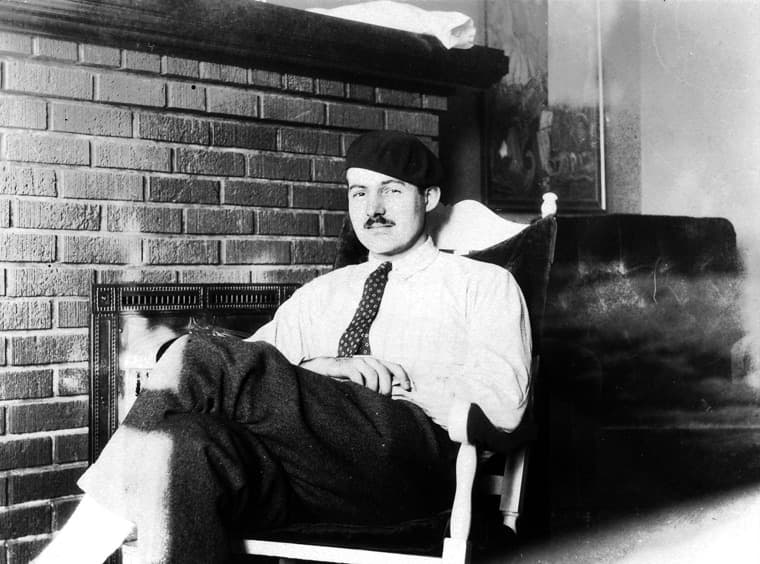
Paris is where that difference became visible. Hemingway arrived in the city in 1921 as a foreign correspondent. After a suitcase containing most of his early manuscripts was stolen in December 1922, he rebuilt his fiction from a much smaller body of surviving work. In 1923 he wrote “Out of Season.” The John F. Kennedy Presidential Library’s comparison of its draft and published text shows how additions, cuts, gestures, and coded references made an ordinary fishing trip carry marital and sexual tension that the narrator never explains directly.
How informed omission works
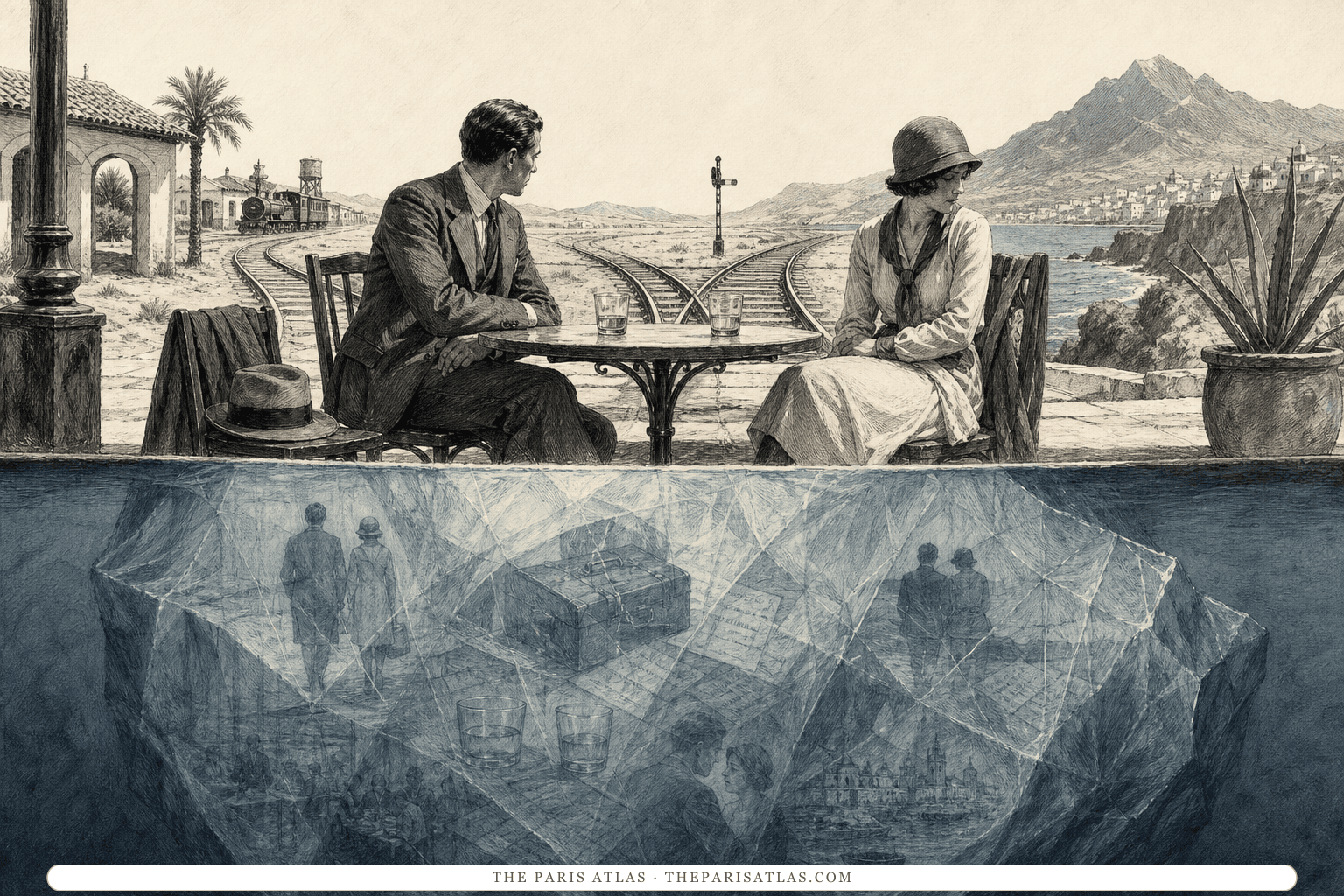
Imagine a story about two people waiting for a train after deciding whether to end a pregnancy. A direct version can name the procedure, describe their earlier arguments, explain what each person wants, and tell the reader who is being honest. An iceberg version may show their drinks, their repeated phrases, what they refuse to answer, and the landscape dividing two possible futures. The history remains active because every visible detail is shaped by it.
The omission succeeds when the surface gives readers something concrete to interpret. Dialogue can contradict itself. A repeated object can gather pressure. A character can perform a careful physical task to avoid thinking about something else. The author does not replace a missing explanation with vagueness; the author replaces it with behavior, rhythm, setting, and consequence.
The ratio is a metaphor, not a mathematical rule. Hemingway was not instructing writers to delete exactly seven-eighths of a draft. He was describing the relationship between what the author understands and what the reader needs to see.
Four clear examples in Hemingway’s writing
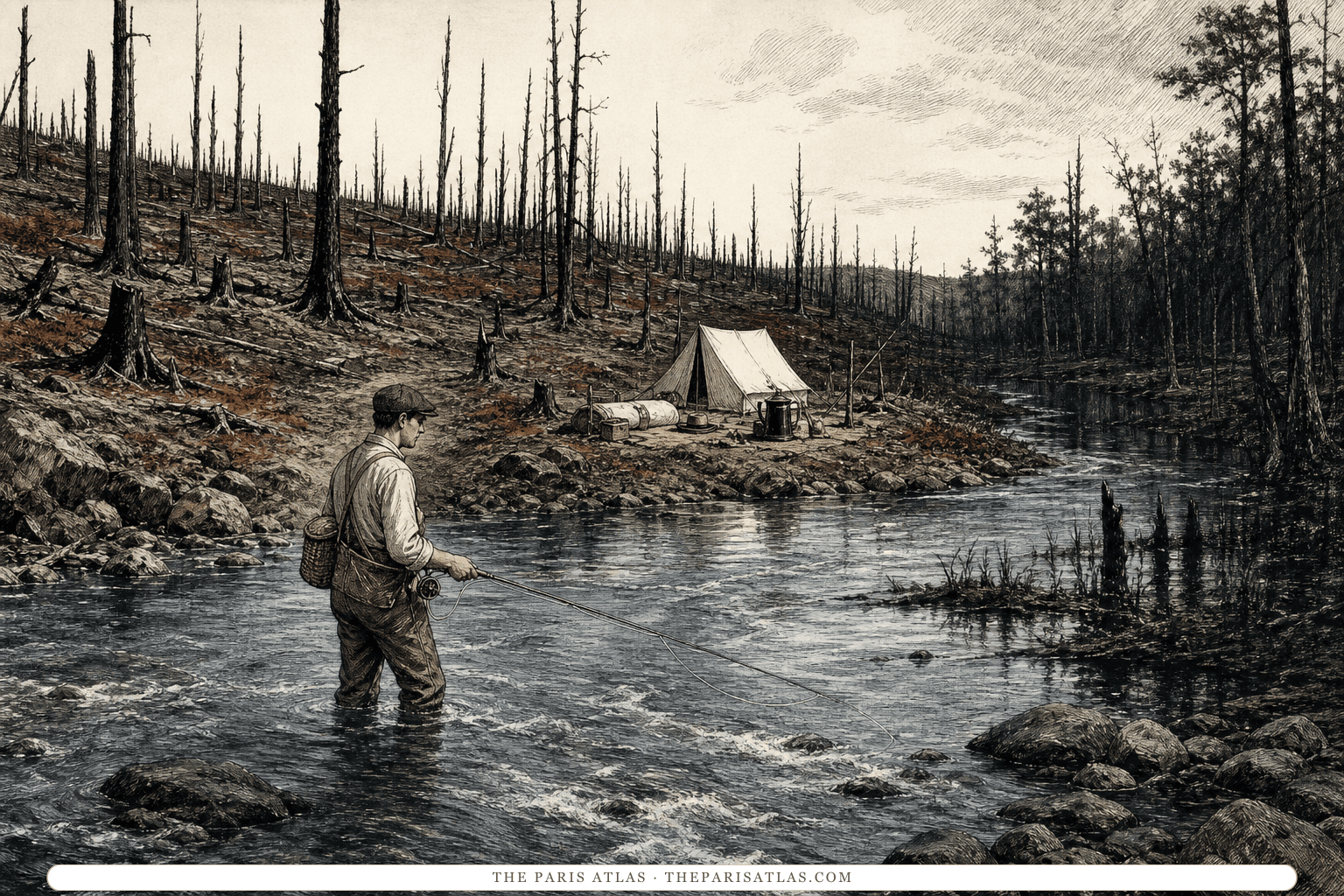
“Big Two-Hearted River,” collected in In Our Time, follows Nick Adams as he walks through a burned Michigan landscape, makes camp, and fishes. The story never says that Nick is recovering from the First World War. Yet the disciplined routine, the ruined country, his need to stop thinking, and his decision not to enter the dark swamp make the war’s pressure legible. The John F. Kennedy Presidential Library describes the story directly: the war is never referenced, but it permeates everything.
“Hills Like White Elephants,” collected in Men Without Women, never uses the word abortion. An American man and a woman called Jig discuss an “operation” while waiting at a railway junction in Spain. Their evasions show the decision, the unequal pressure between them, and the possibility that their relationship will not survive it. Readers infer the subject because the dialogue supplies evidence, not because the story withholds everything.
The Sun Also Rises begins after its central damage has already occurred. Jake Barnes was wounded in the First World War, but the novel never gives a medical case history. His injury appears through clipped references, his private reactions, and the shape of his impossible relationship with Lady Brett Ashley. Drafts held by the John F. Kennedy Presidential Library also show how Hemingway removed an explanatory opening about Brett. The published novel makes readers learn her through action instead.[3]
The Old Man and the Sea is different. Its plot is stated clearly: Santiago catches a marlin and loses it to sharks. The submerged material is the writer’s accumulated knowledge of fishing, currents, weather, physical exhaustion, baseball, pride, and defeat. In his 1958 Paris Review interview with George Plimpton, Hemingway explained that he could have expanded that knowledge into a much longer book but deliberately left it beneath the action. The story is simple because its foundation is large, not because its subject is small.[4]
What the theory does not mean
It does not mean “never explain anything.” Hemingway explains history, technique, and judgment at great length in Death in the Afternoon. The useful question is whether an explanation strengthens this particular scene or merely repeats what its details already show.[1]
It does not mean “write like Hemingway.” Long sentences, comic narration, fantasy, romance, and highly descriptive prose can all use informed omission. The principle concerns the relationship between knowledge and selection, not one voice or sentence length.
It also does not guarantee one correct hidden answer. A strong story can support more than one interpretation. But the interpretations should answer to the words on the page. If any explanation fits equally well, the writing has not created depth; it has created an empty space.
A practical way to use the iceberg theory
First, write down the full situation for yourself. What happened before the scene? What does each person know, want, and fear? Which fact changes the meaning of the visible action? Research any part you do not understand. This private account is the submerged portion.
Second, choose the evidence that can carry that knowledge: an action, contradiction, object, setting, physical sensation, or consequence. Third, remove only the sentences that explain what the remaining evidence already allows a reader to grasp. Fourth, give the draft to someone who does not know your private account. Ask what they believe happened and which details led them there.
If the reader senses pressure but cannot identify its source, add evidence. If the reader understands everything before the scene has begun, remove repetition. If readers invent a story unrelated to your hidden account, the problem is not that they failed the test. The visible portion is not carrying the submerged one.
A short timeline of the idea
1917–1918 — Hemingway works at The Kansas City Star and learns a newsroom preference for short, direct prose. 1923 — he writes “Out of Season” in the Paris period. 1924–1925 — “Big Two-Hearted River” and the American edition of In Our Time demonstrate the method without naming it.
1926–1927 — The Sun Also Rises and “Hills Like White Elephants” bring implication and withheld history into his best-known early fiction. 1932 — Death in the Afternoon publishes the iceberg comparison. 1952 — The Old Man and the Sea gives the late, concentrated version of the method.
1954 — the Swedish Academy praises Hemingway’s narrative mastery and influence on contemporary style when awarding the Nobel Prize in Literature. 1958 — Hemingway discusses omission, rewriting, and The Old Man and the Sea with George Plimpton in The Paris Review. 1964 — the posthumous A Moveable Feast presents his retrospective account of learning omission in the 1920s; because Ernest Hemingway did not prepare the final book for publication, its editorial history should remain visible.
Why the theory still matters
The iceberg theory gives a precise answer to a common writing problem. Readers do not always need more information; they need better-chosen information. A gesture can reveal an argument. A routine can reveal trauma. A conversation about anything else can reveal the subject two people cannot name.
Its warning is equally useful. Compression is not depth by itself. The unseen portion must exist in the writer’s understanding and exert pressure on the visible scene. Hemingway’s most durable formulation is therefore not “say less.” It is: know more than you say, and make what you say carry the weight.
Sources and further reading
The primary statement is chapter 16 of Ernest Hemingway’s Death in the Afternoon, first published by Charles Scribner’s Sons in 1932. George Plimpton’s “The Art of Fiction No. 21,” published in The Paris Review in Spring 1958, records Hemingway discussing his working methods and The Old Man and the Sea. The Nobel Prize archive preserves the 1954 award record and Hemingway’s banquet speech.
For manuscript evidence and modern archival interpretation, see the John F. Kennedy Presidential Library’s Hemingway collection, especially its pages on “Out of Season,” the Nick Adams stories, the First World War, and the original drafts of The Sun Also Rises. The Library identifies its collection as the world’s most comprehensive Hemingway archive and makes its finding aids available to researchers.



 View source