
The Nick Adams Stories
The Michigan boyhood these school pieces first mined, returned to at full power.
Read our take
Before Paris, before the war, before everything: the school newspaper and literary magazine work of Hemingway, sixteen years old.
In 1993 Oak Park and River Forest High School — his own school — published the earliest Hemingway there is: the journalism, stories, and columns he wrote for the school paper, The Trapeze, and the literary magazine, Tabula, in 1916 and 1917. Edited by Cynthia Maziarka and Donald Vogel with an introduction by the biographer Michael Reynolds, it is juvenilia in the honest sense — imitative, eager, occasionally startling — and the first sighting of habits the century would learn by heart. (School writings — nothing here to spoil.)
The teenager on view is a busy operator: sports reports and gossip columns for The Trapeze, many in open imitation of the Chicago humorist Ring Lardner, whose slangy deadpan was young Hemingway's first stylistic crush — and, in Tabula, the earnest early fiction, including 'Sepi Jingan' and 'A Matter of Colour,' the stories the scholarly bibliographies count as his first. The Michigan woods, the fascination with fighters and Indians, the reach for the laconic — the later shelf's whole inventory, in school-magazine miniature.[1]
That the school itself published the collection is the right kind of joke: the institution that graduated him in 1917 — he skipped college for the Kansas City Star and then the Italian front — issuing his complete undergraduate works seventy-six years later. It is the deepest 'before' picture available: the suburban kid with the borrowed styles, two years shy of the wound that made the voice, one decade shy of Paris. Reynolds's introduction places it all with a biographer's tact.[1]
The 1916–17 file: Trapeze journalism — sports coverage, school news, and the Lardner-imitation columns signed with flourishes — and the Tabula fiction and verse, led by 'Sepi Jingan,' a Michigan tale of an Ojibwe friend and a settled score, and 'A Matter of Colour,' a boxing story with a punchline. Editors' notes and Reynolds's introduction frame the apprenticeship.[1]
Read it last, after the shelf — the pleasure is entirely in the hindsight.[1]
The newspaper's audience is part of the performance. As John Hargrove explains, Hemingway's Lardner-style pieces take the form of comic letters to that week's student editor. A public column therefore borrows the intimacy of a private exchange, letting classmates overhear a voice that pretends to be merely chatting. The deliberate verbal awkwardness belongs to that invented speaker, not simply to an inexperienced author. Read this way, imitation becomes a practical experiment in distance: the writer constructs a personality whose casual manner can do more than a straightforward report.
A sports report can reveal a reporter's loyalties as well as a score. In the school swimming report quoted by Charles A. Fenton, Hemingway interrupts the account of defeat to complain about ineligible players and a parent's refusal to let another boy compete. The aside redirects attention from the contest to the restrictions shaping the team. Its irritated tone prevents the writer from disappearing behind the facts. Alongside the imagined sideline scene, it offers a useful complication: learning to observe also involves deciding when an opinion enters the telling.
Nothing earlier exists in print — the bibliographies' page one, between school-colors covers.
Watching a sixteen-year-old impersonate Ring Lardner is the century's most consequential apprenticeship in embryo.
The woods and fights of the Nick Adams stories, tried out a decade early in a school magazine.
1916–1917
At sixteen Hemingway files sports reports and columns in open imitation of the humorist Ring Lardner for the school paper, The Trapeze, and publishes his first stories — 'Sepi Jingan' and 'A Matter of Colour' — in the literary magazine Tabula.
1917
He graduates Oak Park and River Forest High School and skips college for the Kansas City Star, then the Italian front.
1993
The school itself publishes the collected school writings, seventy-six years later, edited by Cynthia Maziarka and Donald Vogel with an introduction by biographer Michael Reynolds.
The Michigan boyhood these school pieces first mined, returned to at full power.
Read our take

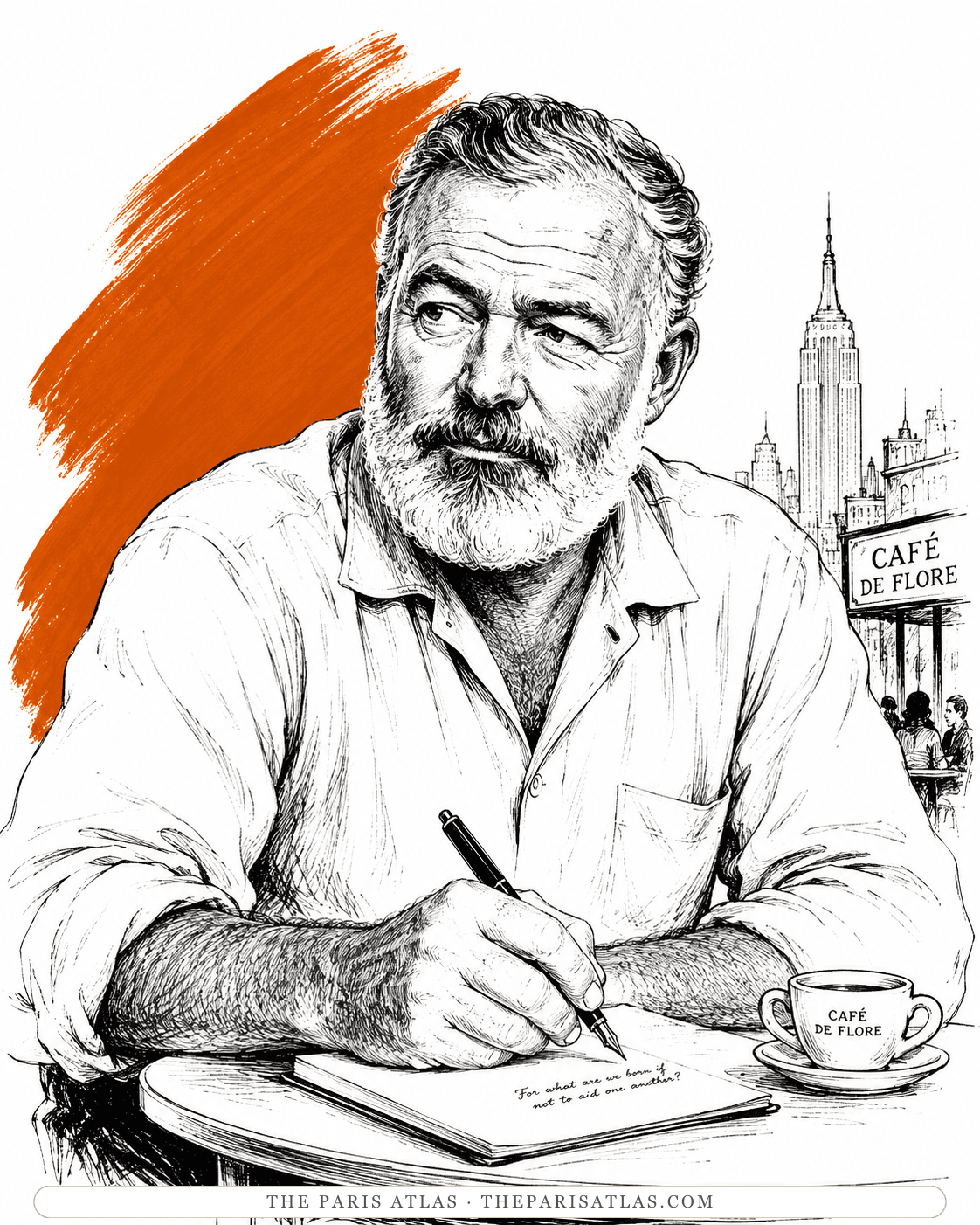
Ernest Hemingway, as a teenager. His own school published the collection in 1993, edited by Cynthia Maziarka and Donald Vogel with an introduction by biographer Michael Reynolds.
The earliest Hemingway there is — the journalism, stories, and columns he wrote for the school paper, The Trapeze, and the literary magazine, Tabula, in 1916 and 1917.
Yes. "Sepi Jingan" and "A Matter of Colour," from the Tabula magazine, are where the scholarly bibliographies begin — first published at sixteen, first collected here.
The Chicago humorist Ring Lardner, whose slangy deadpan was young Hemingway's first stylistic crush — openly copied in the Trapeze columns.
Oak Park and River Forest High School, the institution that graduated him in 1917, issued his complete undergraduate works seventy-six years later — the school as literary executor.
Explore authors with a similar voice, perspective, and influence.

The other great stylist the Great War produced — where Hemingway cut the language down, Céline set it on fire. The same wound, opposite treatments.
View author
Paris on no money a decade later, with the restraint removed. Miller called Hemingway's Paris a tourist's Paris; readers get to referee.
View author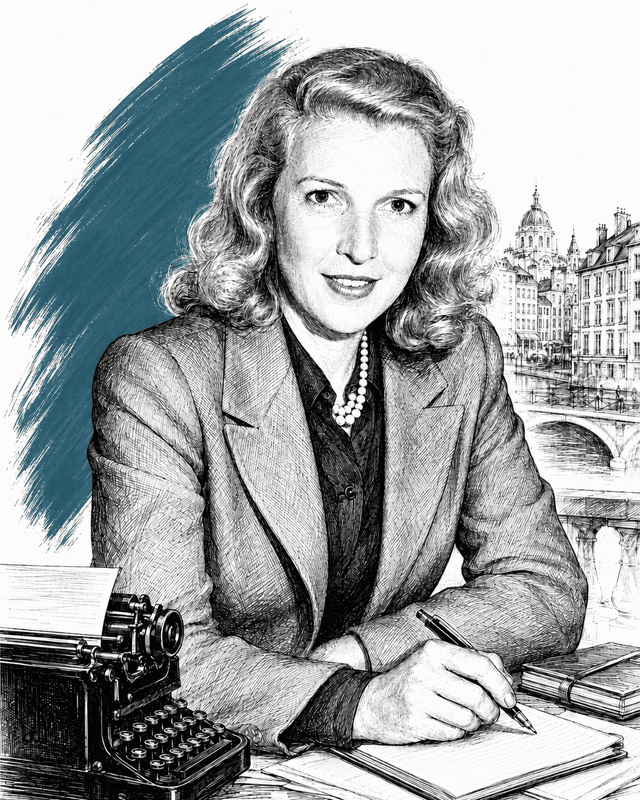
War correspondent who covered the Spanish Civil War, D-Day, and conflicts across five more decades; Hemingway's third wife, 1940–1945.
View authorThe sources below include the primary text, editions, scholarship, archival materials, and other records that informed this page. They document Hemingway at Oak Park High, its publication, and its place in literary history.


Used for the school columns' epistolary persona, not to claim that the newly identified Oak Leaves article belongs to this collection.

Reading of a school sports passage quoted in Chapter I; the complete 1993 collection and original newspaper page were not independently collated.
Used to place Hemingway at Oak Park High within Ernest Hemingway's published work and verify its bibliographic context.
Used for independent biographical, archival, or historical context surrounding Ernest Hemingway's career and the period in which Hemingway at Oak Park High appeared.
Used to cross-check authorship, chronology, and the work's place in Ernest Hemingway's wider catalogue.
Used to verify Ernest Hemingway's bibliography and place Hemingway at Oak Park High within the broader chronology of Ernest Hemingway's career.
The primary text is the baseline reference for every book page. Additional references document publication history, interpretation, and historical context where that evidence is available.
 Explore more resources