
Crazy Cock
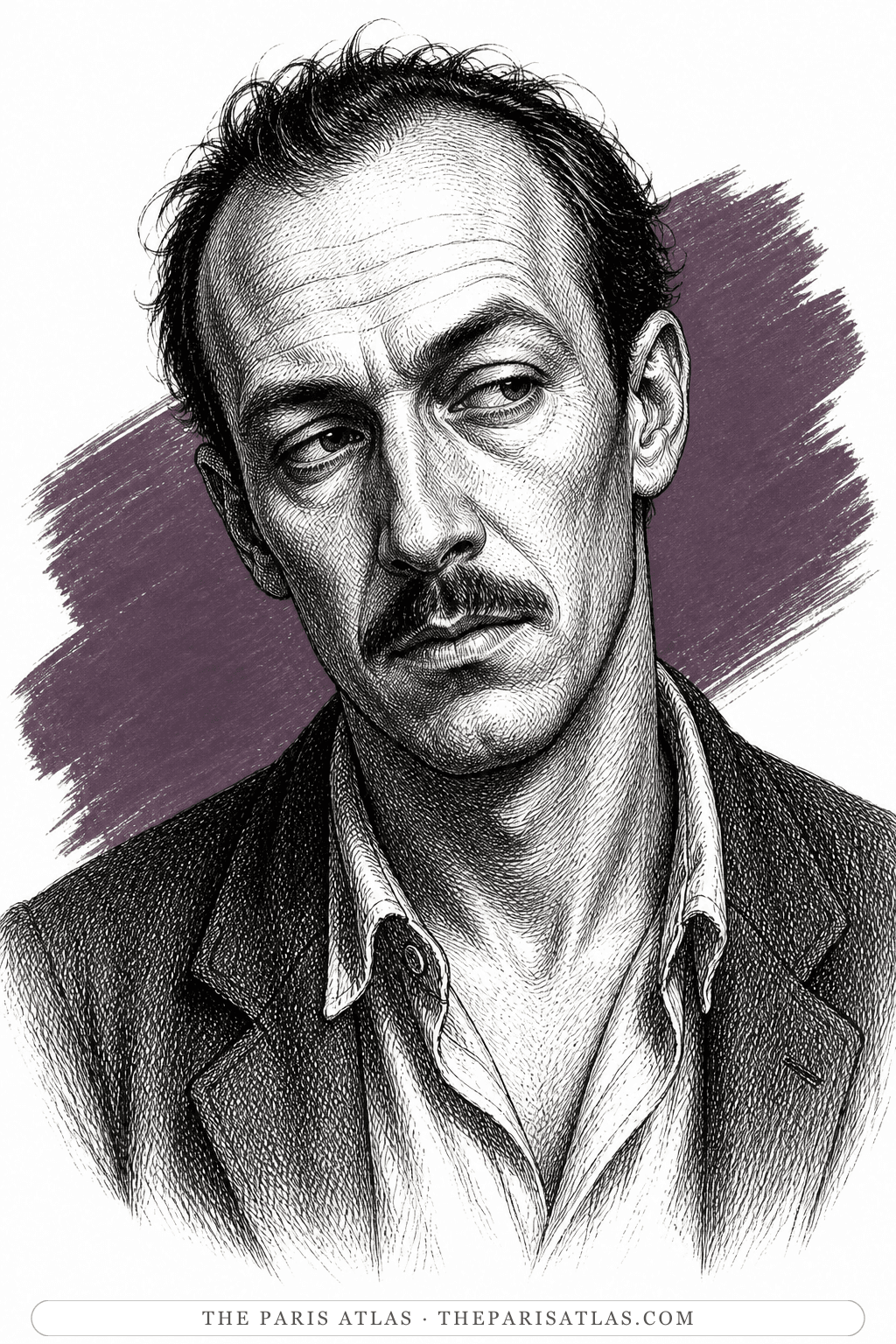
How Jean appears in its pages: The painter and poet Hildred installs in the flat — brilliant, unwashed, possibly mad, and the third point of the triangle. Jean Kronski, renamed.
The painter and poet Hildred installs in the flat — brilliant, unwashed, possibly mad, and the third point of the triangle. Jean Kronski, renamed.
Who they are in the book
Spoiler-freeVanya reaches the novel before she does: the puppet she made — a sunken-visaged, leering rake called Count Bruga — sits in the Brings' bedroom grinning at Tony night and day before its maker ever walks in. When she arrives, the household reorganizes around her. Hildred waits on her, bathes her feet, defends her; Tony studies her with a hatred that keeps slipping toward fascination; and the flat becomes a theater with an audience of one.
She is Jean Kronski, renamed — the identification is stated in Mary Dearborn's introduction to this edition, and the real Count Bruga sat on the real headboard. This profile is drawn from the Grove Press text, read in the Internet Archive's scan.
How Vanya Is Portrayed
- The puppet arrives firstBefore Vanya appears in person, Tony knows her by her work: Count Bruga, the leering puppet propped in the marital bedroom, grinning at him 'night and day like a skulking lout.'
- Neither mad nor saneTaking his first long look, Tony finds her unplaceable: 'neither mad nor sane, neither old nor young,' with a beauty he calls the beauty of nature rather than of a personality — 'like a calm sea at sunrise.'
- The five a.m. prowlerWhen the couple finally gets to bed at dawn, Vanya starts prowling the hall, muttering to herself — then knocks, and pulls Hildred out of bed for whispered conferences.
- Kept like a catHildred fetches a tub of hot water, soaks her feet, wipes them tenderly and anoints them with cold cream. Vanya accepts it all as a matter of course.
- 'I'm not a horse'Her one stab at real work — a portrait of Tony Bring — comes with a complaint about waiting tables that sends Hildred out the door cold: someone in the flat has to do the dirty work.
- The wardShe surfaces in a hospital, and is returned to Hildred in a doorway scene — hesitant, then wildly exuberant, her hair grown long, 'almost a bloodthirsty look about her.'
- In her usual rigBare knees, black shirt, hair flung loose — marching down the stoop at noon past a Lutheran congregation whose eyes blaze at the incongruous trio arguing on the corner.
At a glance
- The painter and poet Hildred moves into the flat — the triangle's third point
- Puppets (Count Bruga above all), painting, and poetry
- The Brings' Brooklyn basement flat, at all hours
- Jean Kronski · Contested — an orphan from the West (Dearborn) or Martha Andrews of Baltimore (Ferguson)









 View source