

Nexus
by Henry Miller
The trilogy's last act: a third party in the marriage, the darkest New York winter — and at the end of it, a boat to Paris.
- 1960
About Henry Miller
The story, briefly
Spoiler-freeThe Rosy Crucifixion concludes in its darkest register: into the marriage comes Stasia — Mona's magnetic, unstable friend — and Henry is demoted to spectator in his own life, jealous, humiliated, and finally galvanized. The last volume Miller completed of his life's central project, published in Paris in 1960, it drives the whole vast story to the water's edge: the departure for Europe where every earlier book on this shelf begins. (Full story below; the ending is behind the accordion.)
The story, in more detail
The last panel took the longest and cost the most: Miller finished Nexus at Big Sur in the late fifties, a quarter-century and an ocean from the events, and it appeared in Paris in 1960 — the trilogy complete, though he talked for years of a second Nexus volume that never came. The material is the hardest of his life: the period when June — Mona — brought her friend into the household, the intense young woman the book calls Stasia, and the marriage became a triangle whose geometry Henry could neither solve nor leave.[1]
The volume's texture is a New York winter: Henry underfoot in his own home, the two women trading secrets in a language he isn't taught, the schemes and séances and scenes — and under the jealousy, uglier and more useful, the slow gathering of the writer: journals kept, plans laid, the first real pages written in the wreckage. Every reader of Tropic of Cancer knows how the story leaves off, and Nexus's work is to earn that famous departure — to show exactly how much had to break before the escape that made the books became thinkable, let alone possible.[1]
The full story
Brooklyn, the late twenties. Stasia has moved in — sculptor, waif, Mona's soulmate by Mona's own account — and the flat runs on a new economy of two against one: whispered conferences, midnight absences, versions of events that never quite reconcile. Henry seethes, spies, rages, and stays; the book is unsparing about how jealousy actually behaves — as obsession doing chores, as detective work performed in slippers. The women's Village world of patrons and admirers pays the bills by means Henry is told not to examine, and the humiliations pile up with their own black comedy.[1]
The turn comes quietly: amid the wreckage Henry begins, at last, to write in earnest — and the marriage's crises begin to read to him, horribly and usefully, as material. Plans form around the one shared dream with any light in it: Europe. Paris hangs over the final chapters as escape, promise, and dare — the place where the artist-life everyone has been performing might actually have to be lived.[1]
How it ends — spoilers ahead
The triangle breaks first: the women bolt to Paris together, leaving Henry behind in the flat with his notebooks — the abandonment that nearly finishes him and instead finishes the apprenticeship. Then the reversal: Stasia falls out of the story abroad, Mona returns, and the marriage — amputated, scarred, still magnetic — reassembles around the old dream with new desperation. The last movement is embarkation: money conjured Mona's way one final time, and Henry and Mona sail for Europe together. The trilogy ends on the crossing — the New York decade done, Paris ahead, and the reader holding the knowledge the emigrant can't: that the marriage is sailing to its death, and the books of this shelf are sailing to their birth. The planned second volume that would have carried the story further never came; this departure is where the Rosy Crucifixion rests.
Themes and analysis
Three people and a puppet
Count Bruga makes the opening room resemble a miniature theater. The puppet sits among books and idols while the narrator surrounds Stasia with extravagant aliases and disputes Mona's accounts of their lives. Yet he cannot stand wholly outside this world of invention: his own language keeps transforming people into literary figures. The conflict is therefore about who gets to direct the household's story as well as who desires whom. His insistence on being deceived does not make his account neutral; the reader must also notice the performances through which he claims authority.
The crossing ahead
At the departure, the narrator corrects himself: the people he summons for an imaginary farewell do not merely belong to his past; they still matter. Historical figures, fictional characters and his grandfather enter the same procession. This crowded ending complicates the fantasy of leaving America behind as a clean break. Anger at the country coexists with attachment to the people and stories through which he has understood it. The ship can carry him elsewhere, but the language of departure reveals how much of the world he rejects remains part of his imaginative life.
Why we recommend it
Jealousy, anatomized
The triangle chapters are merciless self-exposure — obsession recorded from inside, vanity intact and inspected.
The writer finally arrives
After two volumes of failure, the pages that catch fire — the apprenticeship paying off inside the disaster that fueled it.
The completed arc
Read the trilogy's end against Cancer's beginning and the whole shelf clicks shut — one story, told across thirty years.
What this book explores
The people in its pages

Mona
The wife at the marriage's last act — the Brooklyn ménage and the 1927 departure for Paris. June Miller, renamed.

Stasia
The third figure of the household — Jean Kronski, whose appearance is where Dearborn says the book was always going to begin, and the reason Miller put off writing it for a decade.
Timeline
late 1950s
Miller finishes Nexus at Big Sur, a quarter-century and an ocean from the New York winter it recounts.
1960
Obelisk Press publishes it in Paris, completing The Rosy Crucifixion — though a planned second Nexus volume never came.
1965
Grove Press issues the American edition.
Book editions
Paperback
- Paperback
- Obelisk Press
- 1960
Paperback
- Paperback
- Grove Press
Reader reviews
Readers may also like


Nexus: frequently asked questions
Who wrote Nexus?
Henry Miller. It was published in Paris in 1960 as the third and final book of The Rosy Crucifixion.
What is Nexus about?
The trilogy's darkest act: Mona brings her magnetic, unstable friend Stasia into the marriage, and Henry is demoted to spectator in his own life — jealous, humiliated, and finally galvanized into writing.
How does the trilogy end?
It drives the whole story to the water's edge — the departure for Europe where Tropic of Cancer begins — without spoiling the crossing itself.
Was there meant to be more?
Yes. Miller planned a further Nexus volume he never wrote, so the departure for Paris stands as the saga's chosen last word.
How does it connect to Tropic of Cancer?
It docks where Cancer begins: the boat at the end of Nexus delivers the man at the start of Tropic of Cancer, answering the question Cancer itself never does — how did he get there.
If you like Henry Miller
Explore authors with a similar voice, perspective, and influence.

Louis-Ferdinand Céline
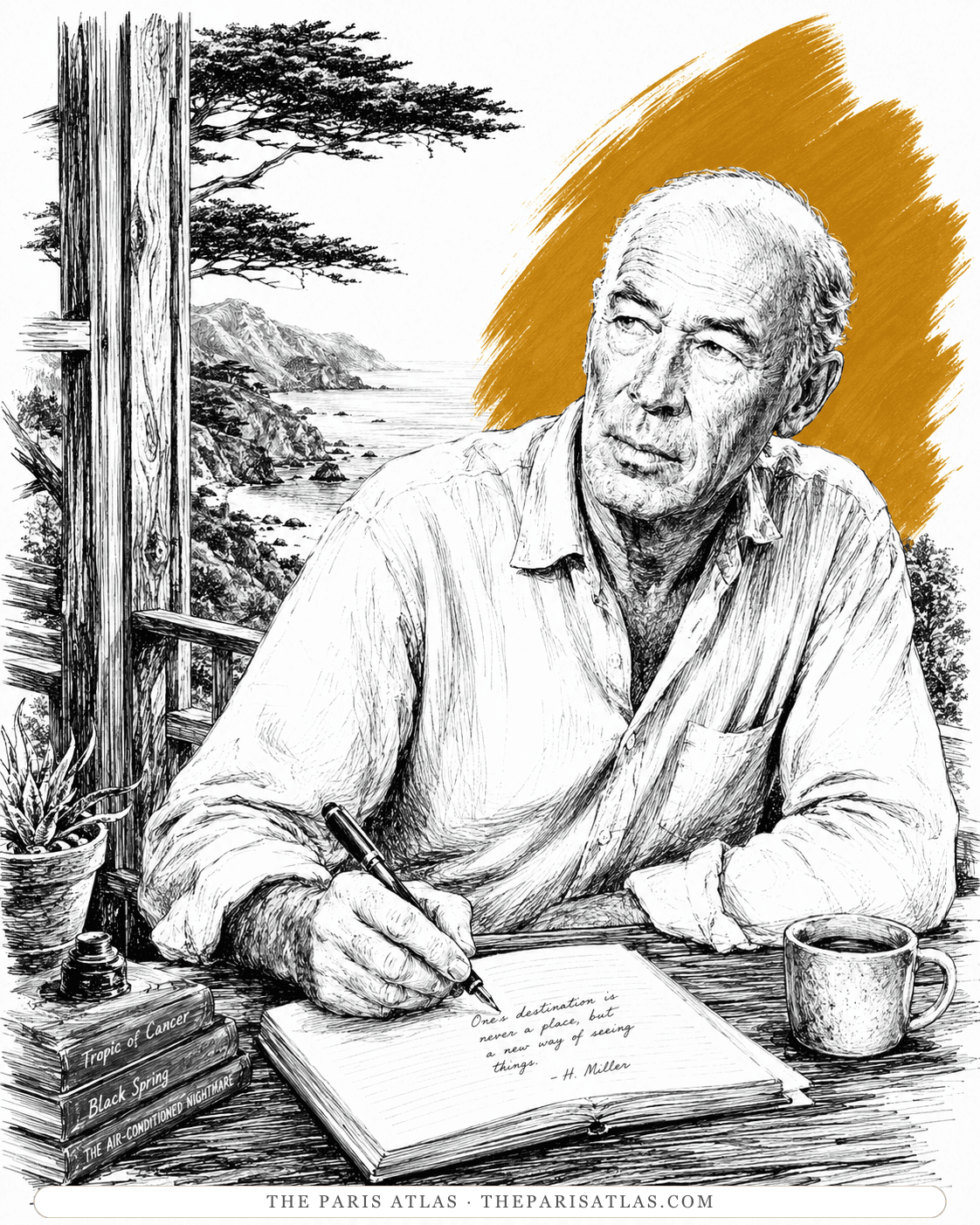
Miller's acknowledged master at making literature out of the gutter. Journey gave him permission; Cancer is what he did with it.
View author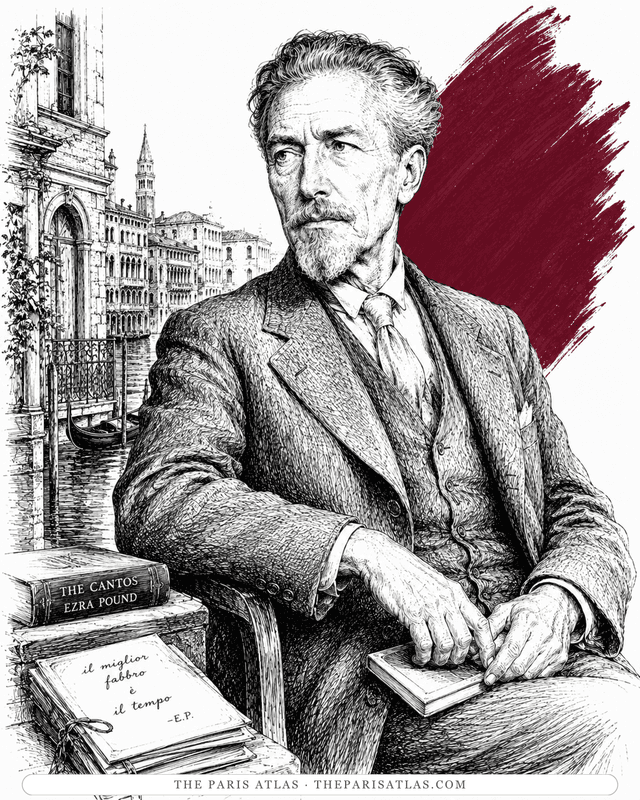
Ezra Pound
Pound read Cancer and sent Miller a famously backhanded postcard. Both believed literature's job was to wake the reader by any means necessary.
View author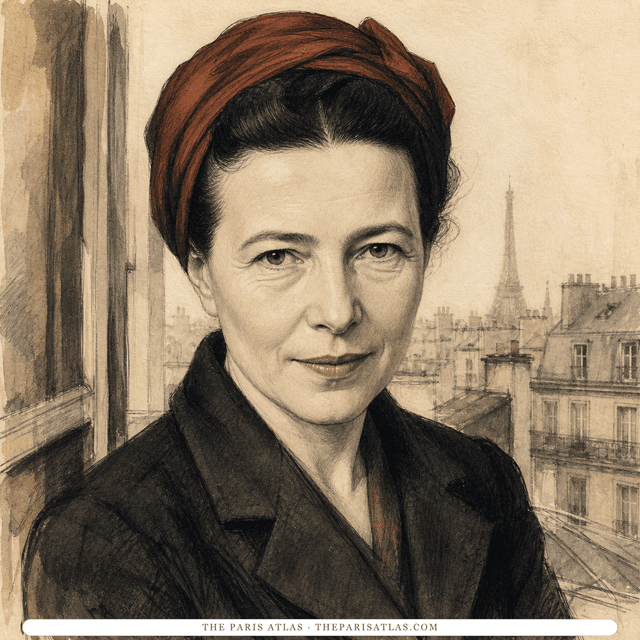
Simone de Beauvoir
French writer and philosopher whose novels, memoirs, and social analysis examined freedom, gender, responsibility, aging, and the material conditions that shape a life.
View author
References
References
The sources below include the primary text, editions, scholarship, archival materials, and other records that informed this page. They document Nexus, its publication, and its place in literary history.


2The Happiest Man Alive: A Biography of Henry Miller
BiographySimon & Schuster, 1991Used forBiographical evidence used to verify chronology, relationships, and historical context connected to Nexus.
3Henry Miller: A Life
BiographyW. W. Norton, 1991Used forBiographical evidence used to verify chronology, relationships, and historical context connected to Nexus.

4Henry Miller: New Perspectives
NonfictionBloomsbury AcademicUsed forThe scholarly collection places Nexus and The Rosy Crucifixion within Miller's autobiographical project.
5Henry Miller: The Paris Years
BiographyBrassaï, 1995Used forBrassaï's firsthand account supplies independent context for the Paris writer looking back on the New York years reconstructed in Nexus.
6Nexus — publisher's opening excerpt
WebsiteGrove AtlanticUsed forPublisher-hosted opening excerpt; no claim to have collated the complete first edition.
7Nexus — public text transcription
WebsiteThePhilosopher.netUsed forClosing passage read in a public reflowed transcription; PDF page numbers are not original-edition pagination.
i
Why these sources are here
The primary text is the baseline reference for every book page. Additional references document publication history, interpretation, and historical context where that evidence is available.
 Explore more resources