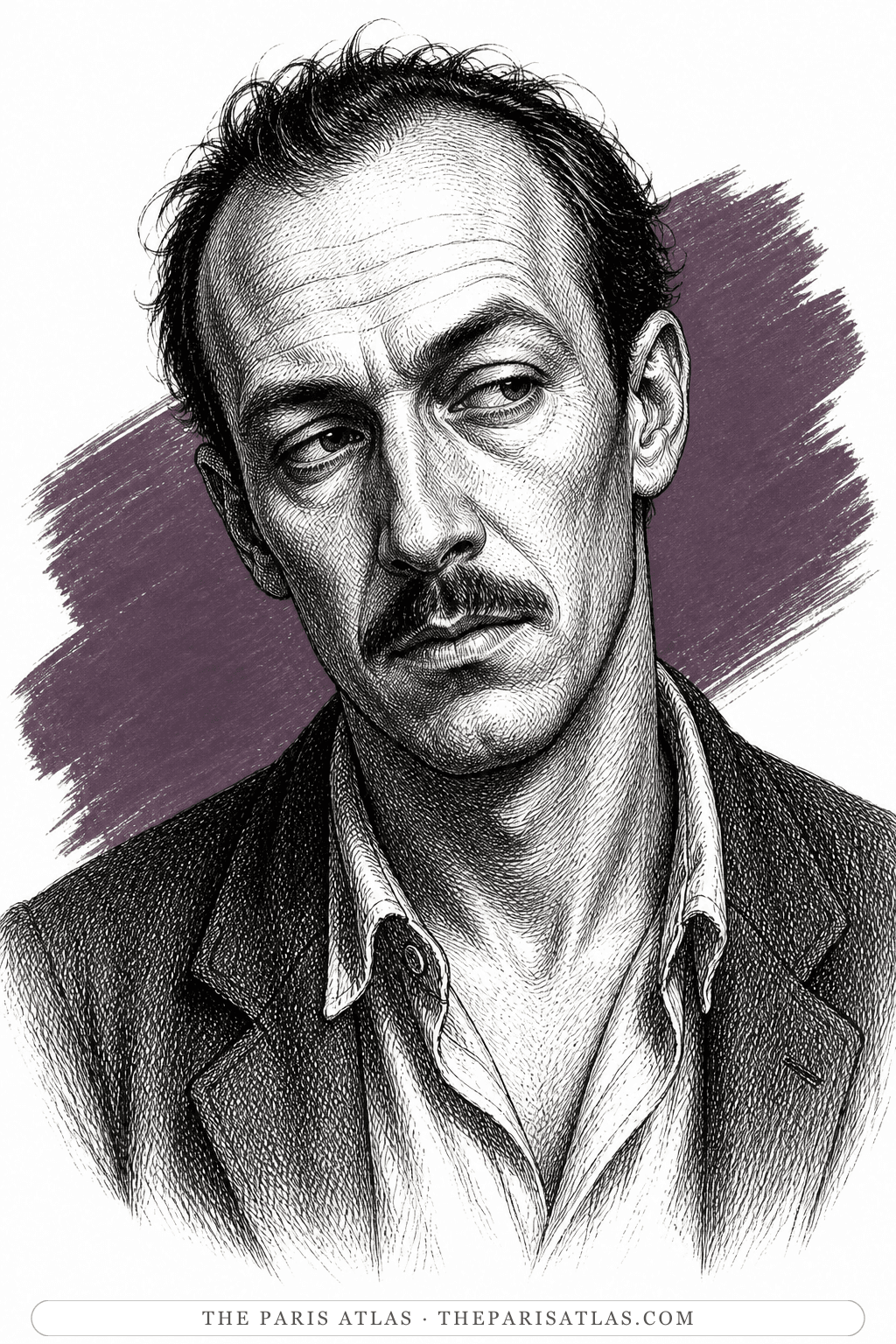
Tony Bring
A would-be writer in Brooklyn, supported by his wife and undone by what she brings home — Miller's stand-in, drawn with less mercy than the later first person ever allowed itself.
He wants his wife to say plainly whether she and the woman living with them are lovers.
The book

At a glance
- An aspiring writer, married to Hildred and living on her wages
- None for most of the novel; late on, selling newspapers on the street at night
- A basement flat shared with Hildred and, from partway through, with Vanya
- His parents, and a sister, Babette, a few years younger, described in the book as having the mentality of a child of eight
- Henry Miller · 1891–1980 · New York — born in Manhattan, raised in Williamsburg, Brooklyn
Who they are in the book
Spoiler-freeTony Bring is the central character of Crazy Cock, a novel Henry Miller wrote in the late 1920s and never managed to publish. He is an aspiring writer who does not write. His wife, Hildred, waits tables at a Greenwich Village club called the Caravan and earns the household's only money, while he stays at home with a book he has been promising for three years.
The arrangement gets worse when Hildred brings home Vanya, a painter and poet, and installs her in the flat. Tony Bring becomes convinced that the two women are lovers, and can neither prove it nor let it go. Most of what he does in the novel follows from that conviction. He shows up at his wife's workplace after being told not to, waits outside his own front door for a signal that it is safe to come in, and reads Vanya's letters and poems while she sleeps.
Miller was writing about himself. Tony Bring is his own stand-in, Hildred is his second wife June Miller, and Vanya is Jean Kronski, the artist June moved into the couple's Brooklyn Heights apartment in October 1926. Mary Dearborn's introduction to the Grove Press edition sets out the correspondence name by name. Dearborn also records that Miller's working title was Lovely Lesbians, and that he changed it to Crazy Cock so that the title referred to Tony Bring rather than to the two women.
The portrait that results is unusually hard on its subject. Miller gives Tony Bring the jealousy, the idleness and the self-pity, and the third-person narration does not defend him. This profile is drawn from the Grove Press text, read in the Internet Archive's scan.
How Tony Bring Is Portrayed
- His wife pays for everythingHildred earns the household's only money and Tony Bring stays home with his manuscript. On a Christmas visit to his parents, his mother asks outright what the three of them are living on, and then answers her own question: 'I think he ought to look for a job. It's a disgrace to be slaving for him all the time.'
- Making breakfast while they read poemsRather than eat the free meal the Caravan gives its staff, the household breakfasts at home by candlelight. Tony Bring squeezes the oranges and watches the oil stove so that Hildred's bacon does not get too crisp, while Vanya reads her poetry aloud across the table and the lines are interrupted by remarks about the coffee and the price of strawberries.
- He turns up where he is not wantedHe keeps dropping in at the Caravan, and Hildred keeps telling him to stop. 'I don't like to see you coming here, Tony. You don't belong here.' She has caught him at it before, pressing his nose against the windowpanes, and accuses him of spying on her.
- Waiting outside for the shade to moveWhen Hildred has a man in the flat, she feeds him, gives him one of his own cigars, then complains of the stuffiness, opens the window a little and pulls the shade halfway down. That is the signal. The bell rings a moment later and Tony Bring is at the door claiming he was just passing and saw the light, his face almost paralyzed by the cold. The narration keeps a tally: 'No mention of the two hundred and seventy-three times he had "passed by" before the shade was raised.'
- Reading her papers while she sleepsHe goes through Vanya's room as a matter of routine — the letters piled on her table from women on the Pacific coast, and the writing she does between two and six in the morning on matchboxes, menus, blotters and, when nothing else will do, toilet paper. Of one batch of her letters the book says: 'He read as much as his curiosity demanded — which is to say all — and put the pages aside.'
- Taking notes on the woman he hatesHe gets Vanya talking about her life, applauds when she turns dramatic, soothes her when she is near the breaking point, then excuses himself to the bathroom to write it down. He comes back and starts her off again, reminding her of things she has left out and tripping her up when she contradicts herself. Both women work out what he is doing and warn him he could be sued for it. At that point he has not written a line.
- The night in the outhouseLeft out of an evening the two women are spending together, he slips out the back door and runs circles around the three iron poles holding up the outhouse roof, looking through the window each time he passes. They are singing 'Let Me Call You Sweetheart' over and over and do not look up. He is loud enough to be heard through the glass and is not heard.
- The night he swears at both of themHe asks Vanya what she would do if a woman propositioned her, and when she will only nod he stands over her waiting for the word yes. Hildred cuts in — 'Why don't you attack me, you coward?' — and he turns on the pair of them, pacing the room shaking his fist and pouring out the foulest language he can reach for, until Vanya breaks her silence and curses him back. Hildred ends the evening face down on the bed trying to smother her sobs in the pillow. The sound leaves him cold: 'Let her lie there and taste some of the agony of life.'
- Ten days flat on his backFrom Lincoln's Birthday to Washington's Birthday he does not leave his bed except for the bathroom. He has hemorrhoids, and the tube of ointment Hildred brings from the druggist comes in a box printed with a description of the complaint in five languages. The drinking and talking in the next room go on without him. Lying there he discovers he can recall his life in order, back to reciting German verses from his high chair, and tells himself: 'If I lie here long enough I can string my whole life together, day by day.'
- Selling newspapers at nightLate in the book he finds the only work he can get, hawking papers on the street. It does not come naturally: 'But one can't sell papers by whispering to people.' He spends his nights shouting at the top of his lungs and walks home quiet and sober, and although he now handles the metropolitan press every day, he reads nothing in it but the headlines.
On Christmas night the fire in the flat is fed with the furniture and with his book. The synopsis alone had taken sheets and sheets of wrapping paper, and it goes up the flue with the chairs. He reminds himself that Thomas Carlyle rewrote his History of the French Revolution after the manuscript was lost, and then admits that he is not Carlyle.
What comes after the fire is the one thing in the novel that goes his way. Scraps of paper and little notebooks start accumulating again, and the writing arrives at last while the two women drink and sing in the next room — the louder they are, the better he writes.
Miller lived the whole of it. He began the novel in 1927, after June Miller and Jean Kronski sailed for Paris without him, reworked it over the following four years, and had given up on it by the time Tropic of Cancer appeared in 1934. He sailed for Paris himself in 1930. Crazy Cock was published in 1991, eleven years after his death.
If you like Crazy Cock


If you like Henry Miller
Explore authors with a similar voice, perspective, and influence.

Louis-Ferdinand Céline
Miller's acknowledged master at making literature out of the gutter. Journey gave him permission; Cancer is what he did with it.
View author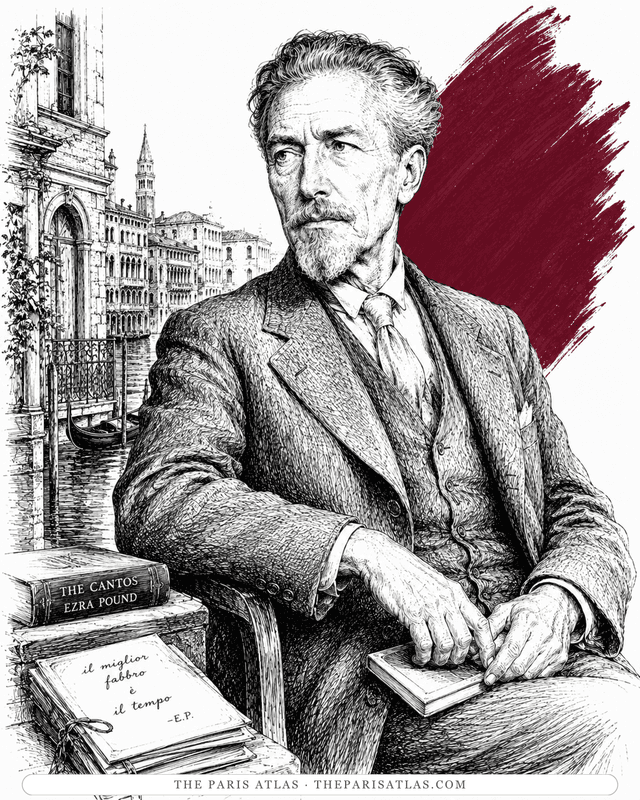
Ezra Pound
Pound read Cancer and sent Miller a famously backhanded postcard. Both believed literature's job was to wake the reader by any means necessary.
View author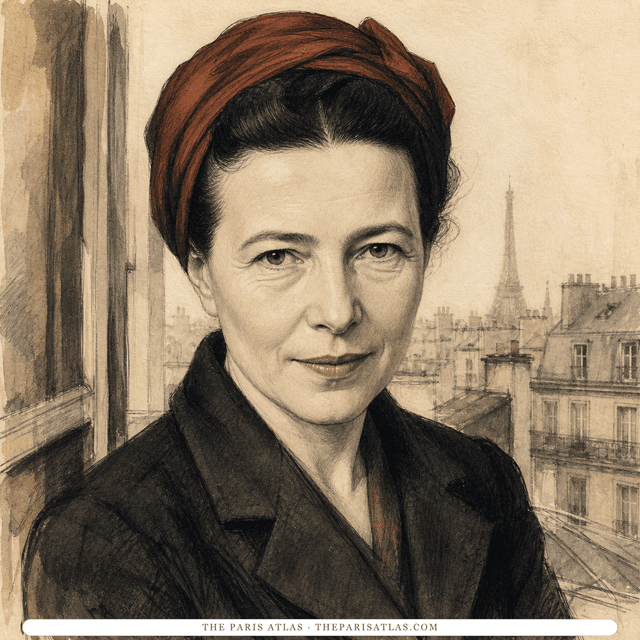
Simone de Beauvoir
French writer and philosopher whose novels, memoirs, and social analysis examined freedom, gender, responsibility, aging, and the material conditions that shape a life.
View author