


Giovanni's Room
The same subject at a sixth of the length, with race removed and only two people in the room.
Read our take
A jazz drummer dies in the first act, and the friends he leaves spend four hundred pages failing to explain it.
James Baldwin's third and longest novel, published by Dial Press in 1962. Rufus Scott, a Black jazz drummer in New York, begins a destructive affair with a white Southern woman called Leona and dies by suicide early in the book. The rest of the novel follows the people around him — his sister Ida, his friend Vivaldo, the married couple Cass and Richard, and the actor Eric, back from France — as they work through what his death exposed about all of them. Baldwin began it in Greenwich Village in 1948 and finished it in Istanbul fourteen years later.
Another Country took Baldwin longer than anything else he wrote, and travelled further. He started it in Greenwich Village in 1948, carried it to Paris, and finished it in Istanbul in 1962. It is his longest novel and the one in which he tried to put everything at once: race, sex between men, sex between men and women, marriage, money, jazz and New York.
It was reviewed badly by people whose opinion he valued. Time called it a failure. Norman Mailer called it abominably written. The New York Times took the other side, calling it a sad story brilliantly and fiercely told. New Orleans banned it as obscene, Australia's customs department blocked imports, and the FBI took an interest in Baldwin partly on its account.
It sold anyway, in numbers that surprised him. Baldwin's own reading of that was straightforward: a great many readers recognised the lives in it, whatever the reviewers said.
Rufus Scott is a jazz drummer in New York, out of work and nearly out of money. He meets Leona, a white woman recently arrived from the South, at a club in Harlem, and they begin an affair that turns violent — he beats her, and she is eventually committed to a psychiatric hospital by her family. Rufus disappears from his friends for weeks. He resurfaces once, at his friend Vivaldo's, and then walks to the George Washington Bridge and jumps.
The rest of the novel belongs to the people he left. His sister Ida, a singer, begins a relationship with Vivaldo, a struggling white novelist who was Rufus's closest friend and who cannot stop asking himself what he failed to see. Their affair carries the weight of everything Rufus's death did not settle, and Ida is under no illusion about how the city treats them together.
Around them, Cass and Richard's marriage comes apart — Richard has finally published a successful novel and become someone Cass does not respect — and Eric, an actor who was once Rufus's lover, returns from the south of France, where he has been living with a young Frenchman called Yves. Eric sleeps with Cass, and then with Vivaldo, and the novel moves through those combinations without treating any of them as a scandal.
The affairs surface. Richard learns about Cass and Eric; Ida tells Vivaldo, at length and without excusing herself, about the man she has been sleeping with to advance her singing career. Neither confession produces a resolution. Cass and Richard are left in a marriage that has been told the truth and does not know what to do with it.
Eric's Yves flies in from France at the very end, and the novel closes on him arriving at Idlewild and walking through the airport toward Eric. It is the one uncomplicated arrival in the book, and Baldwin gives it the last page.
At the jazz-club door, Rufus wants to be recognized and fears precisely that recognition. Hunger and the need for a bathroom bring him toward a place where he once belonged; imagining other people's pity keeps him outside. When the door opens, warmth and smell release memories of playing, friendship and the ordinary comforts of a room of his own. Baldwin makes exclusion bodily before it becomes an abstract condition. The reader follows needs that the passing crowd scarcely notices, while the imagined audience inside the club makes even asking for help feel like a public exposure.
Ida can command attention without receiving uncomplicated support. Emily J. Lordi's discussion of her first public performance draws attention to the possessiveness that accompanies the musicians' pride in her. The primary passages she quotes also make the audience's response difficult to read: applause becomes wary when Ida dedicates a song to Rufus. Through Eric's perspective, the novel registers listeners who can enjoy a voice yet resist the grief it asks them to encounter. Musical success here does not mean that private loss has become shared understanding. The performance changes the room without freeing Ida from its judgments.
Race, class, marriage, jazz, and desire between men and between men and women, all in the same four hundred pages. No other Baldwin novel attempts this range, and the strain of the attempt is part of what makes it worth reading.
Rufus's sister is the one person in the novel who is never fooled — about her lover, her career, or what New York is doing to them. Her long final confession to Vivaldo is the best writing in the book.
It was dismissed as shapeless in 1962 and has outlasted most of what was praised that year. Anthony Burgess later put it among the best English-language novels since 1939.
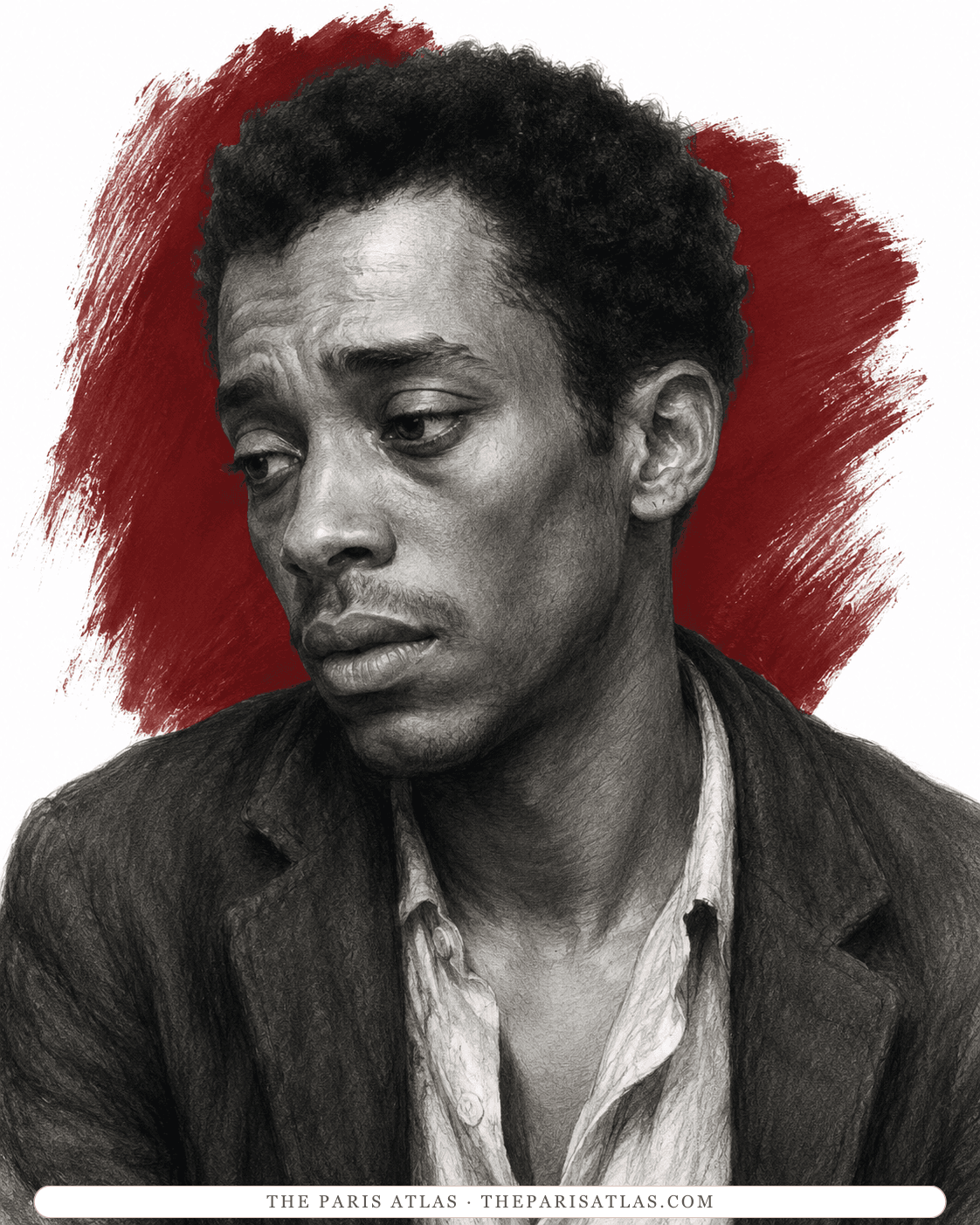
A Black jazz drummer in New York, out of work and out of money. He dies early, and the rest of the novel is what his death leaves behind.

Rufus's younger sister, a singer, and the one person in the book who is never fooled — about her brother, her lover, or what the city is doing to them.

A struggling white novelist, Rufus's closest friend, and unable to stop asking himself what he failed to see in time.

An actor, once Rufus's lover, returning from the south of France. The only person in the novel the book allows to be more or less happy.

Married to Richard, and increasingly unable to respect the man his success has made him.

A novelist who has finally published something that sold. Cass's husband, and the person least changed by Rufus's death.
1948
Baldwin begins the novel in Greenwich Village, then leaves for Paris.
1962
He finishes the manuscript in Istanbul, and Dial Press publishes it.
1962
Time calls it a failure; Norman Mailer calls it abominably written; The New York Times calls it brilliantly and fiercely told.
1963
New Orleans bans the novel as obscene, and Australian customs blocks imports.
1992
Vintage International issues the paperback that is now the standard edition.

The same subject at a sixth of the length, with race removed and only two people in the room.
Read our take
The Harlem this novel's characters escaped, written nine years earlier.
Read our take
The later, longer return to the same territory, with more forgiveness in it.
Read our takeRufus Scott, a fictional Black jazz drummer in New York, has a violent affair with a white Southern woman called Leona and dies by suicide early in the novel. The rest of the book follows his sister Ida, his friend Vivaldo, the married couple Cass and Richard, and the actor Eric as they work through what his death exposed about their own lives and about the city.
For its sexual content, particularly the sex between men and the interracial relationships. New Orleans declared it obscene, Australia's Commonwealth Customs Department initially blocked imports, and the FBI cited it in its file on Baldwin.
About 436 pages, which makes it Baldwin's longest novel after Just Above My Head. It is roughly three times the length of Giovanni's Room.
In three cities over fourteen years. He began it in Greenwich Village in 1948, worked on it in Paris through the 1950s, and finished it in Istanbul in 1962.
Probably not. It is long, it moves between six main characters, and it argues with itself. Giovanni's Room or Go Tell It on the Mountain are easier entries; come to this one once you know you want more.
Not directly, but they were written in the same period and published a year apart, in 1962 and 1963. The novel works through the same material as private lives; the essay makes the public argument.
Explore authors with a similar voice, perspective, and influence.
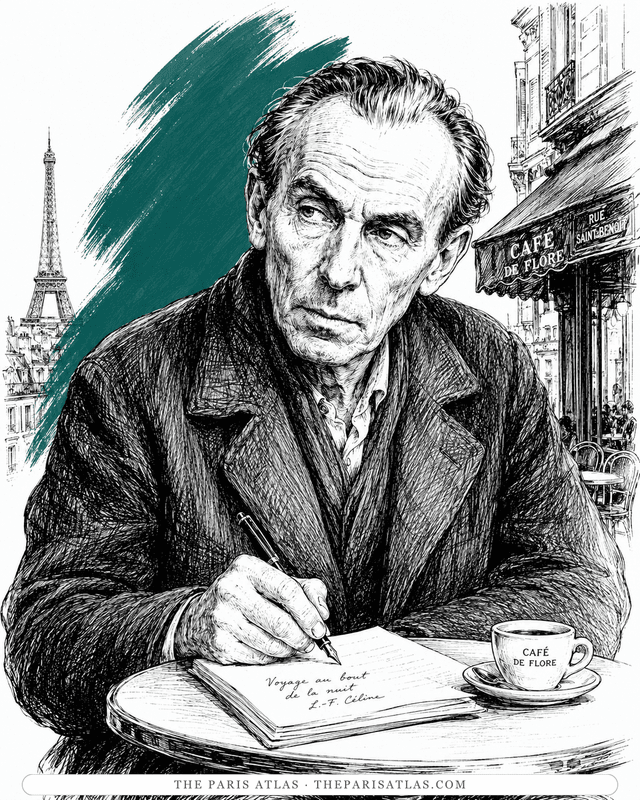
The doctor of the Paris slums who wrote the century's blackest, funniest novel — and changed the sound of French prose.
View author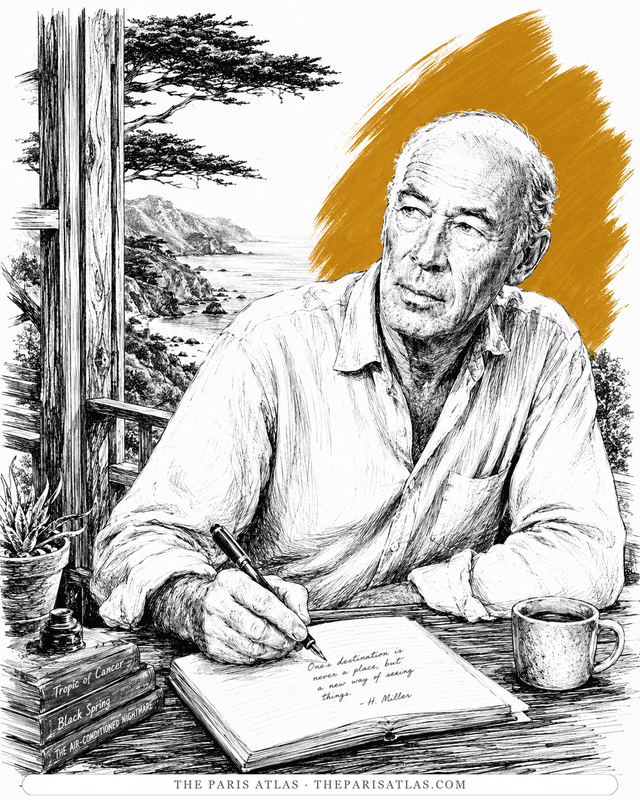
The Brooklyn dropout who arrived in Paris broke at thirty-eight and wrote the exuberant, banned books that ended American censorship.
View author
Author of The Sun Also Rises and A Moveable Feast; his pared-down style, developed in 1920s Paris, became the most imitated in American prose.
View authorThe sources below include the primary text, editions, scholarship, archival materials, and other records that informed this page. They document Another Country, its publication, and its place in literary history.


The primary text represented by this page, used for descriptions of the work’s contents and for any quoted passages shown here.
Jellybooks sample linked by Topping Books; the club-threshold sequence was read, not the complete novel or original edition.
The reading attributes Lordi's interpretation and distinguishes it from Baldwin's quoted performance passages. Public third-party text transcription, not a visually collated PDF or manuscript.

Used to place Another Country within James Baldwin's published work and verify its bibliographic context.
Used for independent biographical, archival, or historical context surrounding James Baldwin's career and the period in which Another Country appeared.
Used to cross-check authorship, chronology, and the work's place in James Baldwin's wider catalogue.
Used to verify James Baldwin's bibliography and place Another Country within the broader chronology of James Baldwin's career.
The primary text is the baseline reference for every book page. Additional references document publication history, interpretation, and historical context where that evidence is available.
 Explore more resources