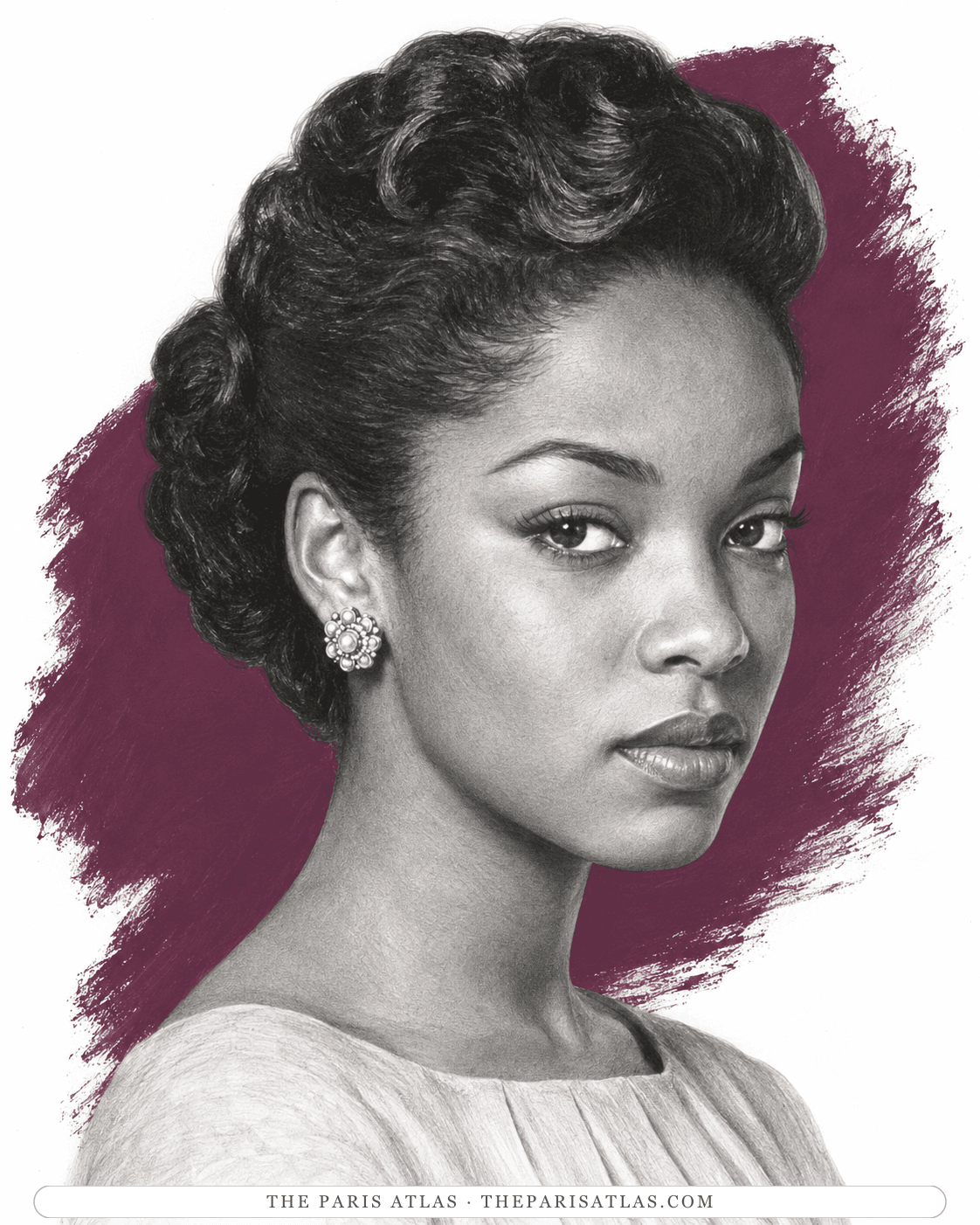
Ida Scott
Rufus's younger sister, a singer, and the one person in the book who is never fooled — about her brother, her lover, or what the city is doing to them.
To sing, and to be taken seriously doing it. Asked at a party what she thinks about while she is waiting tables, she says she has sometimes thought of singing, and that it is what she would like to do.
The book

At a glance
- Waitress at a chain restaurant on the eastern edge of the Village; a beginning singer
- About twenty-one — Vivaldo first met her seven years earlier, at fourteen
- Rufus Scott's younger sister; parents in Harlem
- Vivaldo Moore's apartment on Bank Street, since April
- A ruby-eyed snake ring on one little finger; silver earlier worn by Rufus as cufflinks
- With a singing teacher, and later with a coach
Who they are in the book
Spoiler-freeIda Scott is Rufus Scott's younger sister. After his death, James Baldwin hands her the largest share of the novel's argument, and by the last hundred pages most of what the book has to say is coming out of her mouth. She is about twenty-one, and she is invented, as all these people are. Vivaldo Moore, her brother's closest friend, first saw her seven years earlier, when she was fourteen and in pigtails and Rufus took the two of them to Radio City.
She grew up in the same Harlem apartment Rufus left, with a mother who took in white people's washing and a father who drank, played the guitar for his son at weekends, and worked hard for nothing. As a child she was afraid of the dark and used to run through the flat in the middle of the night to get into her brother's bed. When Rufus disappears, she is the one who searches — every club he played, every musician who worked with him, relatives in Brooklyn — and she is the one who turns up at Cass Silenski's door in a raincoat and hood to ask a room of white people where he is.
When the novel resumes a few months after the funeral she is waiting tables at a chain restaurant on the eastern edge of the Village and living with Vivaldo. She is also beginning to sing. The first time she does it in public, sitting in with musicians at a Village jazz bar, Baldwin is careful to say she is not a singer yet: the voice is low, rough-textured, and of no very great range. What she has instead is a presence that empties the room of conversation.
Ida is the only person in the book who talks about race without lowering her voice, and she directs most of it at the people who love her. She tells Cass that Cass cannot know what was done to Rufus and never will. She tells Vivaldo that he cannot claim to have loved her brother when there was so much about him he did not want to know. Baldwin does not stage these as outbursts. They arrive in taxis and kitchens, in the middle of ordinary evenings, and they are the most sustained speeches in the novel.
How Ida Scott Is Portrayed
- The first time we see herShe arrives at the Silenskis' door out of the rain looking for her brother: fairly tall, sturdy, very carefully dressed, darker than Rufus, in a raincoat with a hood and carrying an umbrella. Cass, who has met her once, notices a hint of Rufus in the eyes — large, intelligent, wary — and in the smile.
- How she walksA long-legged stride and a head carried very high, as though it had borne, but only yesterday, the weight of an African water jar. Baldwin sets that image directly against her mother's head, which had carried white folk's washing, and says Ida has never worked out whether to be ashamed of the second fact or proud of it.
- The waitressShe is the most popular waitress her boss has, which buys her some latitude over her shifts. Vivaldo pictures her approaching a table with a closed, haughty face, working the pad and pencil as though it were a sword and shield. Her manner with customers is at once haughty and free, and the book reads the contradiction as unresolved rather than as style.
- Her voiceLow, rough-textured, no great range. On the evidence of the voice alone she would never be a singer, and Baldwin says so. She compensates with something so implacably egocentric that the room goes quiet, and Vivaldo — who has been living with her — stares at her as though he had never seen her before.
- The song for her brotherAt the end of her first evening on a bandstand she steps up to the microphone and says the next song is for her brother, who died just before Thanksgiving the year before. The room is uncomfortable. Her mourning contains an accusation of the audience, and the audience half-suspects it; they endure the song and hold themselves outside it, and applaud warily afterwards.
- The earringsHeavy, archaic silver, shaped something like a feathered arrow. They are the cufflinks Eric Jones once had made for Rufus, kept in a drawer in Harlem for years and reset for her. Eric recognizes them across a crowded bar before he has worked out why his chest is pounding.
- The voices she can doAt the Silenskis' bar she asks for a taste of that there Cutty Sark in a raucous whiskey voice, announces that when it comes to liquor she is anybody's woman, and then laughs looking exactly like a little girl. It is a performance, and everyone in the room including her knows it is one.
- The dishesAfter a bad phone call in which Vivaldo cannot bring himself to tell his mother that his girlfriend is Black, Ida reaches into the cupboard and throws every plate he owns on the floor, then smashes both glasses against the refrigerator, saying she will give them something to complain about. Vivaldo laughs so hard he ends up on his back on the floor, and eventually she laughs too.
- Her verdict on RufusAsked about him by Eric, she says he was a very beautiful man and a very great artist who made some very bad connections. He was the kind who believed what people said: tell Rufus you loved him and he would stick with you till death. She adds that he was much nicer than she is, and that it does not pay to be too nice.
- The ride uptownSharing a cab with Cass, she asks whether Cass would not hate all white people if they kept her in prison here and made her watch her family go under, not quickly, in front of her. Cass says she cannot know. Ida says no, she cannot, unless she is willing to ask herself how she would have managed with what was dumped on Rufus, and smiles the saddest smile Cass has ever seen.
- The dance at Small's ParadiseShe dresses down for it: a pale orange dress, flat shoes, very little make-up, her hair pulled back into a severe bun, so that she looks almost like a young girl and makes the short, curly-haired television producer Steve Ellis look older and more corrupt beside her. Then she dances him off his feet, circling him with her legs flashing like knives while he flounders, and Cass, watching, cannot tell whether it is revenge or a warning.
- What Vivaldo says about living with herTalking to Eric, he says she never lets him forget he is white and never lets him forget she is colored, and that he does not care; and in the same breath that some days he wishes she were not there at all. It is his account of her, not the book's, and Baldwin keeps the difference visible.
If you like Another Country


If you like James Baldwin
Explore authors with a similar voice, perspective, and influence.

Louis-Ferdinand Céline
The doctor of the Paris slums who wrote the century's blackest, funniest novel — and changed the sound of French prose.
View author
Henry Miller
The Brooklyn dropout who arrived in Paris broke at thirty-eight and wrote the exuberant, banned books that ended American censorship.
View author
Ernest Hemingway
Author of The Sun Also Rises and A Moveable Feast; his pared-down style, developed in 1920s Paris, became the most imitated in American prose.
View author