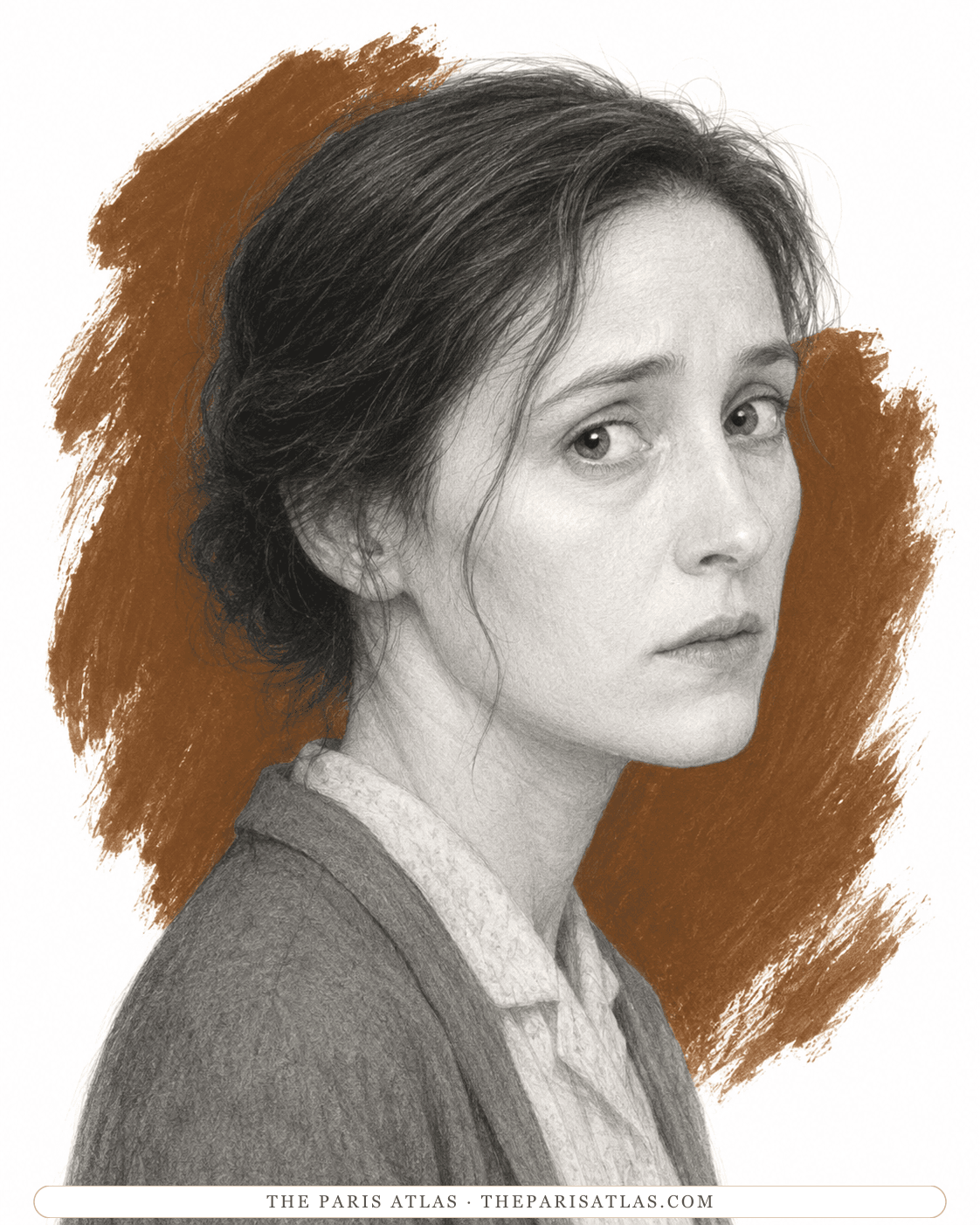
Leona
A white woman recently arrived from the South. Her affair with Rufus turns violent, and her family has her committed.
To stay. She tells Vivaldo she has no place to go, and Rufus registers early on that she clearly intends to stay if he will have her.
The book

At a glance
- Newly arrived in New York from the South; waitress
- Georgia
- Older than Rufus — over thirty, by his guess
- Married; one child, taken from her by her husband
- Rufus Scott, latterly at St. James Slip
- Small and thin, with long pale hair she usually wears pinned up
Who they are in the book
Spoiler-freeRufus Scott takes Leona home from a Harlem club in the first fifty pages of James Baldwin's novel, and she is the person his violence destroys. Both are invented. She is from Georgia and has been in New York a matter of weeks when they meet. She is small and thin, with straight pale hair, and she is considerably older than Rufus, who puts her at over thirty.
She left a husband who she says was rough and mean and who took her child away from her, on the grounds that she drank too much to be a fit mother. She admits she did drink too much, and says it was the only way she could stand living with him. She works in a restaurant, and once Rufus stops working her wages are what the two of them live on.
The novel gives her more good will than anyone else in it and almost no defenses. She likes Vivaldo Moore on sight, she is friendly with Cass Silenski within a minute of meeting her, and when a hostile Italian boy stares the two of them down in Washington Square her reading is that he is bored and lonely and does not know any better. She also tells Rufus, over and over, that there is nothing wrong with being colored. Baldwin records that he had an answer to this which made her wince the first time, and that the second time she slapped him and he slapped her back.
By the time Vivaldo tries to get her out of the apartment on St. James Slip, she has been beaten for months and has nowhere else to go. Rufus accuses her of sleeping with other Black men, which is not true and which he knows is not true.
She is found, some time after Vivaldo takes her away, on a freezing night, half-naked in the street, looking for the baby she believes has been hidden from her in a house whose address she cannot remember; she is taken to Bellevue, and her brother comes up from the South and takes her back to Georgia.
How Leona Is Portrayed
- How Rufus first sees herA damp, colorless face that he identifies immediately as the face of the Southern poor white, and straight pale hair. He notes that she is considerably older than he is, probably over thirty, and that her body is too thin, and that it becomes, abruptly, the most exciting body he has looked at in a long time.
- Tiny and put togetherIn the cab uptown he glances over and thinks that although she is tiny she seems very well put together. She does not smoke.
- In his bathrobeThe next afternoon Vivaldo finds her in the kitchen making breakfast, drowning in Rufus's bathrobe, hair piled on top of her head, face innocent of make-up. Rufus, watching them, decides she could not really be called a pretty girl and immediately suspects Vivaldo of thinking so too. Dressed for the street with her braids pinned up, she looks old-fashioned and much younger than her age.
- Please don't hurt meShe says it on the first night, quietly, with her face leaning into his palm, before he has laid a hand on her: Rufus, I really do like you, please don't hurt me. It is how the reader learns she has been hurt before.
- What she says about strangersAbout the boy in the park who looks at her as though she were a prostitute: he is bored and lonely and does not know any better, and Rufus could probably make friends with him if he tried. She adds that this is what is the matter with most people — they have nobody to be with, and it makes them evil.
- The sentence she keeps repeatingTime and again, she tells Rufus there is nothing wrong with being colored. The first time he answers her back she flinches and says nothing; the second time she slaps him, and he slaps her.
- The jobShe waits tables, and after Rufus stops working and everything has been pawned it is the only money coming in. The drinking at home makes her late and makes her look increasingly disreputable, and she loses it. One evening Rufus turns up at the restaurant half-drunk to collect her.
- On the bathroom floorVivaldo arrives to find her sitting there with her hair in her eyes and her face swollen and dirty with weeping, gasping like an infant, saying that Rufus is always beating her for nothing, for nothing, and that his accusation about other men is not true.
- What she corrects them both aboutThe two men argue over her head about which of them thinks she is not good enough. She interrupts to say that neither of them has it right: Rufus does not think he is good enough for her.
- Her diagnosisIn the street, being taken away, she tells Vivaldo she knows Rufus is sick and cannot get him to see a doctor. Then, at the door, she says the thing the rest of the book proves: that Rufus is not going to kill anybody but himself if he does not find a friend to help him.
If you like Another Country


If you like James Baldwin
Explore authors with a similar voice, perspective, and influence.

Louis-Ferdinand Céline
The doctor of the Paris slums who wrote the century's blackest, funniest novel — and changed the sound of French prose.
View author
Henry Miller
The Brooklyn dropout who arrived in Paris broke at thirty-eight and wrote the exuberant, banned books that ended American censorship.
View author
Ernest Hemingway
Author of The Sun Also Rises and A Moveable Feast; his pared-down style, developed in 1920s Paris, became the most imitated in American prose.
View author