
Eric
An actor, once Rufus's lover, returning from the south of France. The only person in the novel the book allows to be more or less happy.
To be kept. On their last night in France, when Yves says that as long as Eric does not abandon him he will not be afraid, Eric asks whether that is a promise — lightly, and with his voice not quite under control.
The book

At a glance
- American actor, back from France for a Broadway play
- Eric Jones
- A small, well-to-do Alabama town; the only son of prominent people, his father a banker
- Bright red hair, blue eyes, a halting Southern drawl
- Roughly three years in Paris and the south of France
- Yves, twenty-one, French; together more than two years
- Three seasons earlier, in the short-lived Kingdom of the Blind
Who they are in the book
Spoiler-freeEric Jones is an American actor, and his stretch of James Baldwin's novel is the only one that opens somewhere pleasant. Part three finds him sitting naked in a rented garden above the Mediterranean, watching his lover Yves swim, with a kitten stalking the mimosas. He has been in Europe about three years, and he is going home because a New York director has offered him a principal supporting part in a Broadway play.
He is from a small, well-to-do Alabama town, the only son of very prominent people; his father runs the bank and, as his friend LeRoy puts it, owns half the folks in the town. Baldwin gives Eric two formative attachments there, both to Black men and both fatal to his standing. The first was Henry, the family's handyman, in whose arms he sat in the furnace room at ten or eleven listening to stories. The second was LeRoy, a seventeen-year-old porter at the courthouse, with whom, on a Sunday afternoon by a stream, at sixteen, he became a man's lover for the first time.
Before Europe he was in New York, where his affair with Rufus Scott was the worst thing that happened to him. He had cufflinks made for Rufus with the money meant for his own wedding rings, and Rufus took the gift as a weapon. Asked years later whether Rufus tried to make him pay, Eric says: he didn't try, I paid. He also says that without Rufus he would never have had to leave, and would never have been capable of Yves.
What separates him from everyone else in the book is that he has stopped waiting for the world to certify him. Baldwin puts it directly: Eric knows he has no honour the world recognizes, that his life and loves are filth or disease in the eyes of his countrymen, and that there are therefore no standards available to him except the ones he makes himself. It is not presented as a triumph. It is presented as the reason the others come to him.
How Eric Is Portrayed
- Red hairIt is how everyone finds him. Rufus remembers stormy blue eyes, bright red hair and a halting drawl; Ida and Vivaldo expect to spot him in a crowded bar by the hair; Vivaldo greets him across a Village sidewalk by shouting that he is a red-headed Rebel who hasn't changed a bit. At the airport at the end he is thinner, with short hair spinning and flaming about his head.
- The banker's sonThe town was celebrated and well-to-do and not very big, and his name was also his father's name. What he encountered early was the obsequiousness of people who despised him and did not dare say so. LeRoy makes the arithmetic plain: not everybody's old man runs a bank.
- Henry in the furnace roomThe handyman drank too much and was a trial to his wife, and he told Eric stories: how he met Grace, preachers and gamblers, the time he avoided the chain gang. One day Eric found him crying and put a hand on his knee, and the man's tears fell on the back of it. Baldwin marks it as the first time Eric felt a man's arms around him and the chest and belly of a man. He was ten or eleven.
- Dressing upAfter the household was asleep he weighed himself down with discarded hats, gowns, bags, sashes, earrings, capes and necklaces and became his mother's friends, or his mother as he imagined her when she was young, or the heroines of the novels he read and the films he saw.
- The afternoon with LeRoyA hot Sunday, a back road at the edge of town. A car of six white people Eric grew up with passes them and the driver beats out a mocking wedding march on the horn. LeRoy tells him that is where he is supposed to be, that people are talking, and that Eric has to stop coming to see him. They lie down together beside the stream instead. Fifteen years later Eric is still working out what that day revealed.
- The career, such as it isNear-starvation, then dubbing French films, then bit parts in American films made abroad, then television work in England, then Broadway. In one French picture his whole part is to sit drunk and almost motionless against a wall while students argue around him; the director has placed him so that his stillness holds the scene together.
- What is on the tableHis script for the new play, and books: Yves's Cendrars and Genet and Proust beside Eric's copies of An Actor Prepares, The Wings of the Dove and Native Son.
- How he worksCass finds his script heavily underlined and annotated in the margins. One note beside a line about a headache reads: on this, maybe remember what you know of Yves.
- What he cannot do with New YorkYves tells him plainly that he is not afraid of trouble but that Eric is afraid of trouble in New York. Eric says he is not afraid, only that he has had a lot of trouble there. Once he is back, his ears keep listening for the rhythm of Yves's footsteps beside him, and all other sounds are meaningless without it.
- Where he stands with the othersSitting on a rented terrace in France he works out that he was probably never really friends with Vivaldo or Richard or Cass, and that Rufus, who made him suffer, had been his only friend among them, because Rufus dared to know him.
- How people talk to himBoth Cass and Vivaldo bring him what they have not told anyone else, and he mostly listens. Baldwin notes that Cass's affair with him depends on her restraint, and that its unspoken premise is that they are two independent people who will always be friends and probably will not always be lovers.
If you like Another Country


If you like James Baldwin
Explore authors with a similar voice, perspective, and influence.
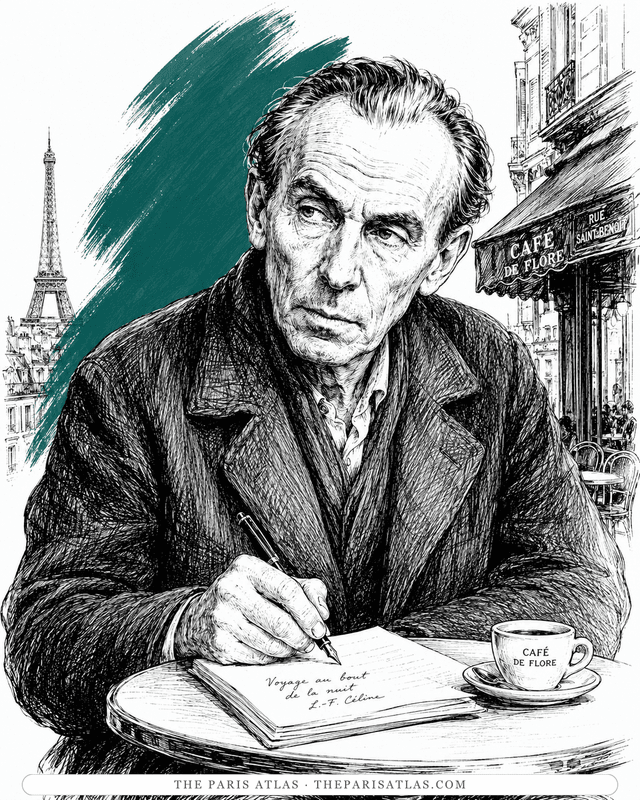
Louis-Ferdinand Céline
The doctor of the Paris slums who wrote the century's blackest, funniest novel — and changed the sound of French prose.
View author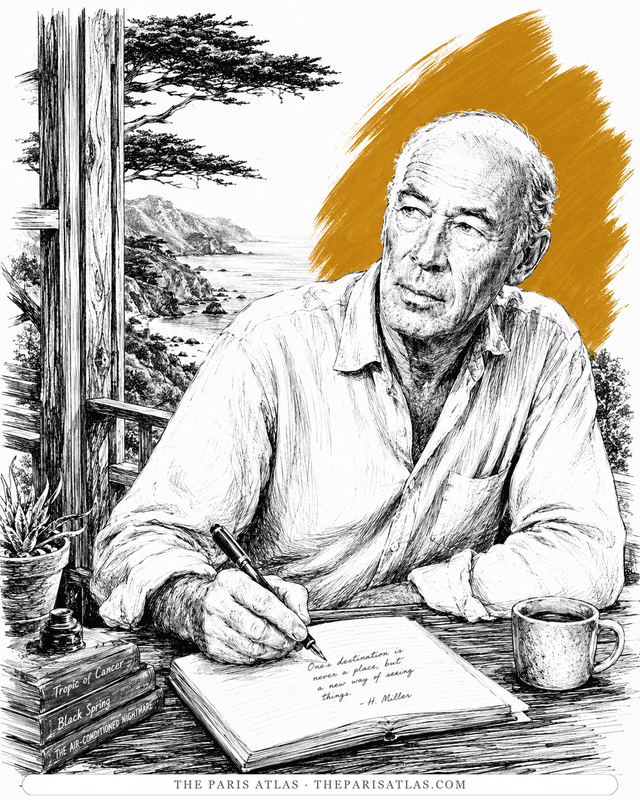
Henry Miller
The Brooklyn dropout who arrived in Paris broke at thirty-eight and wrote the exuberant, banned books that ended American censorship.
View author
Ernest Hemingway
Author of The Sun Also Rises and A Moveable Feast; his pared-down style, developed in 1920s Paris, became the most imitated in American prose.
View author