
Yves
Eric's young French lover, left behind in the south of France. His arrival at the airport is the last thing in the book.
To get to America and make something of himself there. Eric warns him he will hate it; Yves answers that he is sure there is something he can do there, and that he can find his way.
The book

At a glance
- Eric Jones's lover; French
- Twenty-one
- Paris; his mother waited tables in a bistro during the Occupation
- On the streets of Paris from the age of fifteen, living by his wits
- More than two years, since a night in a hotel room in Chartres
- Blaise Cendrars, Jean Genet, Marcel Proust
Who they are in the book
Spoiler-freeYves is twenty-one, French, and the person the American actor Eric Jones has been living with in Europe. James Baldwin invented both of them. They have been together more than two years, and for the last two months they have been renting a house with a garden above the Mediterranean. Eric is about to sail for New York to take a Broadway part, and the plan is for Yves to follow.
His mother was a bistro waitress when the Germans came to Paris; Yves was five, and his father had disappeared so long before that he can barely remember him. He ran from her at fifteen, under a truce in which he stayed out of the hands of the law and she did not use his age to put him there, and lived on the streets of Paris by his wits and by selling himself until he met Eric. He still visits the bistro when he is drunk or hungry or unhappy, and it has been remodelled with neon and plastic and a jukebox, so that what he goes there for is no longer in it.
Baldwin does not sentimentalize the arrangement between them. Yves says openly that his youth cannot last forever and that Eric may as well take him to America now, while he is still fond of him. He also says that the months in that house are the first time he has understood that he does not have to be a whore just because he comes from whores, and that he learned it from Eric.
He is the last thing in the book. The final pages leave everyone else and follow his flight in from Paris: the descent over the highways and the water, the passengers becoming Americans again as the plane lands, his sudden conviction that his shirt is wrong and his hair is too long. It runs until he steps down onto the tarmac and hears Eric call to him in French from the observation deck.
How Yves Is Portrayed
- Out of the waterBrown hair bleaching in the sun and glowing round his head, a long wiry body as brown as bread, a scarlet bikini he steps out of on the beach, and an old pair of Eric's blue jeans, slightly too short, which he has appropriated. He does not much like Americans but he likes their clothes.
- The foreheadBaldwin returns to it repeatedly: high, austere, oddly at variance with the childlike grin. Eric teases him about it in bed with an inventory: the nose turns up, the mouth is too big, the forehead is too high, and soon there will be no hair, and as for those ears, he looks like an elephant or a flying machine.
- The look that frightens EricIt arrives without warning and has no relation to the puppyish playfulness: the look of a seasoned and able adventurer deciding between pouncing on his prey and luring it into a trap. It makes his face bitter and cruel and ageless, and Eric can see the whole ferocity of his intelligence in it.
- The kittenTiny, black and white, and his; it stalks the garden under the mimosas as though the garden were Africa. He feeds it, carries it against his shoulder until it purrs, and at night it tries to arrange itself around his neck in bed.
- The bathHe will not take showers. He wants long scalding baths with newspapers, cigarettes and whiskey on a chair beside the tub and Eric within talking distance, to shampoo his hair and scrub his back.
- What he says about the work he didAsked how it went, he says he took what there was, or let it take him, and that it is simpler with men, usually shorter, and that the money is easier. Women, he says, are more cunning and it is much harder work and not so sure. He also says you do not meet many human persons in the places he has been.
- His half of the roomCopies of Blaise Cendrars, Jean Genet and Marcel Proust on the table beside Eric's books; his sketch pad on the floor with his tennis shoes and socks and underwear on top of it.
- ChartresHe had been once, years before, and wanted Eric to see it. Staying the night was his suggestion, made on the cathedral steps after a silent day. Eric had learned by then that Yves's silences mean he is settling something and will retrace the argument out loud later. They had known each other three months and had never touched.
- MannersWith Madame Belet, the seventy-two-year-old woman who cooks for them, he is patient to a fault, edging toward the door with two drinks in his hands and a pale, polite and lonely smile, waiting for a gap in her advice. Baldwin notes that he has great respect for old people. He promises her that he will get very rich in America and take her on a pilgrimage to Rome.
- What he is afraid ofHe tells Madame Belet he will come back, in a voice full of doubt, and Eric realizes for the first time that he is frightened. Later, at the table, he says that as long as Eric does not abandon him he will not be afraid.
If you like Another Country


If you like James Baldwin
Explore authors with a similar voice, perspective, and influence.
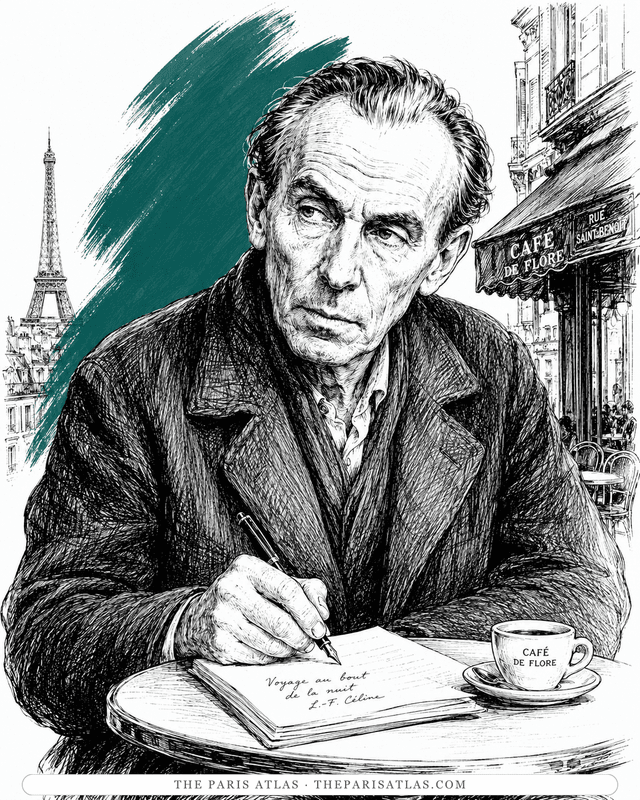
Louis-Ferdinand Céline
The doctor of the Paris slums who wrote the century's blackest, funniest novel — and changed the sound of French prose.
View author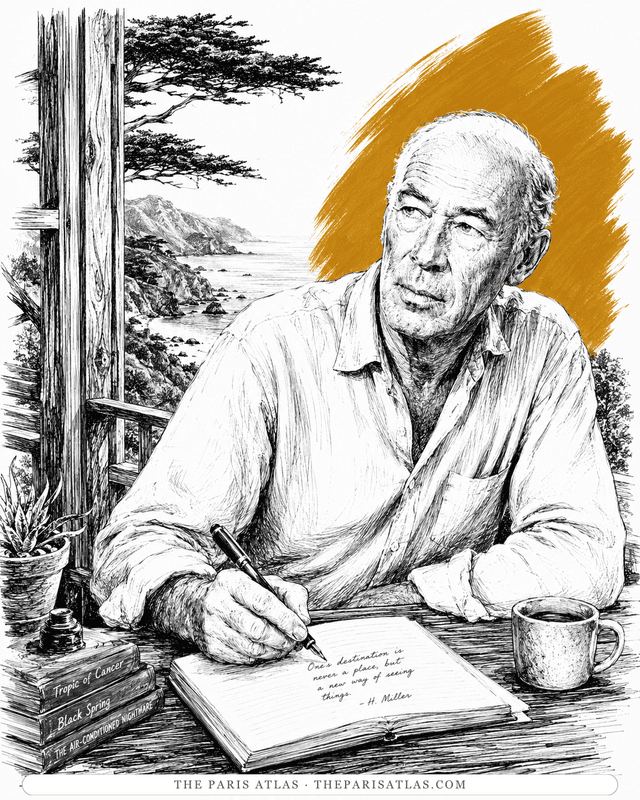
Henry Miller
The Brooklyn dropout who arrived in Paris broke at thirty-eight and wrote the exuberant, banned books that ended American censorship.
View author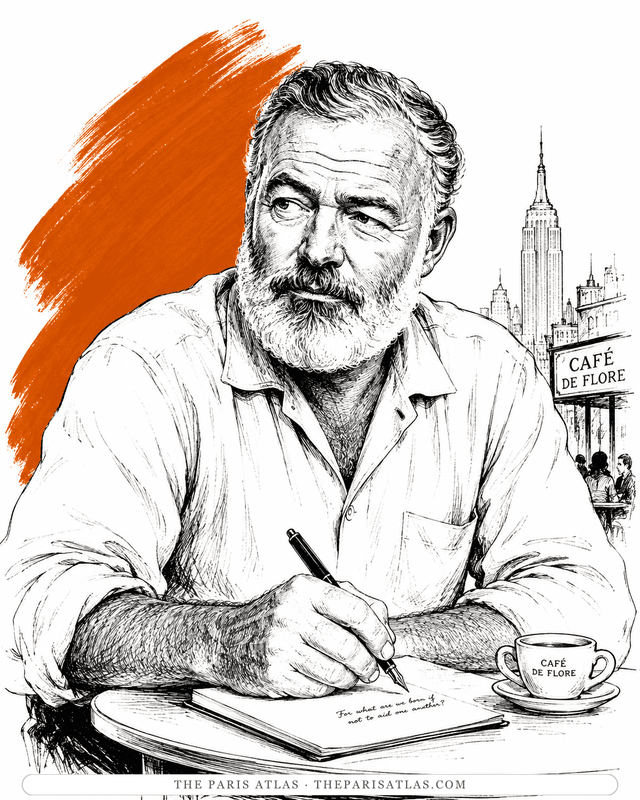
Ernest Hemingway
Author of The Sun Also Rises and A Moveable Feast; his pared-down style, developed in 1920s Paris, became the most imitated in American prose.
View author