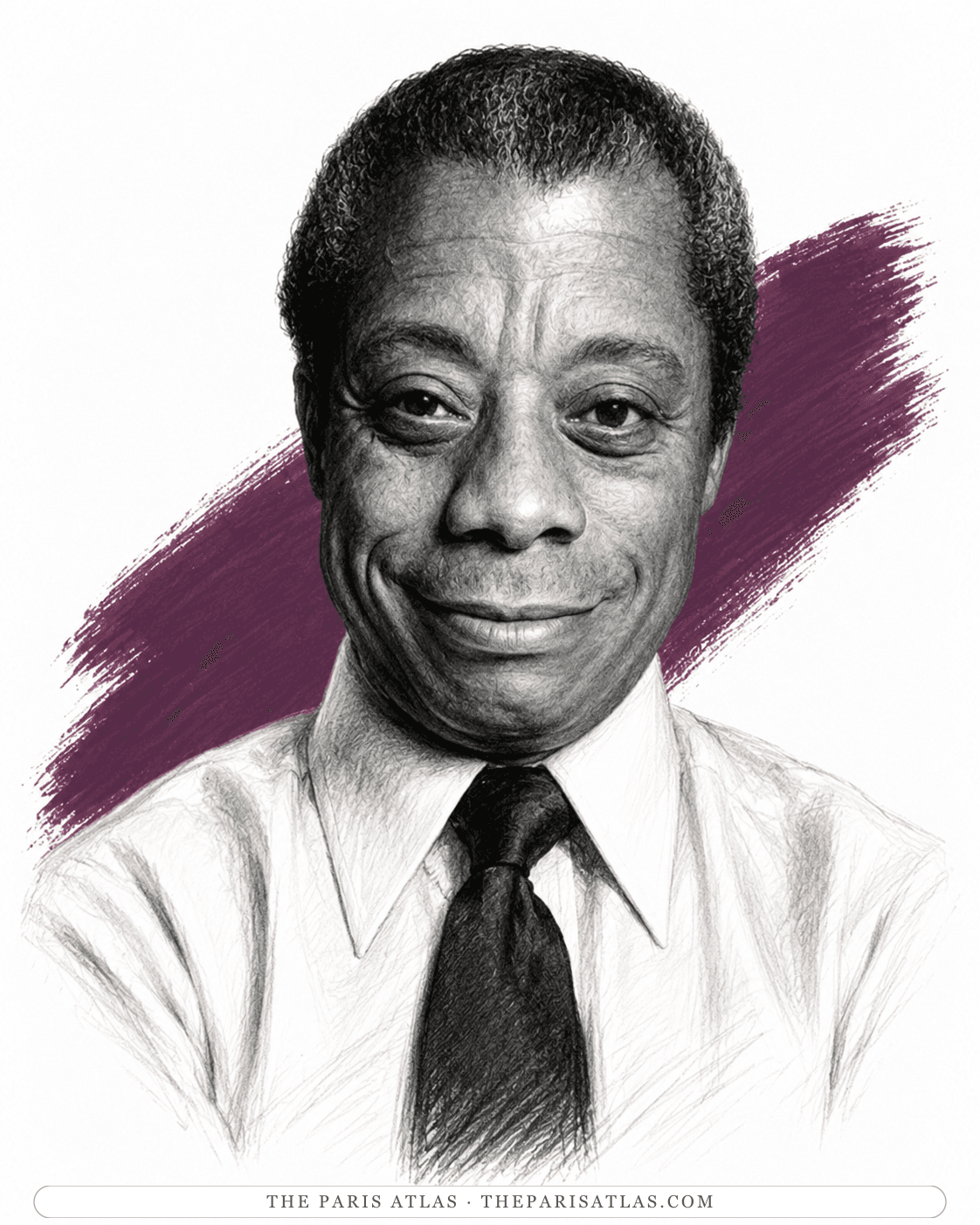
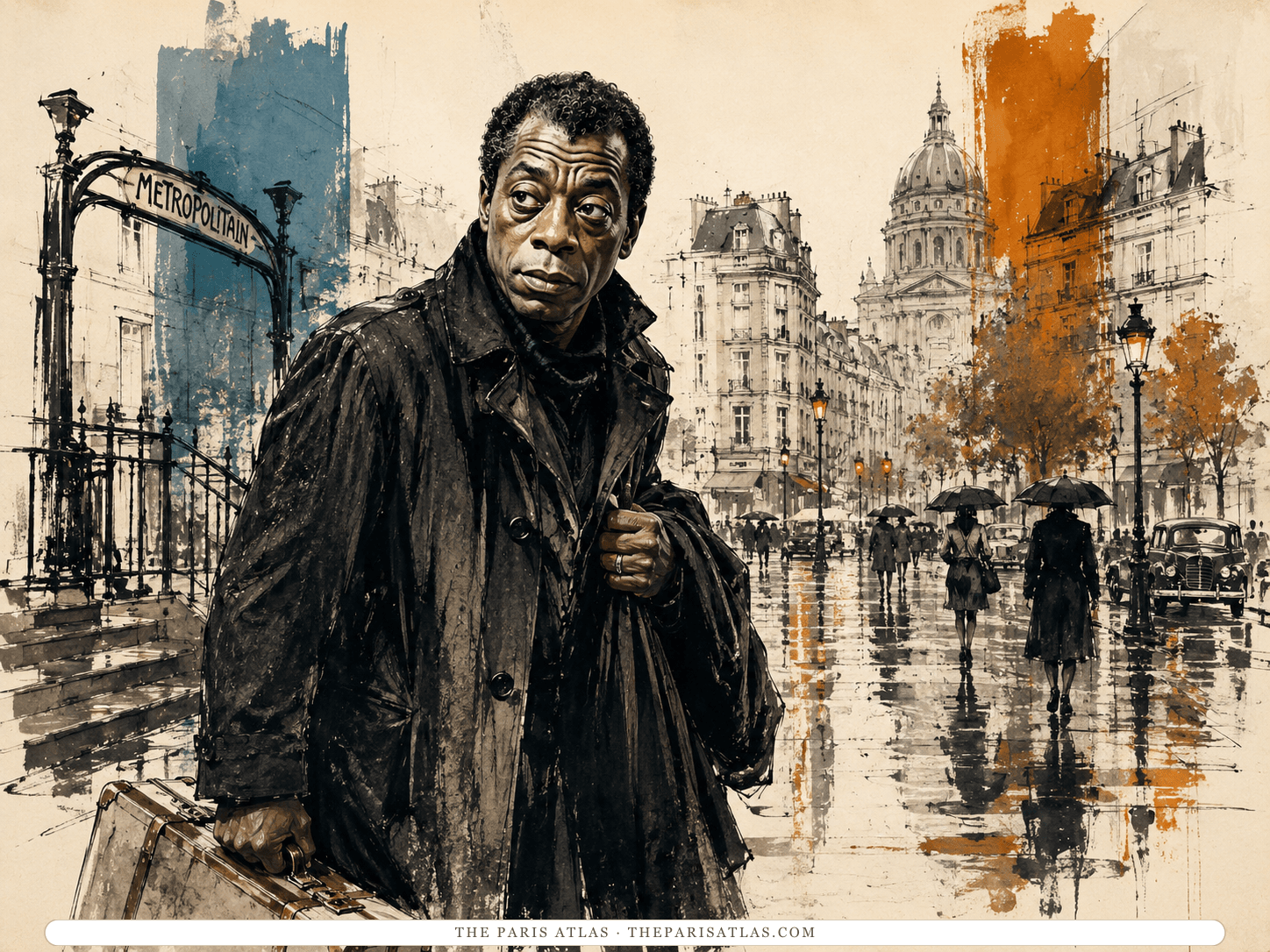
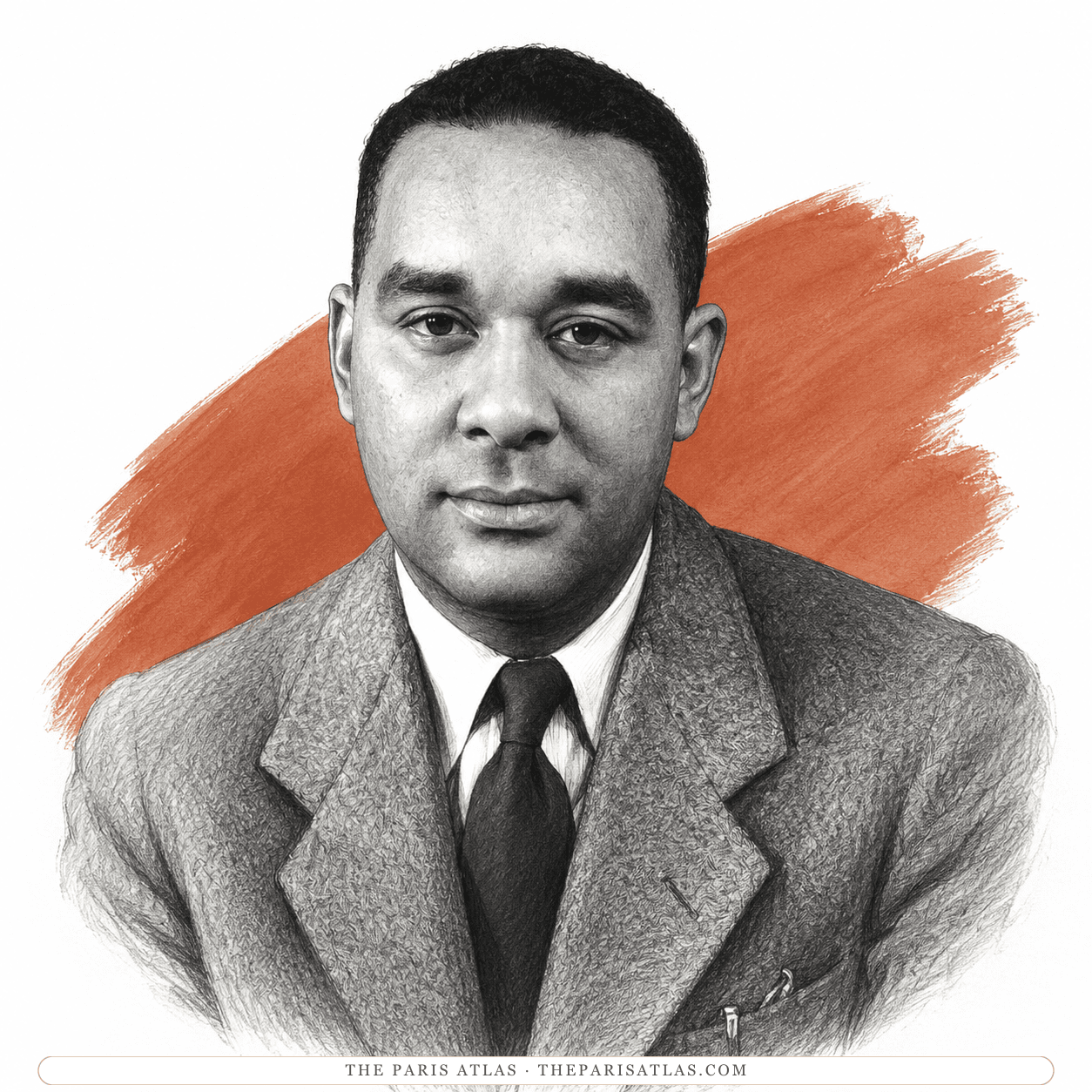
Richard Wright
- Author
- Poet
- Journalist
Depicts
The collection opens with the attack on protest fiction that took Wright's Native Son as its central example and ended the friendship. Wright had helped Baldwin win the fellowship that got him to Paris.

Ten essays, a stepfather's funeral on the day Harlem burned, and eight days in a Paris jail.
James Baldwin's first collection of essays, published by Beacon Press in 1955 when he was thirty. Ten pieces, most of them written for magazines in the years either side of his move to Paris, running from a demolition of protest fiction to a Swiss village where nobody had seen a Black man before. The title essay is about his stepfather's funeral, which fell on the day of the 1943 Harlem riot and on Baldwin's nineteenth birthday. It is the book most readers should start with.
The essays were written for magazines — Harper's, Partisan Review, The New Leader, Commentary — between the mid-1940s and 1955, and they cover the years in which Baldwin stopped being a promising young reviewer in Greenwich Village and became a writer in Paris.
That makes the collection accidentally autobiographical. It opens with the argument about protest fiction that ended his friendship with Richard Wright, moves through Harlem and a trip to Atlanta, arrives at the title essay and his stepfather's funeral, and then leaves the country: an encounter on the Seine, a question of identity, eight days in a French jail, and a Swiss village at the end. The book goes where he went.
Baldwin was thirty when Beacon published it. He had one novel out and a reputation as an essayist that this book largely created.
The opening of “Stranger in the Village” separates being noticed from being recognized as a person. Repeated visits make Baldwin familiar, yet the villagers scarcely use his name and resist believing he is American. Even his attempt at friendliness fails: they attend to his teeth rather than receive his smile. That broken exchange gives the essay's argument a concrete form. He acknowledges the absence of deliberate unkindness without treating it as protection from injury. The children's calls recall his American childhood, so the supposedly remote village cannot free the encounter from a history its inhabitants do not acknowledge.
In the hotel-room sequence of “Equal in Paris,” the sheet changes meaning before it changes hands. What Baldwin had treated as clean bedding, and as leverage against his hotel's poor service, becomes evidence when the inspector approaches the bed. Its monogram was always visible; the narration emphasizes his belated understanding rather than a newly revealed clue. The officers' courtesy sharpens that disorientation. Their reassurance concerns the smallness of the offense, while he hears a promise of release. The gap between those meanings turns an apparently trivial incident into a loss of control over his immediate future.
I love America more than any other country in the world, and, exactly for this reason, I insist on the right to criticize her perpetually.
I imagine that one of the reasons people cling to their hates so stubbornly is because they sense, once hate is gone, that they will be forced to deal with pain.
Joyce is right about history being a nightmare—but it may be the nightmare from which no one can awaken. People are trapped in history and history is trapped in them.
Baldwin is a greater essayist than novelist and the essays are shorter, which matters while you are still deciding whether a writer is for you.
A funeral, a riot and a birthday on one day, held together without strain. It is among the finest essays written in English in the last century.
"Equal in Paris" and "Stranger in the Village" were written in Europe about being there, and they are the clearest record of what the move actually gave him.
Depicts
The collection opens with the attack on protest fiction that took Wright's Native Son as its central example and ended the friendship. Wright had helped Baldwin win the fellowship that got him to Paris.
An attack on protest fiction that begins with Harriet Beecher Stowe's Uncle Tom's Cabin and extends to Richard Wright's Native Son. It caused a lasting rift with Wright.
A sustained critique of Native Son and its portrayal of Bigger Thomas, continuing the argument with Wright.
On the 1954 film, and what Hollywood did with an all-Black cast.
The neighbourhood he grew up in, reported rather than remembered.
A gospel quartet, his own brother among them, taken south as campaign decoration by a political party.
His stepfather's funeral, on the day of the 1943 Harlem riot and his own nineteenth birthday. The best thing in the book.
Black Americans and colonial Africans meeting in Paris, and finding less in common than either expected.
The American student colony in Paris, and what it is actually looking for.
The eight days he spent in a French jail over Christmas 1949, arrested over a stolen hotel sheet.
A Swiss village where nobody had seen a Black man before, and what that let him see about America.
Mid-1940s–1955
Baldwin publishes essays in magazines including Partisan Review, Commentary, and Harper’s, before gathering them into a book.
1955
Beacon Press publishes the essay collection.
2012
Beacon issues an edition with an introduction by Edward P. Jones.


The novel that came out of the childhood the title essay describes.
Read our take
Ten essays by James Baldwin, published in 1955. They cover Harlem, protest fiction, film, a trip to Atlanta, and his first years in Europe. The title essay is about his stepfather's funeral, which fell on the day of the 1943 Harlem riot and on Baldwin's nineteenth birthday.
Yes, and it is usually the best one. Baldwin is a stronger essayist than novelist, the pieces are short, and this collection contains three of the best things he wrote. If you would rather read a single short book, The Fire Next Time is about a hundred pages.
Yes. In "Everybody's Protest Novel," Baldwin argues that protest fiction reduces its Black characters to categories rather than people. He begins with Stowe's Uncle Tom's Cabin, then applies the argument to Wright's Native Son. The next essay, "Many Thousands Gone," examines Native Son at greater length. The criticism caused a lasting rift with Wright, who had helped Baldwin early in his career.
Ten. Most had already appeared in magazines — Harper's, Partisan Review, The New Leader and Commentary — between the mid-1940s and 1955.
Eight days Baldwin spent in a French jail over Christmas 1949, after an acquaintance gave him a bedsheet taken from a hotel. The essay's subject is not French racism but French indifference, and the discovery that the machinery which had him would have ground anyone.
Explore authors with a similar voice, perspective, and influence.
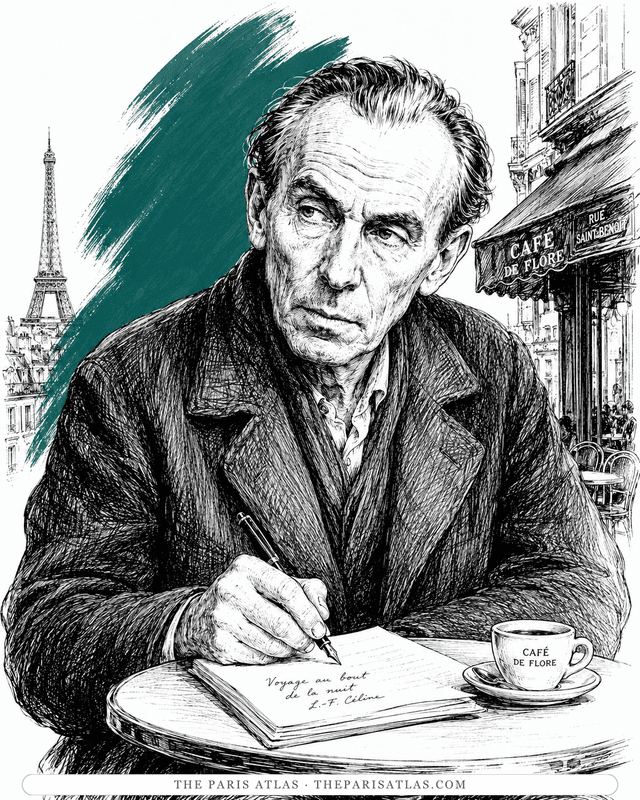
The doctor of the Paris slums who wrote the century's blackest, funniest novel — and changed the sound of French prose.
View author
The Brooklyn dropout who arrived in Paris broke at thirty-eight and wrote the exuberant, banned books that ended American censorship.
View author
Author of The Sun Also Rises and A Moveable Feast; his pared-down style, developed in 1920s Paris, became the most imitated in American prose.
View authorThe sources below include the primary text, editions, scholarship, archival materials, and other records that informed this page. They document Notes of a Native Son, its publication, and its place in literary history.


Published analysis and historical context used in preparing the Notes of a Native Son page.
Used for archival and bibliographic context surrounding Notes of a Native Son within Baldwin's papers and career.

Used for independent biographical and publication context for Notes of a Native Son.
Used to connect Notes of a Native Son to Baldwin's transatlantic life and intellectual development.
Used to verify James Baldwin's bibliography and place Notes of a Native Son within the broader chronology of James Baldwin's career.
Primary essay in a public Norton Reader teaching copy; these opening pages and their footnotes were visually checked. No whole-volume or original-magazine collation is claimed.
Primary Commentary scan hosted by Prison Culture; the sheet and arrest passages were visually checked. The added reading is limited to this sequence.
Publisher's contents independently confirm Equal in Paris and Stranger in the Village within Notes of a Native Son.
The primary text is the baseline reference for every book page. Additional references document publication history, interpretation, and historical context where that evidence is available.
 Explore more resources