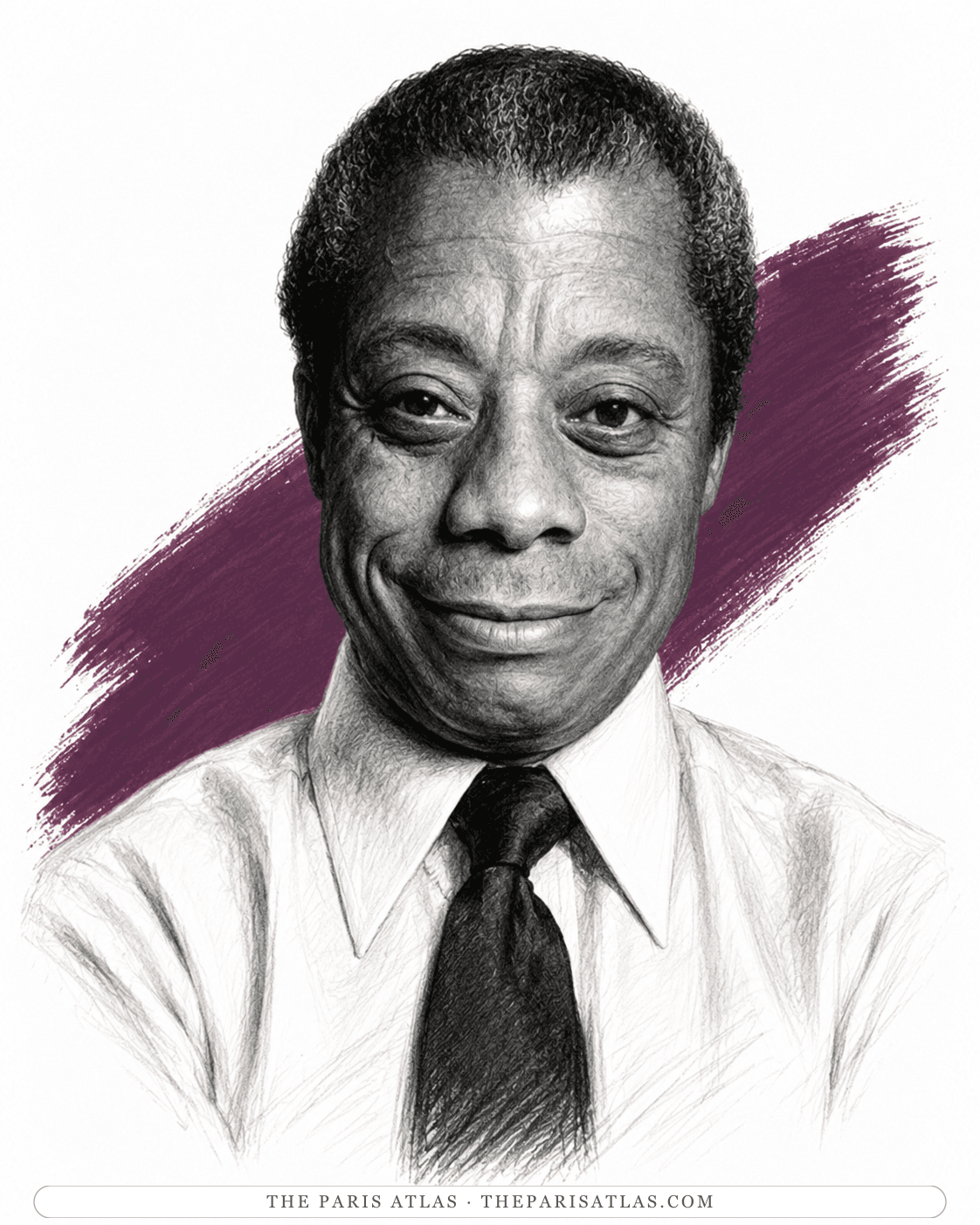

Elijah Muhammad
- Religious leader
Depicts
The long essay pivots on an evening at Muhammad's Chicago house — Baldwin's first-hand account of the Nation of Islam's leader at his own table.

Two letters written for the centenary of emancipation: one to a fifteen-year-old nephew, one about the night Baldwin had dinner with Elijah Muhammad.
James Baldwin's third book of essays, published by Dial Press in 1963 and the one that made him famous outside literary circles. It holds two pieces. The first is a short letter to his nephew James, written on the hundredth anniversary of the Emancipation Proclamation. The second, four times longer, moves from Baldwin's Harlem boyhood through the three years he spent as a teenage Pentecostal preacher to an evening in Chicago at the house of Elijah Muhammad, leader of the Nation of Islam. It is about a hundred and twenty pages, and it is the Baldwin most people have read.
Both essays appeared in magazines first. "My Dungeon Shook" ran in The Progressive in December 1962. The longer one ran in The New Yorker on 17 November 1962 under the title "Letter from a Region in My Mind", and took up most of the issue. Baldwin renamed it "Down at the Cross" for the book.
The timing was not incidental. Both were written for the centenary of the Emancipation Proclamation, which Abraham Lincoln issued on 1 January 1863, and both are addressed to a country that Baldwin thought was congratulating itself a hundred years early.
The book arrived in the middle of the years it describes. Six months after publication, on 17 May 1963, Baldwin was on the cover of Time, photographed during a speaking tour for the Congress of Racial Equality that followed the police response to the Birmingham demonstrations. The cover line was "The Root of the Negro Problem". He was thirty-eight.
The discarded drafts at the start of “My Dungeon Shook” make the letter an effort to find words adequate to someone Baldwin loves. Looking at his nephew, he also sees his brother and their father; remembered faces give the family a depth that racial labels cannot contain. The address keeps returning to this particular boy even as Baldwin imagines a wider audience objecting to his account. His authority rests on having witnessed these lives, not on speaking from a safe distance. The tenderness of that knowledge makes the national accusation more forceful, rather than softening it.
At Elijah Muhammad's table, Baldwin's inward hesitations interrupt the men's spoken chorus of agreement. The warmth of the household is real to him, but so is its expectation that he will join. Memories of his father register the appeal of this authority without settling the question of belief. The scene makes disagreement intimate: he must preserve his judgment while recognizing the pain and desire for belonging that draw him toward his hosts.
Take no one’s word for anything, including mine—but trust your experience. Know whence you came. If you know whence you came, there is really no limit to where you can go.
If the concept of God has any validity or any use, it can only be to make us larger, freer, and more loving. If God cannot do this, then it is time we got rid of Him.
Love takes off the masks that we fear we cannot live without and know we cannot live within. I use the word “love” here not merely in the personal sense but as a state of being, or a state of grace—not in the infantile American sense of being made happy but in the tough and universal sense of quest and daring and growth.
Baldwin's reputation rests more on the essays than the novels, and this is the shortest way into them. It can be read in an evening.
The account of preaching at fourteen — what the pulpit gave him, and what he came to think it cost — is the best thing he wrote about his own childhood, and nothing else in his work covers it as directly.
Baldwin was a respected writer before 1963 and a national one afterwards. If you want to understand why he was on television for the next twenty years, the answer is in this book.
Depicts
The long essay pivots on an evening at Muhammad's Chicago house — Baldwin's first-hand account of the Nation of Islam's leader at his own table.
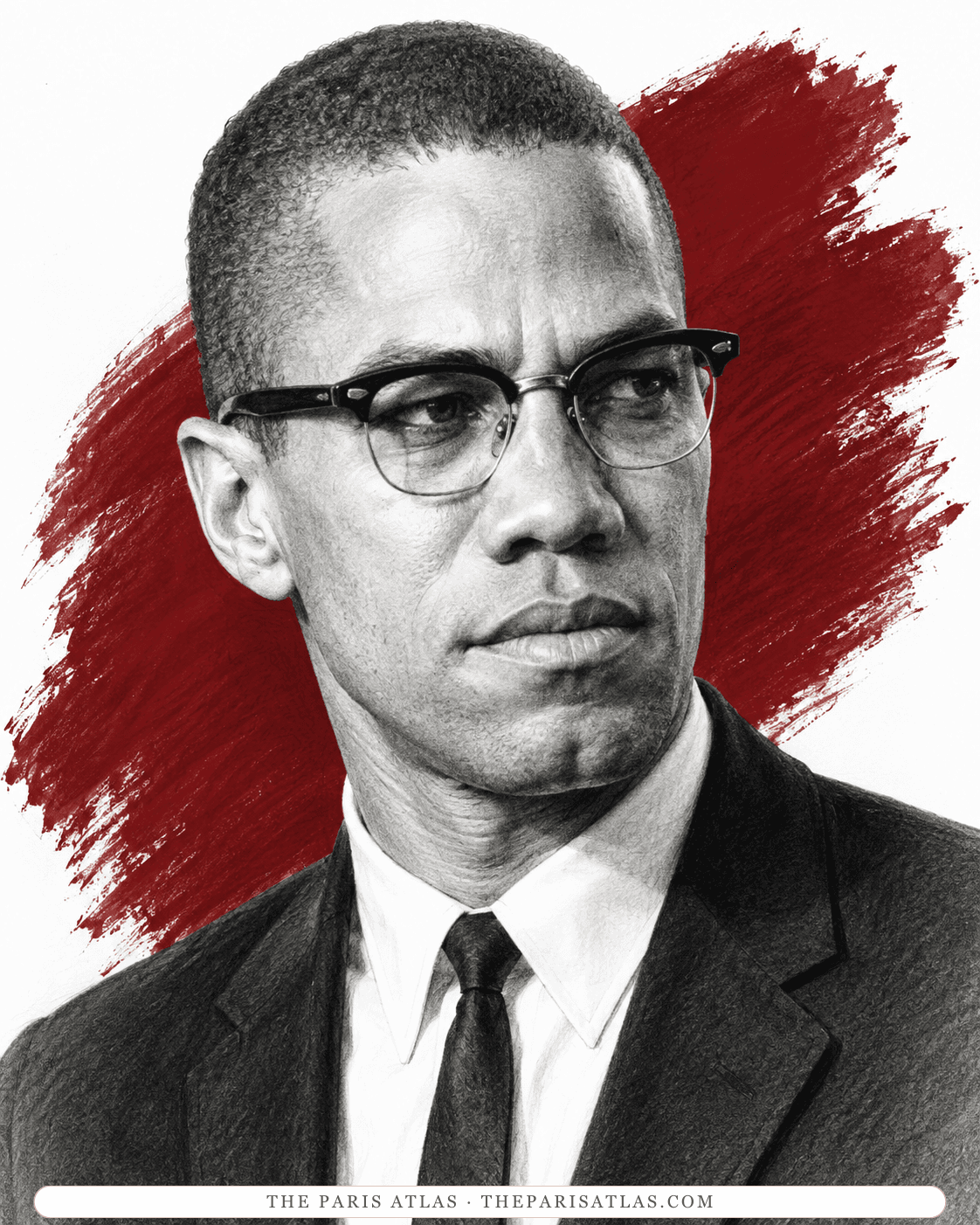
Depicts
"Down at the Cross" engages Malcolm X directly: Baldwin weighs his argument that white America respects only violence, finds he cannot call it untrue, and refuses where it leads. It was a television appearance alongside Malcolm X that brought Baldwin the dinner invitation from Elijah Muhammad at the essay's center.
About ten pages, addressed to his nephew James, then fifteen. It first ran in The Progressive in December 1962.
The long one. Harlem, the three years he spent preaching in a Pentecostal church from the age of fourteen, and an evening at Elijah Muhammad's house in Chicago. It filled most of an issue of The New Yorker in November 1962.
1938
Baldwin, fourteen, begins preaching at a Harlem Pentecostal church.
1962
"Letter from a Region in My Mind" fills most of The New Yorker's 17 November issue.
1962
"My Dungeon Shook" appears in The Progressive in December.
1963
Dial Press publishes both essays together as The Fire Next Time, for the centenary of the Emancipation Proclamation.
1963
Time puts Baldwin on its 17 May cover while he tours for the Congress of Racial Equality.
1992
Vintage International issues the paperback that is now standard.


The first collection, eight years earlier, and the other essential one.
Read our take
The collection in between, and the book where he works out the argument this one delivers.
Read our take
The novel about the same Harlem church, written ten years before he wrote about it as himself.
Read our takeTwo essays by James Baldwin, published in 1963. The first is a letter to his fifteen-year-old nephew, written for the hundredth anniversary of the Emancipation Proclamation. The second is a longer piece about growing up in Harlem, the three years Baldwin spent preaching in a Pentecostal church as a teenager, and an evening he spent at the Chicago home of Elijah Muhammad, who led the Nation of Islam.
About 128 pages in the standard Vintage International edition, which makes it the shortest of Baldwin's major books. Most readers finish it in one or two sittings.
From a spiritual: "God gave Noah the rainbow sign / No more water, the fire next time." Baldwin quotes the lines in the closing sentences of the book. The reference is to the covenant after the flood in Genesis, and to what is promised instead of another flood.
It is the most common place to start, and a reasonable one, because it is short and it is his best-known book. Notes of a Native Son is the fuller introduction to him as an essayist. Either works; this one asks less of your evening.
Yes, and the meeting is described at length in "Down at the Cross". Baldwin was invited to dinner at Elijah Muhammad's house in Chicago and writes about the evening in detail — the formality of the household, the questions put to him, and his own inability to give the answers his host wanted.
"Down at the Cross" ran in The New Yorker on 17 November 1962 under a different title, "Letter from a Region in My Mind", and took up most of the issue. "My Dungeon Shook" ran in The Progressive the following month.
Explore authors with a similar voice, perspective, and influence.

The doctor of the Paris slums who wrote the century's blackest, funniest novel — and changed the sound of French prose.
View author
The Brooklyn dropout who arrived in Paris broke at thirty-eight and wrote the exuberant, banned books that ended American censorship.
View author
Author of The Sun Also Rises and A Moveable Feast; his pared-down style, developed in 1920s Paris, became the most imitated in American prose.
View authorThe sources below include the primary text, editions, scholarship, archival materials, and other records that informed this page. They document The Fire Next Time, its publication, and its place in literary history.


Published analysis and historical context used in preparing the The Fire Next Time page.
Used for archival and bibliographic context surrounding The Fire Next Time within Baldwin's papers and career.

Used for independent biographical and publication context for The Fire Next Time.
Used to connect The Fire Next Time to Baldwin's transatlantic life and intellectual development.
Used to verify James Baldwin's bibliography and place The Fire Next Time within the broader chronology of James Baldwin's career.
Complete displayed letter, reprinted with Vintage's permission via NPR/VPM; the added paragraph concentrates on its opening and address. No original-edition collation is claimed.
Primary excerpt; limited reading.
Publisher's contents confirm both essays in The Fire Next Time.
The primary text is the baseline reference for every book page. Additional references document publication history, interpretation, and historical context where that evidence is available.
 Explore more resources