The Paris AtlasCharting the artists, works, and places worth returning to.
  • Activist
  • Religious leader
  • Author
· American · 1925–1965

Malcolm X

Minister of the Nation of Islam and then a movement of his own, assassinated at the Audubon Ballroom in 1965. James Baldwin knew him, debated him publicly, wrote his life as a screenplay in One Day When I Was Lost, and counted his murder among the three that shape No Name in the Street.

1 book on our shelves

Details

Lived
1925–1965
Born
19 May 1925
Birthplace
Omaha, Nebraska
Died
21 February 1965 · aged 39
Place of death
New York City
Nationality
American
Married
Betty Shabazz · 1958–1965
Roles
ActivistReligious leaderAuthor
Also known as
Malcolm Little · el-Hajj Malik el-Shabazz

About Malcolm X

Malcolm X was the Nation of Islam's most visible minister, and in the last year of his life the leader of a movement of his own. He was assassinated at the Audubon Ballroom in Harlem on 21 February 1965, at thirty-nine. James Baldwin knew him, debated him publicly, and kept writing about him after his death — most directly in One Day When I Was Lost, the screenplay Columbia Pictures hired Baldwin to draw from The Autobiography of Malcolm X.

He carried four names in sequence, and each marks a stage of the life:

  • Malcolm Little, the name he was born with in Omaha in 1925
  • Detroit Red, the street name of the Harlem hustling years
  • Malcolm X, taken in 1950 — the X standing for the African family name slavery erased
  • el-Hajj Malik el-Shabazz, the name he took after the pilgrimage to Mecca in 1964

Early life

Malcolm Little was born on 19 May 1925 in Omaha, Nebraska, a son of Earl and Louise Little. Earl Little was a Baptist lay preacher and an organizer for Marcus Garvey's Universal Negro Improvement Association, and the family moved repeatedly under threat — Malcolm's earliest memory, as the Autobiography tells it, was of the family house in Lansing, Michigan burning. Earl Little died under a streetcar in 1931. The death was ruled an accident; Louise Little believed he had been killed by the Black Legion, a white terrorist group active in Michigan, and the question was never settled.

The family did not survive the loss. Louise Little was committed to the Kalamazoo State Hospital in 1938 and her children were separated into foster homes. Malcolm left Michigan for Boston at fifteen to live with his half-sister Ella, moved on to Harlem in 1943, and spent the war years hustling — numbers running, burglary, the work he later itemized in the Autobiography with a bookkeeper's exactness. In 1946, at twenty, he was arrested in Boston after leaving a stolen watch for repair, and sentenced to eight to ten years for larceny and breaking and entering.

Prison and the Nation of Islam

Prison made the second life. His siblings had joined a small movement called the Nation of Islam, and from 1948 Malcolm corresponded with its leader, Elijah Muhammad, converted, and began the self-education in the prison library that the Autobiography describes — copying out a dictionary page by page. In 1950 he began signing himself Malcolm X. Paroled in 1952, he rose fast: by May 1954 he was minister of Temple No. 7 in Harlem, the Nation's most important post outside Chicago.

Over the next decade he built the Nation from a few thousand members into a national movement, founded its newspaper Muhammad Speaks, and became its public face — a debater of unusual speed and discipline who took on journalists, academics, and civil rights leaders on their own terms. A 1959 television documentary, The Hate That Hate Produced, made him famous outside the movement. In January 1958 he married Betty Sanders, later Betty Shabazz; they had six daughters.

The break

The rupture with Elijah Muhammad came in stages. In December 1963, after Malcolm described President Kennedy's assassination as "chickens coming home to roost," Muhammad silenced him for ninety days. Behind the discipline lay deeper trouble: Malcolm had learned that Muhammad had fathered children with several of his young secretaries, the kind of violation the Nation's own moral code made unforgivable. On 8 March 1964 he announced his departure and founded Muslim Mosque, Inc., followed by the secular Organization of Afro-American Unity.

In April 1964 he made the pilgrimage to Mecca, converted to Sunni Islam, and took the name el-Hajj Malik el-Shabazz. The hajj — praying alongside Muslims of every color — moderated the strict separatism he had preached for the Nation, and he spent much of his final year traveling in Africa and Europe. The Nation treated him as a traitor. His house in East Elmhurst, Queens was firebombed on 14 February 1965, a week before he was killed.

The assassination

On 21 February 1965, as he began a speech to his Organization of Afro-American Unity at the Audubon Ballroom in Washington Heights, three men shot him — a shotgun blast to the chest first, then pistol fire. He was pronounced dead that afternoon at Columbia Presbyterian Hospital, across the street. Three members of the Nation of Islam were convicted in 1966. Two of them, Muhammad Abdul Aziz and Khalil Islam, were exonerated in 2021, after a review found that the FBI and the New York police had withheld evidence pointing away from them; only Talmadge Hayer, who confessed at trial, is still held to have fired.

At the funeral the actor Ossie Davis delivered the eulogy that named him "our own black shining prince." He is buried at Ferncliff Cemetery in Hartsdale, New York, under the name el-Hajj Malik el-Shabazz. The Autobiography, told to Alex Haley across the last two years of his life, appeared that October — Doubleday dropped it after the murder, and Grove Press published it.

Malcolm X and James Baldwin

Baldwin and Malcolm X met on the air — they debated on television and radio in the early 1960s, and it was a joint appearance with Malcolm that earned Baldwin his dinner invitation to Elijah Muhammad's Chicago mansion, the evening at the center of The Fire Next Time. Baldwin was in London when he learned of the assassination, and reporters recorded his fury.

The deaths of Malcolm X, Medgar Evers, and Martin Luther King Jr. became the frame of Baldwin's late nonfiction. No Name in the Street is built around the three murders; the unfinished manuscript about the three men, Remember This House, became the 2016 documentary I Am Not Your Negro. And in 1968 Columbia Pictures hired Baldwin to write the Malcolm X film — the commission he abandoned and published in 1972 as One Day When I Was Lost.

Life events

  1. 1925

    Born Malcolm Little in Omaha, Nebraska, on 19 May.

  2. 1931

    His father Earl Little dies under a streetcar in Lansing, Michigan. The death is ruled an accident; his mother believes he was killed by the Black Legion.

  3. 1946

    Sentenced in Boston to eight to ten years for larceny and breaking and entering. In prison he converts to the Nation of Islam.

  4. 1950

    Begins signing his name Malcolm X.

  5. 1954

    Appointed minister of the Nation of Islam's Temple No. 7 in Harlem.

  6. 1958

    Marries Betty Sanders, later Betty Shabazz. They have six daughters.

  7. 1964

    Leaves the Nation of Islam in March, makes the pilgrimage to Mecca in April, and takes the name el-Hajj Malik el-Shabazz.

  8. 1965

    Assassinated at the Audubon Ballroom in Harlem on 21 February. The Autobiography of Malcolm X, told to Alex Haley, is published that October.

  9. 1972

    James Baldwin publishes One Day When I Was Lost, the screenplay Columbia Pictures commissioned from the Autobiography in 1968.

  10. 2021

    Two of the three men convicted of the assassination are exonerated after a review finds the FBI and the New York police withheld evidence.

People they knew

Documented connections — every one carries its source.

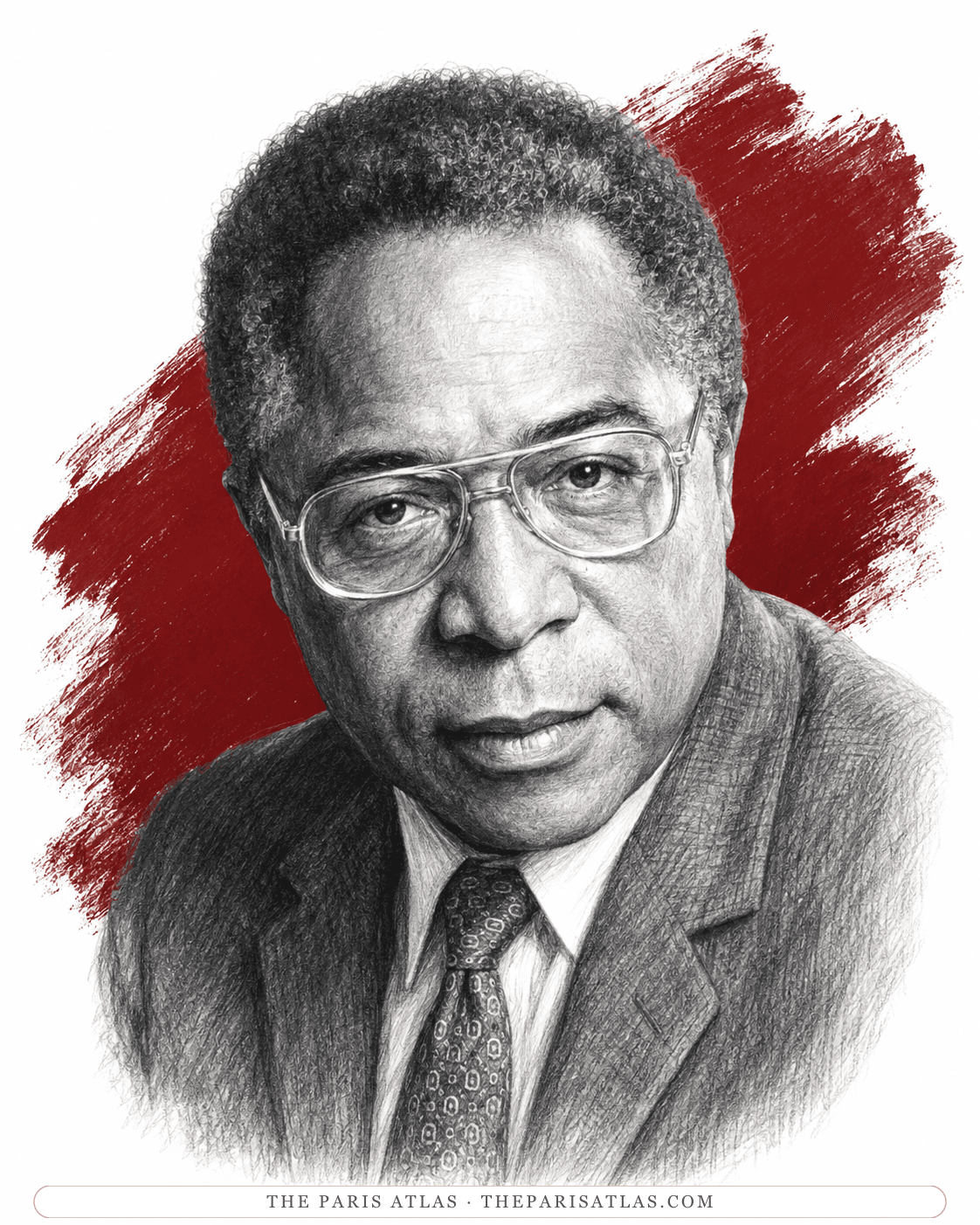
Illustrated portrait of Alex Haley

Alex Haley

  • Author
  • Journalist

Collaborated with · 1963–1965

More than fifty interviews across two years produced The Autobiography of Malcolm X, published nine months after the assassination. Haley's epilogue records the collaboration itself — the guarded early sessions, the chapters corrected in Malcolm X's hand, and the February 1965 phone calls that were their last.
Malcolm X, as told to Alex Haley, The Autobiography of Malcolm X (1965), Epilogue

Books by Malcolm X

Cover of The Autobiography of Malcolm X by Malcolm X

Memoir & autofiction

Malcolm X told his life to Alex Haley across two years of interviews and was murdered before the book appeared. It is the source James Baldwin was hired to turn into a film.

4.6

In works

Works in these pages connected to Malcolm through the claims of the graph.

Cover of No Name in the Street by James Baldwin

Depicted in · Book

No Name in the Street

James Baldwin · 1972

One of the three murdered men the memoir is built around — Baldwin knew all three.

James Baldwin, No Name in the Street (1972)

Cover of One Day When I Was Lost by James Baldwin

Depicted in · Book

One Day When I Was Lost

James Baldwin · 1972

The scenario follows Malcolm X from a Lansing childhood through Harlem, prison, the Nation of Islam, Mecca, and the assassination at the Audubon Ballroom.

James Baldwin, One Day When I Was Lost (1972)

Cover of The Autobiography of Malcolm X by Malcolm X

Depicted in · Book

The Autobiography of Malcolm X

Malcolm X · 1965

His own life, told to Alex Haley across more than fifty interviews between 1963 and 1965: Malcolm Little of Omaha and Lansing, Detroit Red of Harlem, the prison conversion, the ministry, the break with the Nation of Islam, and the pilgrimage to Mecca. He read and corrected chapters as they were drafted but did not live to see the book published.

Malcolm X, as told to Alex Haley, The Autobiography of Malcolm X (1965)

Cover of The Fire Next Time by James Baldwin

Depicted in · Book

The Fire Next Time

James Baldwin · 1963

"Down at the Cross" engages Malcolm X directly: Baldwin weighs his argument that white America respects only violence, finds he cannot call it untrue, and refuses where it leads. It was a television appearance alongside Malcolm X that brought Baldwin the dinner invitation from Elijah Muhammad at the essay's center.

James Baldwin, The Fire Next Time (1963), Down at the Cross

Questions about Malcolm X

How did Malcolm X die?

He was assassinated on 21 February 1965, shot as he began a speech at the Audubon Ballroom in Harlem — a shotgun blast to the chest followed by pistol fire. He was thirty-nine. Three Nation of Islam members were convicted in 1966; two of them were exonerated in 2021.

What was Malcolm X's real name?

He was born Malcolm Little in Omaha, Nebraska in 1925. He replaced Little with X in 1950, the X standing for the African family name erased by slavery, and after his pilgrimage to Mecca in 1964 he took the name el-Hajj Malik el-Shabazz, which is on his grave.

Why did Malcolm X leave the Nation of Islam?

He announced his departure on 8 March 1964. The public occasion was his ninety-day silencing over remarks on President Kennedy's assassination, but he had also learned that Elijah Muhammad had fathered children with several of his secretaries, and after the pilgrimage to Mecca he rejected the Nation's separatist theology for Sunni Islam.

Did Malcolm X know James Baldwin?

Yes. James Baldwin, the novelist and essayist, debated him on television and radio in the early 1960s and wrote about him for the rest of his own life — in No Name in the Street, in the screenplay One Day When I Was Lost, and in the unfinished Remember This House that became the documentary I Am Not Your Negro.

Who wrote The Autobiography of Malcolm X?

Malcolm X told his life to the journalist Alex Haley in more than fifty interviews between 1963 and 1965; the title page credits the book to Malcolm X, as told to Alex Haley. It was published nine months after his death, with Haley's epilogue describing the collaboration and the assassination.

Sourced claims

Every connection the graph holds for Malcolm, with the evidence behind it.

Collaborated with · 1963–1965

Alex Haley

More than fifty interviews across two years produced The Autobiography of Malcolm X, published nine months after the assassination. Haley's epilogue records the collaboration itself — the guarded early sessions, the chapters corrected in Malcolm X's hand, and the February 1965 phone calls that were their last.

Malcolm X, as told to Alex Haley, The Autobiography of Malcolm X (1965), Epilogue

Depicted in

No Name in the Street

One of the three murdered men the memoir is built around — Baldwin knew all three.

James Baldwin, No Name in the Street (1972)

Depicted in

One Day When I Was Lost

The scenario follows Malcolm X from a Lansing childhood through Harlem, prison, the Nation of Islam, Mecca, and the assassination at the Audubon Ballroom.

James Baldwin, One Day When I Was Lost (1972)

Depicted in

The Autobiography of Malcolm X

His own life, told to Alex Haley across more than fifty interviews between 1963 and 1965: Malcolm Little of Omaha and Lansing, Detroit Red of Harlem, the prison conversion, the ministry, the break with the Nation of Islam, and the pilgrimage to Mecca. He read and corrected chapters as they were drafted but did not live to see the book published.

Malcolm X, as told to Alex Haley, The Autobiography of Malcolm X (1965)

Depicted in

The Fire Next Time

"Down at the Cross" engages Malcolm X directly: Baldwin weighs his argument that white America respects only violence, finds he cannot call it untrue, and refuses where it leads. It was a television appearance alongside Malcolm X that brought Baldwin the dinner invitation from Elijah Muhammad at the essay's center.

James Baldwin, The Fire Next Time (1963), Down at the Cross