The Paris AtlasCharting the artists, works, and places worth returning to.

Publisher · 1947–present

Présence Africaine

The review Alioune Diop founded in 1947 became the publishing house of the Black world — and it is still selling books on the rue des Écoles.

Founder
Alioune Diop
Where
Paris, France

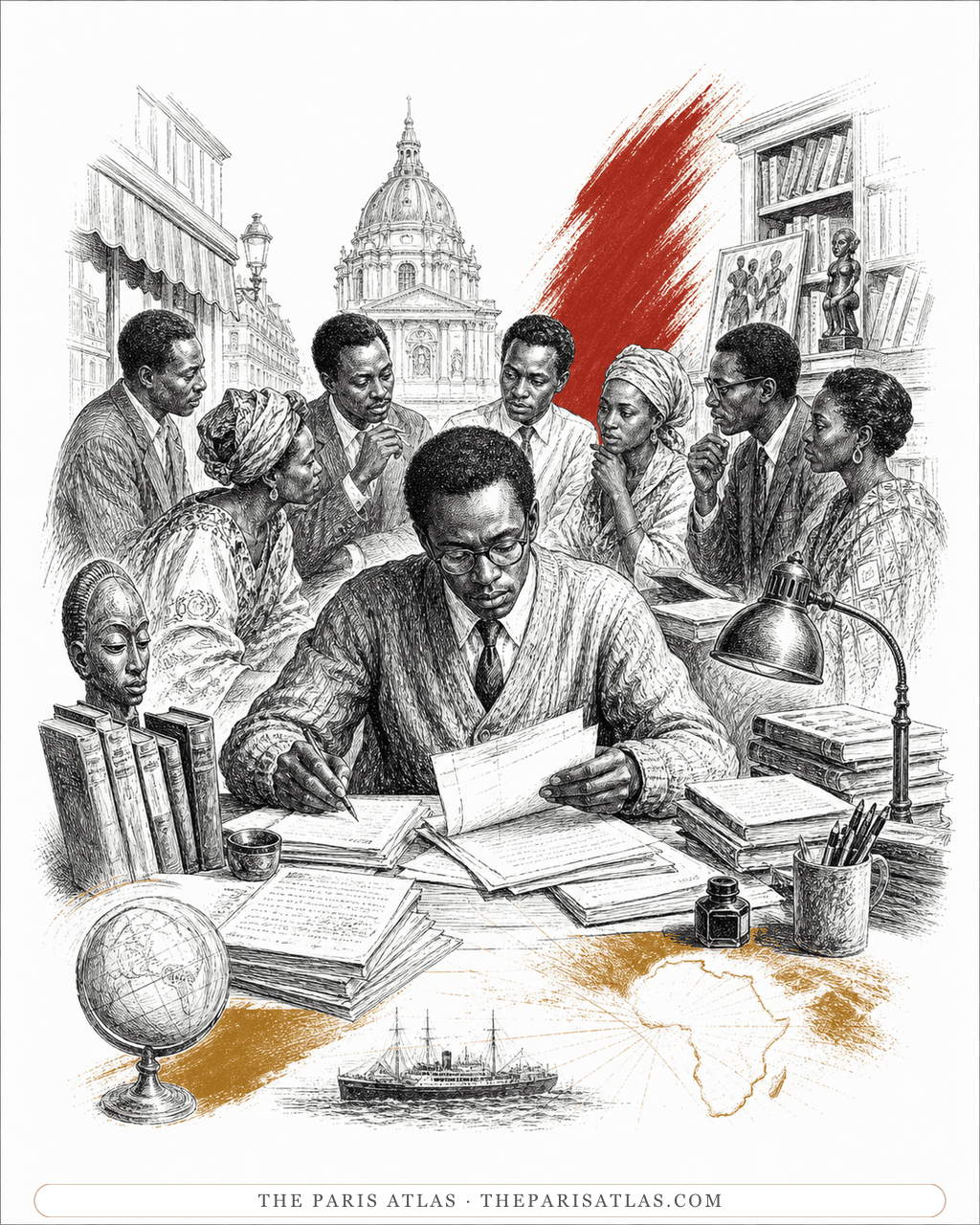
Présence Africaine began as a quarterly review. Alioune Diop, a Senegalese intellectual teaching in Paris, founded it in 1947 to give African writing and thought a journal of record in the French capital, and he launched it with a patronage committee built for protection as much as prestige: Richard Wright, Léopold Sédar Senghor, Aimé Césaire, André Gide, Jean-Paul Sartre, and Albert Camus among them. The first issue appeared in November 1947.

In 1949 the review grew into a publishing house, and the house became the address of a movement. Présence Africaine published the books through which Négritude and African scholarship reached print in France: Cheikh Anta Diop's Nations nègres et culture in 1954, the definitive edition of Aimé Césaire's Discourse on Colonialism in 1955, and the work of writers from across Africa and its diaspora for decades after.

In September 1956 the house organized the First International Congress of Black Writers and Artists at the Sorbonne — the gathering, sometimes called a cultural Bandung, where Wright, Senghor, Césaire, and Frantz Fanon all spoke. It is the event that fixes the organization in this atlas: the American novelist on the patronage committee had helped will into being the institution that convened Black letters on the Left Bank.

Alioune Diop ran the house until his death in 1980, when his wife Christiane Yandé Diop took it over. The firm still publishes, and its bookshop at 25 bis rue des Écoles, in the Latin Quarter a few minutes from the Sorbonne, remains open — one of the few institutions of postwar Black Paris a visitor can still walk into.

The addresses

  1. 25 bis rue des Écoles, 75005 Parisopen today

    The bookshop, in the Latin Quarter near the Sorbonne.

Timeline

  1. 1947

    Alioune Diop founds the review in Paris; the first issue appears in November, with a patronage committee including Richard Wright, Senghor, Césaire, Gide, Sartre, and Camus.

  2. 1949

    The review becomes a publishing house.

  3. 1954

    Publishes Cheikh Anta Diop's Nations nègres et culture.

  4. 1955

    Publishes the definitive edition of Aimé Césaire's Discourse on Colonialism.

  5. 1956

    Organizes the First International Congress of Black Writers and Artists at the Sorbonne, 19–22 September.

  6. 1980

    Alioune Diop dies; Christiane Yandé Diop takes over the house and runs it for decades.

  7. Today

    Still publishing, with the bookshop open at 25 bis rue des Écoles in the Latin Quarter.

The people

Richard Wright

Founding patron

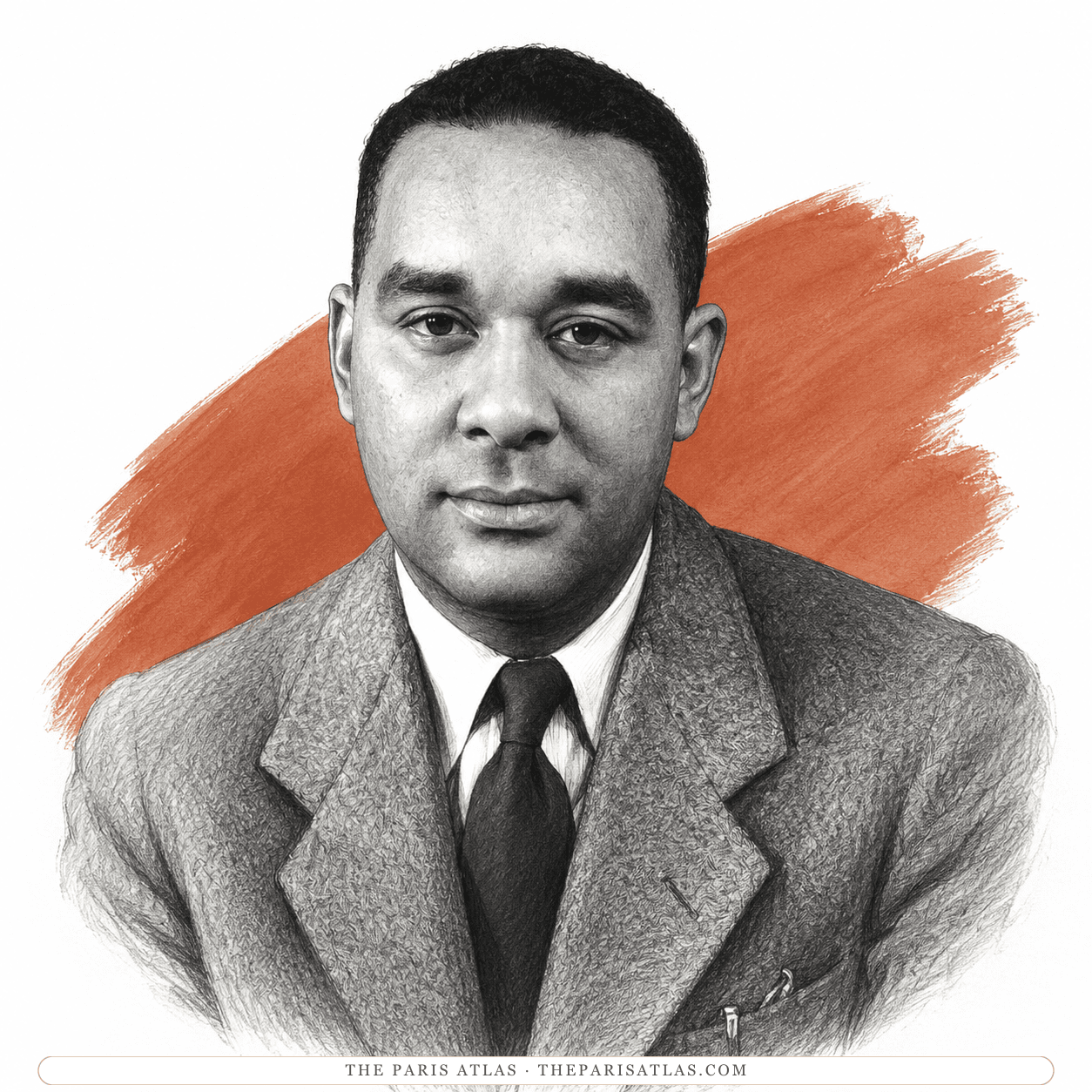
The most famous Black writer in America sat on the review's founding patronage committee from 1947 and spoke at its 1956 Congress at the Sorbonne.

Visit their page

Notable works

  • Nations nègres et culture(1954)

    Cheikh Anta Diop

    The historian's argument for Africa's place at the origin of civilization — the house's landmark work of scholarship.

  • Discourse on Colonialism(1955)

    Aimé Césaire

    The definitive edition of Césaire's indictment of colonial Europe, first drafted in 1950.

  • Présence Africaine (the review)(1947)

    Founded by Alioune Diop

    The quarterly itself — the journal of record for African and diaspora writing in postwar Paris.

Sourced claims

Every connection the graph holds for Présence Africaine, with the evidence behind it.

Members included · 1947

Richard Wright

Wright sat on the founding patronage committee Alioune Diop assembled for the review in 1947, alongside Senghor, Césaire, Gide, Sartre, and Camus, and spoke at the house's 1956 Congress of Black Writers and Artists at the Sorbonne.


Présence Africaine; Présence Africaine — a Black Paris Icon

Members included · 1947

Albert Camus

Camus sat on the founding patronage committee Alioune Diop assembled for the Présence Africaine review in 1947. The connection is institutional and documented; it does not imply agreement with every later position of the journal or its contributors.

Présence Africaine; Présence Africaine — a Black Paris Icon

The Paris ecosystem

More presses, magazines & shops

The Friday Letter

The history behind the books, every Friday.

Presses, magazines, bookshops, and the writers who haunted them — one story from the Paris ecosystem in every letter.

One email a week. No spam, no selling your address. Unsubscribe anytime.