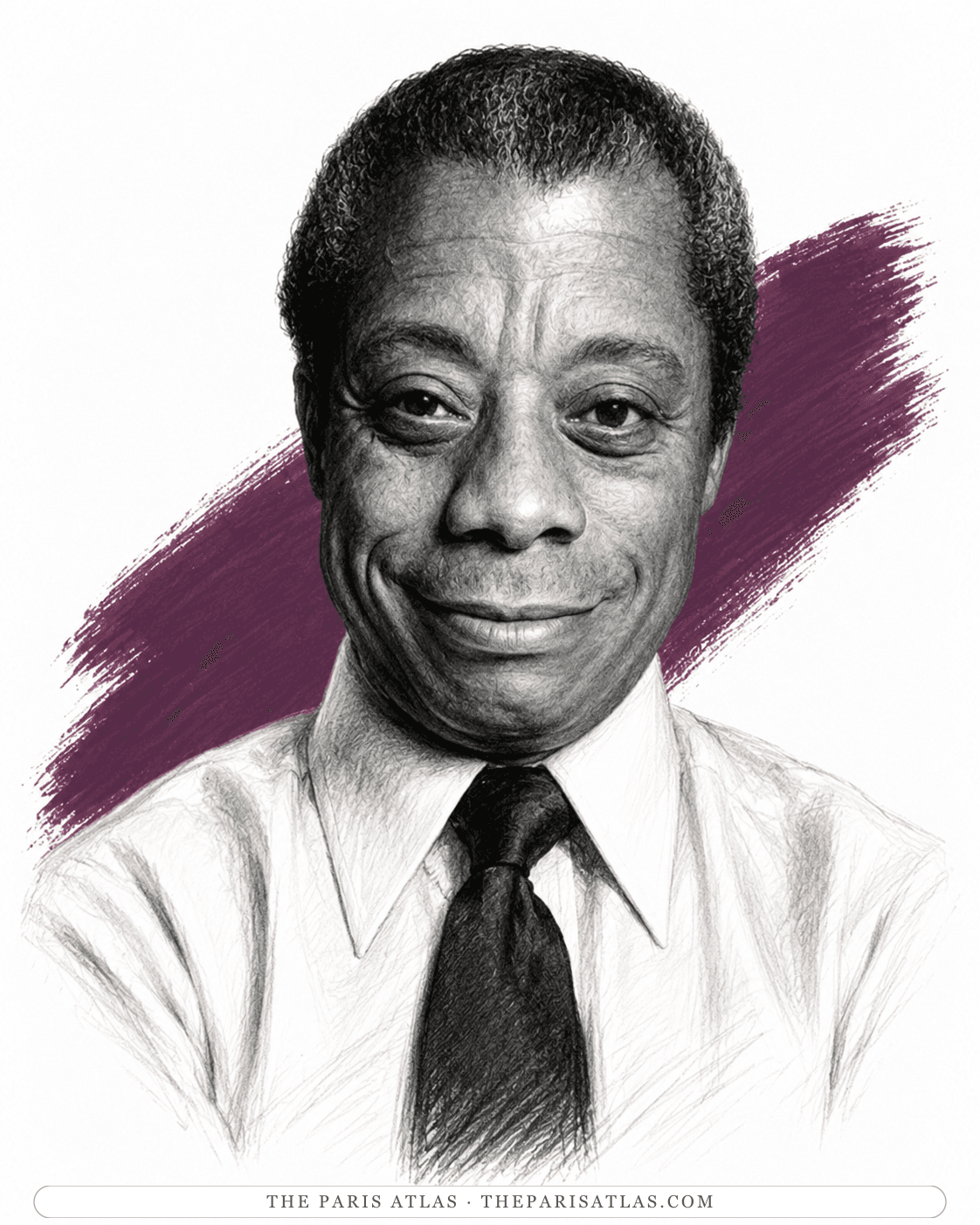

Elijah Muhammad
- Religious leader
Depicts
The break between Muhammad and Malcolm X is what the script has to dramatise; Baldwin knew the material first-hand from the evening recounted in The Fire Next Time.

The Malcolm X film Columbia Pictures hired James Baldwin to write and never made. He published the screenplay as a book instead.
A film script, published as a book. Columbia Pictures brought Baldwin to Los Angeles in 1968 to adapt The Autobiography of Malcolm X, the 1965 book Malcolm X dictated to Alex Haley. The studio paired Baldwin with the screenwriter Arnold Perl, the script went through revisions Baldwin did not want, and he walked away. He printed his own version: Michael Joseph published it in London in 1972 and Dial Press in New York in 1973. No film was made from it in his lifetime.
It is written as a scenario rather than a treatment or a novel — numbered scenes, camera directions, dialogue. Baldwin follows Malcolm X from a Lansing childhood and his father's death through the Harlem hustling years, prison, the Nation of Islam, the break with Elijah Muhammad, Mecca, and the assassination at the Audubon Ballroom in February 1965.[1]
Baldwin had met Malcolm X and had debated him publicly. He also knew the material of the last section from his own reporting: The Fire Next Time, published two years before the assassination, contains his account of an evening at Elijah Muhammad's house.[1]
Arnold Perl died in 1971. The Baldwin and Perl draft survived, and when Spike Lee made Malcolm X in 1992 it was the basis he started from. The credited writers on that film are Arnold Perl and Spike Lee; Baldwin's estate asked for his name to be taken off.[1]
Baldwin wrote about the Hollywood years afterwards in The Devil Finds Work, which is the account of what the studio wanted and what he thought it was for.[1]
In Mikko Tuhkanen's reading, Luther's prison advice turns time from something Malcolm endures into something he can deliberately use. That distinction gives the study pictured here a wider significance: education involves reorganizing a life, not simply collecting information. Yet the screenplay does not make discipline an uncomplicated answer. Its recurring watches connect self-command with other people's demands, and Malcolm later challenges the wealth his work has brought Luther. Learning becomes a beginning from which he can also question the person who first guided him.
Fellowship here can be read as a change in what Malcolm has time to notice. Tuhkanen connects the screenplay's overseas turn to the distance needed to reconsider assumptions formed in America. Betty recognizes that leaving has made a different view possible. The movement is therefore not simply from one fixed conviction to another: it creates room for reflection. Read beside that argument, the imagined gathering suggests an encounter that interrupts a ready-made division of people, allowing attention to precede judgment.
Most people know Malcolm X on film through Spike Lee. This is the script that came first and did not get made, by a writer who had argued with the man in person.
No narrator, no essayist's voice, no paragraphs. Just scenes and dialogue, which makes it the fastest thing in his bibliography to read.
That book is Baldwin explaining what happened in Hollywood. This is the object the argument is about.
Depicts
The break between Muhammad and Malcolm X is what the script has to dramatise; Baldwin knew the material first-hand from the evening recounted in The Fire Next Time.
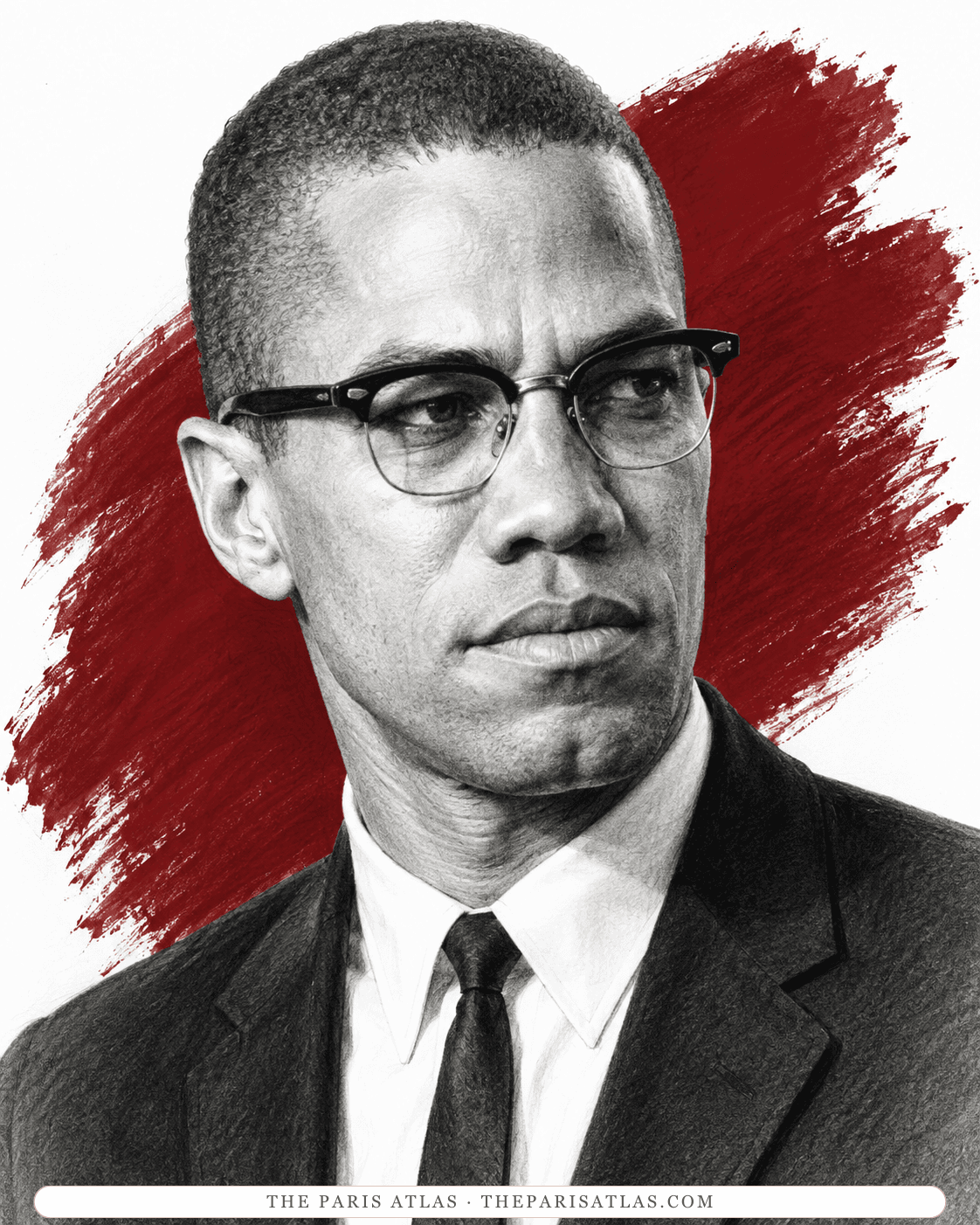
Depicts
The scenario follows Malcolm X from a Lansing childhood through Harlem, prison, the Nation of Islam, Mecca, and the assassination at the Audubon Ballroom.
1965
Malcolm X is assassinated in February; The Autobiography of Malcolm X, dictated to Alex Haley, is published later that year.
1968
Columbia Pictures hires Baldwin to adapt it and pairs him with the screenwriter Arnold Perl.
1972
Michael Joseph publishes the scenario in London after Baldwin leaves the project. Perl had died the year before.
1973
Dial Press publishes the American edition.
1992
Spike Lee's Malcolm X, built on the Baldwin and Perl draft, credits Perl and Lee. Baldwin's estate asks that his name be removed.


Where Baldwin writes about the Hollywood years and this commission directly.
Read our take
The book from the same year, which covers the assassinations of the 1960s as he lived through them.
Read our take
Contains his account of meeting Elijah Muhammad, the break the script has to dramatise.
Read our takeIt is a film script by James Baldwin, adapting The Autobiography of Malcolm X. Columbia Pictures commissioned it in 1968 and never made the film. Baldwin published the screenplay as a book in 1972, and it is printed as a screenplay — numbered scenes, camera directions, dialogue.
Not from this script. Spike Lee's Malcolm X came out in 1992 and used the draft Baldwin had written with Arnold Perl as its starting point, but the film went through further rewriting. Perl and Lee are the credited writers, and Baldwin's estate asked that his name be taken off.
A screenwriter Columbia assigned to work alongside Baldwin on the adaptation. His changes were among the reasons Baldwin abandoned the project. Perl died in 1971, a year before the scenario was published.
Yes. They met and debated publicly, and Baldwin wrote about the Nation of Islam from close range — The Fire Next Time, published in 1963, describes an evening he spent at Elijah Muhammad's house in Chicago.
A gospel refrain: "One day when I was lost, He died upon the cross." Baldwin, who preached as a teenager, took most of his titles from scripture or from spirituals.
It is 288 pages of scenes and dialogue and goes quickly, but it was written to be filmed rather than read. If you want Baldwin on this period in his own voice, The Devil Finds Work is the book.
Explore authors with a similar voice, perspective, and influence.

The doctor of the Paris slums who wrote the century's blackest, funniest novel — and changed the sound of French prose.
View author
The Brooklyn dropout who arrived in Paris broke at thirty-eight and wrote the exuberant, banned books that ended American censorship.
View author
Author of The Sun Also Rises and A Moveable Feast; his pared-down style, developed in 1920s Paris, became the most imitated in American prose.
View authorThe sources below include the primary text, editions, scholarship, archival materials, and other records that informed this page. They document One Day When I Was Lost, its publication, and its place in literary history.


Used for archival and bibliographic context surrounding One Day When I Was Lost within Baldwin's papers and career.

Used for independent biographical and publication context for One Day When I Was Lost.
Used to connect One Day When I Was Lost to Baldwin's transatlantic life and intellectual development.
Used to verify James Baldwin's bibliography and place One Day When I Was Lost within the broader chronology of James Baldwin's career.
Attributed critical readings, pp. 103–107 and 114.
The primary text is the baseline reference for every book page. Additional references document publication history, interpretation, and historical context where that evidence is available.
 Explore more resources