The Paris AtlasCharting the artists, works, and places worth returning to.

Malcolm X Speaks

Selected Speeches and Statements

by Malcolm X

The speeches of Malcolm X's last year, gathered by George Breitman and published within months of the assassination. "The Ballot or the Bullet" is here, and so is his answer to a question in Paris.

Published
1965Posthumous
Pages
242
Shelf rating
4.4

About Malcolm X

Illustrated portrait of Malcolm X
Malcolm X

5 books shelved

The story, briefly

Spoiler-free

Malcolm X Speaks collects fifteen speeches, letters and interviews, almost all from the last year of Malcolm X's life. The editor, George Breitman, was a founding member of the Socialist Workers Party, and Merit Publishers in New York brought the book out in 1965.[1][2] The book runs from "Message to the Grass Roots" in Detroit in November 1963 to interviews given in February 1965, the month he was killed. "The Ballot or the Bullet", given in Cleveland on 3 April 1964, is the third chapter.[3] Breitman wrote a short note before each piece giving the date, the place and the audience.

The story, in more detail

Malcolm X left the Nation of Islam in March 1964 and was shot dead on 21 February 1965. Almost everything in Malcolm X Speaks comes from the eleven months in between. The one exception is the opening speech, "Message to the Grass Roots", given in Detroit on 10 November 1963, while he was still Elijah Muhammad's minister.[3]

The fifteen chapters follow the calendar. After Detroit come his declaration of independence in New York in March 1964, "The Ballot or the Bullet" in Cleveland, and "The Black Revolution" in New York. Letters he wrote from Jedda, Lagos and Accra in spring 1964 follow, and then his appeal to African heads of state in Cairo that July. The winter chapters come from meetings at the Audubon Ballroom in Harlem, a meeting with Fannie Lou Hamer, a talk to young people from McComb, Mississippi, and a radio debate. The book ends with "Last Answers and Interviews", short statements from 23 November 1964 to 21 February 1965.[3]

Breitman's foreword says Malcolm X was a speaker first and a writer second. The only pieces in the book he wrote himself are the memorandum he took to Cairo and some letters. Breitman corrected slips of the tongue and small grammatical lapses. He also cut passages repeated from other speeches and marked each cut with three dots.[4] I. F. Stone reviewed the book with the Autobiography in The New York Review of Books on 11 November 1965. He wrote that Malcolm X's call for Black Americans to act together with Africa and the rest of the colored world comes out more sharply here than in the Autobiography.[5]

What's inside

Chapters I to IV, November 1963 to April 1964. "Message to the Grass Roots" (Detroit, 10 November 1963), "A Declaration of Independence" (New York, 12 March 1964), "The Ballot or the Bullet" (Cleveland, 3 April 1964) and "The Black Revolution" (New York, 8 April 1964).[3]

Chapters V to VII, spring and summer 1964. "Letters from Abroad", written from Jedda, Lagos and Accra in April and May. "The Harlem 'Hate-Gang' Scare" (New York, 29 May). "Appeal to African Heads of State", the memorandum he took to the Organization of African Unity meeting in Cairo on 17 July.

Chapters VIII to XII, December 1964 and January 1965. Two meetings at the Audubon Ballroom, a joint appearance with Fannie Lou Hamer, a talk to young people from Mississippi on 31 December, and "Prospects for Freedom in 1965" at the Militant Labor Forum on 7 January.

Chapters XIII to XV, February 1965. "After the Bombing" (Detroit, 14 February), a radio debate on WINS called "Confrontation with an 'Expert'" (18 February), and "Last Answers and Interviews", short statements from 23 November 1964 to 21 February 1965.[3]

Themes and analysis

These readings discuss events throughout the book, including its ending.

Paris in the book

Malcolm X spoke in Paris on 23 November 1964, on his way home from Africa. Le Monde reported the meeting at the Mutualité, where French-speaking Black students questioned him. The last chapter of Malcolm X Speaks starts on that date. One of its short answers is labelled as given at a Présence Africaine meeting in Paris on 23 November 1964. Someone in Paris had asked him about the American presidential election held earlier that month.

His answer was that the system mattered more than the president. He said Lyndon Johnson was acceptable to the world only because Barry Goldwater was the alternative, and he used the image of a fox and a wolf to say so. He added that Johnson had troops in the Congo and South Vietnam while people hoped he was a man of peace.

He tried to go back to Paris on 9 February 1965 and was refused entry at Orly airport. Three pieces in the book deal with that week. Breitman's note before "After the Bombing" says the French government barred him without explanation, and that his house in Queens was firebombed a few hours after he got home.

In the Detroit speech itself, given that same evening, Malcolm X says he had helped Afro-Americans in Paris organize a group in November. The Paris group and the African community there had invited him back to speak. He tells the audience that France, Britain and the United States were all frightened by the idea of Afro-Americans working with Africans.

Four days later, on the WINS radio program Contact, a caller asked him about the refusal. Malcolm X said he had sent a telegram to Secretary of State Dean Rusk demanding an investigation. He blamed Communist trade-union workers in Paris for blocking the halls his hosts tried to book. The French translation of the book, Le Pouvoir noir, was published in Paris the following year.

Who made the book

George Breitman was born in Newark, New Jersey, in 1916 and joined the Trotskyist movement in the 1930s. He was a founding member of the Socialist Workers Party in 1938 and edited its weekly paper, The Militant. From the mid-1950s to the late 1960s he worked as a proofreader and led the party's Detroit branch.

Two of the speeches in the book were given in Detroit, "Message to the Grass Roots" in November 1963 and "After the Bombing" in February 1965. The publisher's acknowledgments credit The Militant for several texts it had printed first. "The Harlem 'Hate-Gang' Scare" and "Prospects for Freedom in 1965" were both given at the Militant Labor Forum in New York.

I. F. Stone noted in 1965 that the book was edited and published by Trotskyists. He thought that was why the international side of Malcolm X's thinking came through more clearly here than in the Autobiography, which Alex Haley wrote down. Breitman went on to edit By Any Means Necessary in 1970 from the same kind of material.

Quotes from Malcolm X Speaks

Quoted verbatim from the text, each line verified against its source.

I'm not going to sit at your table and watch you eat, with nothing on my plate, and call myself a diner.
Malcolm X, "The Ballot or the Bullet", Cleveland, 3 April 1964, in Malcolm X Speaks (1965)
You can't hate Africa and not hate yourself.
Malcolm X, "After the Bombing", Detroit, 14 February 1965, in Malcolm X Speaks (1965)
I don't see any American dream; I see an American nightmare.
Malcolm X, "The Ballot or the Bullet", Cleveland, 3 April 1964, in Malcolm X Speaks (1965)

Why we recommend it

  1. The speeches people quote are here in full

    "The Ballot or the Bullet" and "Message to the Grass Roots" are the two speeches most often quoted from him, and both are complete in this book.

  2. The speeches cover the year the Autobiography rushes

    The Autobiography was dictated while his views were changing. These speeches show what he was telling audiences month by month after he left the Nation of Islam.

  3. Published the year he died

    Merit Publishers brought the book out in 1965, with a note before each piece saying where and when it was given and who was in the room.

  4. The Paris episode in his own words

    The last chapters include his answer to a question at a Paris meeting and his own account of being turned away at Orly.

What this book explores

Bring it to book club

  • "Message to the Grass Roots" comes from before the break with the Nation of Islam. What changes between that speech and "The Ballot or the Bullet" five months later?
  • Breitman left in some of the laughter and interruptions. How does hearing the room change the way the speeches read?
  • I. F. Stone thought this book showed Malcolm X's international thinking better than the Autobiography. Do you agree?
  • In "After the Bombing" Malcolm X links his refusal at Orly to France's fear of Afro-Americans working with Africans. What evidence does he give?

A complete discussion guide is on our editorial calendar. Join the letter to hear when it ships.

Inside the book

Selected works from this book, with notes on each.

Message to the Grass Roots

Detroit, 10 November 1963, at the rally that closed the Northern Negro Grass Roots Leadership Conference, in the King Solomon Baptist Church. Breitman's note calls it the only speech in the book from his years in the Nation of Islam.

The Ballot or the Bullet

Cleveland, 3 April 1964, three weeks after he left the Nation of Islam. The book's third chapter and its best-known speech.

After the Bombing

Detroit, 14 February 1965, hours after his house in Queens was firebombed and days after France refused him entry.

Timeline

  1. 1963

    Malcolm X gives "Message to the Grass Roots" in Detroit on 10 November, while still a minister of the Nation of Islam.

  2. 1964

    He leaves the Nation of Islam in March and gives "The Ballot or the Bullet" in Cleveland on 3 April. On 23 November he speaks in Paris.

  3. 1965

    France refuses him entry at Orly on 9 February. He is shot dead in Harlem on 21 February.

  4. 1965

    Merit Publishers in New York publishes Malcolm X Speaks, edited by George Breitman. I. F. Stone reviews it in The New York Review of Books on 11 November.

  5. 1966

    F. Maspero publishes the French translation, Le Pouvoir noir, in Paris.

  6. 1990

    Grove Weidenfeld issues the Evergreen paperback that stays in print for decades.

  7. 2024

    Grove Press publishes a new edition with an introduction by Ibram X. Kendi.

Book editions

Hardcover
Hardcover
Merit Publishers
1965
First edition, New York, edited with prefatory notes by George Breitman. xiii, 242 pages, illustrated. Library of Congress LCCN 65027410.
Paperback
Paperback
Grove Press
1966
The Grove Press paperback, 226 pages, which carried the book to most readers.
Hardcover edition cover
Hardcover
Pathfinder
1989
ISBN-13
9780873485463
Second cloth edition, xi, 233 pages with 8 pages of plates.
Paperback edition cover
Paperback
Grove Weidenfeld
1990
ISBN-13
9780802132130
First Grove Weidenfeld Evergreen edition, viii, 226 pages. The long-running Grove paperback.
Paperback edition cover
Paperback
Grove Press
2024
ISBN-13
9780802160706
New edition with an introduction by Ibram X. Kendi, 272 pages.
Paperback
Paperback
French
F. Maspero
1966
Translated by
Guillaume Carle
Le Pouvoir noir, Paris, 271 pages, with a preface by Claude Julien. Reissued by Maspero in a small format in 1968.
Paperback edition cover
Paperback
French
La Découverte
2008
ISBN-13
9782707154408
Translated by
Guillaume Carle
Le Pouvoir noir in the La Découverte-poche series, Paris, 264 pages.

Reader reviews

Loading reviews…

Malcolm X Speaks: frequently asked questions

What is Malcolm X Speaks?

A collection of fifteen speeches, letters and interviews by Malcolm X, edited by George Breitman and published by Merit Publishers in New York in 1965. All but the first come from the last year of his life, after he left the Nation of Islam.

Is "The Ballot or the Bullet" in Malcolm X Speaks?

Yes. The speech he gave in Cleveland on 3 April 1964 is the third chapter. "Message to the Grass Roots", from Detroit in November 1963, is the first.

Who was George Breitman?

A writer and editor born in Newark in 1916, a founding member of the Socialist Workers Party and a former editor of its weekly paper, The Militant. He also edited the 1970 collection By Any Means Necessary.

How is it different from The Autobiography of Malcolm X?

The Autobiography is his life story, told to Alex Haley. Malcolm X Speaks prints what he said in public during his last year, speech by speech, with a short note on each. I. F. Stone read the two together in 1965 and thought the speeches showed his politics more clearly.

Does the book mention Paris?

Yes. The last chapter includes an answer he gave at a meeting in Paris on 23 November 1964. "After the Bombing" and the WINS radio debate both deal with his being refused entry to France on 9 February 1965.

What is the French title?

Le Pouvoir noir, which means Black Power. F. Maspero published it in Paris in 1966, translated by Guillaume Carle with a preface by Claude Julien. La Découverte reissued it in 2008.

If you like Malcolm X

Explore authors with a similar voice, perspective, and influence.

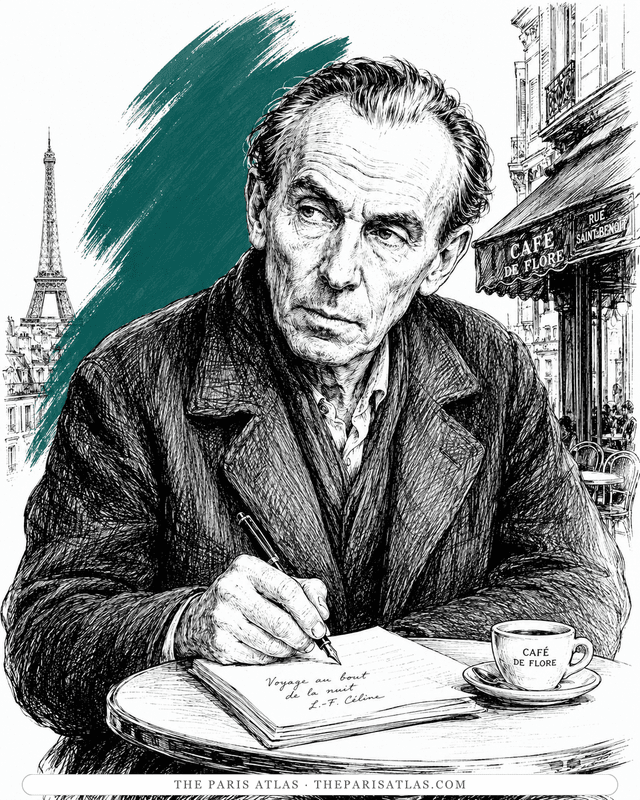
  • Illustrated portrait of Louis-Ferdinand Céline

    Louis-Ferdinand Céline

    The doctor of the Paris slums who wrote the century's blackest, funniest novel — and changed the sound of French prose.

    View author
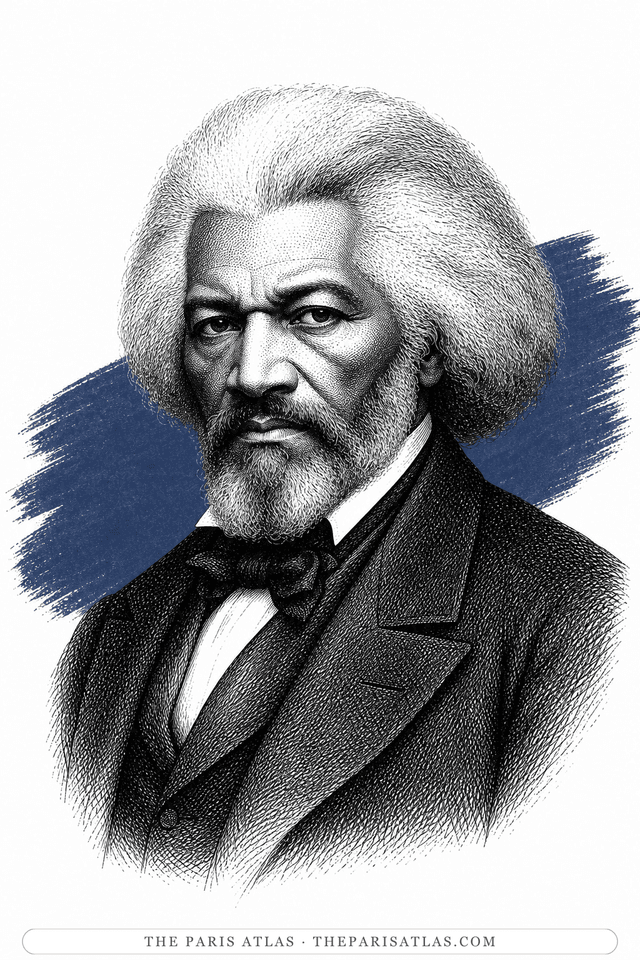
  • Illustrated portrait of Frederick Douglass

    Frederick Douglass

    American abolitionist — a campaigner for the abolition of slavery — orator and newspaper publisher, born into slavery in Maryland in 1818, who escaped north in 1838 and spent the next half-century arguing for Black citizenship in books, newspapers and federal office. In 1859 the American minister in London, the senior United States diplomat in Britain, refused him a passport for France on the ground that he was not a citizen of the country he had been born in: American law at the time held that no Black person could be one. The French minister in London issued him a permit to enter France at once. Twenty-seven years later he reached Paris anyway, aged sixty-eight, and spent weeks in its galleries.

    View author
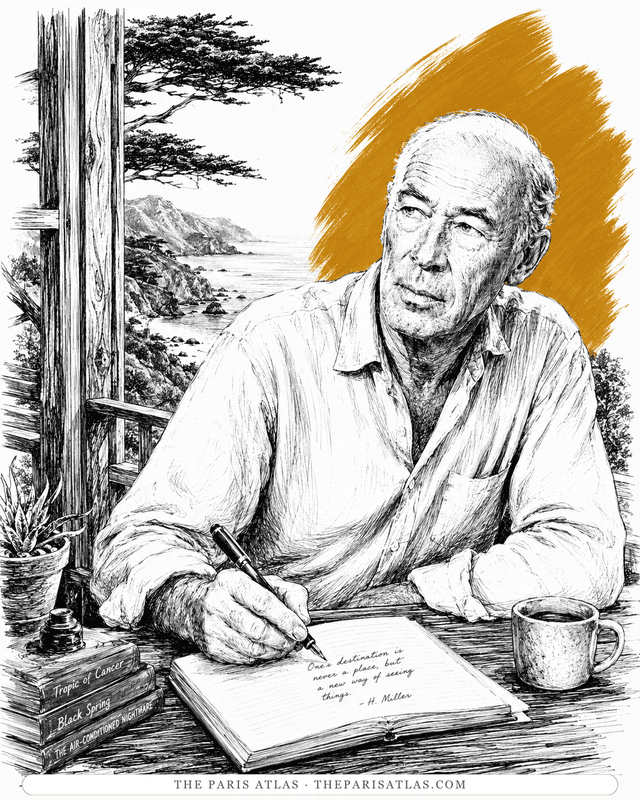
  • Illustrated portrait of Henry Miller

    Henry Miller

    The Brooklyn dropout who arrived in Paris broke at thirty-eight and wrote the exuberant, banned books that ended American censorship.

    View author
References

References

The sources below include the primary text, editions, scholarship, archival materials, and other records that informed this page. They document Malcolm X Speaks, its publication, and its place in literary history.

  1. 1Malcolm X Speaks — Library of Congress catalog record for the Merit Publishers first edition, edited by George Breitman (LCCN 65027410)

    Archive
    Library of Congress, 1965
    Used for

    Library of Congress record for the 1965 Merit Publishers first edition: editor, place, date and collation.

    View source
  2. 2George Breitman Papers (TAM.169) — finding aid and biographical note

    Archive
    Tamiment Library and Robert F. Wagner Labor Archives, New York University
    Used for

    New York University finding aid, used for George Breitman's life and his work for The Militant and Pathfinder Press.

    View source
  3. 3abcdeMalcolm X Speaks (Grove Weidenfeld, 1990) — Indiana University Libraries catalog record with the full list of fifteen chapters, their dates and places

    Archive
    Indiana University Libraries, 1990
    Used for

    Catalogue record with the full contents list, used for every chapter title, date and place.

    View source
  4. 4Malcolm X Speaks: Selected Speeches and Statements

    Nonfiction
    Grove Press, 1965
    Used for

    The book itself, read for the editor's notes and for the Paris and Orly passages in chapters XIII to XV.

  5. 5The Pilgrimage of Malcolm X (review of The Autobiography of Malcolm X and Malcolm X Speaks)

    Periodical
    The New York Review of Books, 1965
    Used for

    I. F. Stone's 1965 review of this book and the Autobiography; source for two of the quotations.

    View source
  6. 6Malcolm X, The Ballot or the Bullet (1964)

    Website
    BlackPast
    Used for

    Transcript of "The Ballot or the Bullet", used to check the wording of two quotations.

    View source
  7. 7Malcolm X à la Mutualité

    Periodical
    Le Monde, 1964
    Used for

    Contemporary report of the Paris meeting of 23 November 1964.

    View source
  8. 8Malcolm X Part 34 — France entry refusal clippings and memoranda

    Official record
    Federal Bureau of Investigation — The Vault, 1965
    Used for

    Clippings and memoranda on the refusal of entry at Orly, 9 February 1965.

    View source
  9. 9Malcolm X in France (Moshik Temkin)

    Website
    Moshik Temkin
    Used for

    Scholarly account of Malcolm X's visits to France and the Orly refusal.

    View source
  10. 10Le Pouvoir noir [Malcolm X Speaks] — Bibliothèque nationale de France catalogue record for the F. Maspero edition, Paris, 1966, translated by Guillaume Carle with a preface by Claude Julien

    Archive
    Bibliothèque nationale de France, 1966
    Used for

    BnF record for the first French translation, Paris, 1966.

    View source
  1. 11Le Pouvoir noir [Malcolm X Speaks] — Bibliothèque nationale de France catalogue record for the F. Maspero small-format reissue, Paris, 1968

    Archive
    Bibliothèque nationale de France, 1968
    Used for

    BnF record for the 1968 Maspero reissue.

    View source
  2. 12Le Pouvoir noir — Bibliothèque nationale de France catalogue record for the La Découverte paperback, Paris, 2008, ISBN 9782707154408

    Archive
    Bibliothèque nationale de France, 2008
    Used for

    BnF record for the 2008 La Découverte edition and its ISBN.

    View source
  3. 13By Any Means Necessary: Speeches, Interviews, and a Letter — Library of Congress catalog record for the Pathfinder Press first edition, edited by George Breitman (LCCN 74108718)

    Archive
    Library of Congress, 1970
    Used for

    Library of Congress record for Breitman's second collection, By Any Means Necessary (1970).

    View source
  4. 14Malcolm X Speaks — Library of Congress catalog record for the Pathfinder second cloth edition, ISBN 9780873485463 (LCCN 90133810)

    Archive
    Library of Congress, 1989
    Used for

    Library of Congress record for the 1989 Pathfinder cloth edition and its ISBN.

    View source
  5. 15Malcolm X Speaks — Library of Congress catalog record for the first Grove Weidenfeld Evergreen edition, ISBN 0802132138 (LCCN 90030051)

    Archive
    Library of Congress, 1990
    Used for

    Library of Congress record for the 1990 Grove Weidenfeld paperback and its ISBN.

    View source
  6. 16Malcolm X Speaks — publisher's page for the 2024 Grove Press edition with an introduction by Ibram X. Kendi

    Website
    Grove Atlantic, 2024
    Used for

    Publisher's page for the 2024 edition with Ibram X. Kendi's introduction.

    View source
  7. 17Malcolm X — Open Library author and edition records, used to confirm that every ISBN listed here resolves to the book named

    Archive
    Open Library
    Used for

    Open Library edition records, used to check that each ISBN belongs to this book.

    View source
  8. 18HathiTrust copyright determinations for Malcolm X Speaks (1965), By Any Means Necessary (1992), The End of White World Supremacy (1971) and Malcolm X: The Last Speeches (1989), checked 23 September 2026 — every volume returns rights code "ic" (in copyright), search-only in the United States

    Archive
    HathiTrust Digital Library, 2026
    Used for

    HathiTrust copyright status of the 1965 first edition: in copyright, search-only.

    View source
  9. 19Malcolm X Speaks

    Nonfiction
    Malcolm X, 1965
    Used for

    The primary text represented by this page, used for descriptions of the work’s contents and for any quoted passages shown here.

i
Why these sources are here

The primary text is the baseline reference for every book page. Additional references document publication history, interpretation, and historical context where that evidence is available.

Explore more resources