James Baldwin’s Paris: A Self-Guided Walking Tour of the Left Bank
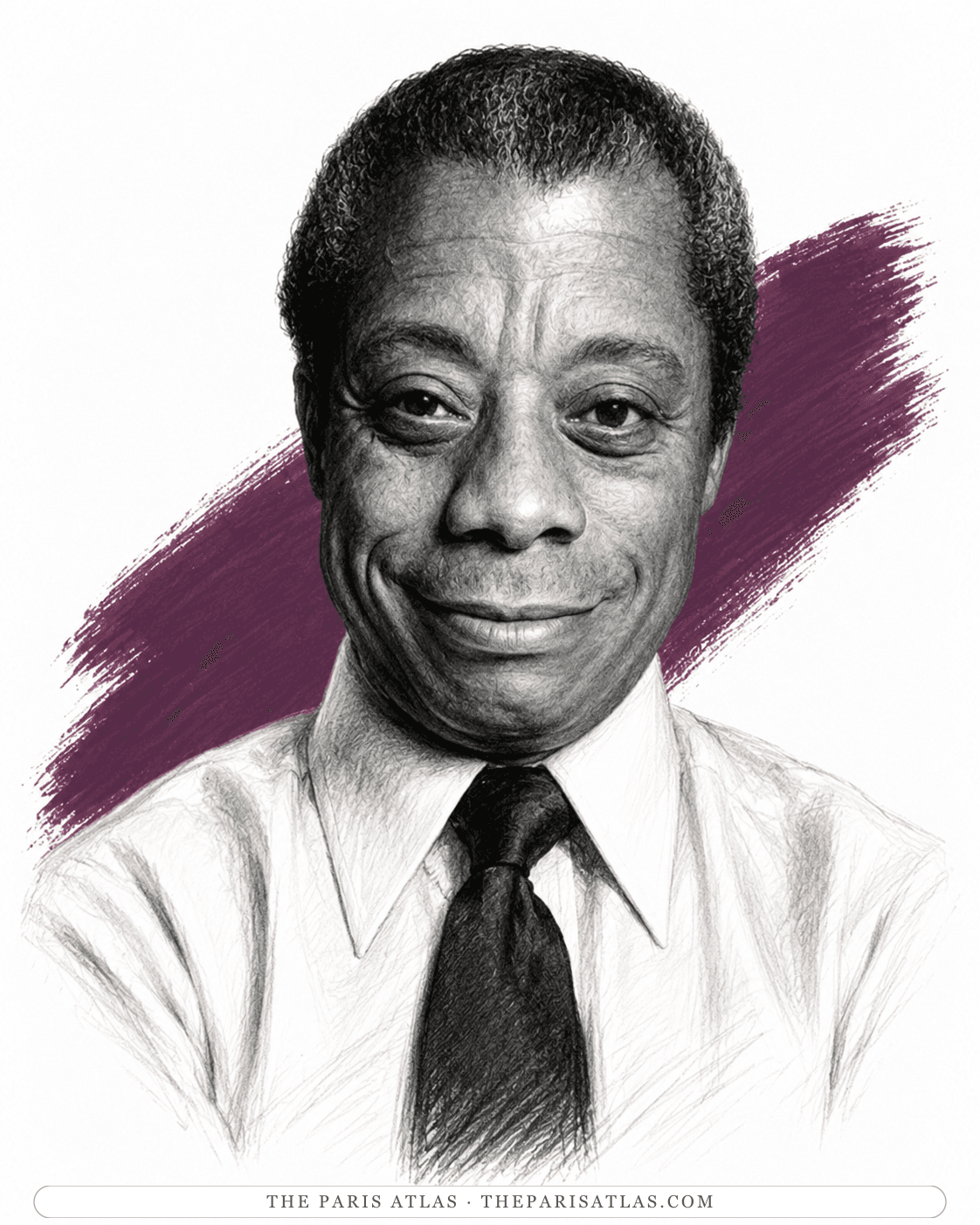
James Baldwin arrived in November 1948 with forty dollars, and for nearly a decade his Paris fit inside one Left Bank neighborhood: Saint-Germain-des-Prés, its hotels, cafés and clubs. You can walk it all in an afternoon.
Nearly all of James Baldwin’s Paris fits in one afternoon in Saint-Germain-des-Prés: seven addresses inside two kilometers, three cafés still serving, a hotel still renting rooms.
The only building in the city that carries his name is the one he never entered — a library in the 19th arrondissement, a Métro ride away. I went there too. Let me tell you about it.
I went looking for James Baldwin's Paris expecting commemorative plaques. There are almost none. What there is instead is better: the hotel he lived in still rents rooms, two of his cafés still serve breakfast, and the street where he danced still has the Montana's name over a doorway. Baldwin's Paris was never turned into a memorial. The businesses simply stayed open.
The geography is almost comically small. Baldwin arrived in November 1948, twenty-four years old, with forty dollars and no French, and spent his poorest years inside a few hundred meters of Saint-Germain-des-Prés: a room at the Hôtel Verneuil, workdays at the Café de Flore and Les Deux Magots, nights on the rue Saint-Benoît. The whole route takes an afternoon on foot, coffee stops included.[1][2]
One stop breaks the pattern. In 2024 the city opened a médiathèque named for Baldwin in the 19th arrondissement, far from Saint-Germain in every sense. He never saw it — he died in 1987 — but it is the most substantial tribute Paris has built him, and the city chose the location deliberately. I ended the day there, and I would tell you to do the same.[2]
| Stop | Address | The Baldwin connection | Today |
|---|---|---|---|
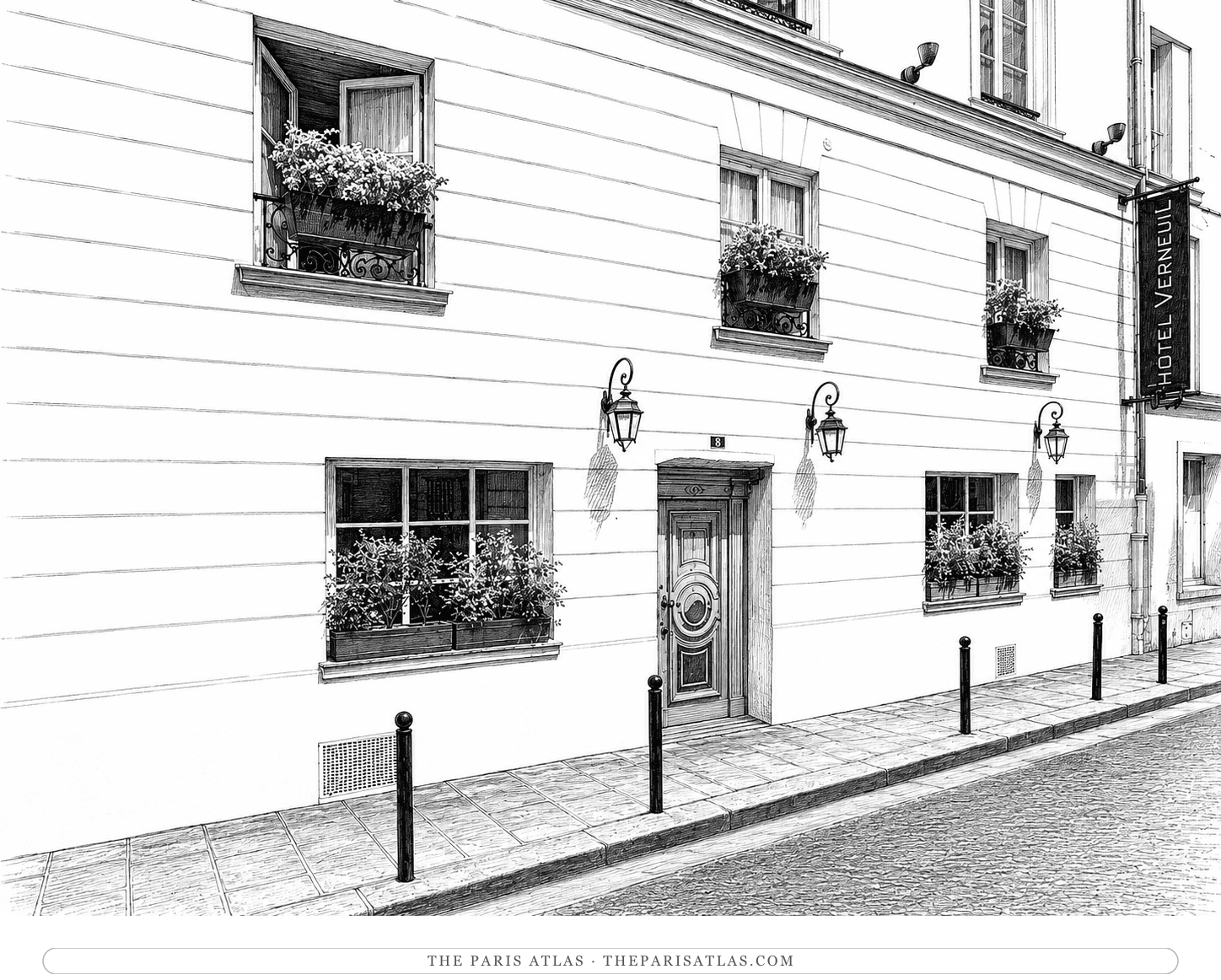
| Hôtel Verneuil | 8 rue de Verneuil, 7th | His home from late 1948, in his poorest years | Operating as the Hôtel Verneuil Saint-Germain |
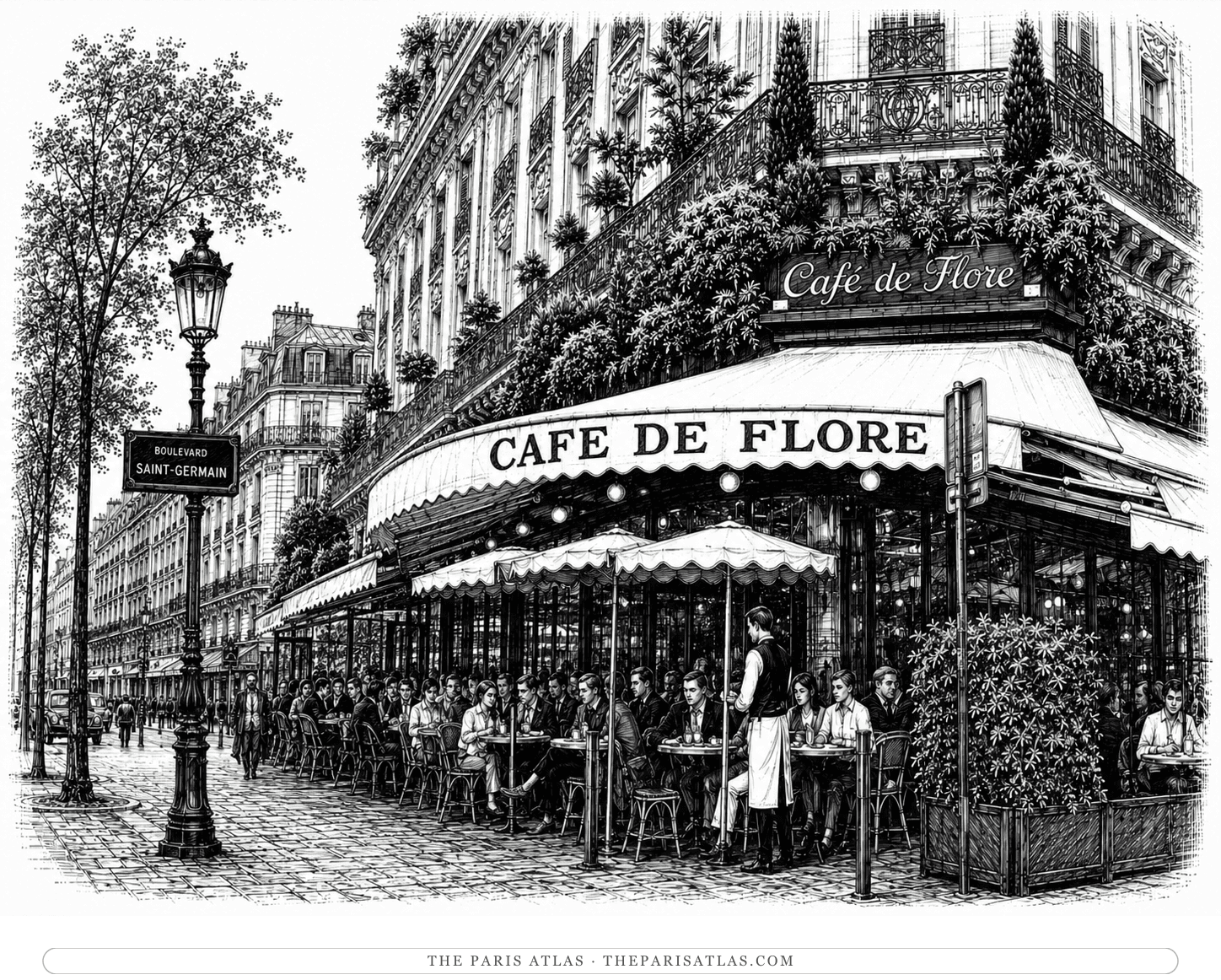
| Café de Flore | 172 boulevard Saint-Germain, 6th | A working café for a writer with an unheated room | Operating |
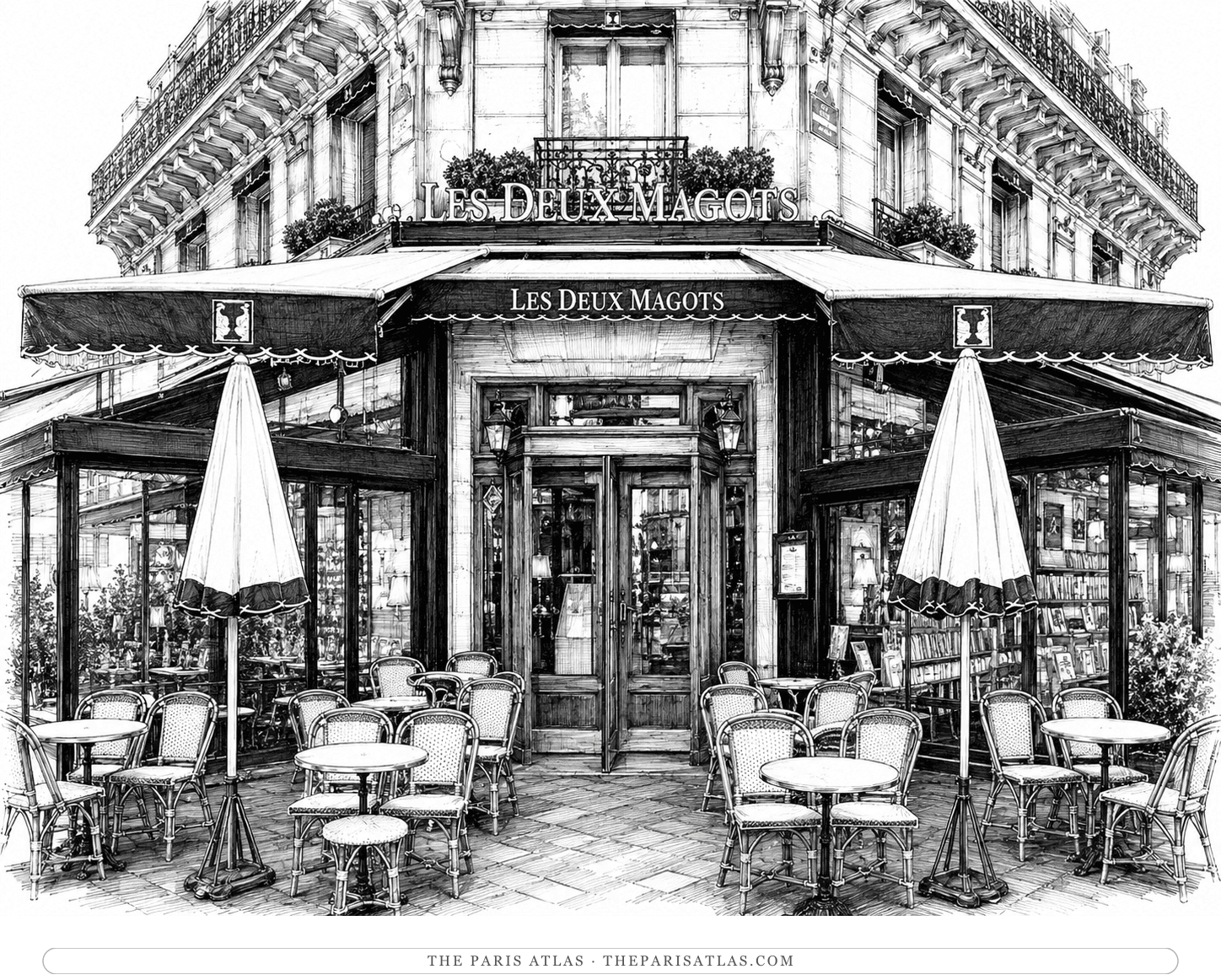
| Les Deux Magots | 6 place Saint-Germain-des-Prés, 6th | Richard Wright greeted him here on his first day | Operating |
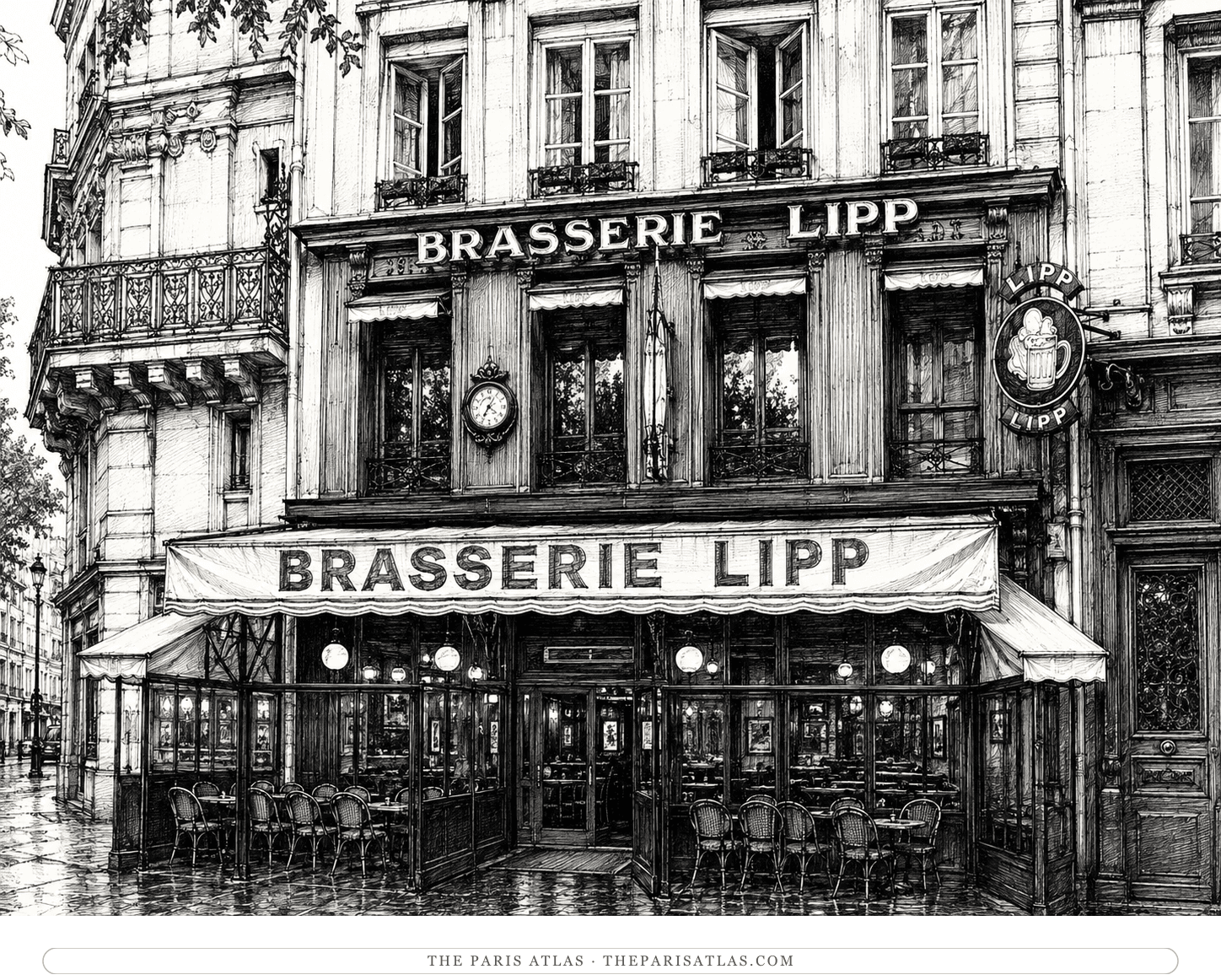
| Brasserie Lipp | 151 boulevard Saint-Germain, 6th | The 1949 public quarrel with Wright | Operating |
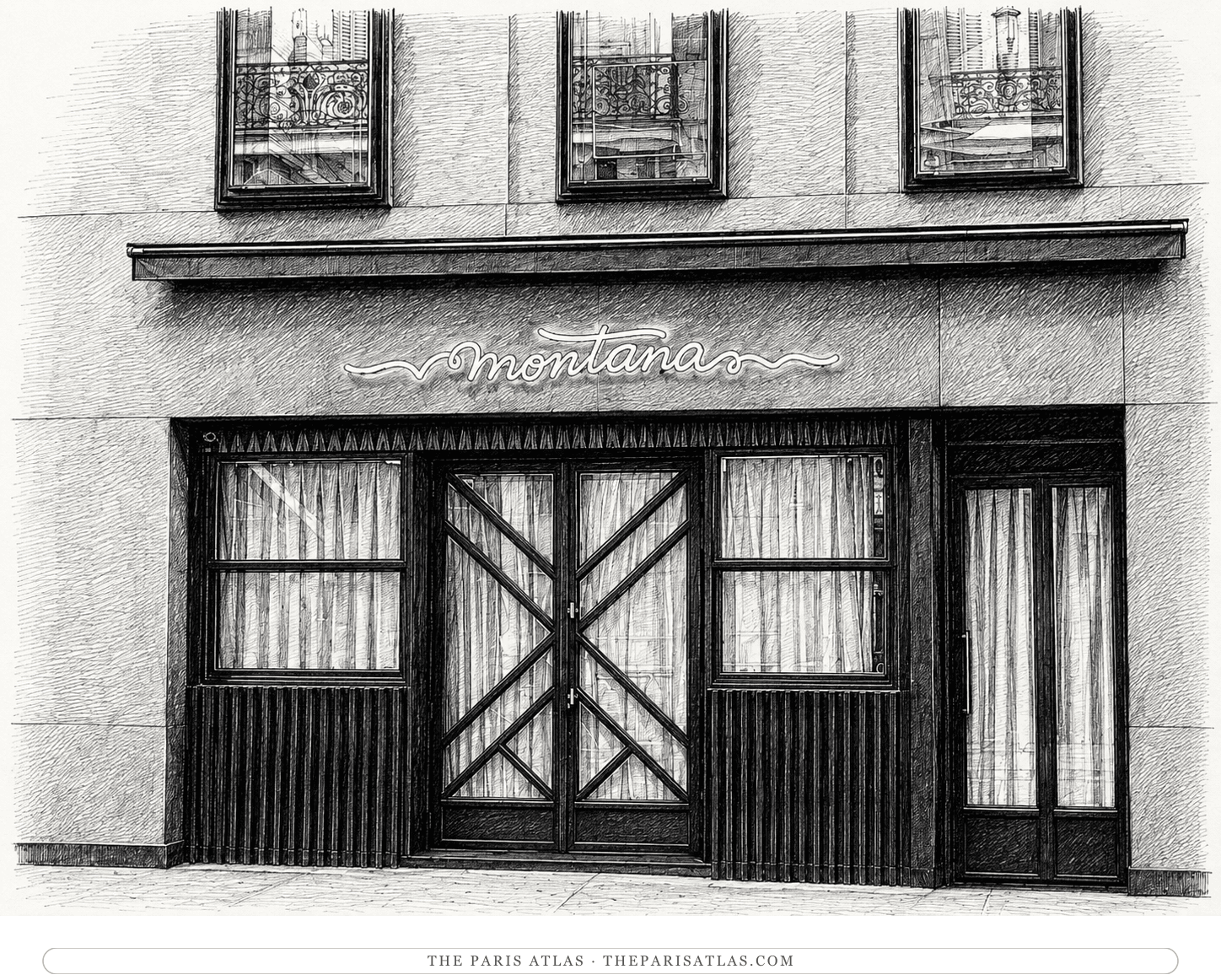
| Le Montana | 28 rue Saint-Benoît, 6th | One of the clubs of his Saint-Germain nights | An Italian restaurant under the Montana name, hotel above |
| 26 rue Saint-Benoît | 26 rue Saint-Benoît, 6th | His likely address around his first novel's publication | A residential building |
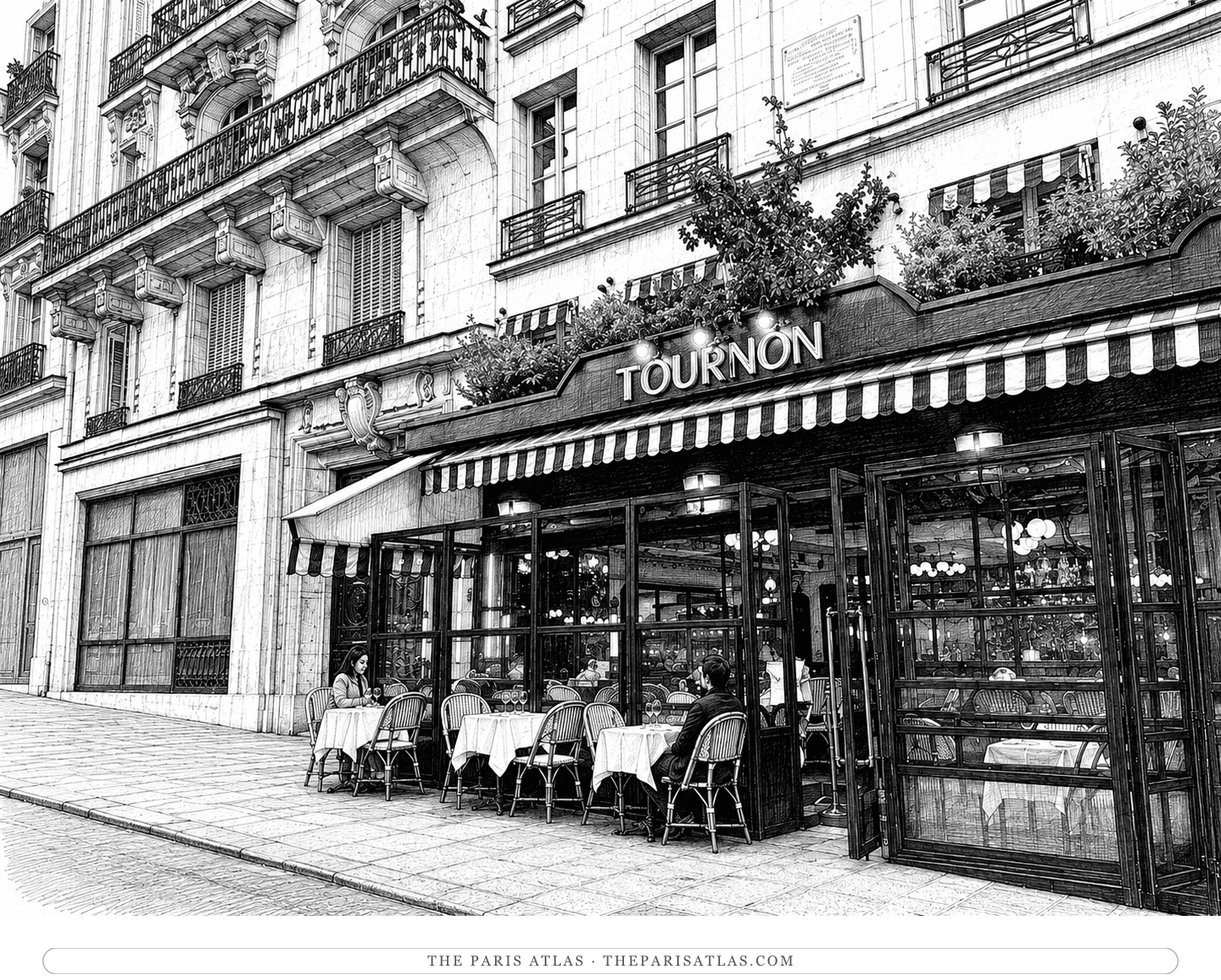
| Le Tournon | 18 rue de Tournon, 6th | The daily headquarters of Black American writers in the early 1950s | Operating |
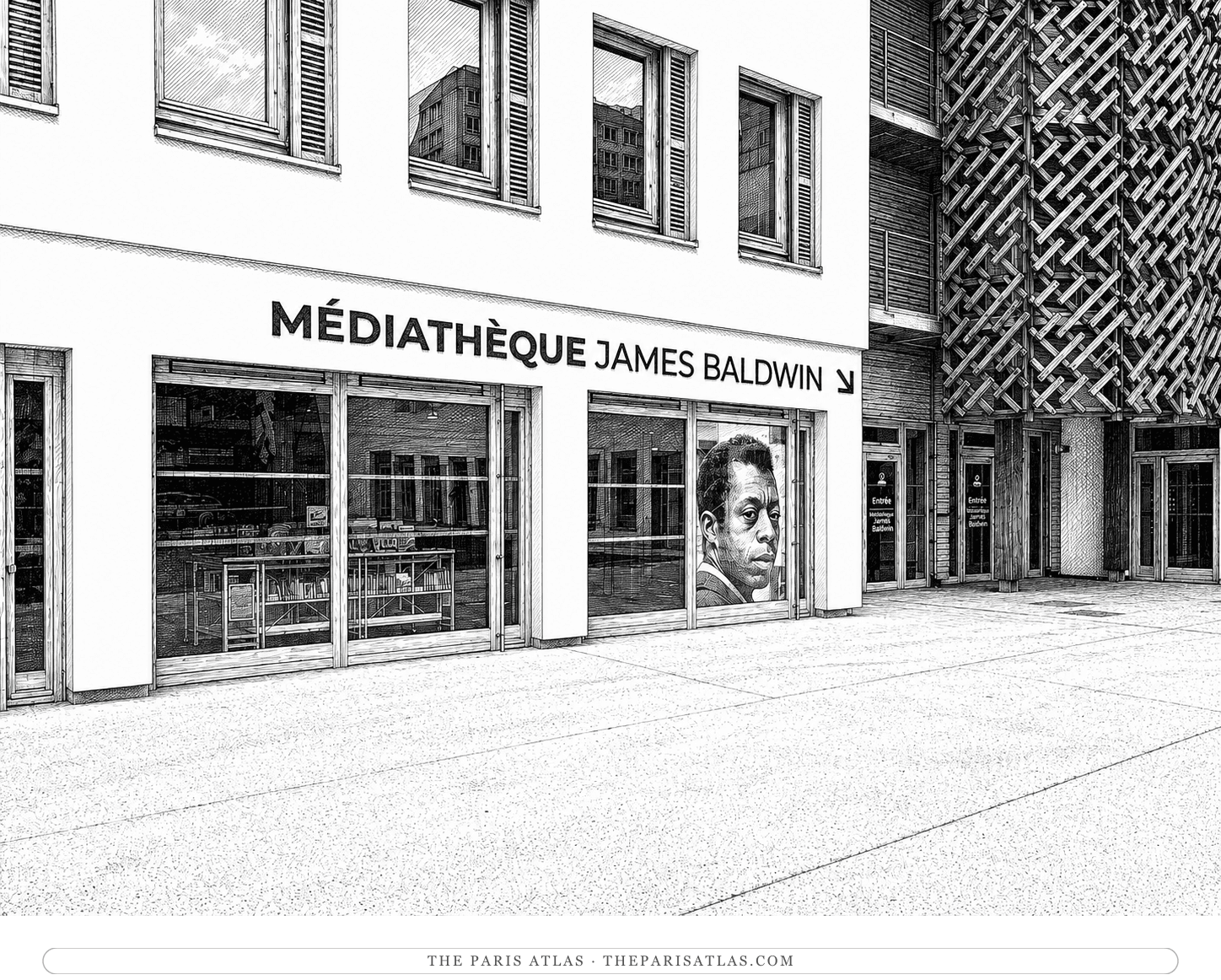
| Médiathèque James Baldwin | 10 bis rue Henri-Ribière, 19th | None — it opened thirty-seven years after his death | Open since July 2024 |
1. Hôtel Verneuil
Start where he settled. The rue de Verneuil is a narrow street of low seventeenth-century façades a few minutes south of the river, expensive now, cheap then. Baldwin spent his first Paris nights in a hotel on the rue du Dragon and then took a room here, at what is now the Hôtel Verneuil Saint-Germain. The hotel's own history counts him among its residents.
The room was unheated, which explains most of this tour: the cafés had stoves, so the cafés are where the writing happened. These were the years of real poverty. When Baldwin fell seriously ill early in 1949, the hotel's proprietress, Madame Dumont, waived his rent and nursed him for roughly three months. It is not the sort of detail a hotel invents for its website — kindness to a broke, unknown tenant only becomes marketing decades later, once the tenant has become James Baldwin.
The neighborhood supplied his first famous essay subject too. In 1949 Baldwin was arrested at a hotel on the nearby rue du Bac over a bedsheet an acquaintance had carried off from another hotel, and spent eight days in Fresnes prison for it. He told the story in "Equal in Paris," collected in Notes of a Native Son.[1]
Before you leave the street, walk a few doors along to the graffiti-covered wall of Serge Gainsbourg's old house. Two writers draw admirers to this street now. Gainsbourg's leave spray paint; Baldwin's leave nothing.
2. Café de Flore
From the Verneuil it is a few minutes' walk to the boulevard and the first of the heated rooms. The Flore is where the City of Paris places Baldwin's meetings with Simone de Beauvoir and Jean-Paul Sartre, and a popular account has Go Tell It on the Mountain taking shape at its tables — the novel he had carried unfinished from Harlem, and would finally finish in a Swiss mountain village with Lucien Happersberger, the man he met in Paris in 1949 and later called the love of his life.[2]
It is tempting to romanticize writing in cafés, so it is worth being plain about the economics: Baldwin worked here because his room was cold and the café was not, and because one coffee bought a table for hours. The Flore costs far more now, but the same deal still works.
3. Les Deux Magots
A hundred meters along the boulevard, the Deux Magots holds the tour's first scene chronologically. Accounts of Baldwin's first day in Paris in November 1948 put him at this terrace being welcomed by Richard Wright, then America's most famous Black writer and an early champion — he had read the twenty-year-old Baldwin's unfinished first novel and backed him for the fellowship that kept him writing.[2]
Sit here if you sit anywhere on this walk. The warm scene did not last: within a year Baldwin and Richard Wright would quarrel publicly, and the story of that quarrel is two stops ahead, at Brasserie Lipp.
4. Brasserie Lipp
Cross the boulevard. Brasserie Lipp is where the best-documented scene of Baldwin's Paris years took place, even though as a customer he was occasional at most — one account has him stopping in before eating somewhere cheaper, which anyone who has read a Lipp menu will understand.
The scene, though, is firmly fixed here. In 1949 the little magazine Zero published Baldwin's essay "Everybody's Protest Novel," which used Wright's novel Native Son as its example of everything the protest novel could not do. Days later, at this brasserie, the two men had it out in public. The friendship never fully recovered. Baldwin returned to the quarrel in essay after essay for the rest of his life, regretting the loss of the friendship without ever taking back the argument.[1]
5. Le Montana
Turn off the boulevard beside the Flore and you are on the rue Saint-Benoît, a short street that after the war held a disproportionate share of the quarter's nightlife. Le Montana at number 28 was one of the cellar clubs where people danced and listened to jazz after the cafés closed, and the City of Paris names it among the gay clubs Baldwin frequented in his early years here, alongside L'Abbaye and La Reine Blanche.[2]
That fact is worth pausing on. Baldwin left the United States partly because he was gay in a country where that could get a man arrested, and the clubs of this street are where part of that freedom was actually lived. The life he found here fed Giovanni's Room in 1956, his novel set in the bars of Paris nightlife. Of the three clubs the city names, the Montana is the only one whose name is still over the door: an Italian restaurant at street level, with the Hôtel Montana's suites above.
6. 26 rue Saint-Benoît
Stay on the street for the quietest stop. The City of Paris's account has Baldwin likely living at number 26 in the period around 1953, the year Go Tell It on the Mountain was published in New York. "Likely" is the honest word — his early Paris housing was a shifting circuit of cheap hotels and borrowed rooms, loosely documented even by his biographers — so treat the address as probable rather than certain.[2]
The street compensates with a certainty a few doors down: at number 5, a plaque marks the apartment where Marguerite Duras lived from 1943 until her death, host to the writers and thinkers the French remember as the groupe de la rue Saint-Benoît. One short street, and the difference in how Paris remembers its writers: Duras has a plaque and a named group. Baldwin has a "likely."
7. Le Tournon
The longest leg of the walk — ten to fifteen minutes through the Odéon quarter, uphill toward the Luxembourg — ends at Le Tournon, the café below the Senate. In the early 1950s this room was the unofficial headquarters of Black American literary Paris: Richard Wright held court nearly every day, and the circle around his table included Chester Himes, the cartoonist Ollie Harrington and the painter Beauford Delaney, the mentor who had taught the teenage Baldwin that a Black man could live as an artist, and who had followed his former student across the Atlantic in 1953.
The city counts the Tournon among Baldwin's favorite cafés, and it was also complicated ground: after the Lipp quarrel, walking into this café meant walking into Richard Wright's territory. The café keeps its name and its corner today, and of all the stops on this walk it is the one that has changed least — a neighborhood café doing neighborhood business under the same sign the writers argued beneath.[2]
Coda: the Médiathèque James Baldwin
The last stop is not walkable and is not in Saint-Germain, which is the point. Take the Métro to Place des Fêtes, in the working-class 19th arrondissement, and you arrive at the Médiathèque James Baldwin: four levels of library in a converted lycée, opened in July 2024, with collections built around exile and migration, LGBT culture, feminisms and ecology, and a refugee support center — the Maison des Réfugiés — sharing the site.
Baldwin never set foot here; he died thirty-seven years before it opened. But the city chose the location deliberately. Instead of Saint-Germain, where he wrote and argued, his name went on a public library in a working-class neighborhood, lending books to the immigrants and the poor he wrote about in No Name in the Street.
Saint-Germain kept the cafés he wrote in. The 19th arrondissement got his name. Seeing both in one afternoon is the best argument for the city's choice.




 View source