
Recalled in the memoir
A Moveable Feast
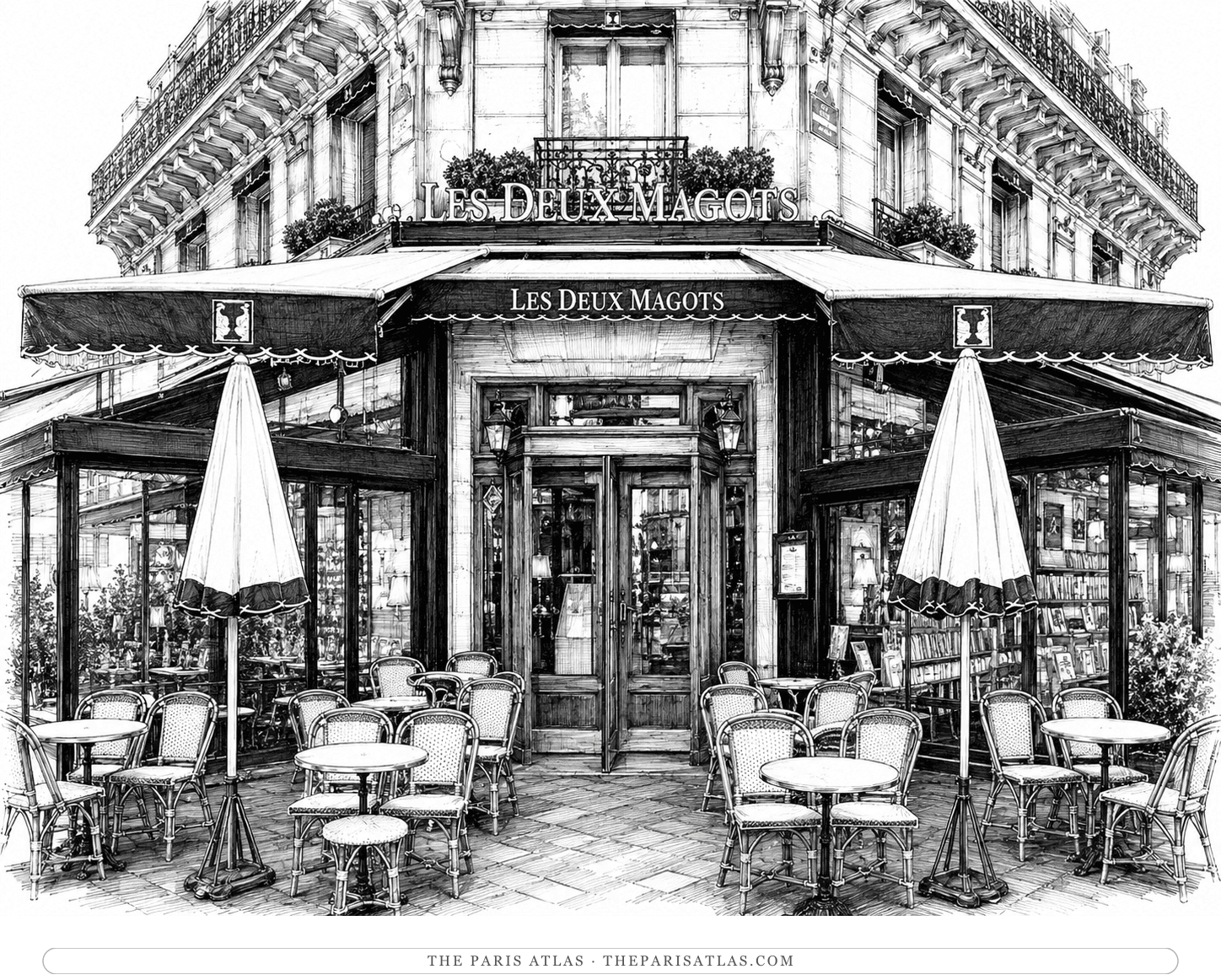
A few doors from Les Deux Magots and part of the same Left Bank circuit. Later became more associated with Sartre and de Beauvoir.
A few doors from Les Deux Magots and part of the same Left Bank circuit. Later became more associated with Jean-Paul Sartre and Simone de Beauvoir.
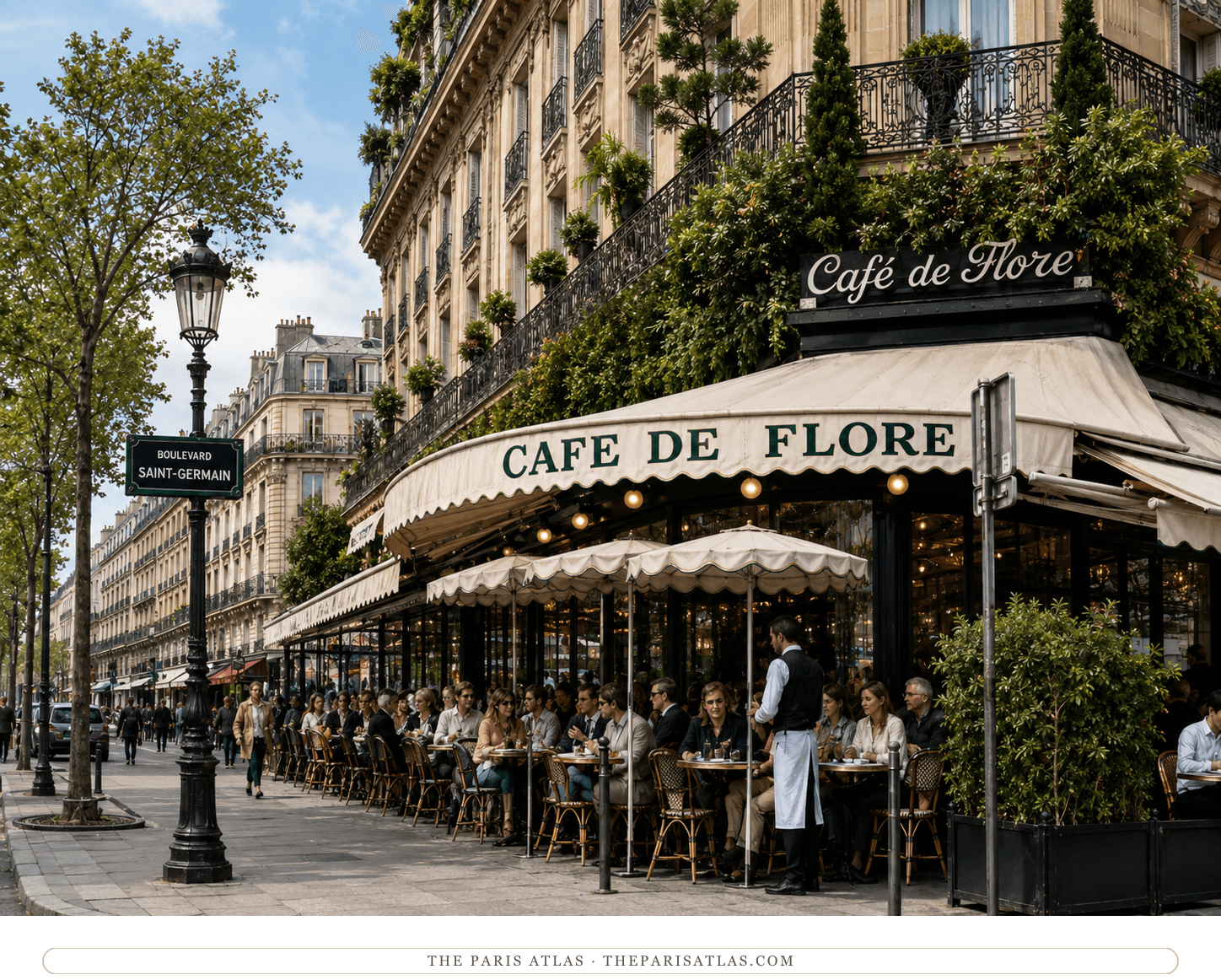
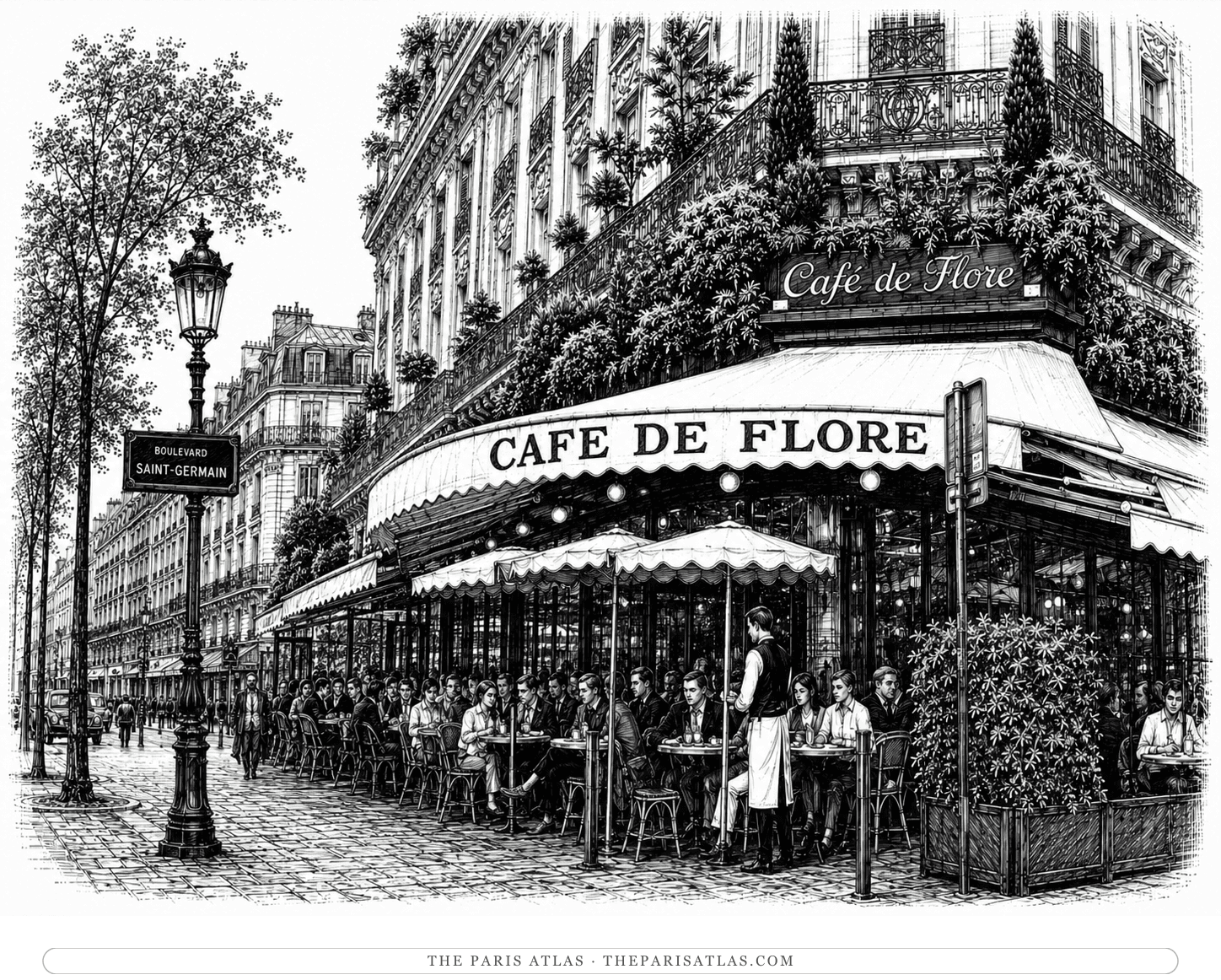
The Flore opened around 1887 and took its name from a statue of the goddess Flora that stood across the boulevard. Its first literary tenant was Guillaume Apollinaire, who from 1913 effectively ran his magazine Les Soirées de Paris from the ground floor, treating the café as an editorial office with waiter service — a working arrangement Paris would keep reinventing for a century.[1]
Blaise Cendrars belonged to that first Flore generation. Philippe Soupault remembered Guillaume Apollinaire meeting his friends at the Flore every Wednesday around six in the spring of 1917, with Cendrars among the regulars, and described leaving the café at Cendrars's side to wander through Paris. It is a firsthand account rather than a later café legend.
In the twenties the Flore was one station on the Left Bank circuit rather than its capital: a few doors from the Deux Magots, across the boulevard from Lipp, part of the triangle every expatriate walked daily. Hemingway knew it as the neighborhood knew it — a warm room with good light. Its own legend came a generation later, when Sartre and Beauvoir sat out the Occupation at its upstairs tables, writing through the winters because the Flore had a working stove and their flats did not. Sartre later claimed, with proprietary satisfaction, that the roads of existentialism ran through the café.[1]
Since then the Flore has become the most self-aware café in Paris — expensive, touristed, and unbothered. It founded its own literary prize, the Prix de Flore, in 1994, and the corner terrace under the awning remains one of the most photographed literary addresses in the world. Somewhere under the varnish is the room where Apollinaire opened the mail.[1]
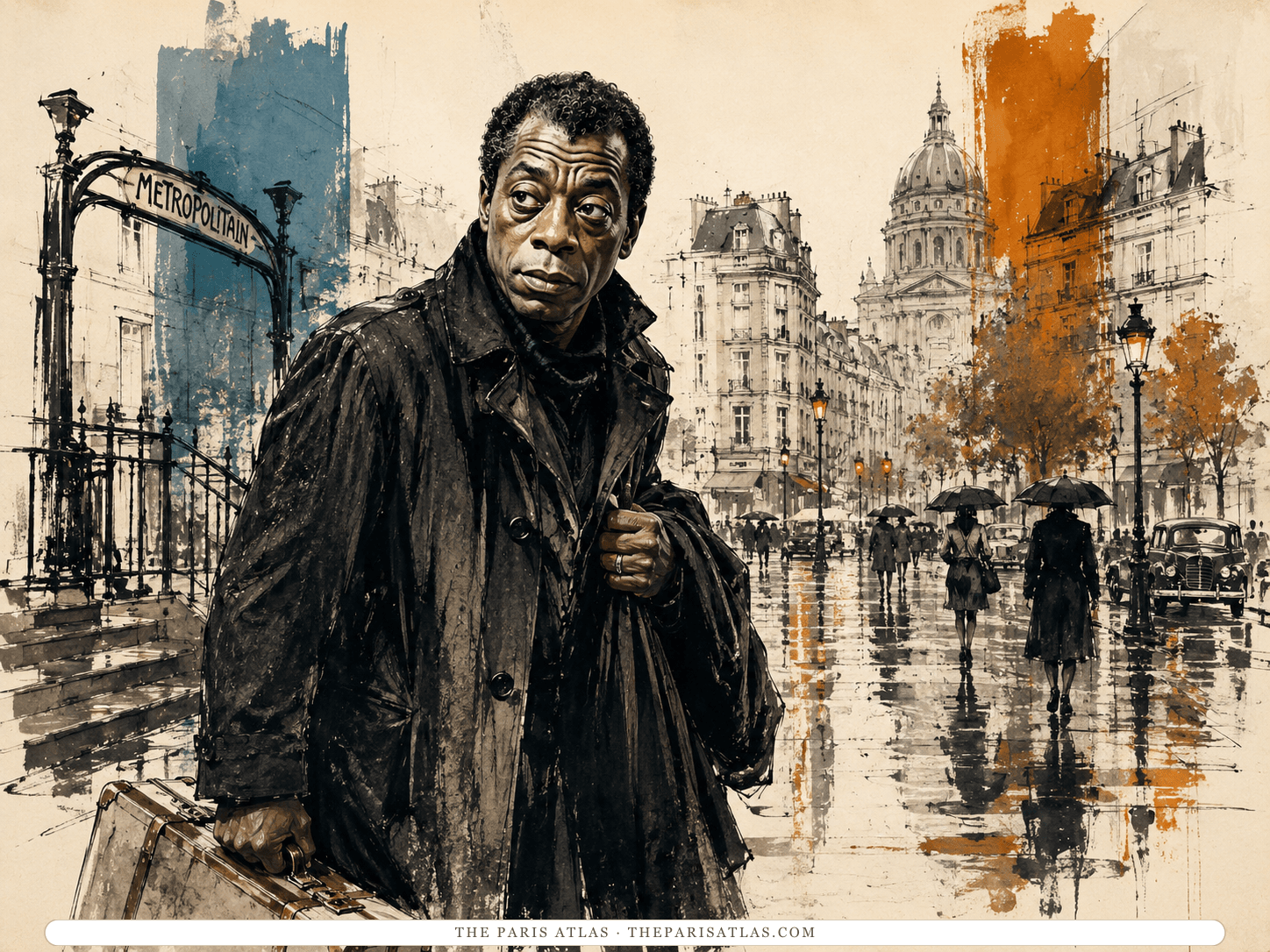
James Baldwin reached Paris in November 1948. He was twenty-four and had forty dollars, and the rooms he could afford were unheated. The cafés were heated, and they did not mind how long a customer sat over one coffee. That is the plain reason so much of his early work happened at café tables rather than at a desk. The City of Paris, in its walking account of his years here, names the Flore among the rooms he used.[2][3]
The same account places his meetings with Simone de Beauvoir and Jean-Paul Sartre at these tables. The two of them had spent the Occupation writing upstairs a few years earlier, for the same reason Baldwin came: the café had heat.[2][1]
A popular account of his Paris years also has Go Tell It on the Mountain taking shape here. That one is worth holding loosely. He worked across several rooms in Saint-Germain, no first-hand source fixes the drafting to this café, and he finished the novel in a Swiss Alpine village rather than in Paris at all.[4]
The Flore is one address on a short walk Baldwin made most days, and the neighbouring rooms carry the rest of the story:
Opens on the corner of the boulevard, named for the Flora statue opposite.
Apollinaire makes the ground floor the office of Les Soirées de Paris.
Part of the daily café triangle with Lipp and the Deux Magots for the expatriate crowd.
Sartre and Beauvoir write through the Occupation at the first-floor tables — the café had heat.
The Prix de Flore is founded, keeping the house in the literary business.
Still open, terrace and awning intact, prices adjusted for fame.
For its regulars rather than its coffee. Guillaume Apollinaire ran a magazine from the ground floor in 1913; Jean-Paul Sartre and Simone de Beauvoir wrote at the upstairs tables through the Occupation because the café had heat and their flats did not; Pablo Picasso, Jacques Prévert and Albert Camus were regulars. The house has kept itself in the literary business since, awarding the Prix de Flore each November.
Yes. The City of Paris names the Flore among the cafés the novelist James Baldwin used after he arrived in November 1948, and places his meetings with Simone de Beauvoir and Jean-Paul Sartre there. He worked in cafés because the rooms he could afford were unheated and the cafés were not.
Probably not, or at least not only there. Popular accounts of Baldwin's Paris years attach the novel to the Flore's tables, but no first-hand source fixes the drafting to this café, he worked across several rooms in Saint-Germain, and he finished the book in a Swiss Alpine village, where he also settled on its title. Treat the Flore connection as atmosphere rather than authorship.
A few doors of the same boulevard, and different house legends. Les Deux Magots is the older literary address, associated with the Surrealists and, later, with James Baldwin's first day in Paris. The Flore's fame is mostly post-war and belongs to Jean-Paul Sartre and Simone de Beauvoir. In the 1920s and again in the late 1940s both were stations on the same daily circuit, and most regulars used both.
Yes. It still trades on its original corner at 172 boulevard Saint-Germain in the 6th arrondissement, terrace and awning script intact. It is a working café rather than a museum, and it is priced for its fame.
Recalled in the memoir
A few doors from Les Deux Magots and part of the same Left Bank circuit. Later became more associated with Sartre and de Beauvoir.

Frequented by · 1948
Baldwin's Paris rooms were unheated and the cafés were not, which is the plain reason he worked in them, and the Flore is the one his early Paris years are most consistently attached to. The City of Paris's account of those years places his meetings with Simone de Beauvoir and Jean-Paul Sartre here, and a popular account has Go Tell It on the Mountain taking shape at its tables.
Frequented by · 1917
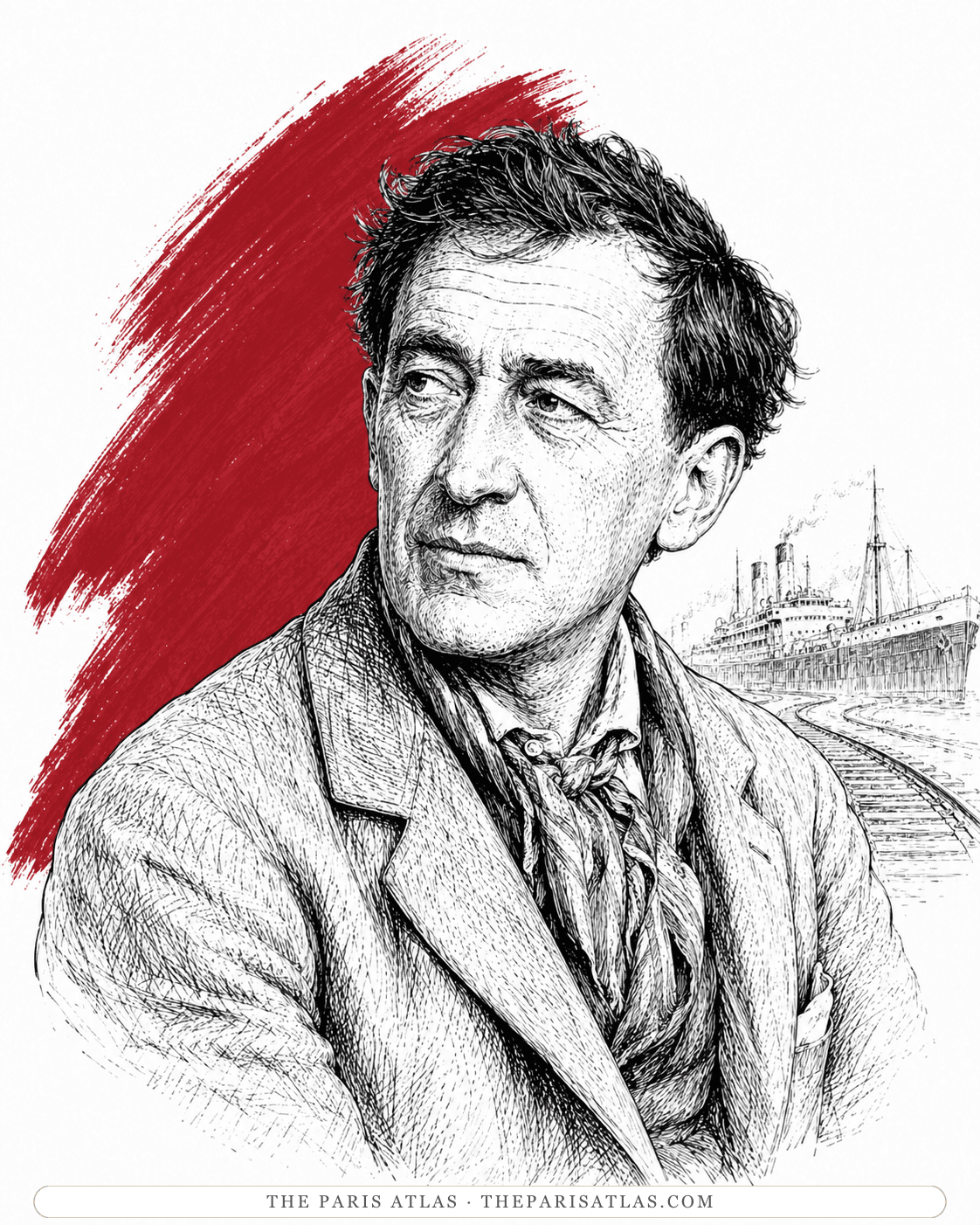
Philippe Soupault's memoir places Cendrars among the regulars at Guillaume Apollinaire's Wednesday gatherings at the Flore in the spring of 1917, around six in the evening, and describes leaving the café at his side to walk the city.
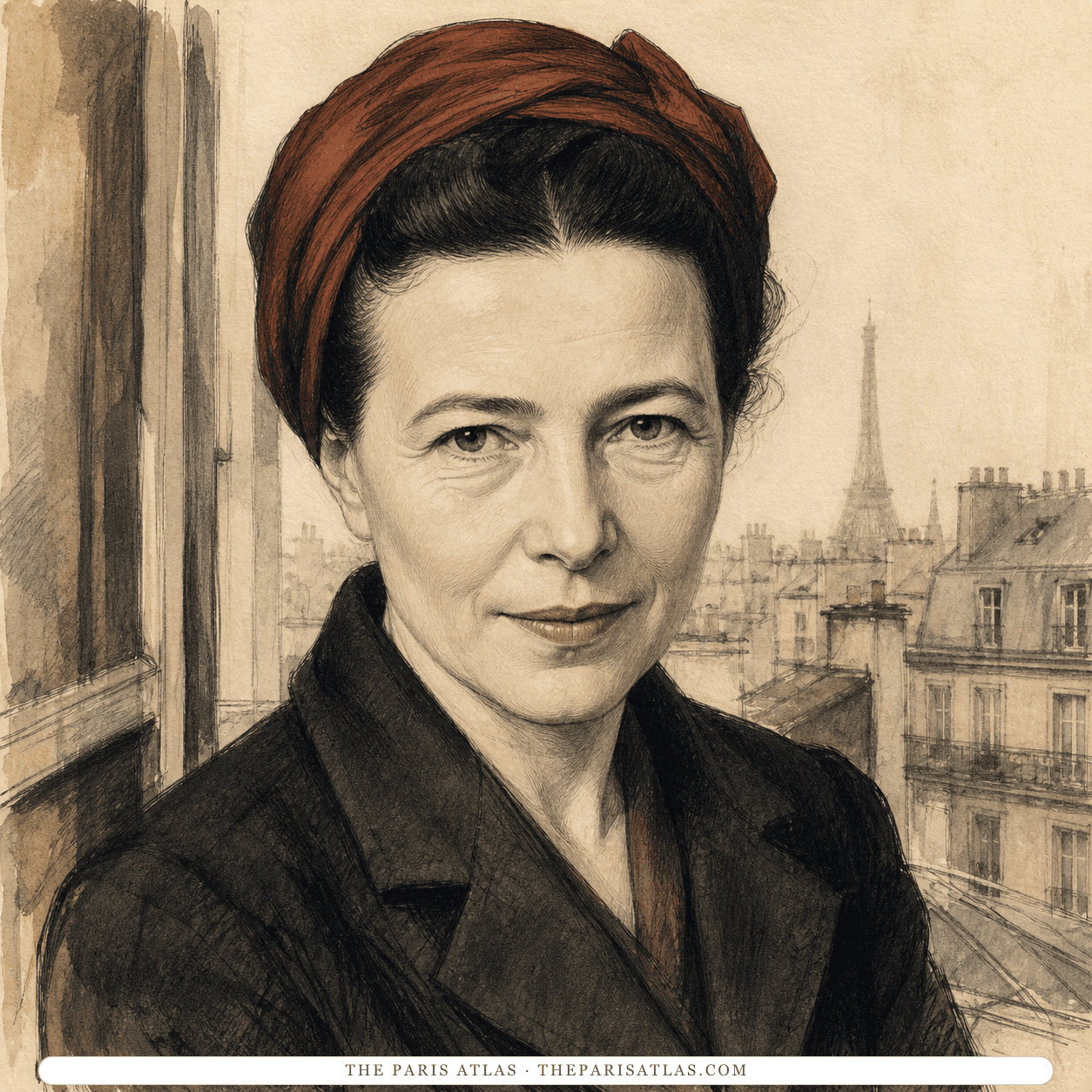
Frequented by · 1939–1945
The Café de Flore's own history identifies Simone de Beauvoir as one of the first writers to adopt the café's heated room after Paul Boubal took over in 1939. During the German occupation of Paris, she and Jean-Paul Sartre used the café as a regular place to work and meet people.

Frequented by
One of the Saint-Germain cafés Camus used, a minute from his hotel on the boulevard Saint-Germain, and part of the quarter's intellectual traffic through and after the Occupation.

Frequented by
The Flore was Sartre and Beauvoir's working café for years — warm when their own rooms were not, and close enough to Saint-Germain-des-Prés to serve as an office.
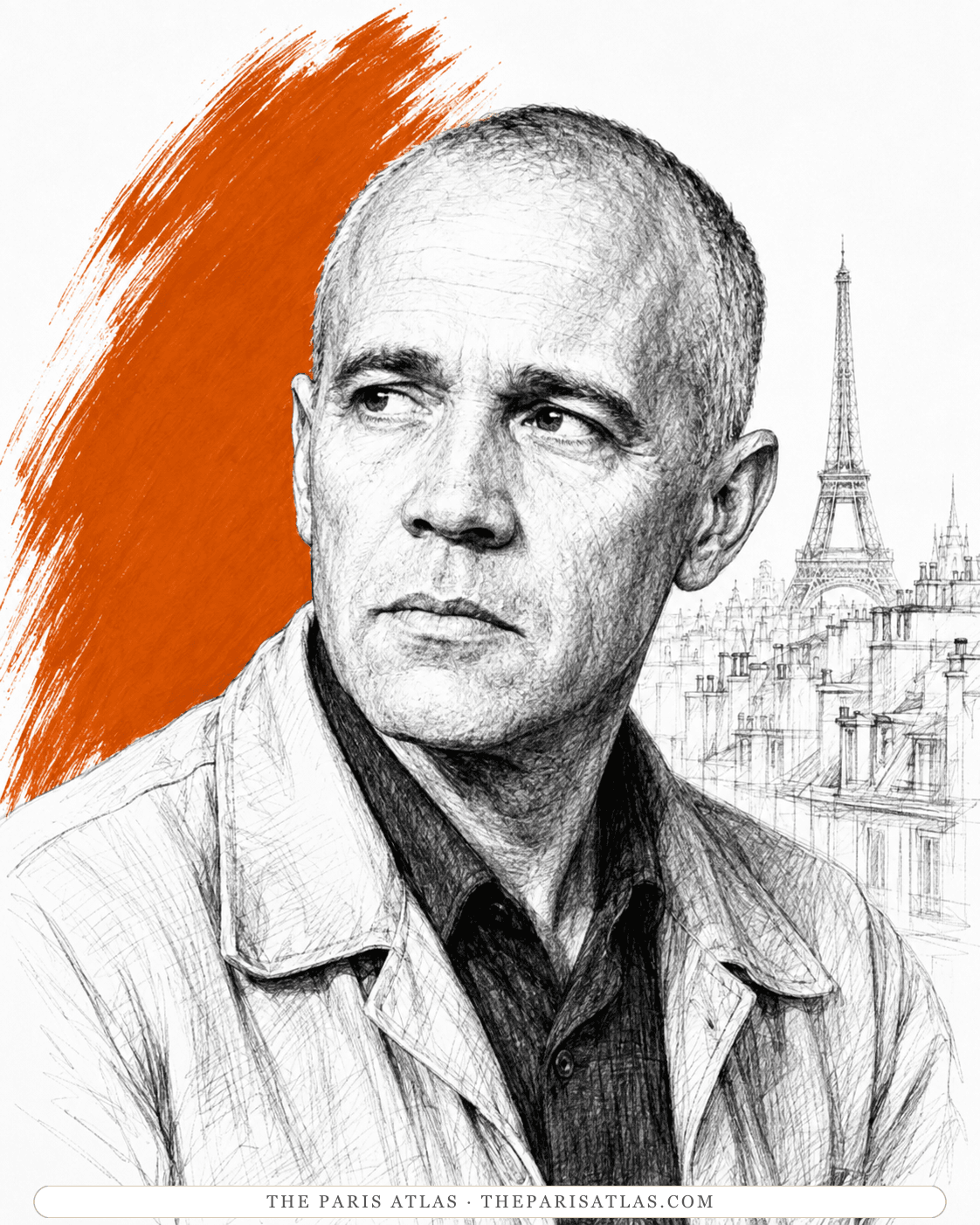
Frequented by · 1944
Genet approached Jean-Paul Sartre at the Café de Flore after Sartre and Simone de Beauvoir had read his work, beginning his relationship with their Saint-Germain circle.
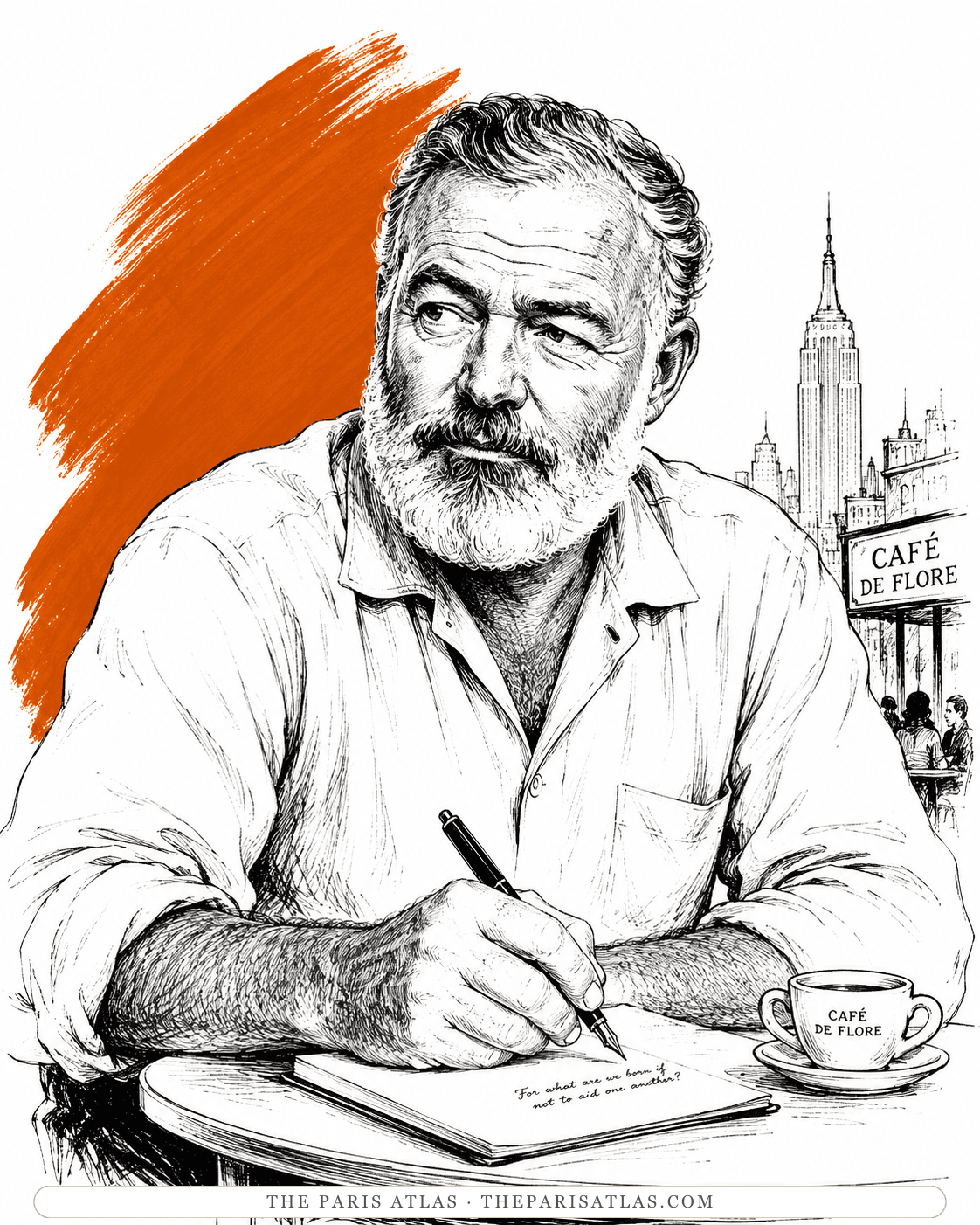
Ernest Hemingway wrote about Café de Flore in A Moveable Feast.

In 1936 Oppenheim was at lunch with Pablo Picasso and Dora Maar at the Cafe de Flore, wearing a fur-covered bracelet of her own design. Picasso's remark that anything could be covered in fur led directly to Object, the fur-covered cup, saucer and spoon now at the Museum of Modern Art.
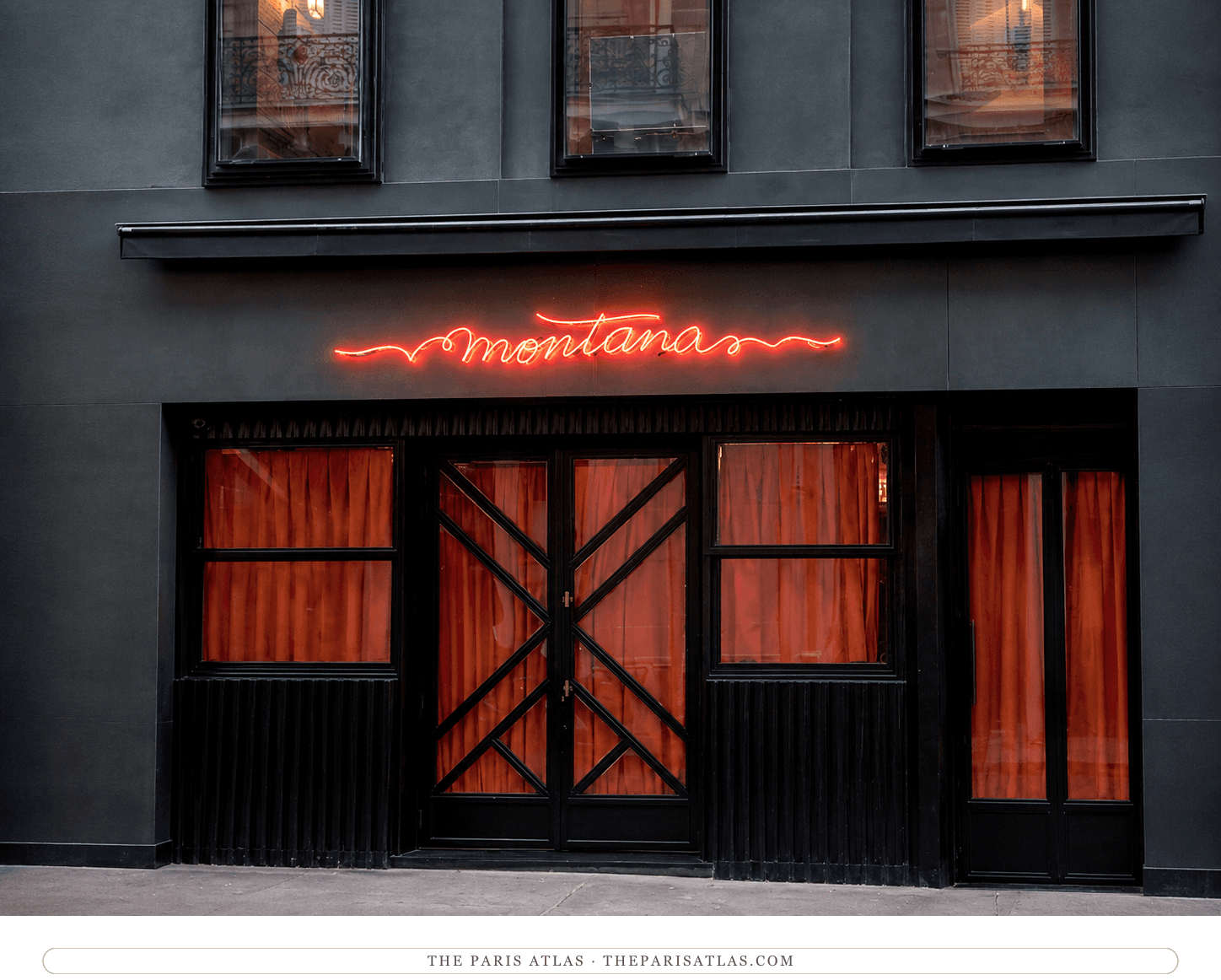
A Saint-Germain bar of the postwar years, steps from the Café de Flore, that the City of Paris counts among the gay clubs James Baldwin frequented.
Visit the place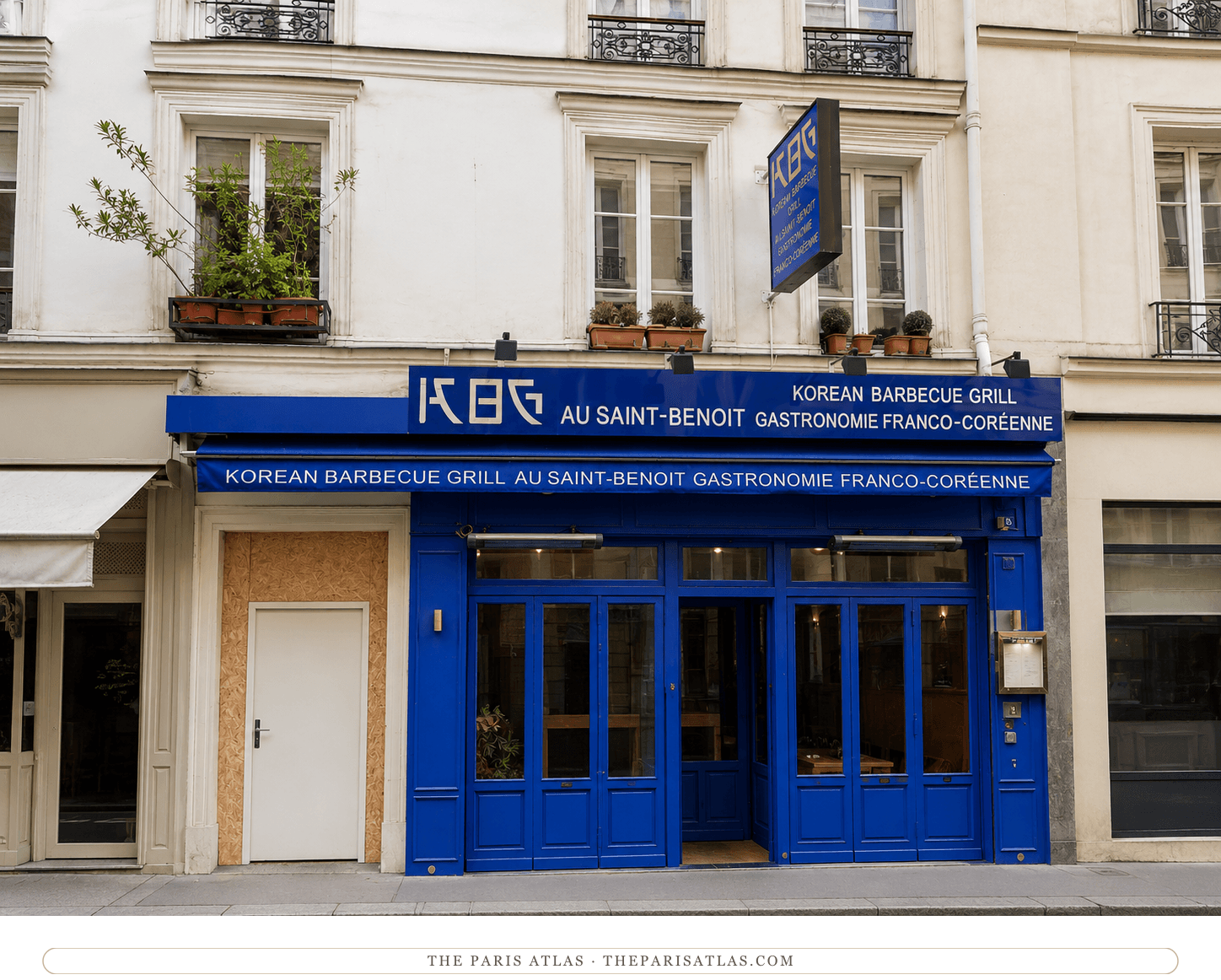
The Saint-Germain address where the City of Paris places James Baldwin as a likely resident in the early 1950s, around the publication of Go Tell It on the Mountain.
Visit the place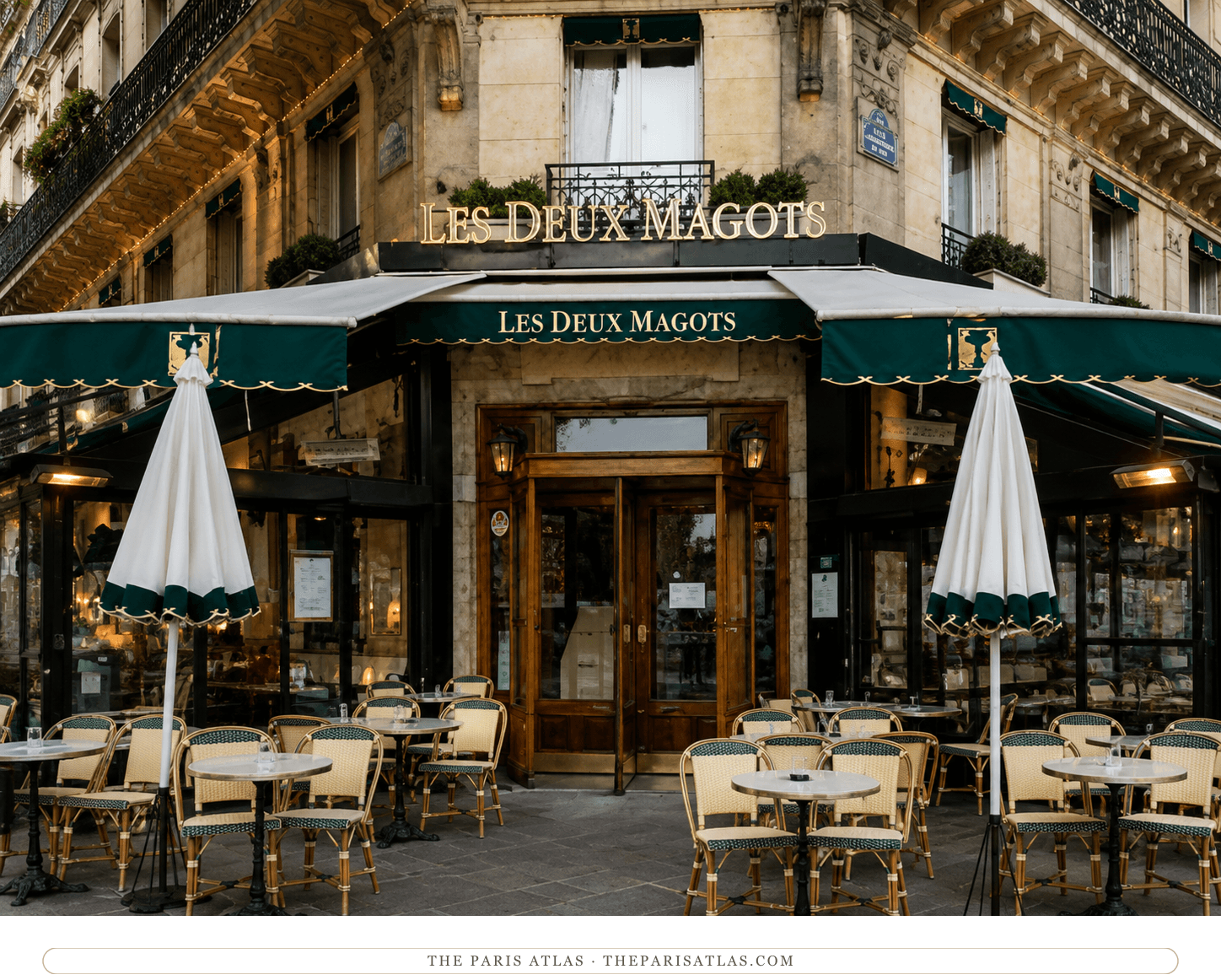
The famous literary terrace where the expat crowd gathered. Ernest Hemingway came here, though he preferred La Closerie for actual work.
Visit the place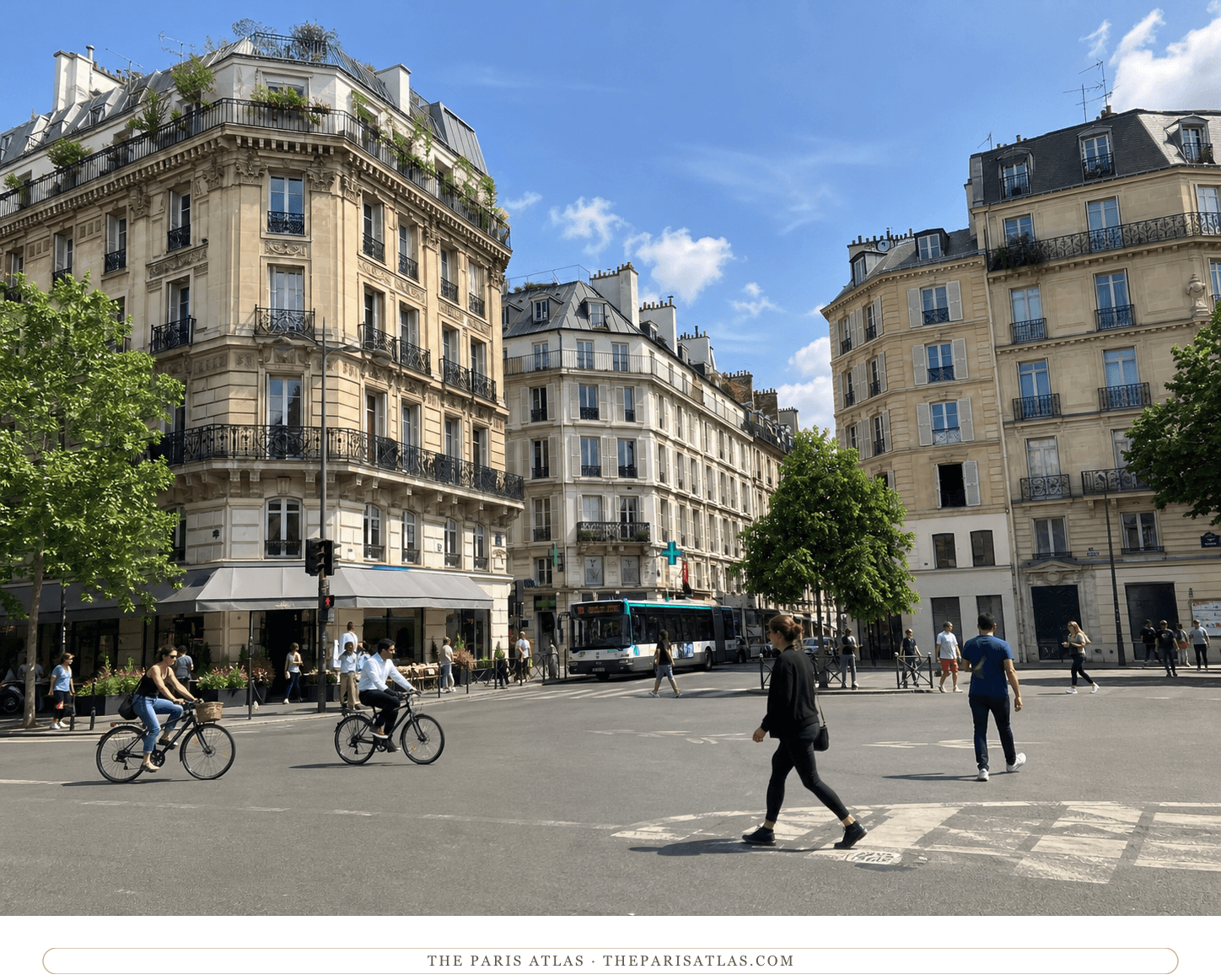
A small square in Saint-Germain-des-Prés, renamed in 2000 for Jean-Paul Sartre and Simone de Beauvoir together — a few steps from the Café de Flore and Les Deux Magots, where they worked.
Visit the placeThe sources below include histories, archival materials, scholarly research, and official records that informed this page. They document Café de Flore, the people connected to it, and its place in Paris.


The café's own history: an 1887 opening, the name taken from a statue of Flora across the boulevard, Apollinaire's editorial office of 1913, the Occupation stove Sartre and Beauvoir worked beside, and the Prix de Flore of May 1994.
The standard account of the Left Bank years, for Baldwin's arrival and for his working in cafés because they were heated and his rooms were not.
The chronology that places the finishing of Go Tell It on the Mountain at Loèche-les-Bains in Switzerland in 1952.
Hemingway’s memoir connects Café de Flore to the Left Bank circuit recalled in A Moveable Feast.
The café’s official website documents its present-day identity and continuing operation at the historic Saint-Germain address.

Map data used to verify the street address, geographic coordinates, and placement shown on this page.
These references provide the documented foundation for this page's history and context. Claim-level citations remain attached to the specific claims they support.
 Explore more resources
Newsletter
The cafés, studios, and walk-up flats where the work was made — one story from the map in every letter.