
Recalled in the memoir
A Moveable Feast
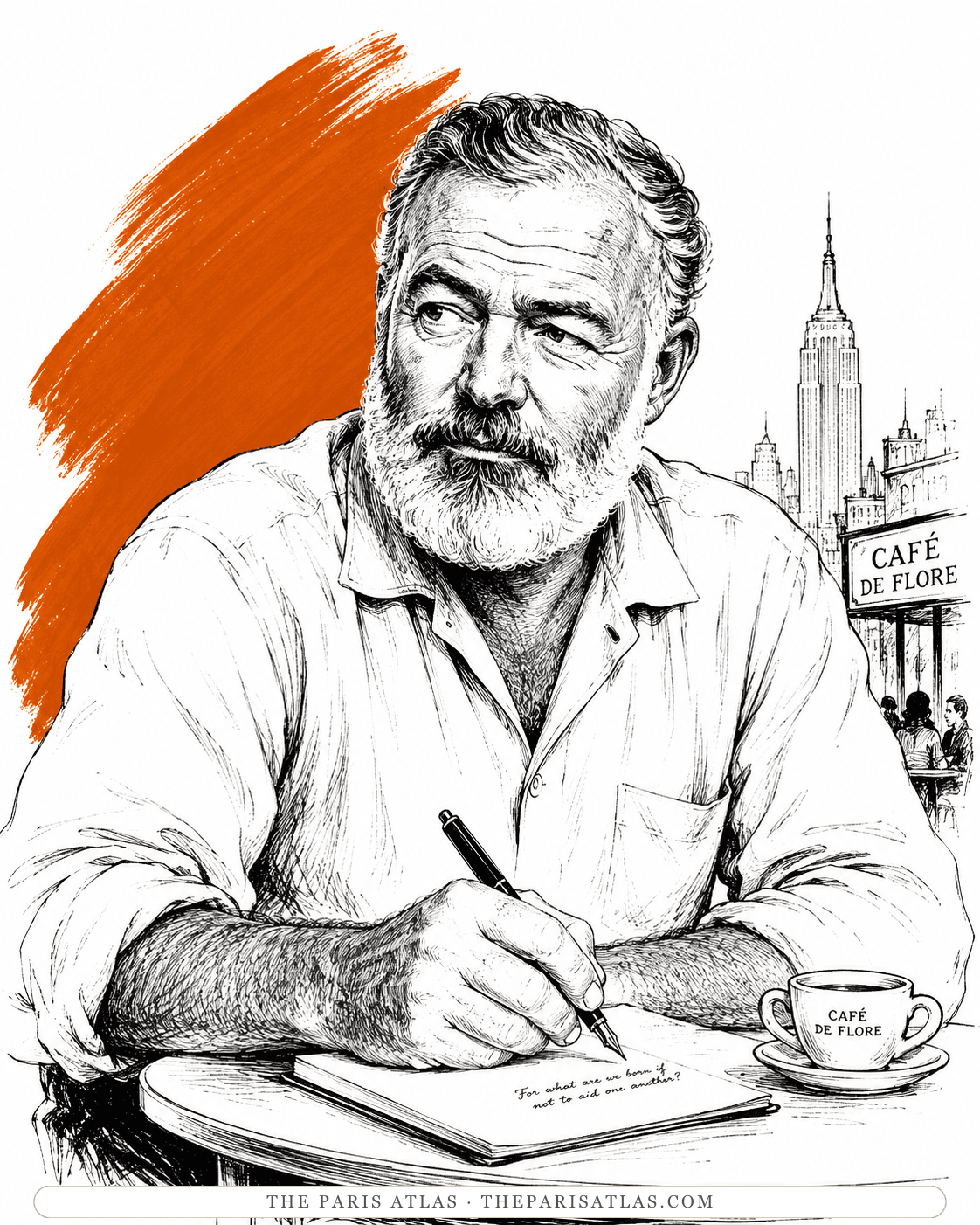
The famous literary terrace where the expat crowd gathered. Hemingway came here, though he preferred La Closerie for actual work.
The famous literary terrace where the expat crowd gathered. Ernest Hemingway came here, though he preferred La Closerie for actual work.
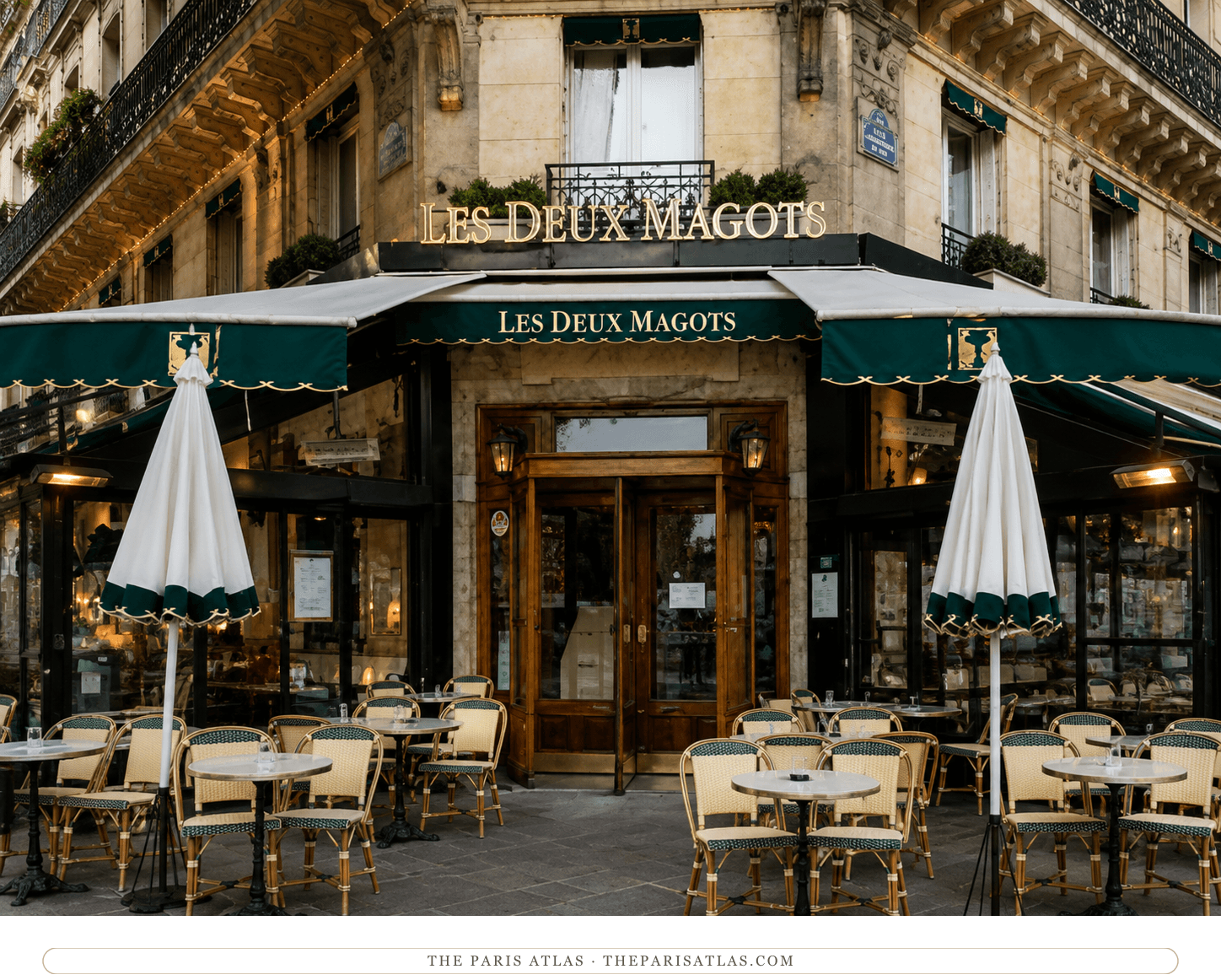
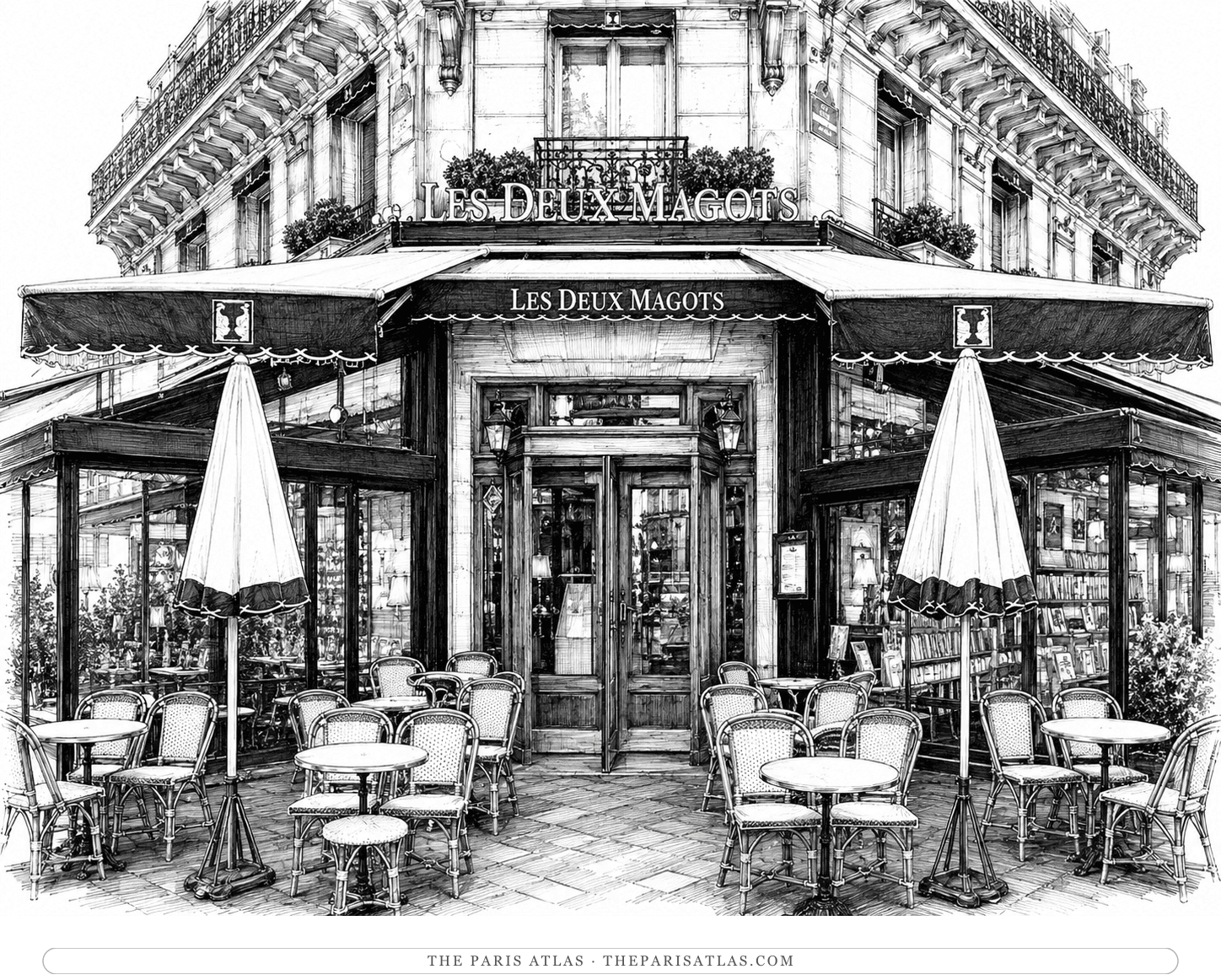
The name comes from the shop that stood here first: a novelty and silk drapers called Aux Deux Magots, after the two Chinese figurines — magots — on its sign. When the café took over the premises in 1884 it kept the name and the statues, and the two lacquered figures still preside over the room from their column, watching a century of literary Paris order coffee beneath them.
The terrace faces the oldest church tower in Paris, and by the twenties it was the sitting room of the quarter — the place you went to be found. Verlaine and Mallarmé had drunk here; the Surrealists held court under Breton with the discipline of a standing committee; and the young Hemingway used it as neutral ground for the biggest meetings of his apprenticeship. It was at the Deux Magots, by his own account, that he sat with James Joyce — the great man drinking dry sherry — and talked about writing while trying not to say anything foolish.[1][2][3]
Hemingway was clear-eyed about the difference between a café for working and a café for talking; the Deux Magots was for talking. The house understood its role and eventually institutionalised it: in 1933 it founded the Prix des Deux Magots, a literary prize created — with very Left Bank logic — as the irreverent answer to the Goncourt. The first winner was Raymond Queneau. The terrace, the statues, and the self-regard all survive.[1][2]
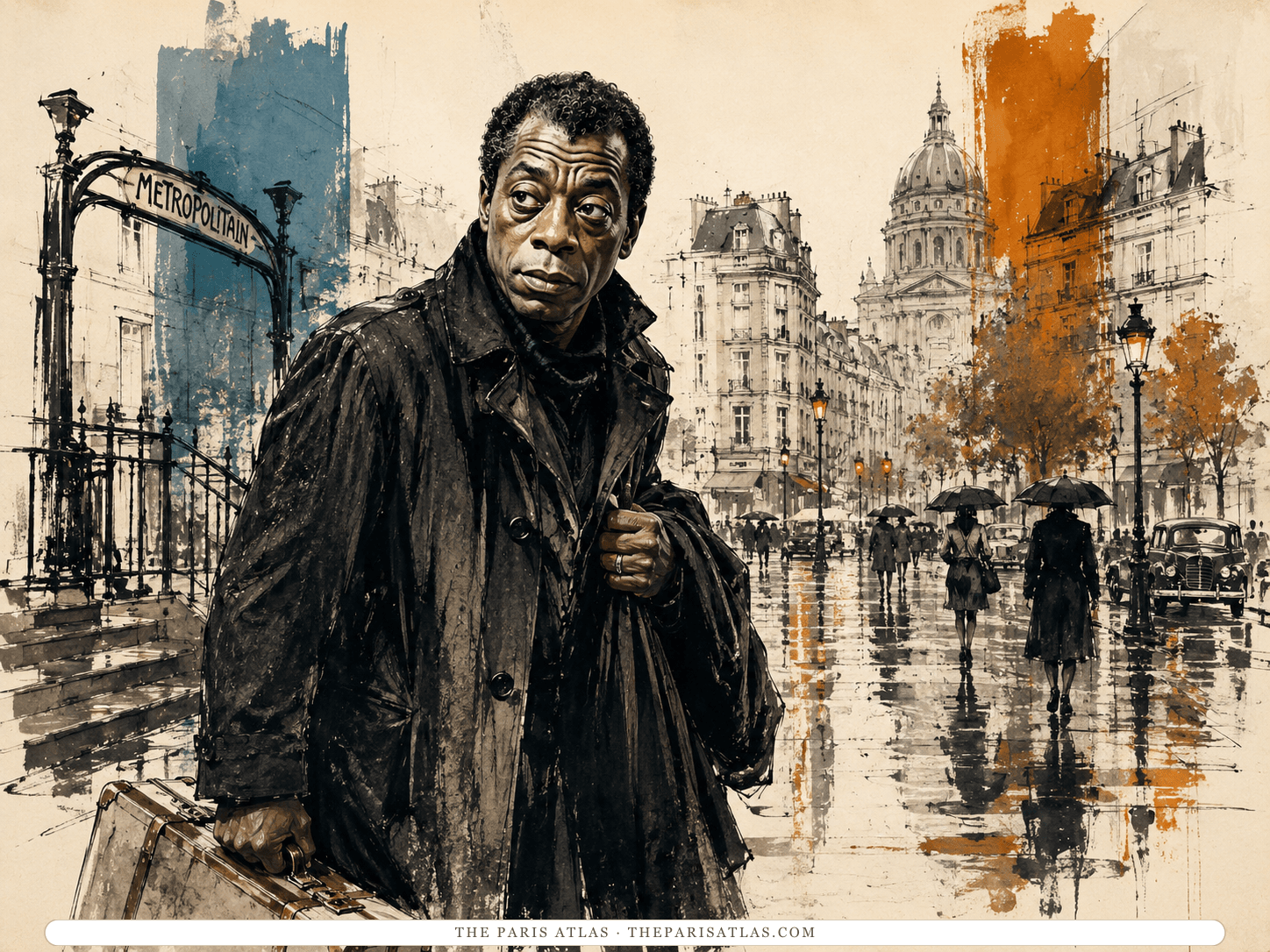
James Baldwin landed in Paris in November 1948 with forty dollars and no French. Accounts of that first day put him on this terrace within hours of arriving, where Richard Wright greeted him by name.[4][5]
Wright was the reason he had got there at all. Four years earlier he had read the twenty-year-old Baldwin's unfinished first novel and backed him for the Eugene F. Saxton fellowship, which Baldwin won in 1945 and which eventually paid for the crossing. The older writer was by then the most famous Black novelist in America and had been living in Paris since 1946. Meeting him on the terrace of the Deux Magots was the closest thing to an official welcome the city offered.[6][5]
It lasted about four months. In the spring of 1949 Baldwin published Everybody's Protest Novel in the Paris magazine Zero, an essay that used Wright's Native Son as its example of what he thought the protest novel got wrong. Wright took it personally, and confronted him about it on the day Zero published it, at Brasserie Lipp a few hundred metres up the boulevard. The friendship never fully recovered.[7][8][9]
They quarreled a second time four years later, and that argument did happen here. In 1953 the two of them argued again on this terrace, with the novelist Chester Himes present, in an evening that carried on afterwards at a Martinican café nearby. Wright and Himes each described that night differently afterwards. Because the two occasions are so often told as one story, the 1949 break over the essay is regularly misplaced in this room; it belongs to Lipp.
The City of Paris still names Les Deux Magots among Baldwin's favorite cafés, so whatever the two men had done to each other, he kept using the room.[4]
The Aux Deux Magots drapery opens, its sign bearing the two Chinese figures.
The café takes over the site and the name; the statues stay.
The Surrealists and the expatriate Americans make the terrace the quarter's common room; Hemingway meets Joyce here.
The house founds the Prix des Deux Magots; Raymond Queneau takes the first award.
Sartre and Beauvoir migrate between here and the Flore, writing through the Occupation.
Richard Wright greets the newly arrived James Baldwin on the terrace, on Baldwin's first day in Paris.
Still open on the square, terrace intact, prize still awarded.
For the writers who used its terrace. Paul Verlaine and Stéphane Mallarmé drank here in the nineteenth century; André Breton ran the Surrealists from it in the 1920s; Ernest Hemingway met James Joyce here; Jean-Paul Sartre and Simone de Beauvoir worked here through the Occupation; and the novelist James Baldwin was greeted on the terrace by Richard Wright on his first day in Paris in 1948. The café has awarded its own literary prize since 1933.
It means "the two figurines". The name came from a novelty and silk drapery on the site whose sign carried two Chinese figures, called magots in French. The café took over the premises in 1884 and kept both the name and the statues, which still sit on a column inside the room.
Yes, from his first day in the city. The novelist James Baldwin arrived in Paris in November 1948, and accounts of that day place him on this terrace being greeted by Richard Wright, the writer whose recommendation had won him the fellowship that paid for the trip. The City of Paris names Les Deux Magots among his favorite cafés.
By Hemingway's own account, yes. He described sitting here with Joyce — who drank dry sherry — talking about writing. Hemingway distinguished between cafés for working and cafés for talking, and he put the Deux Magots firmly in the second category, preferring La Closerie des Lilas when he actually wanted to write.
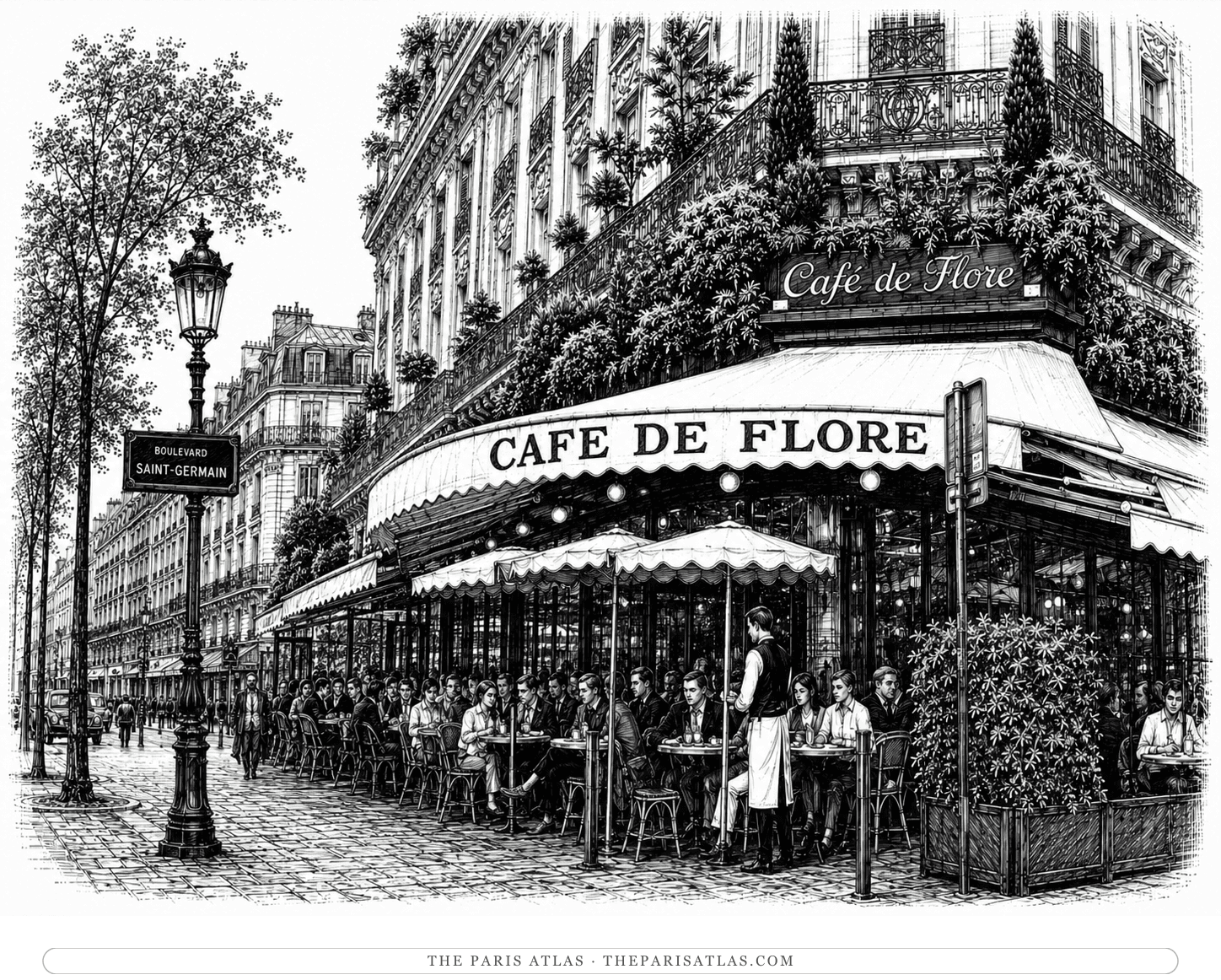
About fifty metres, and two different house legends. Les Deux Magots is the older address and its fame runs from the Symbolists through the Surrealists to the expatriate 1920s. The Café de Flore's reputation is mostly post-war and belongs to Jean-Paul Sartre and Simone de Beauvoir. Both sat on the same daily circuit, and most regulars — Baldwin included — used both.
Recalled in the memoir
The famous literary terrace where the expat crowd gathered. Hemingway came here, though he preferred La Closerie for actual work.
Frequented by
Part of his Left Bank circuit, though he preferred the quieter Closerie for working.
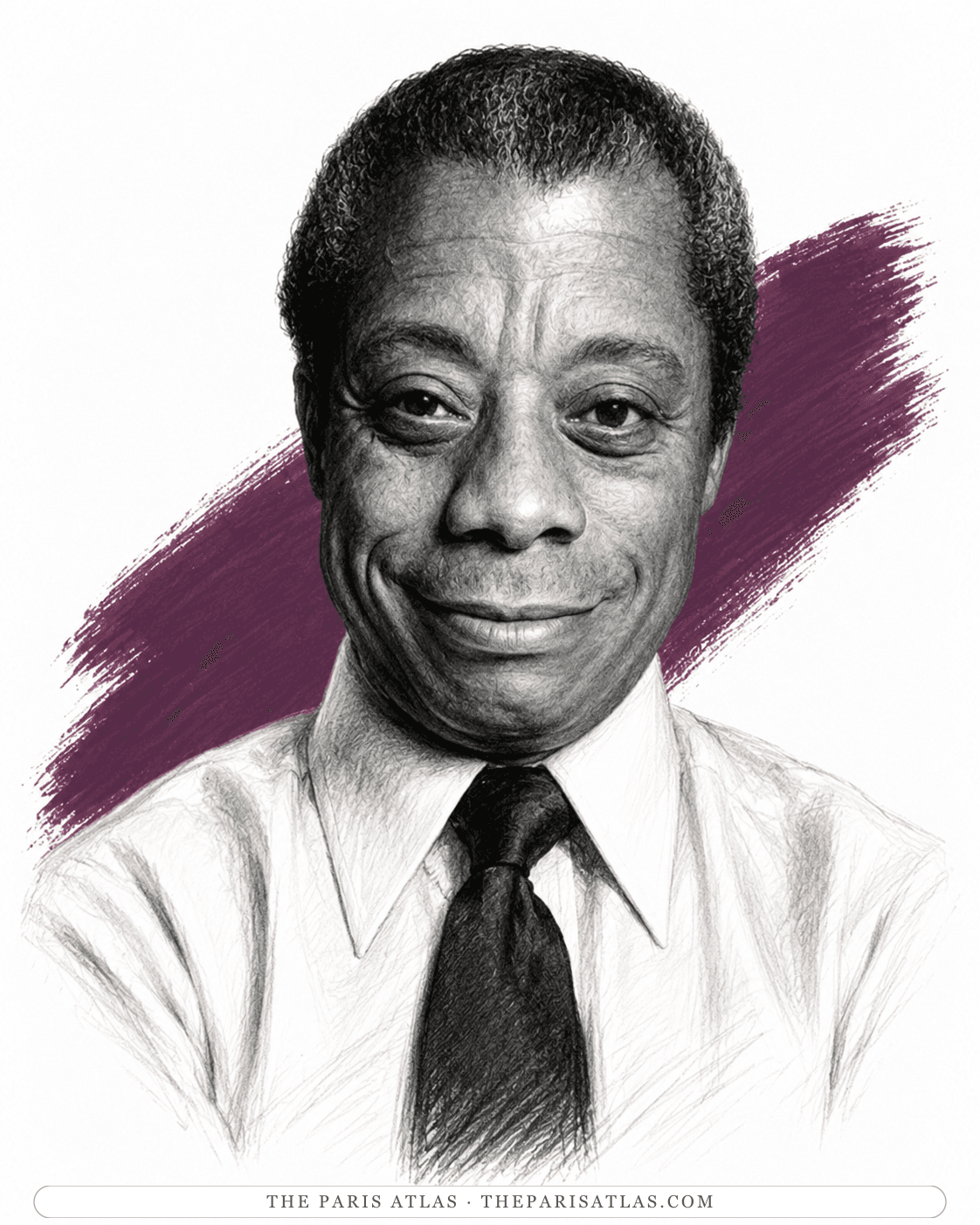
Frequented by · 1948
The City of Paris names Les Deux Magots among Baldwin's favorite cafés, and accounts of his first day in Paris in November 1948 put him at this terrace being greeted by Richard Wright, who had helped him get there.

Frequented by · 1945
Orwell is reported to have seen James Joyce eating here and not approached him. Returning to Paris as a war correspondent in 1945 he arranged to meet Albert Camus at the café — an appointment Camus was too ill to keep, so the two writers never met.

Frequented by
One of the two cafés on the junction now named for Sartre and Beauvoir, and part of the pair's daily working geography in Saint-Germain-des-Prés.
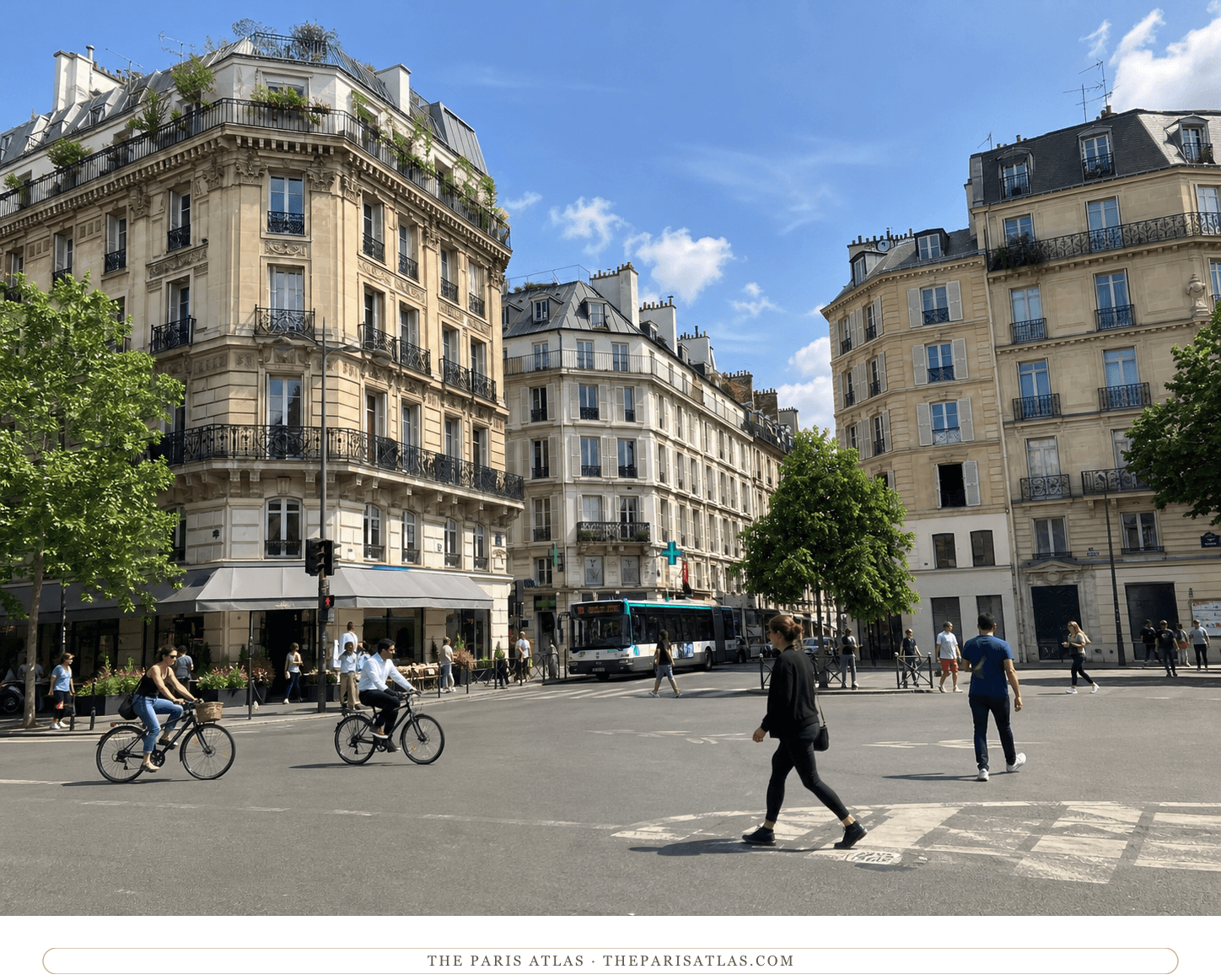
A small square in Saint-Germain-des-Prés, renamed in 2000 for Jean-Paul Sartre and Simone de Beauvoir together — a few steps from the Café de Flore and Les Deux Magots, where they worked.
Visit the place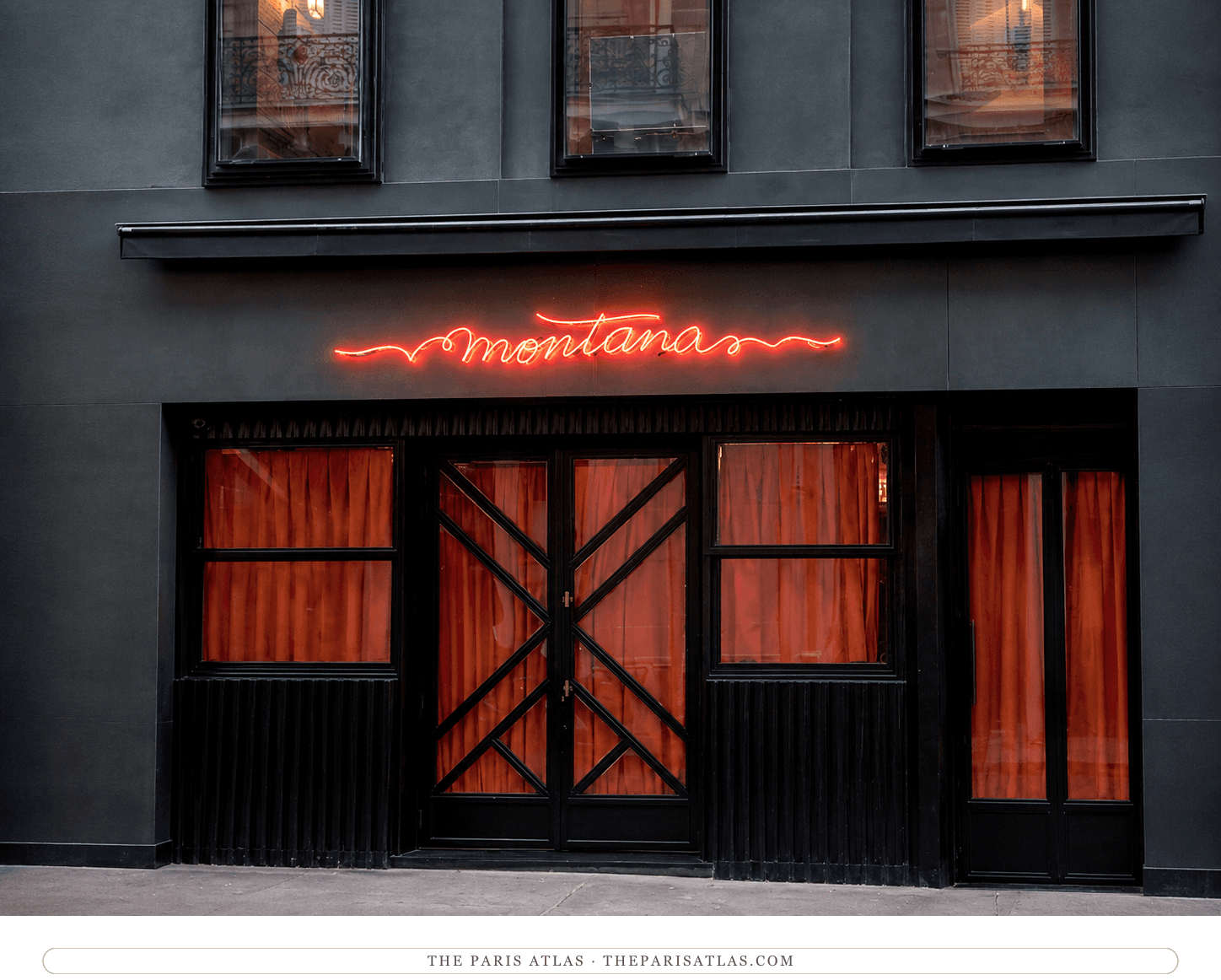
A Saint-Germain bar of the postwar years, steps from the Café de Flore, that the City of Paris counts among the gay clubs James Baldwin frequented.
Visit the place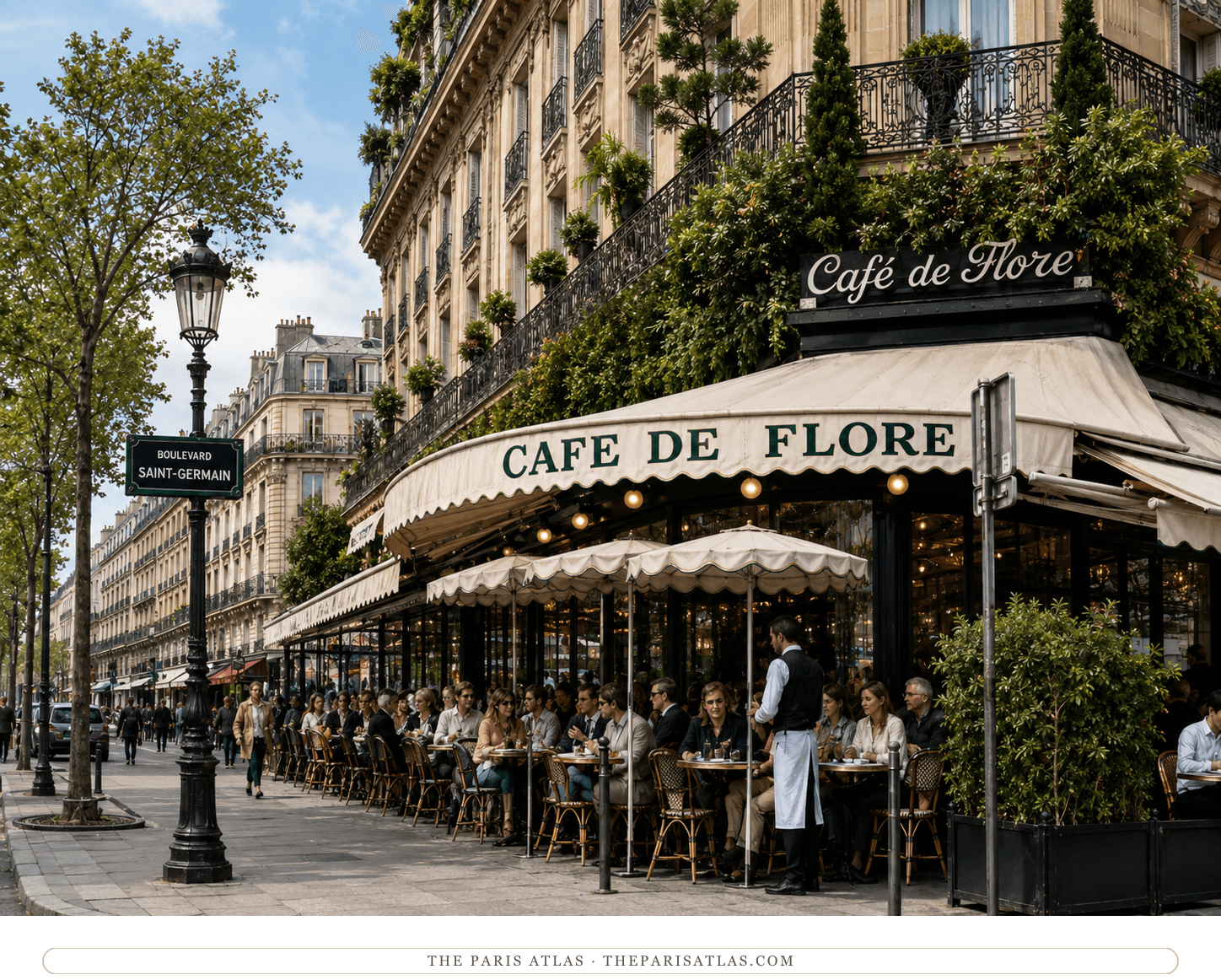
A few doors from Les Deux Magots and part of the same Left Bank circuit. Later became more associated with Jean-Paul Sartre and Simone de Beauvoir.
Visit the place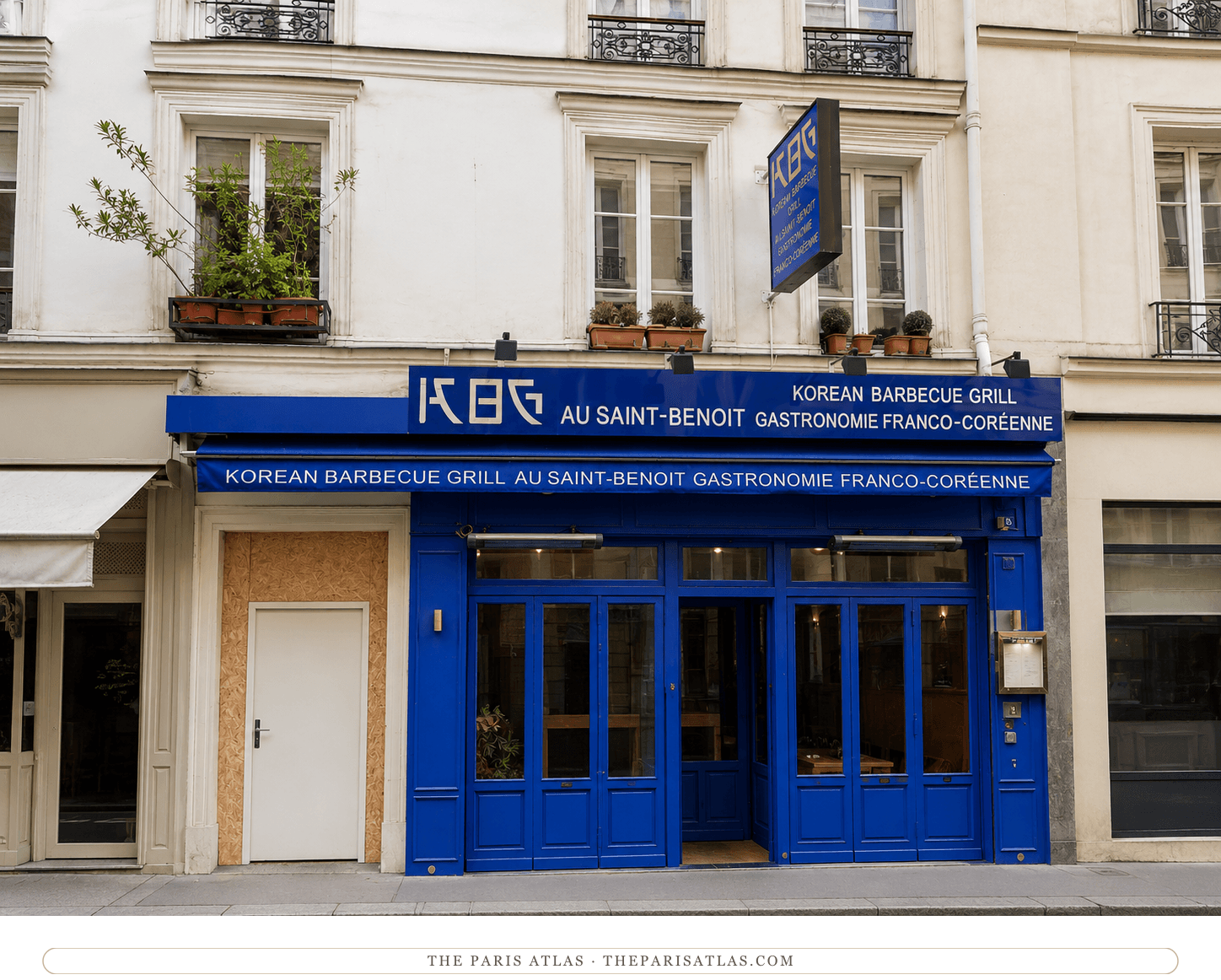
The Saint-Germain address where the City of Paris places James Baldwin as a likely resident in the early 1950s, around the publication of Go Tell It on the Mountain.
Visit the placeThe sources below include histories, archival materials, scholarly research, and official records that informed this page. They document Les Deux Magots, the people connected to it, and its place in Paris.


First-person evidence and historical context used in preparing the Les Deux Magots page.

Cambridge's chapter on the Baldwin–Wright relationship: Wright read Baldwin's early drafts and helped him win the Eugene F. Saxton Fellowship.
A college library's record of where Baldwin's essays first appeared, including Everybody's Protest Novel in Zero, Spring 1949.
A university library exhibition on what Everybody's Protest Novel argued and why it used Native Son as its example.

Baldwin's own account, written after Wright's death, of the afternoon the essay appeared.
Web source consulted for documented facts and historical context presented on the Les Deux Magots page.
Map data used to verify addresses, geographic coordinates, and the placement associated with Les Deux Magots.
Official record used to verify names, dates, institutional details, or other factual information on this page.
These references provide the documented foundation for this page's history and context. Claim-level citations remain attached to the specific claims they support.
 Explore more resources
Newsletter
The cafés, studios, and walk-up flats where the work was made — one story from the map in every letter.