The Amazing and Invariable Beauford Delaney
How Beauford appears in its pages: The Knoxville-born modernist painter whose creative intensity, generosity, and precarious life are the essay’s subject.
American painter of light and portraits who took the teenage James Baldwin under his wing in Greenwich Village, moved to Paris himself in 1953, and remained the person Baldwin credited with teaching him how to see.
Beauford Delaney was an American painter who spent the first half of his working life in New York and the second in Paris, and who is now recognised as one of the significant American colourists of the twentieth century.
He was born in Knoxville, Tennessee, on 30 December 1901 and died in Paris on 26 March 1979.
He painted the streets and people of Greenwich Village through the 1930s and 1940s in thick, high-keyed colour, and after moving to France in 1953 turned increasingly to abstraction built almost entirely out of yellow.
James Baldwin, who met him at fifteen and called him his spiritual father, said that Delaney taught him how to see. Delaney's portraits of Baldwin, and Baldwin's writing about Delaney, are the reason a great deal of what is known about him is known.[1]
He was poor for nearly all of his life and mentally ill for the last two decades of it. He died in a psychiatric hospital in Paris.
Beauford Delaney was born on 30 December 1901 in Knoxville, Tennessee, the eighth of ten children. His father, Samuel Delaney, was a Methodist minister and barber; his mother, Delia Johnson Delaney, had been born into slavery.[2]
Only four of the ten children lived to adulthood. Beauford and his younger brother Joseph both became painters, and both had long careers.
He was taught locally by a white Knoxville artist, Lloyd Branson, who saw the work and paid for him to go north. From 1924 to 1929 he studied in Boston: at the Massachusetts Normal Art School, at the South Boston School of Art, and in evening classes at the Copley Society. He copied in the museums in his own time. In later years he described himself as largely self-taught.[2]
In 1929 Delaney moved to New York and stayed for twenty-four years. He went first to Harlem, arrived at the start of the Depression, and was poor throughout.[2]
His first solo show came the following year, at the 135th Street branch of the New York Public Library.[3]
He lived and worked in Greenwich Village, mostly at 181 Greene Street, in a cold-water loft with no bath. He painted the streets, the fire escapes, the hydrants, the traffic and the people: portraits of neighbours, of musicians, of Ethel Waters, W. C. Handy, Louis Armstrong and Duke Ellington.[2]
The style is immediately recognisable. Delaney laid on paint thickly, outlined shapes in black, and used colour at a pitch that has nothing to do with the actual colour of a New York street. Yellow was already dominant.[4]
His pastel portraits took W. E. B. Du Bois and Duke Ellington as sitters. He worked for the Works Progress Administration during the 1930s, showed regularly and sold rarely. He supported himself with odd jobs: part-time teaching at a Village art school, custodial work at the Whitney Museum, and a spell as a gallery telephone operator.[5]
The Smithsonian's account of him puts the Greene Street years plainly: the street became to Delaney what Mont Sainte-Victoire had been to Cézanne.[2]
In 1940 James Baldwin, then fifteen and the stepson of a Harlem preacher, knocked on the door at 181 Greene Street. He had been given the address by Emile Capouya, a fellow pupil at DeWitt Clinton High School who worked with him on the school literary magazine. Delaney was thirty-eight.[1]
In Delaney's rooms Baldwin heard the jazz and blues records that his church upbringing had kept away from him.
The friendship lasted for the rest of Delaney's life. Baldwin wrote about him repeatedly and in the strongest terms he used about anyone: he called him his spiritual father, and said that Delaney was the first living proof he had that a Black man could be an artist.[1]
Baldwin also credited Delaney with teaching him to look. In an account Baldwin repeated often, Delaney pointed at a puddle in the street. He made Baldwin see the oil in it, then the colours in the oil, then the reflection of the buildings above. Baldwin dated his ability to describe the physical world to that afternoon.[1]
Delaney painted Baldwin many times over nearly forty years, from a boy to a middle-aged man. The first was Dark Rapture, painted in 1941.
When Baldwin bought a one-way ticket to Paris in 1948, Delaney encouraged him to go and promised to follow.[1]
Delaney spent a fellowship year at the Yaddo colony in upstate New York in 1950 and 1951, then sailed for Europe in 1953, intending to go on to Rome. He stayed in Paris for the rest of his life. Baldwin was already living in France, and a number of Black American writers and artists had settled there.[2]
He lived first in the city and then at Clamart, in the southern suburbs, in conditions that were often close to destitute. Friends, Baldwin among them, sent money and bought paintings to keep him going.
The work changed in Paris. The New York street scenes gave way to abstraction: fields of colour, mostly yellow, built up in swirls and dabs with no subject at all. He went on painting portraits alongside them, of Baldwin, of Henry Miller, of Marian Anderson and of himself.[4]
The abstractions are what his reputation now rests on. They were made at the same time as American abstract expressionism and look nothing like it, being warmer, denser and made out of light rather than gesture. What they draw on is Van Gogh and the Fauves rather than anything happening in New York.[4]
Yellow is the colour Delaney is identified with, and he used it from the New York years onward, first as the light in a street scene and then as the whole surface of a painting.
Baldwin wrote about it directly, and connected it to the light in the Greene Street loft and to Delaney's own account of what colour was for. Delaney himself said little about it in print. The Paris canvases of the 1960s are built out of yellow in layers, applied in swirls, dabs and short strokes, with other colours pushed to the edges or buried under it.[1]
Delaney heard voices from at least the late 1950s and the condition worsened through the 1960s. He drank heavily, was hospitalised more than once, and in 1961, on a boat to Greece, attempted to drown himself.[3]
He kept working through it for as long as he could. Friends organised exhibitions and sales, and the Paris dealer who represented him arranged shows, but he never earned enough to be secure.
Baldwin, who had called Delaney his spiritual father, looked after him until schizophrenia made that impossible. By the mid-1970s Delaney could not live alone. In 1975 he was committed to the psychiatric hospital of Sainte-Anne in Paris, and he stayed there until his death.
Beauford Delaney died at Sainte-Anne on 26 March 1979, aged seventy-seven. He is buried in the cemetery at Thiais, south of Paris.[3]
Delaney's work was scattered and his reputation was thin at his death. His estate was disputed and much of the work stayed in storage for years.
In 1978, the year before he died, the Studio Museum in Harlem opened a retrospective of his work, the first exhibition in its Black Master series. He was in hospital in Paris and did not see it.[2]
Interest built again from the 1990s. Museums in the United States began acquiring, a substantial biography appeared in 1998, and exhibitions in Knoxville, New York and Paris presented the New York and Paris periods together for the first time. Prices for his work rose sharply over the following two decades, and the Greenwich Village paintings and the Paris abstractions are now shown as one body of work rather than two.
In 2020 the Knoxville Museum of Art opened a permanent gallery devoted to Beauford and Joseph Delaney, and portraits by him now hang in major American collections.
Delaney is a rare case of a painter whose two careers are both first-rate and look almost unrelated. The Greenwich Village street scenes of the 1930s and 1940s are among the strongest American urban paintings of the period, and the Paris abstractions of the 1960s are a body of colour painting with no close relative.
He also stands at the centre of a network that is easy to miss. Through Delaney, the New York of the 1930s connects to the Paris of the 1950s and to James Baldwin's writing. Baldwin's account of learning to see in a Greene Street loft is one of the clearest descriptions anyone has given of what a painter can teach a writer.
Born in Knoxville, Tennessee, on 30 December, the eighth of ten children of a Methodist minister and a mother born into slavery.
Only four of the ten Delaney children survive to adulthood. He and his younger brother Joseph both become painters.
Is taught by the white Knoxville artist Lloyd Branson, who sees the work and pays for him to go north.
Moves to Boston, studies at several art schools and copies in the museums.
Moves to New York and settles in Greenwich Village.
Shows pastel portraits at the Whitney Studio Galleries.
Works for the Works Progress Administration during the Depression.
Paints portraits of musicians including W. C. Handy, Louis Armstrong and Duke Ellington.
James Baldwin, aged fifteen, knocks on the door of Delaney's loft at 181 Greene Street. The friendship lasts the rest of Delaney's life.
Shows Can Fire in the Park, one of his best-known New York street paintings.
Continues painting Greenwich Village in thick, high-keyed colour, outlining shapes in black.
Works as a caretaker and a gallery telephone operator to support himself.
Is included in group exhibitions but sells very little.
Sails for Europe intending to go on to Rome, and stays in Paris for the rest of his life.
Moves out to Clamart, in the southern suburbs of Paris, and lives close to destitution.
Begins the abstract paintings built almost entirely out of yellow.
Begins hearing voices. The condition worsens over the following decade.
Attempts to drown himself on a boat to Greece.
Holds a solo exhibition in Paris arranged by friends, who buy work to keep him going.
Paints portraits of Henry Miller, Marian Anderson and James Baldwin alongside the abstractions.
Is hospitalised in Paris for the first of several times.
Exhibits at the Galerie Darthea Speyer in Paris.
His health declines further and he is unable to work consistently.
Is committed to the psychiatric hospital of Sainte-Anne in Paris and remains there.
Dies at Sainte-Anne on 26 March, aged seventy-seven, and is buried at Thiais, south of Paris.
His estate is disputed and much of the work goes into storage for years.
James Baldwin dies, having written about Delaney as his spiritual father for four decades.
Exhibitions in the United States begin the reassessment of his work.
A substantial biography brings the New York and Paris periods together for the first time.
The Studio Museum in Harlem shows his work alongside that of his brother Joseph.
The Knoxville Museum of Art opens a permanent gallery devoted to Beauford and Joseph Delaney.
How Beauford appears in its pages: The Knoxville-born modernist painter whose creative intensity, generosity, and precarious life are the essay’s subject.
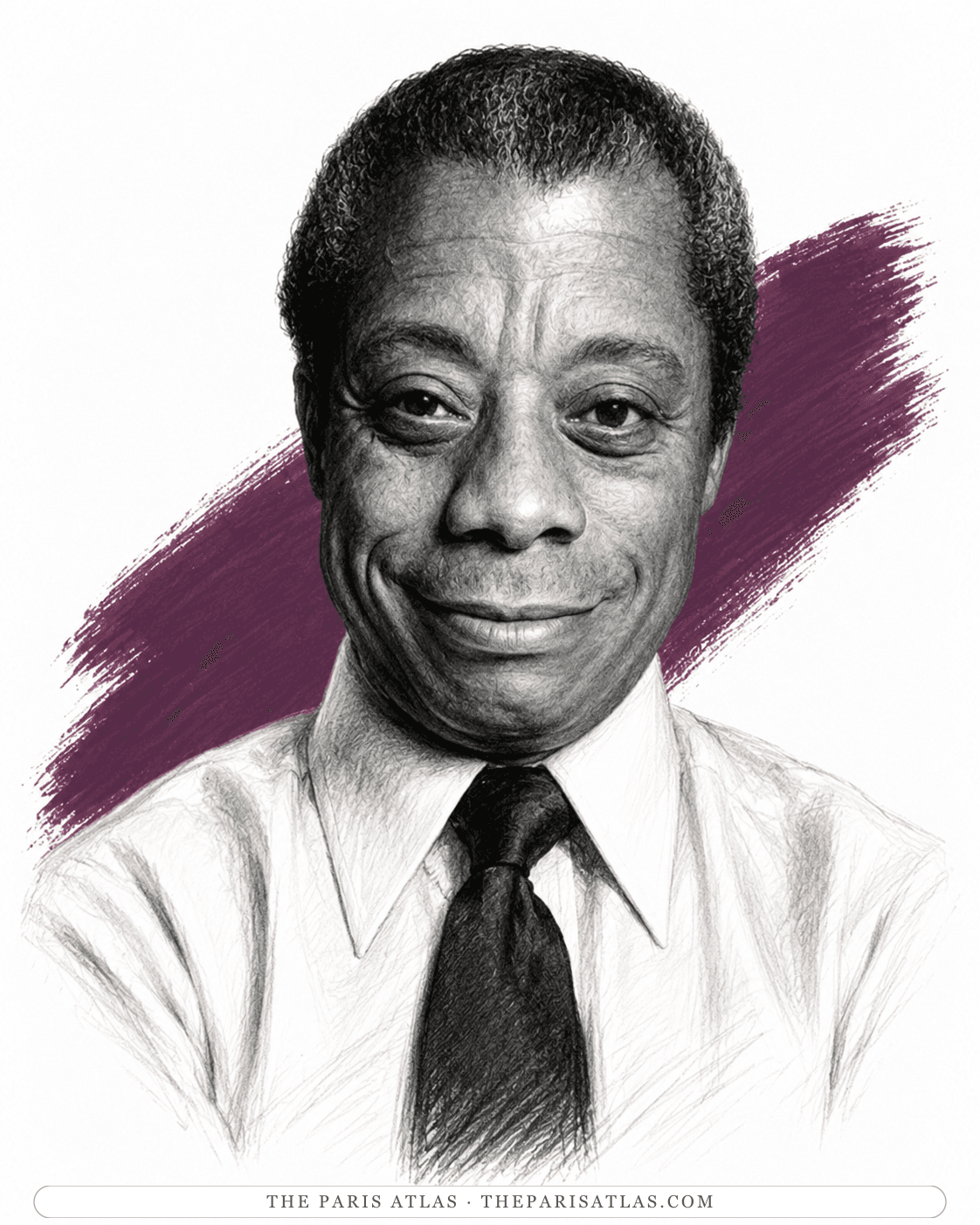
Mentored · 1940
Baldwin was about fifteen when a school friend sent him to Delaney's room in Greenwich Village. He credited the painter with two things for the rest of his life: proof that a Black person could live as an artist, and his own way of looking at the physical world.
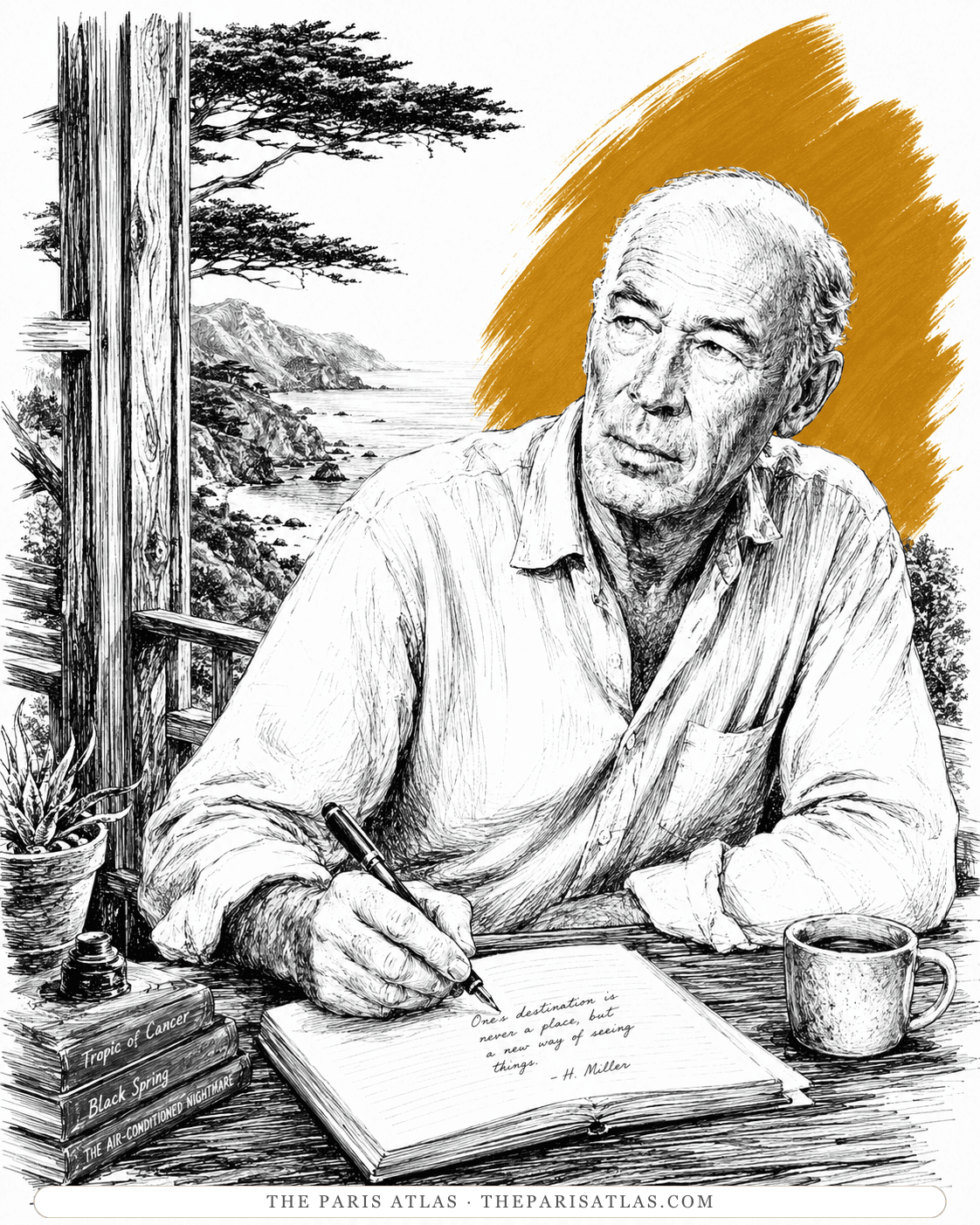
Met
The Smithsonian American Art Museum counts Miller, with James Baldwin, among the close friendships of Delaney's New York years.
An American painter, born in Knoxville, Tennessee, in 1901 and died in Paris in 1979. He painted Greenwich Village street scenes and portraits through the 1930s and 1940s, moved to France in 1953, and turned to abstraction built almost entirely out of yellow. He is now recognised as one of the significant American colourists of the century.
Baldwin knocked on Delaney's door in Greenwich Village at sixteen, in 1940, and the friendship lasted until Delaney's death. Baldwin called him his spiritual father and said Delaney was the first living proof he had that a Black man could be an artist. Delaney painted him many times over nearly forty years.
How to look. In an account Baldwin repeated often, Delaney pointed at a puddle in the street and made him see the oil in it, the colours in the oil and the reflection of the buildings above. Baldwin dated his ability to describe the physical world to that afternoon.
He sailed for Europe in 1953 intending to travel on to Rome and stayed in France instead. Baldwin was already living there, and a number of Black American writers and artists had settled in Paris. Delaney lived in the city and then at Clamart in the southern suburbs, often close to destitute, supported partly by friends who bought his work.
He died on 26 March 1979 at Sainte-Anne, a psychiatric hospital in Paris, aged seventy-seven. He had heard voices since the late 1950s, drank heavily, was hospitalised repeatedly, and had attempted to drown himself in 1961. He was committed to Sainte-Anne in 1975 and remained there. He is buried at Thiais, south of Paris.
Major American museums now hold his work, and the Knoxville Museum of Art opened a permanent gallery in 2020 devoted to Beauford and his brother Joseph Delaney, who was also a painter. His reputation was thin at his death, his estate was disputed, and much of the work stayed in storage until exhibitions from the 1990s brought it back.
Mentored · 1940
Baldwin was about fifteen when a school friend sent him to Delaney's room in Greenwich Village. He credited the painter with two things for the rest of his life: proof that a Black person could live as an artist, and his own way of looking at the physical world.
Met
The Smithsonian American Art Museum counts Miller, with James Baldwin, among the close friendships of Delaney's New York years.
The sources below include biographies, scholarly essays, interviews, and primary materials that informed this page. They reflect both the historical record and ongoing critical conversations about Beauford Delaney and their work.


Web source consulted for documented facts and historical context presented on the Beauford Delaney page.
Reference article cross-checked for the dates, the New York and Paris periods, the illness and the burial.
These references anchor the page in the documented record and in the scholarly conversations around Beauford Delaney. Every claim on this page traces back to one or more of the works listed here.
 Explore more resources