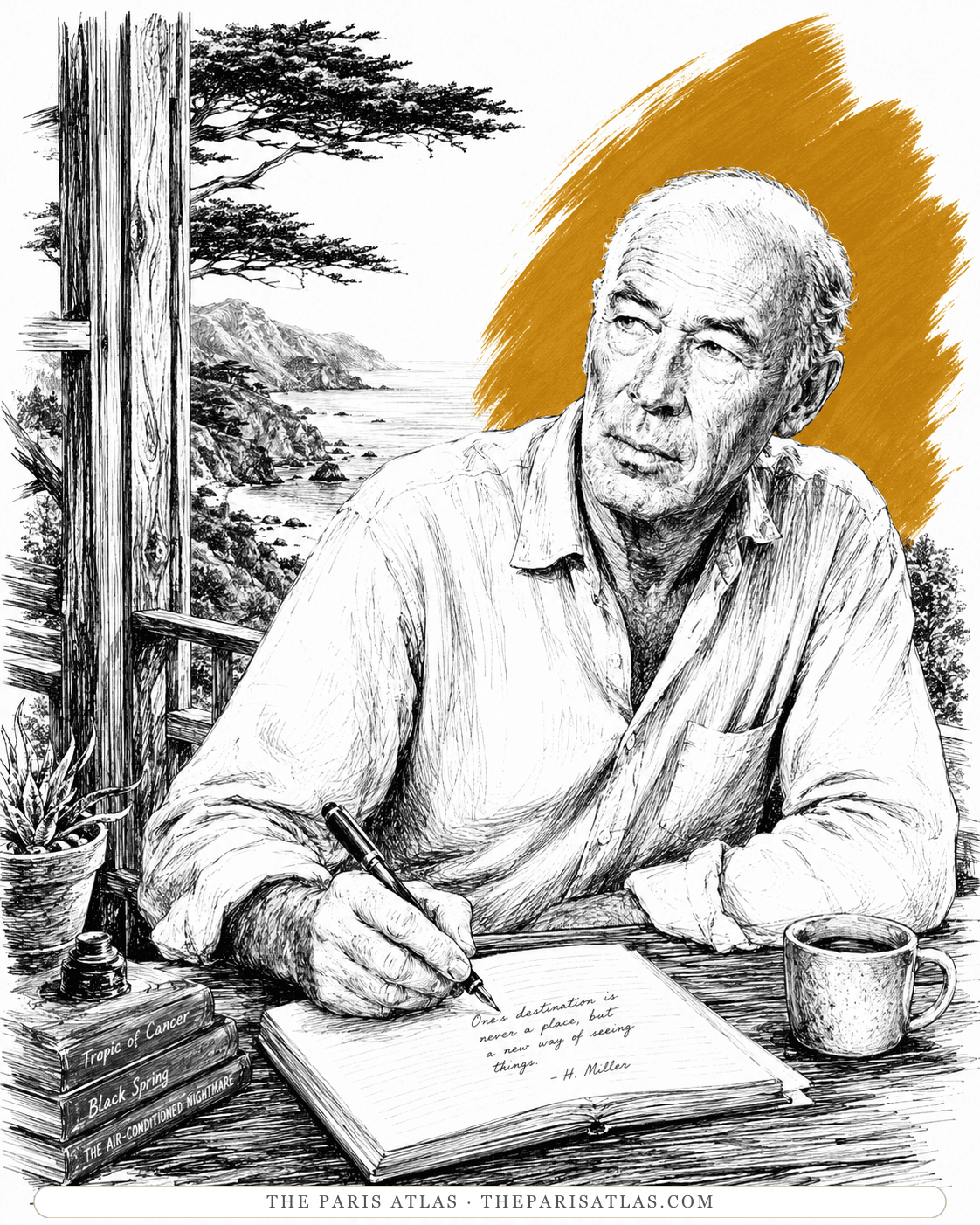


The Amazing and Invariable Beauford Delaney
by Henry Miller
Miller’s incandescent portrait of Beauford Delaney: painter, friend, and proof that creative abundance could survive American neglect.
- 1945
About Henry Miller
The story, briefly
Spoiler-freeThe Amazing and Invariable Beauford Delaney is Henry Miller’s portrait of the African American painter he met during his journey across the United States. Miller presents Delaney as an artist of extraordinary radiance and resilience, living precariously while producing work whose color and spiritual intensity contradicted his material circumstances. Alicat Book Shop published the piece in 1945 as number two in its Outcast chapbook series, in an edition of 750 copies; it also became part of Remember to Remember.
The story, in more detail
The essay belongs to Miller’s counter-map of American culture: against standardized prosperity he sets isolated makers whose lives refuse the national pattern. Delaney’s generosity, music, friendships, and paintings become inseparable in that argument.
The Morgan record identifies the text as a fragment from the projected second volume of The Air-Conditioned Nightmare and documents the 750-copy Alicat issue. Its later appearance in Remember to Remember placed Delaney beside Miller’s portraits of Jean Varda, Abe Rattner, and other independent artists.
Themes and analysis
An artist as an answer to America
Miller presents Beauford Delaney as a creative presence whose value is not measured by financial success or institutional recognition. The portrait forms part of his larger search for exceptions to the materialism he attacks in his American travel writing.
Delaney should nevertheless remain a person with his own artistic history, not only an example in Miller’s argument. His work, relationships, and circumstances exceed the role of a spiritually sustaining friend assigned to him by an admiring writer.
In the passage reproduced by critic Judd Tully, Miller describes street paintings without human figures, yet fills them with emotional life. Color becomes explosive, while hunger moves through an apparently inescapable street. The absence of painted people does not empty the scene of feeling; it makes the whole setting carry the loneliness Miller perceives. His account then moves from what is on the canvas to the painter's isolation in North America. That shift is revealing: the paintings become an argument about their maker's circumstances, not simply objects whose appearance he records.
Admiration and racial stereotyping
The praise contains romantic racial generalizations. Miller associates Delaney’s art with an imagined Africa and contrasts that image with a spiritually exhausted white America. Contemporary criticism has rightly identified the stereotyping within this apparently celebratory language.
That feature cannot be removed from the account without making the essay sound more perceptive than it is. Miller’s admiration helped draw attention to Delaney, but affection did not prevent him from replacing the painter’s particular history with an exotic racial idea. Readers need to hold those facts together.
The 1945 portrait is not the later Paris tribute
Alicat Book Shop issued the essay in 1945 as the second Outcast chapbook, in 750 copies. The Morgan catalogue identifies it as material from the projected second Air-Conditioned Nightmare volume; it subsequently appeared in Remember to Remember.
Miller also wrote a separate tribute to Delaney in 1972, after the painter had spent many years in Paris. That later text belongs to a different occasion and cannot supply scenes for the 1945 essay. Keeping the two apart preserves the chronology of both the friendship and Delaney’s career.
Why we recommend it
A major friendship in miniature
Miller sees Delaney’s warmth and artistic conviction as one continuous force.
A doorway into Delaney
The essay makes a passionate starting point, best followed by modern scholarship centered on the painter himself.
Praise that deserves a critical reading
Miller’s admiration can be read alongside the racial stereotypes in his language, rather than accepted as a complete account of Delaney.
What this book explores
The people in its pages
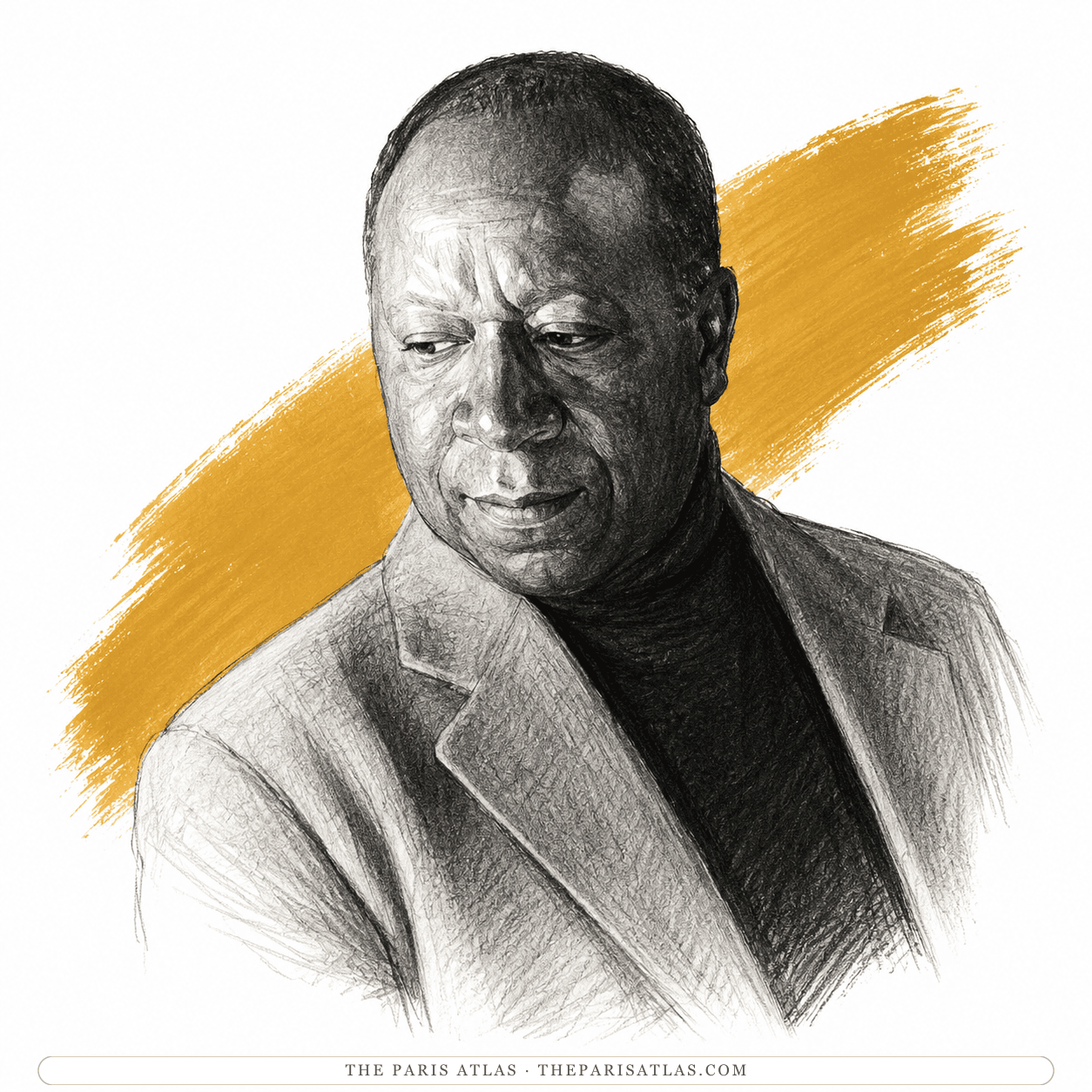
Beauford Delaney
The Knoxville-born modernist painter whose creative intensity, generosity, and precarious life are the essay’s subject.
Timeline
1945
Alicat Book Shop publishes the separate chapbook.
1947
The portrait appears in Remember to Remember.
1972
Miller writes another tribute to Delaney. It is a separate work, not a revision of the 1945 portrait.
Book editions
Paperback
- Paperback
- Alicat Book Shop
- 1945
Hardcover
- Hardcover
- New Directions
- 1947
Reader reviews
Readers may also like

The Air-Conditioned Nightmare
The American journey and cultural argument from which the portrait emerged.
Read our take
The Amazing and Invariable Beauford Delaney: frequently asked questions
Who was Beauford Delaney?
An American modernist painter known for luminous portraits and abstractions, and a friend of Miller’s from the 1940s.
When was the essay first published?
Alicat Book Shop issued it in 1945 in 750 copies as the second Outcast chapbook.
Is it in another Miller book?
Yes. It was collected in Remember to Remember in 1947.
Is Miller’s 1972 Delaney tribute the same text?
No. The later tribute is distinct from the essay first published separately in 1945.
Is the book a full biography of Delaney?
No. It is Miller’s personal portrait of the painter, not a comprehensive life or catalogue of his work.
If you like Henry Miller
Explore authors with a similar voice, perspective, and influence.
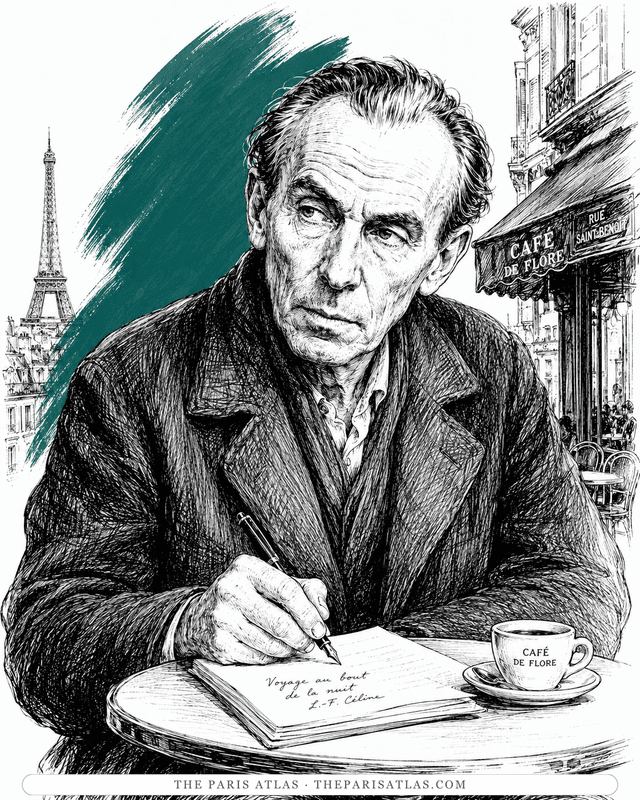
Louis-Ferdinand Céline
Miller's acknowledged master at making literature out of the gutter. Journey gave him permission; Cancer is what he did with it.
View author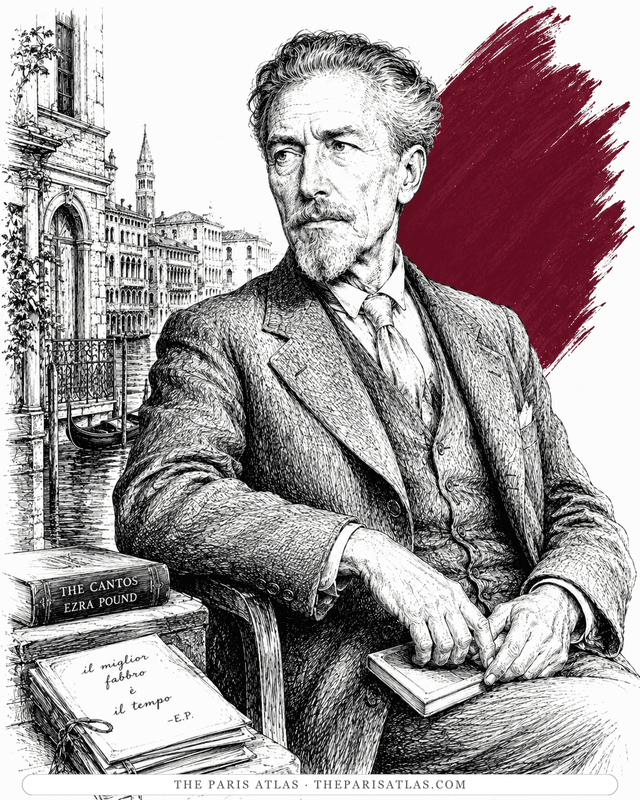
Ezra Pound
Pound read Cancer and sent Miller a famously backhanded postcard. Both believed literature's job was to wake the reader by any means necessary.
View author
Simone de Beauvoir
French writer and philosopher whose novels, memoirs, and social analysis examined freedom, gender, responsibility, aging, and the material conditions that shape a life.
View author
References
References
The sources below include the primary text, editions, scholarship, archival materials, and other records that informed this page. They document The Amazing and Invariable Beauford Delaney, its publication, and its place in literary history.


1The Amazing and Invariable Beauford Delaney
EssaysHenry Miller, 1945Used forThe primary text represented by this page, used for descriptions of the work’s contents and for any quoted passages shown here.

2Beauford Delaney’s Light and Faith
WebsiteThe New YorkerUsed forWeb source consulted for documented facts and historical context presented on the The Amazing and Invariable Beauford Delaney page.
3Henry Miller’s 1972 tribute to Beauford — archival letter excerpts
WebsiteLes Amis de Beauford DelaneyUsed forWeb source consulted for documented facts and historical context presented on the The Amazing and Invariable Beauford Delaney page.
4The Amazing and Invariable Beauford DeLaney — printed-book record
Official recordThe Morgan Library & MuseumUsed forOfficial record used to verify names, dates, institutional details, or other factual information on this page.
5Remember to Remember
Official recordNew DirectionsUsed forOfficial record used to verify names, dates, institutional details, or other factual information on this page.
6The Happiest Man Alive: A Biography of Henry Miller
BiographySimon & Schuster, 1991Used forBiographical evidence used to verify chronology, relationships, and historical context connected to The Amazing and Invariable Beauford Delaney.
7Henry Miller: A Life
BiographyW. W. Norton, 1991Used forBiographical evidence used to verify chronology, relationships, and historical context connected to The Amazing and Invariable Beauford Delaney.
8Beauford Delaney — ARTS Magazine review with a quoted Henry Miller passage
WebsiteJudd Tully / ARTS Magazine, 1979Used forReproduces Miller's description of the empty street paintings. Used for that passage only, not the review's inconsistent publication date.
i
Why these sources are here
The primary text is the baseline reference for every book page. Additional references document publication history, interpretation, and historical context where that evidence is available.
 Explore more resources