A Key to Uncle Tom's Cabin
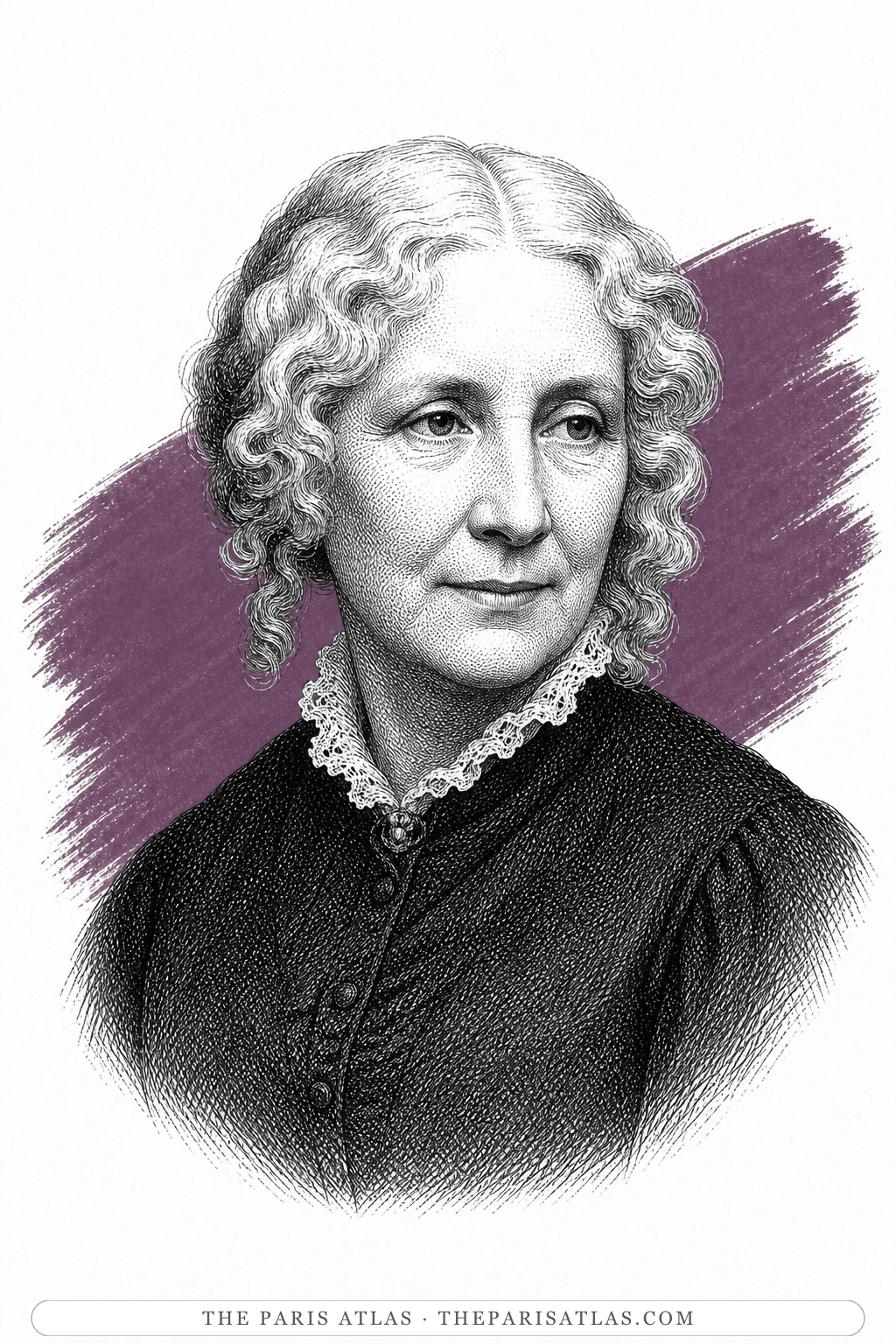
Harriet Beecher Stowe
A Key to Uncle Tom's Cabin
Stowe's answer to readers who said she had made it up: the court records, advertisements and testimony behind each character.
Read our takeUncle Tom's Cabin
Harriet Beecher Stowe
The anti-slavery novel that outsold everything in the nineteenth century, and the book that gave America the insult "Uncle Tom".
Harriet Beecher Stowe wrote Uncle Tom's Cabin as a weekly serial for an abolitionist newspaper and published it as a book on 20 March 1852. Two enslaved people are sold from the same Kentucky farm. Eliza Harris runs north with her small son and crosses the Ohio River on floating ice. Tom, a strong, devout man, is sold south, and dies on a Louisiana cotton plantation after he refuses to betray two women who have escaped. The book sold 300,000 copies in the United States in its first year, and the Stowe Center calls it the novel that galvanized the anti-slavery movement. The same book also fixed a picture of Black people as gentle, childlike and forgiving, and "Uncle Tom" is now a racial insult.
Stowe was living in Brunswick, Maine, when Congress passed the Fugitive Slave Act of 1850, which obliged people in the free states to help return escaped slaves. Her son's family biography says that her sister-in-law wrote to her that if she could use a pen as Harriet could, she would make the whole nation feel what an accursed thing slavery is. Stowe is remembered standing up with the letter in her hand and saying she would write something.[1]
The same biography dates the first scene she wrote to a communion service in the college church at Brunswick in February 1851. She saw the death of Uncle Tom in her mind, went home and wrote it out, and read it to her children.[1] The novel then ran in The National Era, a Washington abolitionist weekly, from 5 June 1851 to 1 April 1852. John P. Jewett of Boston published it in two volumes on 20 March 1852, before the serial had even finished.[2]
The numbers are the story of the book's first year. Vassar College Library's history of its publication records more than 10,000 copies sold in the first week and 300,000 in the United States by the end of 1852. More than a million and a half copies sold in England in the year after publication.[2]
Paris read it too. In 1853 alone there were seventeen French editions.[2] George Sand reviewed it in the Paris daily La Presse on 20 December 1852, and three Paris theatres staged their own versions within weeks of each other in early 1853.[3] Stowe authorised one French translation, by Louise Swanton Belloc and published by Charpentier, and wrote a preface for it.[1]
Arthur Shelby, a Kentucky farmer in debt, agrees to sell two of the people he owns to a slave trader named Haley. One is Tom, the most trusted man on the farm, who lives in a cabin with his wife, Aunt Chloe, and their children. The other is Harry, the small son of Eliza, Mrs. Shelby's maid. Eliza overhears the deal. She wakes Tom to warn him and runs that night with Harry in her arms.[4]
Tom decides not to run, because he does not want the Shelbys ruined and he believes it is his duty to go. Eliza reaches the Ohio River with Haley close behind her and crosses it by jumping from one block of floating ice to the next. On the free side an Ohio state senator who has just voted for a law against helping fugitives hides her anyway, and a settlement of Quakers passes her on. Her husband, George Harris, has escaped from a cruel owner on his own, and the family is reunited among the Quakers.[4]
Tom is taken down the Mississippi by steamboat. He jumps overboard to save a little girl, Eva St. Clare, from drowning, and her father, Augustine St. Clare, buys him. Tom spends two years in the St. Clare house in New Orleans. St. Clare's cousin, Miss Ophelia, has come from Vermont to run the household, and St. Clare buys her Topsy, a wild, neglected girl, to see whether a New England woman can raise an enslaved child. Eva falls ill and dies.[4]
St. Clare promises Tom his freedom but is stabbed to death trying to break up a fight in a café before he signs the papers. His widow sends Tom to auction. Simon Legree, who owns a cotton plantation on the Red River in Louisiana, buys him along with a young woman named Emmeline. On Legree's plantation Tom meets Cassy, a woman Legree has kept for years. Legree orders Tom to flog another worker and Tom refuses.[4]
Cassy and Emmeline escape by hiding in the plantation's garret and letting Legree believe the house is haunted. Legree is sure Tom knows where they are, and Tom will not tell. Legree has him beaten until he is dying. Tom forgives him. George Shelby, the son of Tom's first owner, arrives with money to buy Tom back and finds him dying in a shed. George buries him and knocks Legree down.
George Harris, Eliza and Harry cross Lake Erie to Canada. Cassy turns out to be Eliza's mother, and a French widow called Madame de Thoux turns out to be George's sister. The whole family goes to France, where George studies at a university for four years. They then sail for Liberia, the colony in West Africa for freed American slaves. Miss Ophelia takes Topsy to Vermont, and Topsy grows up to be a missionary in Africa.
Back in Kentucky, George Shelby frees every enslaved person on the farm. He tells them to think of their freedom every time they see Uncle Tom's cabin. The last chapter is Stowe speaking directly to her readers. She says the incidents are mostly true, asks what an ordinary person can do, and answers that they can see to it that they feel right.
Stowe says plainly in the last chapter what the book was for. She asks what one person can do about slavery, and answers that every individual can see to it that they feel right. The novel is built to produce that feeling. Its worst scenes are families broken up by sale: a mother drowns herself after her baby is sold, and Eliza runs across the ice because her son has been sold.
The book does not let Northern readers off. The senator who hides Eliza in Ohio has just voted for a state law against helping fugitives, and changes his mind only when she is standing in his kitchen. In the closing chapter Stowe writes that merchants in Northern cities also buy and sell enslaved people, and asks whether the whole guilt of slavery should fall only on the South.
Black abolitionists read it at once. Frederick Douglass' Paper noticed the book on 1 April 1852, reporting that the first printing of five thousand copies had sold in four days. The notice praised the touching portrait of Uncle Tom and said the book was destined for every library north of the Mason and Dixon line.
Stowe believed that Black people were by nature gentler than white people, and she says so. In Chapter XVI she predicts a great future for Africa, when its people will show their lowly docility of heart, their aptitude to repose on a superior mind and rest on a higher power, and their childlike simplicity of affection. She meant it as praise. Read now, it is a description of a people suited to be ruled.
Tom himself is one result. In the novel he is not an old man. Stowe introduces him as a large, broad-chested, powerfully made man, and he saves Eva by diving into the Mississippi. His strength goes into endurance and forgiveness instead of resistance. He refuses to run, refuses to fight, and dies forgiving the man who had him beaten. Stowe wrote him as a Christian martyr. Many later readers see a man who never defends himself.
The other Black characters are drawn with the comic dialect and physical humour of the period. Topsy, the neglected girl St. Clare buys for his cousin, grins and says she was never born, and that she expects she just grew. Sam and Andy, the two men sent to help Haley chase Eliza, are written as clowns. George Harris, the most defiant character in the book, is described as nearly white. So is Eliza.
The ending sends the Harris family to Liberia, the colony founded to settle freed Black Americans in Africa. George Harris writes that he wants an African nationality, and Stowe's closing chapter suggests educating escaped slaves in the North before helping them to Africa. Martin R. Delany, a Black abolitionist, asked in Frederick Douglass' Paper in May 1853 whether Stowe was a colonizationist. He pointed out that the novel sneers at independent Haiti while praising Liberia.
Most Americans met the story on the stage, not in the book. Stowe never controlled the plays, and the first stage version appeared in Baltimore in 1852. Touring companies kept playing it for decades, and the Library of Congress notes that the main actors were usually white. The Stowe Center, which keeps her house in Hartford, says the stage versions used minstrel theatre, with white actors in blackface, and changed Tom's character dramatically.
The name turned into an insult in the twentieth century. Stephen Railton's University of Virginia archive finds the earliest public use of "Uncle Tom" as a term of contempt in Marcus Garvey's movement. At the 1920 convention of Garvey's Universal Negro Improvement Association in New York, marchers carried signs saying Uncle Tom was dead and buried. The Stowe Center now states it directly: "Uncle Tom" is a racial slur for someone thought subservient and passive.
The insult has even changed the name of a museum. Josiah Henson escaped from slavery to Canada, and his 1849 memoir was one of the lives Stowe drew on. The historic site in Dresden, Ontario, where he lived was called Uncle Tom's Cabin Historic Site. In 2022 the Ontario Heritage Trust renamed it the Josiah Henson Museum of African-Canadian History, to move away from the negative meaning of the words.
The most famous criticism of the novel was written in Paris. James Baldwin was twenty-four and living in Paris when "Everybody's Protest Novel" appeared in Zero, a small Paris magazine, in the spring of 1949. Partisan Review reprinted it that June. Baldwin later collected it as the first essay in Notes of a Native Son (1955).
The essay opens with Uncle Tom's Cabin, which Baldwin calls the cornerstone of American social protest fiction, and then says it is a very bad novel. His complaint is that Stowe was not so much a novelist as an impassioned pamphleteer, and that her book set out only to prove that slavery was wrong. To do it, he argues, she took Tom's humanity away. In his words, Tom, her only black man, has been robbed of his humanity and divested of his sex.
Baldwin then turned the same argument on Native Son, the 1940 novel by Richard Wright. Its hero, Bigger Thomas, is in Baldwin's words Uncle Tom's descendant, flesh of his flesh. Wright was living in Paris too. Baldwin later wrote, in "Alas, Poor Richard", that on the day the magazine came out, before he had seen it, he walked into Brasserie Lipp. Richard Wright was there and called him over. Baldwin wrote that he would never forget that conversation.
Earlier readers had ranked the novel very high. In What Is Art?, Leo Tolstoy listed the best modern art that flows from love of God and man. His list includes Schiller's The Robbers, Victor Hugo's Les Misérables, several books by Charles Dickens, Uncle Tom's Cabin, Dostoevsky, and George Eliot's Adam Bede.
George Orwell split the difference in a newspaper column of 1945. He called Uncle Tom's Cabin perhaps the supreme example of the good bad book: unintentionally ludicrous and full of melodrama, and also deeply moving and essentially true. He added that he would back it to outlive the complete works of Virginia Woolf.
But, what can any individual do? Of that, every individual can judge. There is one thing that every individual can do,—they can see to it that they feel right.
I forgive ye, with all my soul!
I spect I grow’d. Don’t think nobody never made me.
The novel sold 300,000 copies in the United States in its first year, and more than a million and a half in England, according to Vassar College Library's history of the book.
Reading the novel shows how far the name moved from the character. The Tom of the book is a strong man who dies rather than betray two women who have escaped. The Tom of the insult was made later, largely on the minstrel stage.
James Baldwin's essay "Everybody's Protest Novel", first published in Paris in 1949, is the starting point for most modern readings. The essay makes most sense after reading the book it attacks.
There were seventeen French editions in 1853 alone. George Sand reviewed it in La Presse, and three Paris theatres staged it that winter.
A strong, devout man enslaved on the Shelby farm in Kentucky. Sold south, he refuses to run, refuses to flog anyone and refuses to betray two women who have escaped, and dies forgiving the man who had him beaten.
Mrs. Shelby's maid, who runs the night she learns her son has been sold, and crosses the Ohio River on floating ice.
Eliza's husband, an inventive factory worker whose owner takes him out of the factory to humble him. Escapes, fights off slave catchers, and ends the book emigrating to Liberia.
The small daughter of a New Orleans slaveholder, saved from drowning by Tom. Her illness and death take up the middle of the novel.
Eva's father, who knows slavery is wrong and says so wittily while keeping his slaves. Dies in a café brawl before he signs Tom's freedom papers.
St. Clare's cousin from Vermont, who hates slavery in principle and admits she could never bear to have Topsy touch her.
A neglected, beaten girl St. Clare buys for his cousin to raise. Written for comedy in dialect, and the character the stage versions made most of.
The owner of a cotton plantation on the Red River in Louisiana, who buys Tom at auction and has him beaten to death.
A woman Legree has kept for years, whose children were all sold from her. Escapes with Emmeline by pretending the garret is haunted, and turns out to be Eliza's mother.
The son of Tom's first owner, who as a boy taught Tom his letters. Arrives too late to buy him back and frees everyone on the Kentucky farm.
1850
Congress passes the Fugitive Slave Act. Stowe, in Brunswick, Maine, is urged by her sister-in-law to write something against slavery.
1851
In February Stowe writes the scene of Tom's death after a communion service in Brunswick. The serial begins in The National Era on 5 June.
1852
John P. Jewett publishes the book in two volumes on 20 March. The serial ends on 1 April. Sales reach 300,000 in the United States by the end of the year.
1852
The first stage version opens in Baltimore. George Sand reviews the novel in La Presse in Paris on 20 December.
1853
Seventeen French editions appear. Paris theatres open rival stage versions at the Ambigu-Comique in January and the Gymnase in February.
1853
Stowe publishes A Key to Uncle Tom's Cabin, the documents behind the novel, and sails for Britain and Paris.
1920
Marchers at the Universal Negro Improvement Association convention in New York carry signs saying Uncle Tom is dead and buried.
1949
James Baldwin attacks the novel in "Everybody's Protest Novel", published first in Zero in Paris and then in Partisan Review.
2022
Uncle Tom's Cabin Historic Site in Dresden, Ontario, is renamed the Josiah Henson Museum of African-Canadian History.


A Key to Uncle Tom's Cabin
Harriet Beecher Stowe
Stowe's answer to readers who said she had made it up: the court records, advertisements and testimony behind each character.
Read our takeDred
Harriet Beecher Stowe
Her second anti-slavery novel, four years later, about a man who plans a revolt instead of forgiving his enemies.
Read our takeSunny Memories of Foreign Lands
Harriet Beecher Stowe
Her account of the 1853 European tour the novel's success paid for, including her weeks in Paris.
Read our take
James Baldwin's first essay collection, which opens with his attack on this novel, written in Paris in 1949.
Read our take
An escaped slave's own account, published seven years earlier. Stowe drew on the fugitive narratives, and this is the best known.
Read our take
Mark Twain's novel of a boy and an escaped slave on the Mississippi, written by Stowe's neighbour in Hartford.
Read our takeTwo enslaved people are sold from the same Kentucky farm. Eliza Harris escapes north with her son across the frozen Ohio River and reaches Canada. Tom is sold south and is beaten to death on a Louisiana plantation for refusing to betray two women who have escaped.
Because it came to mean a Black person who submits to white people. The Stowe Center says the stage versions, played in blackface, turned Tom into a stereotype. The University of Virginia's Uncle Tom's Cabin archive finds its earliest public use as an insult in Marcus Garvey's movement around 1920.
In "Everybody's Protest Novel" (1949) he called it a very bad novel. He said Stowe was not so much a novelist as an impassioned pamphleteer, and that she robbed Tom, her only Black man, of his humanity. The essay first appeared in Zero, a magazine published in Paris.
The novel is fiction, but Stowe said most of its incidents were real. In 1853 she published A Key to Uncle Tom's Cabin with the court cases, advertisements and testimony behind it. She named Josiah Henson, who escaped from slavery to Canada, as one real parallel to Tom.
More than 10,000 copies in the first week and 300,000 in the United States in 1852, according to Vassar College Library's history of the book. More than a million and a half copies sold in England in the year after publication.
The story comes from Stowe herself. The Library of Congress records that she reported Lincoln saying, on meeting her, that she was the little woman who wrote the book that made this great war. The words are best repeated as her report, which is how the Library of Congress presents them.
Paris read the novel as eagerly as London. George Sand reviewed it in La Presse in December 1852, and three Paris theatres staged it early in 1853. Stowe visited in 1853. James Baldwin's famous attack on the book was first published in Paris in 1949.
Explore authors with a similar voice, perspective, and influence.
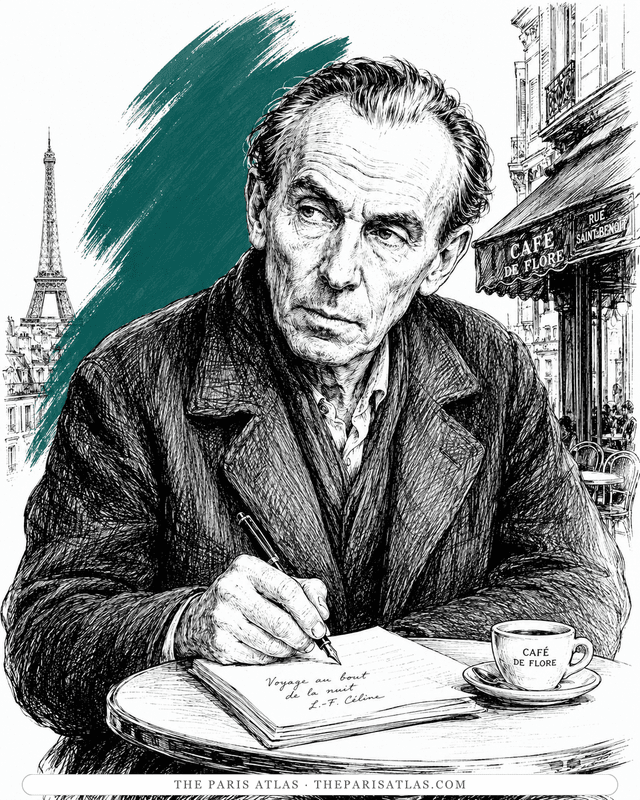
The doctor of the Paris slums who wrote the century's blackest, funniest novel — and changed the sound of French prose.
View author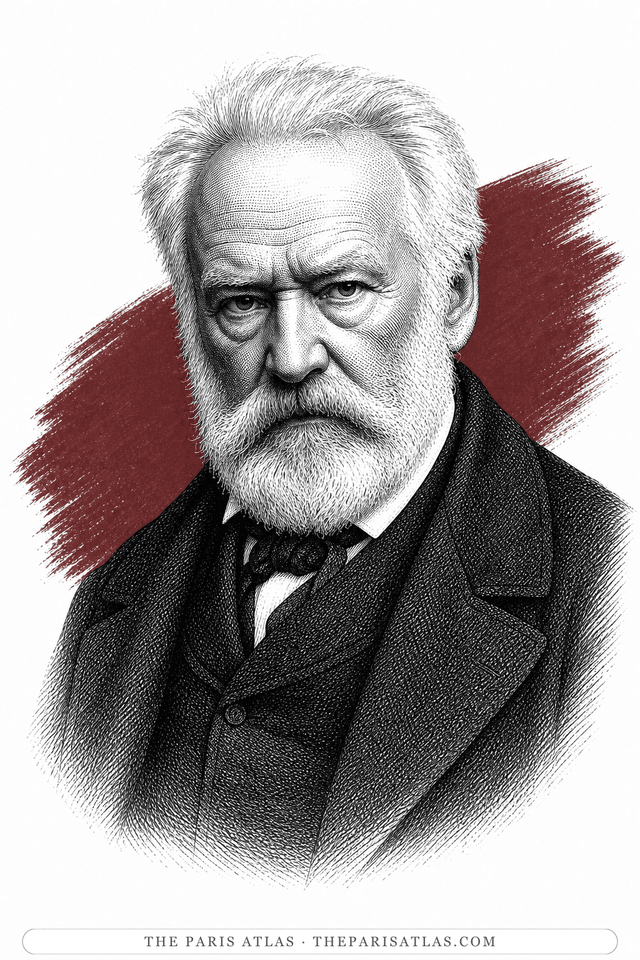
Poet, novelist and playwright who spent sixteen years in an apartment on the Place des Vosges that is now his museum, wrote a novel about Notre-Dame that shamed France into repairing the cathedral, spent nineteen years in exile for opposing the emperor Napoleon III, and was buried in the Panthéon — the Paris monument where France buries its most honoured dead — in 1885 after a funeral that brought roughly two million people into the streets of Paris.
View author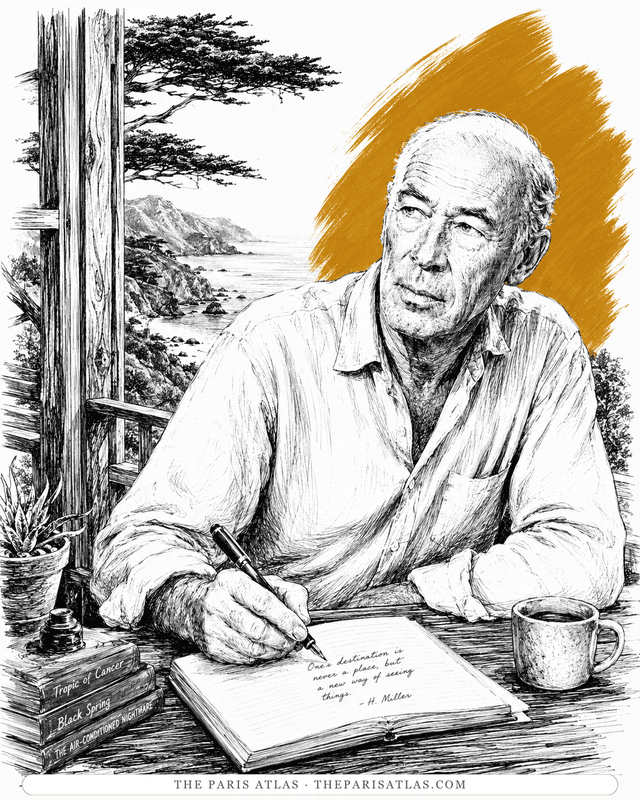
The Brooklyn dropout who arrived in Paris broke at thirty-eight and wrote the exuberant, banned books that ended American censorship.
View authorThe sources below include the primary text, editions, scholarship, archival materials, and other records that informed this page. They document Uncle Tom's Cabin, its publication, and its place in literary history.


The family biography compiled by Stowe's son, for the Brunswick origin of the novel, the first scene written, the authorised French translation and George Sand's review in English.
Vassar College Library's history of the book's publication, for the serial dates, the publication date, the sales figures, the 1853 translations and the first stage version.
The Bibliothèque nationale de France's history blog, for George Sand's article in La Presse and the three Paris stage versions of 1853.

Transcriptions from Frederick Douglass' Paper, for the first Black abolitionist response and Delany's objection to the Liberia ending.
Stephen Railton's University of Virginia archive, for how "Uncle Tom" became an insult around 1920.
The Stowe Center in Hartford, for the minstrel stage versions and its statement that "Uncle Tom" is a racial slur.
The Library of Congress exhibition, for the touring stage productions and the Lincoln remark as something Stowe reported.
For Josiah Henson's 1849 memoir and the renaming of the Dresden, Ontario, historic site in 2022.
James Baldwin's essay. The wording quoted was checked against the full-text search of the 1955 Beacon Press edition on the Internet Archive.
Connecticut College Library, for the first appearance of "Everybody's Protest Novel" in Zero in spring 1949, ahead of Partisan Review that June.
Baldwin's own account of walking into Brasserie Lipp on the day Zero appeared, checked against the Internet Archive full-text search of the 1961 Dial Press edition.

Leo Tolstoy's list of the highest modern art, in Aylmer Maude's out-of-copyright translation.
George Orwell's Tribune column of 2 November 1945, as reproduced by the Orwell Foundation.
Library catalogue records, for the 1852 first edition and every modern ISBN listed.
The primary text represented by this page, used for descriptions of the work’s contents and for any quoted passages shown here.
The primary text is the baseline reference for every book page. Additional references document publication history, interpretation, and historical context where that evidence is available.
 Explore more resources