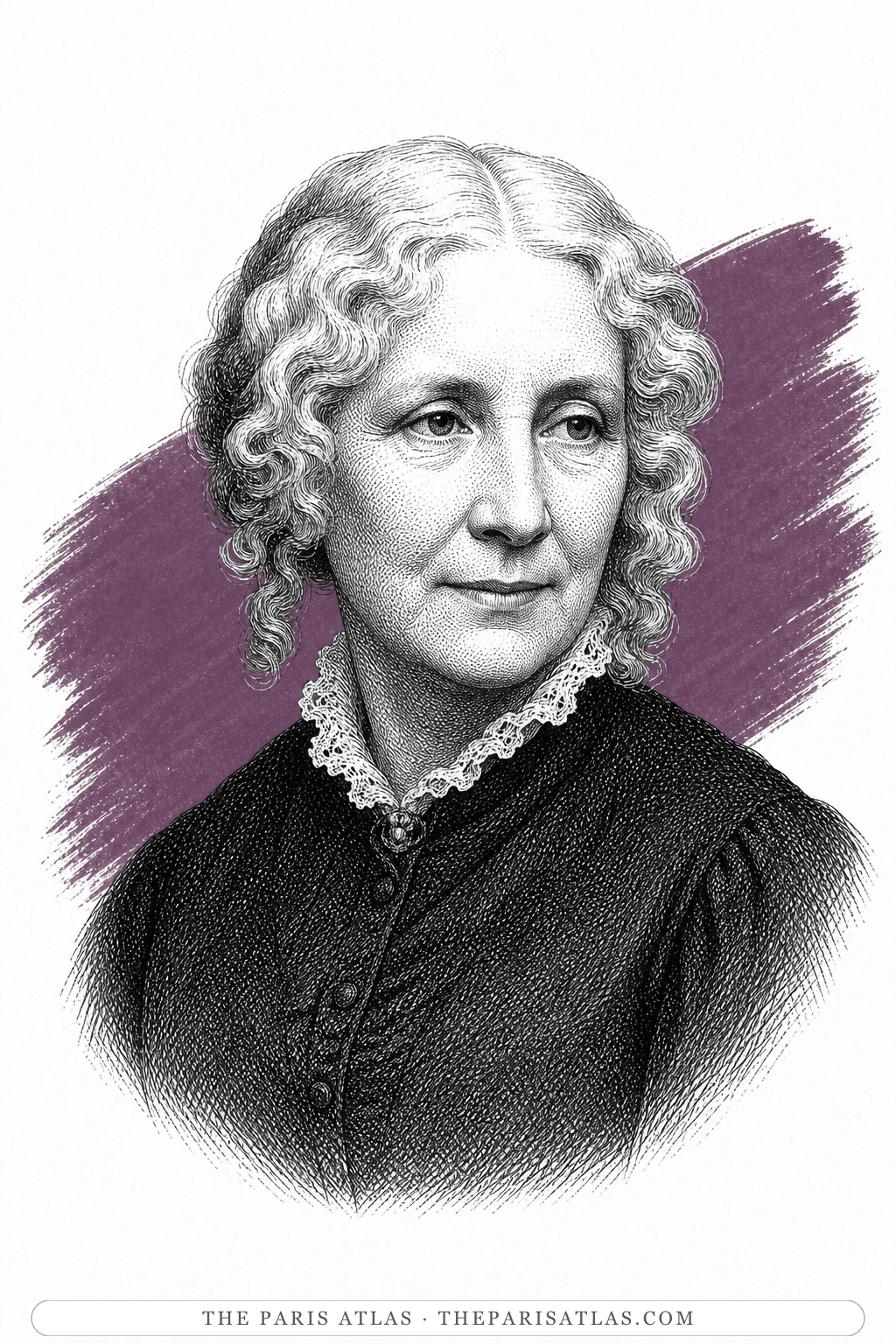
Uncle Tom's Cabin
Harriet Beecher Stowe
Uncle Tom's Cabin
The book this one was written to follow. Lowell used the new novel to argue that Uncle Tom's Cabin had been underrated as art.
Read our takeThe Minister's Wooing
Harriet Beecher Stowe
A love story set in Newport after the Revolution, written in grief after Stowe's son drowned, with a real minister who preached against the slave trade.
The Minister's Wooing is the novel Harriet Beecher Stowe serialised in The Atlantic Monthly from December 1858 and published as a book in 1859. Mary Scudder, a devout young woman in Newport, Rhode Island, loves her cousin James Marvyn, a sailor who has not been converted. When James is reported lost at sea, Mary agrees to marry Dr. Samuel Hopkins, the minister who lodges with her mother. Hopkins was a real Newport pastor, and in the novel he preaches against the slave trade to the merchants who pay for his church. Aaron Burr appears as a seducer, and a free Black woman, Candace, has the book's most famous speech. Stowe wrote it after her eldest son drowned in 1857.
On 9 July 1857 Stowe's eldest son, Henry Ellis Stowe, a freshman at Dartmouth College, drowned while swimming in the Connecticut River at Hanover, New Hampshire. Her son's biography says that the first chapter of The Minister's Wooing appeared in The Atlantic Monthly in December 1858. She dictated much of it under great strain, and wrote The Pearl of Orr's Island at the same time as a relief.[1]
The serial ran until December 1859. Derby and Jackson published the book in New York in 1859, and Sampson Low published it in London the same year with illustrations by Phiz.[2] Stowe went to Europe that summer to see the London edition through. The family met in Paris at the end of August, where her two eldest daughters were at school, before going on to Switzerland.[1]
In a short introduction Stowe says that some of the principal characters are historic, and that the main events are founded on fact.[3] Samuel Hopkins was pastor of the First Congregational Church in Newport, and in 1793 he published a sermon against the slave trade.[4]
Katy Scudder is a widow in Newport who keeps an immaculate house and takes in the town's minister, Dr. Samuel Hopkins, as a lodger. Her daughter Mary is quiet, beautiful and religious. Mary's cousin James Marvyn is in love with her, but he has not been converted, and Mary will not promise to marry a man whose soul she fears for. James sails on a long voyage.[3]
Dr. Hopkins works on a system of theology and preaches it with no concession to his listeners. He also visits the enslaved people of Newport and decides that he must speak against the slave trade, which built the town's fortunes. On a visit to the Marvyn farm he raises the question of slavery, and James's father frees Candace, the family's servant. Then he preaches the sermon to the ship-owners in his own church.[3]
News comes that James's ship has gone down. His mother, Mrs. Marvyn, collapses into despair, because she believes her unconverted son is damned. Mary grieves without saying so. Colonel Aaron Burr, the most dazzling young man in the new republic, comes to Newport. The Doctor had once lived in the household of Burr's grandfather, the theologian Jonathan Edwards. Burr meets Madame Virginie de Frontignac, the young French wife of a colonel, and sets out to seduce her.[3]
Mary confronts Burr and tells him what he is doing. Madame de Frontignac comes to stay at the Scudder cottage and recovers. Katy Scudder encourages the Doctor, and Mary, believing James dead, agrees to marry him. A week before the wedding James comes home. He survived the wreck and has been converted on his travels.
Mary means to keep her promise to the Doctor, and nobody will tell him. Miss Prissy, the dressmaker, goes into his study and tells him everything. The Doctor spends a night struggling with himself, then gives Mary up. He conducts the wedding of Mary and James himself, in the silk gown the ladies of the parish had given him for his own. He later marries another woman and publishes his theology.
The book's hardest chapter is Mrs. Marvyn's breakdown after James is reported drowned. She has been taught that God chooses who is saved and that almost everyone is not. Now she applies the doctrine to her son. Brides should wear mourning, she says, and the bells should toll for every wedding, because every new family is built over the pit. Stowe had lost her own eldest son to drowning less than eighteen months before the serial began.
Candace, the Marvyns' servant, is the one who reaches her. She takes Mrs. Marvyn in her arms, rocks her like a baby, and tells her to stop reasoning and look at Jesus on the cross. The Doctor's theology is fine in fair weather, she says, but sick folks must not have strong meat. The scene is the novel's answer to Mrs. Marvyn's despair, and Stowe gives the answer to Candace, not to the minister.
Candace's other great scene is the one in which she is freed. Asked whether she thinks slavery is right, she says she heard the Declaration of Independence read when General Washington was in Newport. If it was true, she told her husband Cato, then they were as free as anybody. She is not a creature with hoofs and horns, she says, but a reasonable being, a woman, as much a woman as anybody.
The same pages also describe her through the physical comedy of the period. Candace is introduced as a powerfully built, majestic black woman, corpulent, and her tears when she is freed are a tropical torrent. Her speech is written in heavy dialect. In the last chapter she presides over the next generation of Marvyns in gorgeous clothes and a butterfly turban. John Ruskin, writing to Stowe after the London edition, named Candace's sayings and doings as the sharpest parts of the book.
The Doctor's sermon is aimed at his own congregation. In the novel he tells the ship-owners that the slave trade has been the first wheel of commerce in Newport, and that the town was built on the blood of Africans. Aaron Burr, who hears it, writes to a friend that no moral argument ever prevailed over twenty-five per cent profit. Stowe put the town's real business into a love story set in its best parlours.
James Russell Lowell welcomed the novel as proof that Stowe was a novelist and not only a campaigner. In the piece her son's biography reprints, Lowell says he first read Uncle Tom's Cabin in Paris, after the excitement had died down. Reading it at that distance, he wrote, convinced him that her power was genius and not political sympathy. He predicted that The Minister's Wooing would be the book her reputation rested on.
John Ruskin was more mixed. He wrote that nothing could be nobler than Mary's great speech to Colonel Burr, and nothing more delightful than everything Madame de Frontignac says and does. He did not believe that any girl would revere the Doctor without laughing at him. He also thought Stowe was too disdainful of what ordinary readers call interest, the suspense that keeps people up until three in the morning.
Lady Byron, the widow of Lord Byron, read the first instalments in London in May 1859. She told Stowe they had more power than anything she had written before, and more power than Adam Bede by George Eliot, which she called the book of the season.
Why, look at me,—I a’n’t a critter. I’s neider huffs nor horns. I’s a reasonable bein’,—a woman,—as much a woman as anybody,
No moral argument, since the world began, ever prevailed over twenty-five per cent. profit.
Brides should wear mourning, the bells should toll for every wedding; every new family is built over this awful pit of despair, and only one in a thousand escapes!
It was a trial to me—a very great trial; but as she did not deceive me, I shall never lose my friendship for her.
James Russell Lowell thought this was the book her fame would rest on. The comedy of Newport tea parties and Miss Prissy's gossip is some of the best she wrote.
Samuel Hopkins really was pastor of the First Congregational Church in Newport and published against the slave trade. Stowe puts him in the middle of a courtship.
Mrs. Marvyn's despair and Candace's comfort were written by a mother whose son had drowned the year before.
A devout young woman in Newport who loves her cousin James and agrees to marry the minister when she believes James is dead.
The Scudders' lodger and the town's minister, a real historical figure. Unworldly, honest and brave, he preaches against the slave trade to the men who pay for his church.
Mary's cousin, a sailor with no religion, reported drowned and home again, converted, a week before her wedding.
Mary's mother, a widow who runs a perfect house and thinks the Doctor the best match in New England.
The Marvyns' servant, freed by Mr. Marvyn after the Doctor's visit. She comforts Mrs. Marvyn when no one else can, and is also drawn with the comic dialect of the period.
James's mother, a thoughtful, reading woman who breaks down when she believes her unconverted son is damned.
The real politician, shown as a charming, cynical seducer who pursues Madame de Frontignac.
The young French wife of a colonel, who falls for Burr and is saved by Mary's friendship.
The talkative dressmaker who goes into the Doctor's study and tells him the truth that no one else will.
1793
Samuel Hopkins, pastor of the First Congregational Church in Newport, publishes a sermon against the slave trade.
1857
Stowe's eldest son, Henry Ellis Stowe, drowns in the Connecticut River at Hanover, New Hampshire, on 9 July.
1858
The first chapter appears in The Atlantic Monthly in December.
1859
Lady Byron writes from London on 31 May praising the first instalments. Derby and Jackson and Sampson Low publish the book.
1859
Stowe meets her daughters in Paris at the end of August on her third European journey. The serial ends in December.


Uncle Tom's Cabin
Harriet Beecher Stowe
The book this one was written to follow. Lowell used the new novel to argue that Uncle Tom's Cabin had been underrated as art.
Read our takeDred
Harriet Beecher Stowe
The anti-slavery novel of three years earlier, set in the South Stowe then left behind for New England.
Read our takeSunny Memories of Foreign Lands
Harriet Beecher Stowe
Her letters from the first European tour, when she met Lady Byron, who later praised this novel.
Read our takeMary Scudder, a young woman in Newport, Rhode Island, after the American Revolution. She loves her cousin James, a sailor, but when he is reported drowned she agrees to marry the minister, Dr. Samuel Hopkins. James comes home a week before the wedding.
Yes. He was pastor of the First Congregational Church in Newport and published a sermon against the slave trade in 1793. Stowe's introduction says some of her principal characters are historic. Aaron Burr is also in the novel.
The Marvyn family's servant, a Black woman who is freed during the novel. She says she is a reasonable being, a woman, as much a woman as anybody, and she comforts Mrs. Marvyn when the family believes James has drowned. The narrator also describes her in the comic style of the period.
Miss Prissy the dressmaker tells the Doctor that Mary still loves James. The Doctor gives her up and marries Mary and James himself. He later marries someone else and publishes his theology.
A small one. Stowe's family met in Paris in August 1859 on the journey she made to see the London edition published. James Russell Lowell's praise of the novel begins by saying he first read Uncle Tom's Cabin in Paris.
The text is free from Project Gutenberg as ebook 47958, in the 1859 London edition with Phiz's illustrations. Penguin Classics publishes an edition edited by Susan K. Harris.
Explore authors with a similar voice, perspective, and influence.
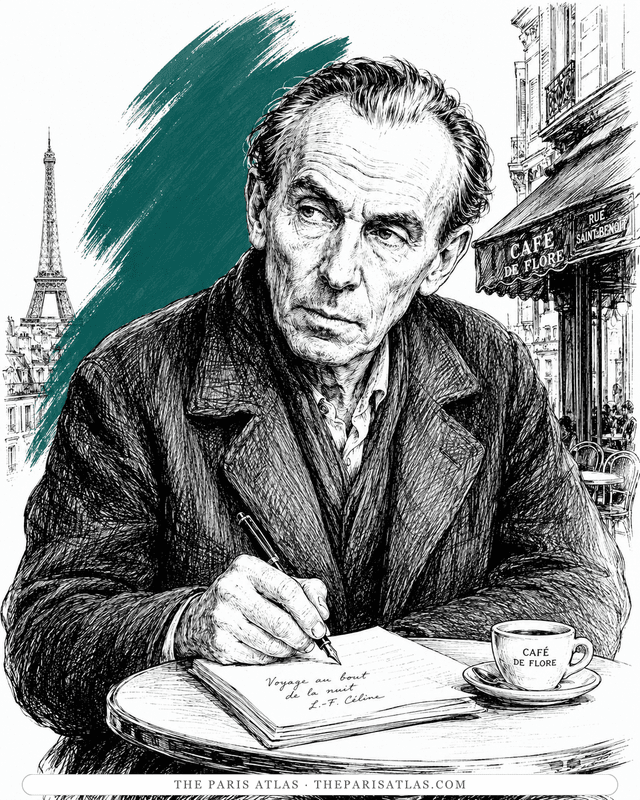
The doctor of the Paris slums who wrote the century's blackest, funniest novel — and changed the sound of French prose.
View author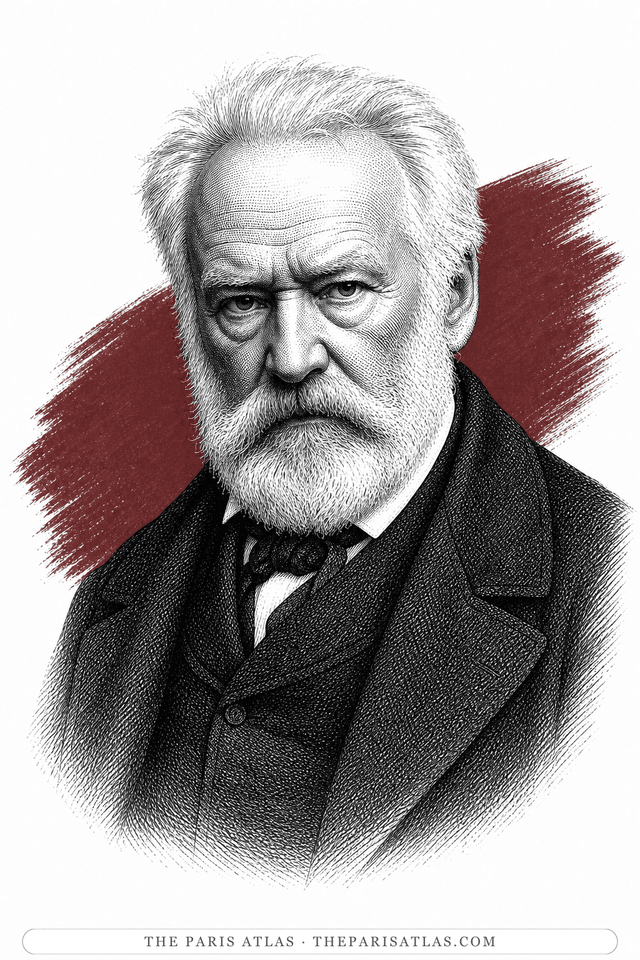
Poet, novelist and playwright who spent sixteen years in an apartment on the Place des Vosges that is now his museum, wrote a novel about Notre-Dame that shamed France into repairing the cathedral, spent nineteen years in exile for opposing the emperor Napoleon III, and was buried in the Panthéon — the Paris monument where France buries its most honoured dead — in 1885 after a funeral that brought roughly two million people into the streets of Paris.
View author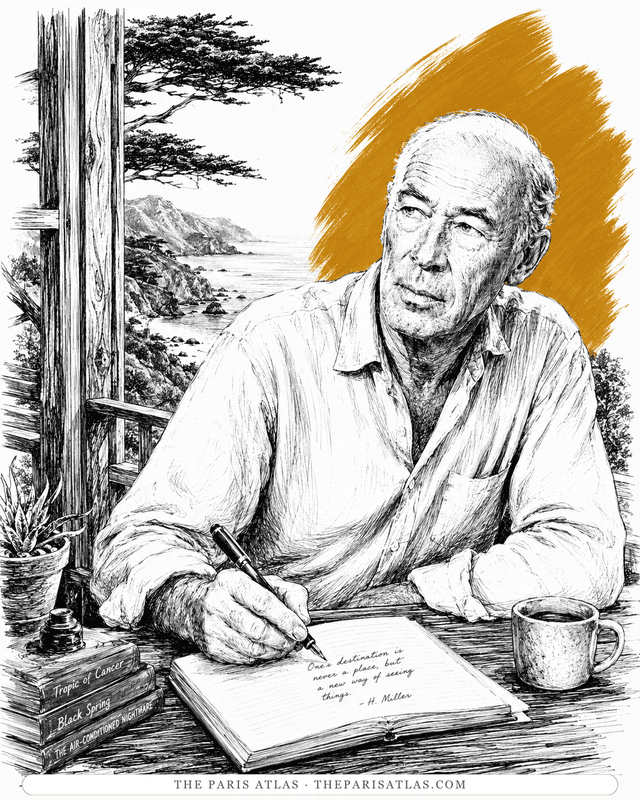
The Brooklyn dropout who arrived in Paris broke at thirty-eight and wrote the exuberant, banned books that ended American censorship.
View authorThe sources below include the primary text, editions, scholarship, archival materials, and other records that informed this page. They document The Minister's Wooing, its publication, and its place in literary history.

The family biography, for Henry Ellis Stowe's death, the serial dates, the letters from James Russell Lowell, John Ruskin and Lady Byron, and the 1859 journey through Paris.
Library catalogue records, for the 1859 New York and London editions and the modern ISBNs.

The Evans Early American Imprint record of Samuel Hopkins's 1793 discourse, whose title page names him pastor of the First Congregational Church in Newport.
The primary text represented by this page, used for descriptions of the work’s contents and for any quoted passages shown here.
The primary text is the baseline reference for every book page. Additional references document publication history, interpretation, and historical context where that evidence is available.
 Explore more resources