The Paris AtlasCharting the artists, works, and places worth returning to.
  • Author
  • Translator
  • Editor
  • Critic
· English · 1819–1880

George Eliot

Mary Ann Evans, who wrote Middlemarch under a man's name because she was living openly with another woman's husband and knew what English readers would do with that. Her mind was formed in French and German: she translated Strauss and Feuerbach before she wrote a line of fiction, and the sight she most wanted in Paris was not a monument but the flat where Auguste Comte had lived.

Details

Lived
1819–1880
Born
22 November 1819
Birthplace
South Farm, Arbury, Warwickshire
Birth name
Mary Ann Evans
Died
22 December 1880 · aged 61
Place of death
London
Nationality
English
Profession
Novelist, translator and editor
Major works
Adam Bede, The Mill on the Floss, Silas Marner, Middlemarch, Daniel Deronda
Married
John Walter Cross · 1880
Partner
George Henry Lewes · 1854–1878
Roles
AuthorTranslatorEditorCritic
Also known as
Mary Ann Evans · Marian Evans · Marian Evans Lewes · Mary Ann Cross

About George Eliot

George Eliot was the pen name of Mary Ann Evans, born on a Warwickshire farm in 1819 and buried in Highgate Cemetery in 1880, and the author of Middlemarch — routinely called the greatest novel in English, and a book about ordinary people in a provincial town failing at the things they meant to do. She came to fiction late, at thirty-seven, after a decade as a translator and as the working editor of a leading intellectual review, and she came to it disguised, because by then she was living with a man who could not divorce his wife.

Paris is not a chapter of her life; it is a recurring station in it, and the honest version of the Paris story is stranger than a residence would have been. She passed through in 1849 on the journey that followed her father's death, spent a day in the Musée du Louvre in 1859 that converted her to Veronese, went in January 1865 chiefly to stand in the rooms where Auguste Comte had lived, spent the last three days of 1866 at Madame Mohl's dinner table meeting Ernest Renan, and returned in May 1880, newly married at sixty, for a fortnight of Louvre mornings and walks in the Bois — seven months before she died. France mattered to her far more as a set of ideas than as a place, and the ideas arrived first.

Griff House, and losing her religion

She was born Mary Ann Evans at South Farm on the Arbury estate in Warwickshire on 22 November 1819, the youngest child of Robert Evans, the estate's land agent — a practical, capable man whose competence she gave to Adam Bede and Caleb Garth. Early in 1820 the family moved to Griff House, a big farmhouse between Nuneaton and Bedworth, and she lived there until she was twenty-one. The house is now a Beefeater restaurant and hotel; the George Eliot Fellowship has spent years converting the surviving outbuilding behind it into a visitor centre.

In 1841 she moved with her widowed father to Coventry and fell in with Charles and Cara Bray, freethinking manufacturers whose house at Rosehill collected sceptics. Within a year she had stopped going to church, which caused a serious breach with her father, and had taken on a job that shaped everything after: translating David Friedrich Strauss's Das Leben Jesu, the German book that examined the Gospels as historical documents and treated the miracles as myth. It appeared in English in 1846. In 1854 she published a second translation, of Ludwig Feuerbach's The Essence of Christianity, which argued that God is a projection of human qualities — the one book ever printed with her real name, Marian Evans, on the title page.

In 1849, three months after her father died, she went to the Continent with the Brays, travelling by way of Paris, Lyons and the Alps, and stayed on alone in Geneva for eight months while they went home. She came back through Paris in March 1850. Then she moved to London, lodged with the publisher John Chapman, and became — unpaid and unnamed on the masthead — the effective editor of the Westminster Review, the most serious radical quarterly in England.

The name, and the man it came from

George Henry Lewes was a critic, philosopher and biographer of Goethe, and he was already married. English divorce law of the 1850s gave him no way out of that marriage and gave her no way to enter it. On 20 July 1854 Mary Ann Evans boarded a steamer at London for Antwerp with him, bound for Weimar and Berlin, and from then on called herself Marian Evans Lewes. Victorian society had no category for what the arrangement was, and treated it as the worst thing it could be. Her own brother Isaac stopped writing to her for more than twenty years, and resumed only when she made a legal marriage in 1880.

It was Lewes who pushed her into fiction, and the disguise was practical. She was a woman, she was a scandal, and she wanted the stories judged as stories. Her first three appeared in Blackwood's Magazine in 1857 as by 'George Eliot', a name her husband later explained without any romance at all: George was Lewes's Christian name, and Eliot was a good, mouth-filling, easily pronounced word. 'I shall be resolute in preserving my incognito,' she told her publisher, 'having observed that a nom de plume secures all the advantages without the disagreeables of reputation.'

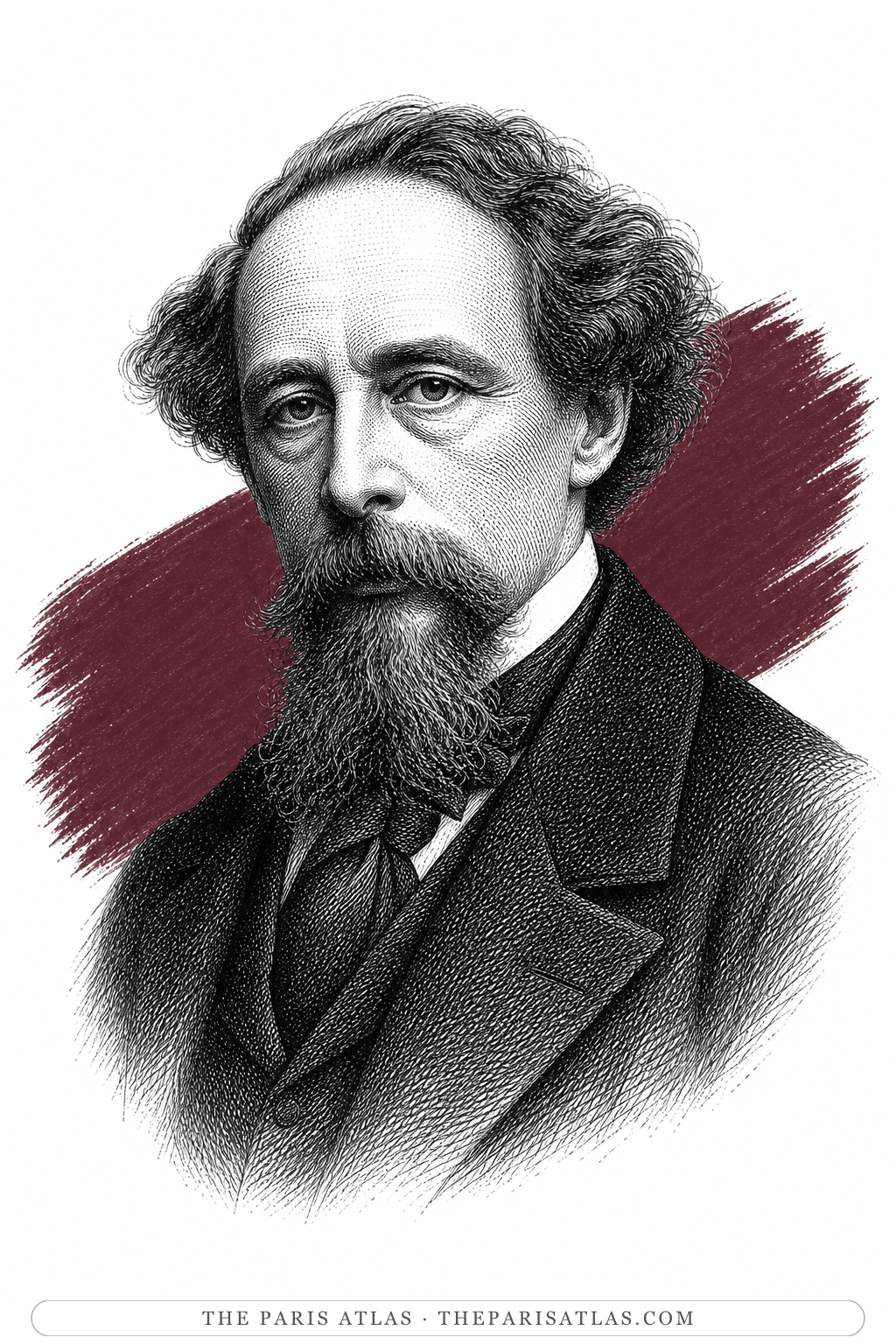
The disguise nearly held. In January 1858 Charles Dickens wrote to Blackwood's mysterious author to say he had never seen the like of the truth and delicacy in those stories — and that, addressing the envelope to 'George Eliot, Esq.', he would have been strongly disposed to address the writer as a woman, because if no woman wrote them then no man ever before had the art of making himself mentally so like one. He dined with the Leweses for the first time in November 1859, by which point the secret was out: a Warwickshire clergyman named Joseph Liggins was going about claiming the books, and stopping him meant giving her name.

Comte's apartment, and Madame Mohl's dinner

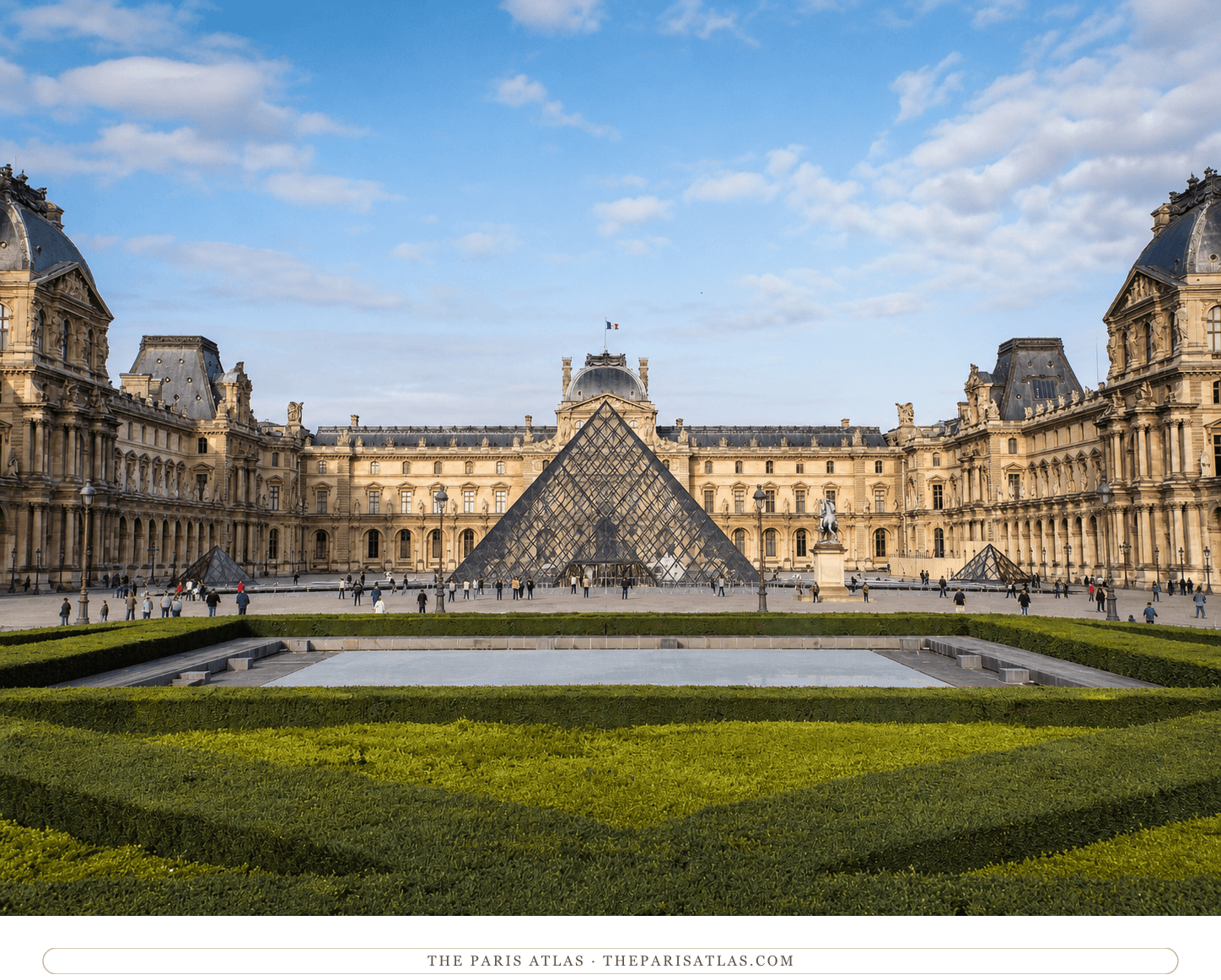
On 9 July 1859, on the way to Switzerland, she and Lewes spent a day in Paris and went first to the Louvre, where Veronese's enormous Marriage at Cana — the largest painting in the museum — converted her, as she wrote in her journal, to high admiration of him. They came back through the city ten days later. It is a small entry, and it is the pattern of her Paris: a day, seized between trains, spent looking hard at something.

The visit of 15 to 25 January 1865 was different, and it explains what France meant to her. She and Lewes went to the theatre or the opera nearly every night and saw sights all day, but the sight she singled out was a private flat. Auguste Comte, the French philosopher who founded positivism — the doctrine that knowledge should rest on observable fact rather than theology or metaphysics, and that humanity itself should be the object of reverence — had died in 1857, and his followers had kept his rooms as he left them. Eliot, who subscribed to the English positivist fund and counted Comte's disciples among her closest friends, went to stand in them. 'Such places, that knew the great dead, always move me deeply,' she wrote afterwards. 'We thought the apartment very freundlich, and I flattered myself that I could have written better in the little study there than in my own.'

My gratitude increases continually for the illumination Comte has contributed to my life.

George Eliot, letter from Biarritz, January 1867

The last days of 1866 gave her the one Paris season that was social. On the way to Spain the Leweses stayed three days at the Hôtel du Helder and prolonged the stop to see Mary Clarke Mohl — 'Madame Mohl', an Englishwoman who had married the German orientalist Julius Mohl and kept, in the rue du Bac, one of the most durable salons in Paris. She gave a dinner for them on 29 December with the Protestant critic Edmond Scherer and his wife, the politician Jules Simon and other men of letters, and tempted them to stay until Monday the 31st by promising to produce Ernest Renan at breakfast — the scholar whose Vie de Jésus had scandalised Catholic France three years earlier by treating Christ as a historical man. She got him. Eliot's verdict is characteristically unimpressed and exact: Renan's appearance was something between the Catholic priest and the dissenting minister, his manners very amiable, his talk pleasant but not distinguished. On the last night of the year the couple had to walk back from the rue de Rivoli to their hotel in the rain, because every carriage in Paris was taken.

Middlemarch

Adam Bede (1859), The Mill on the Floss (1860) and Silas Marner (1861) made her one of the most successful novelists in England: the fourth edition of Adam Bede, five thousand copies, sold out in a fortnight. Middlemarch, begun on 2 August 1869 and published in eight instalments from 1 December 1871 to the end of 1872, is the book the rest built towards. It is subtitled 'A Study of Provincial Life' and set in a Midlands town around the Reform Bill of 1832. Dorothea Brooke, clever and desperate to do good, marries a dried-up scholar whose great book will never be written; Tertius Lydgate, an ambitious young doctor, means to change medicine and is destroyed by debt, gossip and an expensive wife. Nobody achieves what they set out to achieve. What the novel does that almost nothing before it had done is grant every one of its several dozen characters an inner life of the same weight as the heroine's, and then show them all colliding.

The reading behind it was Continental. Her journal for the Middlemarch summers records her working through Renouard's history of medicine while she built Lydgate, and the intellectual frame is French: the positivist idea that a society can be studied as a system whose parts act on one another is the organising principle of a novel whose governing image is a web.

Two marriages and Highgate

In 1869 a letter arrived from Connecticut. Harriet Beecher Stowe, whom she had never met, addressed her as 'dear friend'; Eliot wrote back that she valued very highly the warrant to call her friend, and confessed the paralysing despondency in which many days of her writing life had been passed. The two women exchanged letters for the rest of Eliot's life and never once saw each other.

Lewes died in 1878. Eighteen months later, on 6 May 1880, she married John Walter Cross, a banker twenty years younger who had been the couple's friend and financial adviser — a decision she made, she told a friend, only a fortnight before it happened. Her brother Isaac, who had not written to her since 1857, sent congratulations at once; she had become respectable by becoming a wife. The honeymoon went through Paris to Italy, and Cross's account of it is the last picture of her: at Paris they spent their mornings at the Louvre or the Luxembourg looking at pictures and sculpture, walked in the Bois in the afternoons and went to the theatre in the evenings, and from the day she set foot on the Continent to the day she came home she was never ill, and looked years younger.

The health did not survive the return to the English damp; her strength went from the week she got home. She died in London on 22 December 1880, aged sixty-one, and was buried on the 29th in Highgate Cemetery, in the grave next to Lewes, on a bitter day of sleet and snow, before a crowd of people who had known her and a larger crowd who had not.

Life events

  1. 1819

    Born Mary Ann Evans on 22 November at South Farm on the Arbury estate, Warwickshire; the family moves to Griff House the following spring.

    George Eliot, edited by J. W. Cross, George Eliot's Life, as Related in Her Letters and Journals, Vol. 1 (1885); George Eliot Visitor Centre, Griff House

  2. 1846

    Publishes her translation of Strauss's Life of Jesus, the German study that treated the Gospel miracles as myth — work handed on to her by a friend of the Coventry freethinkers.

    George Eliot, edited by J. W. Cross, George Eliot's Life, as Related in Her Letters and Journals, Vol. 1 (1885)

  3. 1849

    Travels to the Continent with Charles and Cara Bray after her father's death, going by way of Paris, and stays alone in Geneva for eight months; returns through Paris in March 1850.

    George Eliot, edited by J. W. Cross, George Eliot's Life, as Related in Her Letters and Journals, Vol. 1 (1885)

  4. 1854

    Her translation of Feuerbach's The Essence of Christianity appears in July — the only book ever published under her own name — and on 20 July she sails from London for Antwerp with George Henry Lewes, bound for Weimar.

    George Eliot, edited by J. W. Cross, George Eliot's Life, as Related in Her Letters and Journals, Vol. 1 (1885)

  5. 1857

    Publishes her first fiction in Blackwood's as 'George Eliot' — George for Lewes, Eliot for being a good, mouth-filling, easily pronounced word.

    George Eliot, edited by J. W. Cross, George Eliot's Life, as Related in Her Letters and Journals, Vol. 1 (1885)

  6. 1858

    Dickens writes on 17 January to praise the Scenes of Clerical Life and to say that, whatever the title page claims, he would have been disposed to address their author as a woman.

    George Eliot, edited by J. W. Cross, George Eliot's Life, as Related in Her Letters and Journals, Vol. 2 (1885)

  7. 1859

    Adam Bede makes her famous. On 9 July she and Lewes spend a day in Paris and go to the Louvre, where Veronese's Marriage at Cana converts her to high admiration of him.

    George Eliot, edited by J. W. Cross, George Eliot's Life, as Related in Her Letters and Journals, Vol. 2 (1885)

  8. 1859

    Dickens dines with the Leweses for the first time on 10 November.

    George Eliot, edited by J. W. Cross, George Eliot's Life, as Related in Her Letters and Journals, Vol. 2 (1885)

  9. 1865

    Ten days in Paris, 15 to 25 January. The sight she found most interesting was Auguste Comte's apartment, kept as the philosopher had left it by his followers.

    George Eliot, edited by J. W. Cross, George Eliot's Life, as Related in Her Letters and Journals, Vol. 2 (1885)

  10. 1866

    Three days in Paris at the end of December on the way to Spain: dinner with Madame Mohl on the 29th, and breakfast with Ernest Renan on the 31st.

    George Eliot, edited by J. W. Cross, George Eliot's Life, as Related in Her Letters and Journals, Vol. 3 (1885)

  11. 1869

    Receives an unsolicited letter from Harriet Beecher Stowe addressing her as 'dear friend', and begins a correspondence that lasts the rest of her life between two women who never met.

    George Eliot, edited by J. W. Cross, George Eliot's Life, as Related in Her Letters and Journals, Vol. 3 (1885)

  12. 1871

    The first part of Middlemarch is published on 1 December; the eighth and last follows a year later.

    George Eliot, edited by J. W. Cross, George Eliot's Life, as Related in Her Letters and Journals, Vol. 3 (1885)

  13. 1880

    Marries John Walter Cross on 6 May, eighteen months after Lewes's death; the honeymoon runs through Paris — mornings at the Louvre and the Luxembourg, afternoons in the Bois — to Italy.

    George Eliot, edited by J. W. Cross, George Eliot's Life, as Related in Her Letters and Journals, Vol. 3 (1885)

  14. 1880

    Dies in London on 22 December and is buried in Highgate Cemetery, in the grave next to Lewes.

    George Eliot, edited by J. W. Cross, George Eliot's Life, as Related in Her Letters and Journals, Vol. 3 (1885)

People they knew

Documented connections — every one carries its source.

Charles Dickens

  • Author
  • Journalist
  • Editor

Met · 1859

The acquaintance began in the post and in the dark. In January 1858 Dickens wrote to the anonymous author of Scenes of Clerical Life, addressing the envelope to "George Eliot, Esq." while telling the writer inside that he would have been strongly disposed to address her as a woman, because the touches in those stories were womanly and the title page did not convince him. Dickens dined with the Leweses for the first time on 10 November 1859, by which point the pseudonym had been given up to stop a Warwickshire clergyman claiming the books. Her verdict afterwards: a man one can thoroughly enjoy talking to, with a strain of real seriousness along with his keenness and humour.

George Eliot, edited by J. W. Cross, George Eliot's Life, as Related in Her Letters and Journals, Vol. 2 (1885), Letter from Charles Dickens, 17 January 1858; Journal, 10 November 1859

George Eliot’s Places

The cataloged places connected to George Eliot — through the books, and through the documented record.

Places you can enter today appear first, followed by addresses to see from outside and sites that have vanished.

Questions about George Eliot

Why did Mary Ann Evans write as George Eliot?

For two reasons at once. Novels by women in the 1850s were assumed to be light domestic romances, and she wanted hers judged without that assumption. More urgently, she was living openly with George Henry Lewes, who was married to somebody else and legally unable to divorce; if her name went on the books, the reviews would be about her private life. The name itself was not symbolic: her second husband recorded that she picked George because it was Lewes's Christian name, and Eliot because it was a good, mouth-filling, easily pronounced word. She told her publisher she would be resolute about her incognito, having observed that a pen name secured all the advantages of reputation without the disagreeables.

What did George Eliot do in Paris?

She never lived there, and she never wrote a book about it — the Paris episodes are short, deliberate and scattered across thirty years. She passed through in 1849 on her way to Geneva after her father's death. She spent 9 July 1859 in the Louvre with Lewes, converted to Veronese by the Marriage at Cana. She spent ten days there in January 1865 whose high point, by her own account, was standing in Auguste Comte's preserved apartment. She spent the last three days of 1866 at Madame Mohl's table, meeting Ernest Renan over breakfast. And in May 1880, sixty years old and just married to John Cross, she spent her honeymoon mornings in the Louvre and the Luxembourg and her afternoons walking in the Bois de Boulogne, seven months before she died.

Why did she visit Auguste Comte's apartment?

Because Comte's ideas had shaped hers. He was the French philosopher who founded positivism — the argument that real knowledge comes from observable fact rather than theology or metaphysics, and that humanity itself should take the place religion had held. Eliot, who had already translated two German books demolishing the historical claims of Christianity, found in it a way to keep the moral seriousness of religion without the doctrine; she subscribed to the English positivist fund, and Richard Congreve and his wife, positivism's leading English apostles, were among her dearest friends. Comte died in 1857 and his followers preserved his rooms. When she got there in January 1865 she wrote that places which knew the great dead always moved her deeply, and that she thought she could have written better in his little study than in her own.

Was George Eliot married to George Henry Lewes?

Not legally, and not for want of trying. Lewes was married to Agnes Jervis, who had four children by another man; because Lewes had registered them as his, English law treated him as having condoned the adultery and he could never obtain a divorce. Mary Ann Evans left for Germany with him on 20 July 1854 and lived as his wife for twenty-four years, calling herself Marian Evans Lewes, until his death in 1878. Society treated it as a scandal: her brother Isaac broke off all contact for twenty-three years and only wrote again when she made a legal marriage in 1880.

What is Middlemarch about?

A provincial English town around 1830, and the gap between what people intend and what they manage. Dorothea Brooke, intelligent and hungry to do something useful with her life, marries the elderly scholar Edward Casaubon believing she is joining a great work, and finds that the work does not exist. Tertius Lydgate, an ambitious young doctor trained abroad, arrives meaning to reform medicine and is broken by debt, small-town politics and a marriage to a woman who wants a different life. Around them run half a dozen other stories — a banker with a buried past, a young man who wastes his gifts, a pair of lovers kept apart by money — all connected, all mattering. The final sentence, about the unhistoric acts of people who lived faithfully a hidden life and rest in unvisited tombs, is one of the most quoted endings in English.

Where is George Eliot buried?

In Highgate Cemetery in north London, in the grave beside George Henry Lewes. She died on 22 December 1880 and was buried on the 29th, in sleet and snow, with a great many people at the graveside whom she had known and a great many she had not. Her widower's account of the day is the last page of the life he made out of her letters.

Sourced claims

Every connection the graph holds for George, with the evidence behind it.

Met · 1859

Charles Dickens

The acquaintance began in the post and in the dark. In January 1858 Dickens wrote to the anonymous author of Scenes of Clerical Life, addressing the envelope to "George Eliot, Esq." while telling the writer inside that he would have been strongly disposed to address her as a woman, because the touches in those stories were womanly and the title page did not convince him. Dickens dined with the Leweses for the first time on 10 November 1859, by which point the pseudonym had been given up to stop a Warwickshire clergyman claiming the books. Her verdict afterwards: a man one can thoroughly enjoy talking to, with a strain of real seriousness along with his keenness and humour.

George Eliot, edited by J. W. Cross, George Eliot's Life, as Related in Her Letters and Journals, Vol. 2 (1885), Letter from Charles Dickens, 17 January 1858; Journal, 10 November 1859

Visited · 1859–1880

Musée du Louvre

Twice over twenty-one years, and the two visits bracket her whole career. On 9 July 1859, breaking a journey to Switzerland with George Henry Lewes, she spent the day in the museum and recorded in her journal that Veronese's Marriage at Cana had converted her to high admiration of him. In May 1880, sixty years old and three weeks married to John Walter Cross, she spent the Paris leg of the honeymoon there: mornings at the Louvre or the Luxembourg looking at pictures and sculpture, afternoons walking in the Bois, evenings at the theatre. Cross, who wrote the account, noted that she had never in eleven years of acquaintance been so well. She died seven months later.

George Eliot, edited by J. W. Cross, George Eliot's Life, as Related in Her Letters and Journals, Vol. 2 (1885), Journal, 9 July 1859; George Eliot, edited by J. W. Cross, George Eliot's Life, as Related in Her Letters and Journals, Vol. 3 (1885)

References

References

The sources below include biographies, scholarly essays, interviews, and primary materials that informed this page. They reflect both the historical record and ongoing critical conversations about George Eliot and their work.

  1. 1George Eliot's Life, as Related in Her Letters and Journals, Vol. 1

    George Eliot, edited by J. W. Cross, 1885

    The letters and journals her widower assembled — the primary source for her own words.

    View source
  2. 2George Eliot's Life, as Related in Her Letters and Journals, Vol. 2

    George Eliot, edited by J. W. Cross, 1885
    View source
  1. 3George Eliot's Life, as Related in Her Letters and Journals, Vol. 3

    George Eliot, edited by J. W. Cross, 1885
    View source
  2. 4George Eliot Visitor Centre, Griff House

    The George Eliot Fellowship

    The Fellowship on Griff House and the Arbury estate.

    View source
i
Why these sources are here

These references anchor the page in the documented record and in the scholarly conversations around George Eliot. Every claim on this page traces back to one or more of the works listed here.

Explore more resources
Browse all authors