Silas Marner
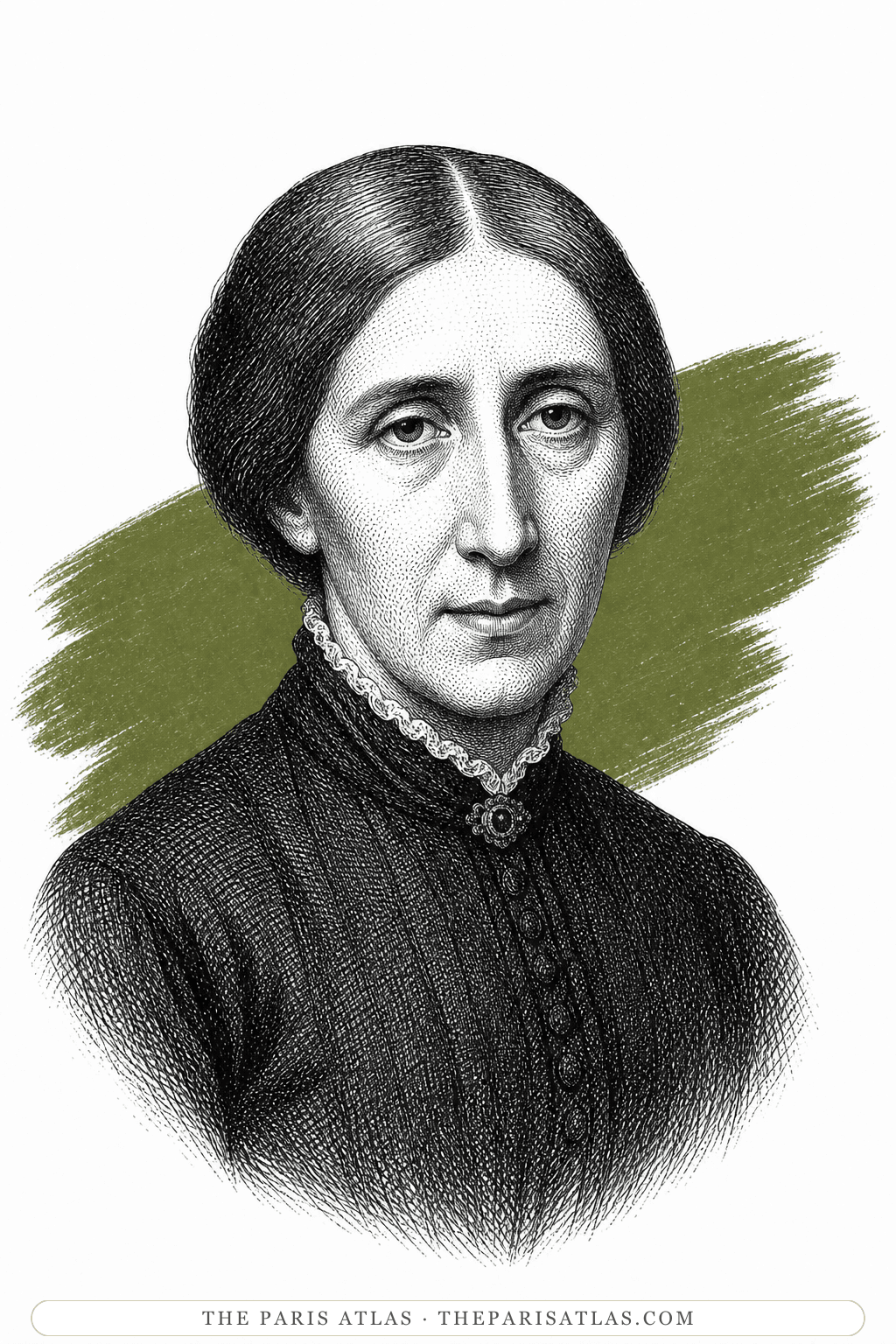
George Eliot
Silas Marner
George Eliot's short novel of village life from two years later, with the same Midlands voices.
Read our takeAdam Bede
George Eliot
by George Eliot
A village carpenter loves a pretty dairymaid who has been seduced by the squire's heir, and the secret ends in a prison cell.
Adam Bede is George Eliot's first full-length novel, published in three volumes in February 1859 and set in a Midlands village in 1799. Adam is a proud, hard-working carpenter in love with Hetty Sorrel, a vain young girl on her uncle's farm. Hetty is secretly courted by Arthur Donnithorne, the young heir to the local estate. When Arthur goes back to his regiment, Hetty finds she is pregnant and runs away. Beside her stands Dinah Morris, a young Methodist preacher. The book made George Eliot famous before anyone knew who she was.
The novel grew from a story George Eliot heard as a young woman. Her Methodist aunt, Mrs Samuel Evans, told her about visiting a condemned girl who had killed her baby and would not confess. The aunt stayed and prayed with her all night until the girl broke down and confessed. Then she rode with her in the cart to the gallows.[1]
George Eliot told the story to George Henry Lewes in December 1856, and he said the prison scene would make a fine part of a novel. She began writing on 22 October 1857. Dinah grew out of her memories of the aunt, and Adam out of her father's early life. She wrote that neither was a portrait.[1]
Lewes also shaped the plot. He suggested that Dinah should end up as the main figure, and George Eliot accepted at once. At Munich in 1858 he worried that Adam was too passive. The fight between Adam and Arthur in the wood came to her one night at the Munich opera, during Rossini's William Tell.[1]
The book opens in Jonathan Burge's carpenter's workshop in Hayslope on 18 June 1799. The narrator promises to show it the way an Egyptian sorcerer shows visions in a drop of ink.[2]
Adam Bede is twenty-six, the best workman in Jonathan Burge's shop, and in love with Hetty Sorrel. His brother Seth loves Dinah Morris, a young Methodist who preaches to the villagers on the green. Their father, Thias, drinks. One night he leaves a coffin unmade, and Adam works through the night to finish it. On the way to deliver it, Adam and Seth find their father drowned in the Willow Brook.[2]
Hetty lives at the Hall Farm with her uncle and aunt, Martin and Rachel Poyser. She is seventeen, very pretty, and dreams of being a lady. Captain Arthur Donnithorne, the old squire's grandson and heir, meets her in the woods and flirts with her, meaning no harm. He tries to stop, fails, and they become lovers.[2]
One evening in August, at sunset, Adam walks through the Grove and sees Arthur and Hetty kissing under a beech tree. He makes Arthur fight him and knocks him down. Adam forces him to write to Hetty ending the affair. Arthur leaves Hayslope to rejoin his regiment. Hetty slowly agrees to marry Adam instead.[2]
Before the wedding Hetty realises she is pregnant. She tells her family she is visiting Dinah and sets off alone to find Arthur at Windsor, but his regiment has gone to Ireland. She wanders the country, thinking of drowning herself in a pool, and cannot do it. Adam goes to look for her and learns she never reached Dinah.[2]
The rector, Mr Irwine, tells Adam that Hetty is in prison at Stoniton, charged with killing her baby. At the trial she is found guilty and sentenced to hang. She refuses to say anything to anyone until Dinah comes to her cell.[2]
Dinah stays with Hetty through the night, and Hetty confesses. She left her newborn baby under a nut-tree in a wood and covered it with chips and grass, and she heard it cry. When she went back it was gone. On the morning of the hanging, as the cart reaches the gallows, Arthur gallops through the crowd with a reprieve. Hetty is transported overseas instead.
Arthur leaves Hayslope for years, so that the Poysers and Adam will not have to leave. Adam and Dinah slowly realise they love each other, and she accepts him on the hill above Hayslope. In the Epilogue, in 1807, they are married with two children. The Methodist Conference has forbidden women to preach, and Dinah has given it up. Arthur comes home ill with fever. Hetty died as she was coming back.
Chapter XVII is called In Which the Story Pauses a Little. George Eliot stops the plot to explain why she will not make her characters better than they are. Drawing a griffin is easy, she says, and drawing a real lion is hard. Saying the exact truth, even about your own feelings, is harder than saying something fine.
Her model is Dutch painting. She loves those pictures of homely life, she writes, which lofty-minded people despise: an old woman eating her dinner alone, a spinning-wheel, a stone jug. Art should remind us that most people are common and coarse, so that we do not leave them out of our religion and philosophy.
Nobody outside a small circle knew who George Eliot was in 1859. In Warwickshire, where she grew up, people were saying the author was a local man, a Mr Liggins. On 16 April 1859 George Eliot sent a letter to The Times denying it.
Paris joined the guessing. On 15 June 1859 Émile Montégut reviewed Adam Bede at length in the Revue des Deux Mondes, the city's leading literary review. He spelled the name George Elliott. He admitted that Scenes of Clerical Life had convinced him the author was a pious woman. He had imagined her as someone who ran a ragged school for poor children.
Adam Bede changed his mind. The new book seemed to him to have both a man's and a woman's gifts. In his view only clergymen had that mix, so he concluded, trembling as he said it, that the author was a minister of the Church of England. He had already compared the precision of her earlier stories to the best Dutch paintings.
In November George Eliot told her friends the Brays which reviews she rated highest. An article in Bentley's was the best, she wrote, unless it was Montégut's.
In April 1859, two months after the book came out, the Paris publisher Hachette wrote to ask George Eliot's terms for translating it into French. On 9 July 1859 she and Lewes spent a day in Paris on their way to Switzerland. They went first to the Musée du Louvre, where Veronese's Marriage at Cana won her over.
The translation was done by an old friend. François d'Albert-Durade was a Geneva painter in whose flat she had lodged in 1849 and 1850. In July 1860 she told John Blackwood his Adam Bede was in the press and carefully done. On 28 November that year she noted that the French edition was at last published.
The national library in Paris catalogues it as a two-volume edition from the Paris publisher Dentu, dated 1861. Hachette was still reprinting the same translation in 1913.
In What Is Art? (1898), Leo Tolstoy named a handful of modern books as the highest kind of art, the kind that spreads love of God and of other people. Adam Bede is on the list, beside Schiller's The Robbers, Victor Hugo's Les Misérables, Charles Dickens's A Tale of Two Cities and A Christmas Carol, and Uncle Tom's Cabin.
I’m not denyin’ the women are foolish: God Almighty made ’em to match the men.
on’y it was a pity he couldna be hatched o’er again, an’ hatched different.
There’s a sort of wrong that can never be made up for.
The farmer's wife at the Hall Farm is one of the great comic talkers in English fiction. A member of Parliament quoted her in the House of Commons within two months of publication.
The prison scene comes from a real night George Eliot's aunt spent praying with a condemned girl. The whole novel was built to lead up to it.
Adam's carpentry, the Poysers' dairy and the harvest supper are written with real knowledge of how work was done in 1799.
The Revue des Deux Mondes reviewed it at length within months and guessed that the author was a clergyman. George Eliot ranked it among the best reviews the book got.
A tall, skilled village carpenter of twenty-six, upright and quick to judge, who loves Hetty Sorrel.
Mrs Poyser's pretty seventeen-year-old niece, who works in the dairy at the Hall Farm and dreams of being a lady.
Mrs Poyser's niece, a calm young Methodist preacher who works in a cotton-mill at Snowfield, who stays with Hetty in prison.
The old squire's grandson and heir, a good-natured captain in the militia who means well and seduces Hetty.
Rachel Poyser, the sharp-tongued, hard-working wife at the Hall Farm, and Hetty's aunt.
Adam's gentle younger brother, a Methodist who loves Dinah and is turned down.
Adam and Seth's anxious, complaining, devoted mother.
The easy-going, kindly rector of Broxton and Hayslope, and Arthur's old tutor.
The lame schoolmaster who teaches working men at his night-school and claims to despise women.
1839 or 1840
George Eliot's Methodist aunt, Mrs Samuel Evans, tells her about praying all night with a condemned girl.
22 October 1857
George Eliot begins writing the novel, which she and George Henry Lewes call My Aunt's Story.
Spring 1858
At the Munich opera, during William Tell, she sees how Adam and Arthur's fight should go.
16 November 1858
She writes the last word and sends the manuscript off.
1 February 1859
Blackwood publishes the novel in three volumes.
24 March 1859
Charles Buxton quotes Mrs Poyser in the House of Commons.
17 April 1859
Hachette asks her terms for a French translation.
15 June 1859
Émile Montégut's review in the Revue des Deux Mondes guesses the author is a clergyman.
July 1859
Word comes that the fourth edition, of 5,000 copies, has sold out in a fortnight.
28 November 1860
She notes that François d'Albert-Durade's French translation is at last published.
1898
Leo Tolstoy's What Is Art? names Adam Bede among the highest works of modern art.
2008
Penguin Classics publishes Margaret Reynolds's edition.

Silas Marner
George Eliot
George Eliot's short novel of village life from two years later, with the same Midlands voices.
Read our takeThe Mill on the Floss
George Eliot
Her next novel, begun as soon as Adam Bede was out, and closer to her own childhood.
Read our takeMiddlemarch
George Eliot
Uncle Tom's Cabin
Harriet Beecher Stowe
Harriet Beecher Stowe's novel, which Leo Tolstoy put on the same short list of the highest modern art as Adam Bede.
Read our take
Charles Dickens's novel of 1859, published the same year and also named on Leo Tolstoy's list.
Read our takeA carpenter in a Midlands village in 1799 loves a pretty farm girl, Hetty Sorrel. She is seduced by the squire's heir, becomes pregnant and is tried for killing her baby. A young Methodist preacher, Dinah Morris, stays with her in prison.
Yes, her first full-length novel. Her first fiction was the three stories collected as Scenes of Clerical Life, published in 1858.
Partly. George Eliot's aunt told her about spending a night in prison praying with a girl condemned for killing her child. George Eliot said the prison scene was the climax she wrote towards.
On 1 February 1859, in three volumes, by William Blackwood and Sons. The novel sold 16,000 copies in its first year.
The Revue des Deux Mondes reviewed it on 15 June 1859 and guessed the author was a clergyman. A French translation by François d'Albert-Durade came out in Paris at the end of 1860.
Hetty's aunt, the farmer's wife at the Hall Farm, famous for her sayings. In Chapter XXXII she tells the old squire exactly what she thinks of him.
Explore authors with a similar voice, perspective, and influence.
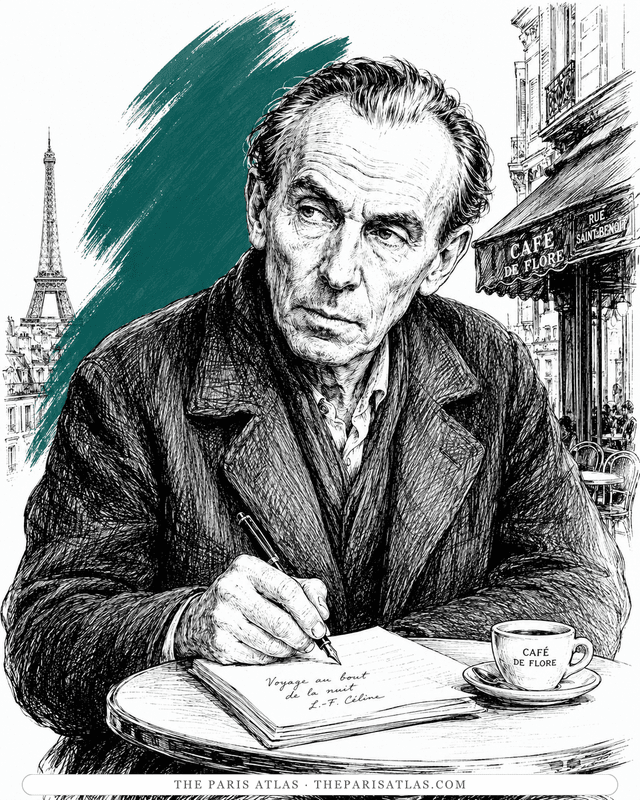
The doctor of the Paris slums who wrote the century's blackest, funniest novel — and changed the sound of French prose.
View author
The Missouri newspaperman who became America's most famous writer, and whose first book made its reputation partly out of Paris: in 1867 he arrived with a shipload of American tourists, renamed his guide Ferguson, watched the high-kicking can-can through his fingers and wrote it all down. He kept coming back — and was living in Paris in the mid-1890s, broke, while finishing the novel he considered his best, Personal Recollections of Joan of Arc.
View author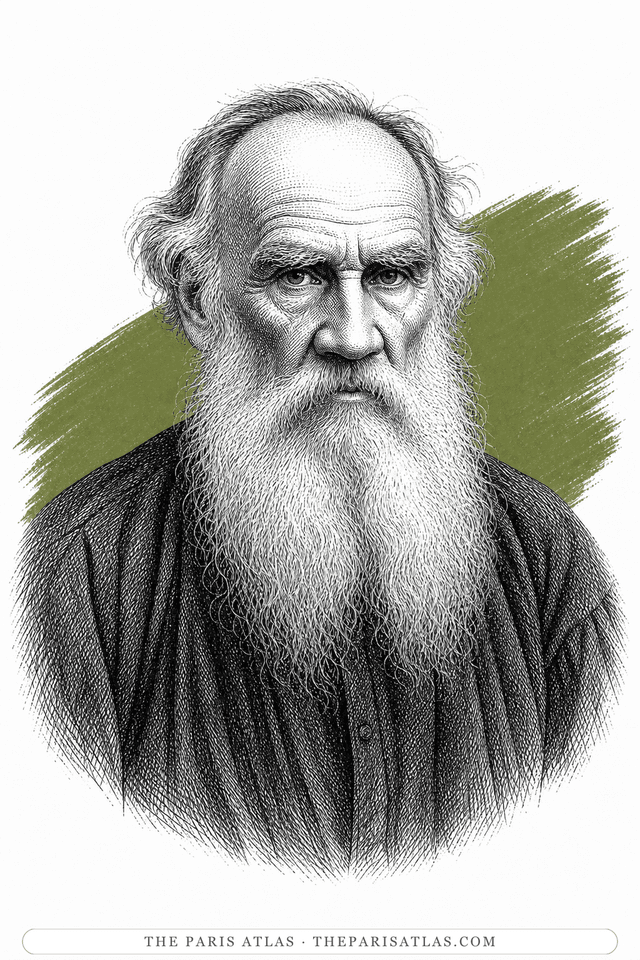
Russian novelist who wrote War and Peace and Anna Karenina, then renounced the life that produced them. He spent six weeks in Paris in 1857, and on one April morning went to watch a man beheaded in the street — an hour he said destroyed his belief in progress and in the state, and which he was still writing about twenty-two years later.
View authorThe sources below include the primary text, editions, scholarship, archival materials, and other records that informed this page. They document Adam Bede, its publication, and its place in literary history.


Who the French translator was.

The Paris review.

Leo Tolstoy's list of the highest modern art.
Catalogue record for the first French edition.
Catalogue record for a later Hachette printing of the same translation.
Selected ISBN, on-sale date, page count and editor.
Library record confirming ISBN 9780140436648 as the Penguin Classics edition.
The primary text represented by this page, used for descriptions of the work’s contents and for any quoted passages shown here.
The primary text is the baseline reference for every book page. Additional references document publication history, interpretation, and historical context where that evidence is available.
 Explore more resources