Hetty Sorrel
Mrs Poyser's pretty seventeen-year-old niece, who works in the dairy at the Hall Farm and dreams of being a lady.
She wants Arthur to marry her and make her a lady, with fine clothes and a carriage.
The book
Adam Bede
George Eliot
Who they are in the book
Spoiler-freeHetty is vain, shallow and very young, and the narrator does not pretend otherwise. What happens to her is out of all proportion to what she did wrong. The novel follows her alone across England in some of its most painful chapters.
How Hetty Sorrel Is Portrayed
- In the dairyIn Chapter VII she is making butter in the dairy when Arthur calls. She knows he is looking at her.
- Earrings in the mirrorIn Chapter XV she lights two bought candles in her bedroom and puts on large glass earrings and an old black lace scarf. Then she admires herself in a small mirror.
- The letterIn Chapter XXXI she reads Arthur's letter ending the affair, and sees her own white face in the old glass.
- The poolIn Chapter XXXVII she finds a black pool in the dark and sits by it, meaning to drown herself, and cannot.
- The confessionIn Chapter XLV she tells Dinah she buried the baby under a nut-tree in a wood, and could hear it crying.
- The cartIn Chapter XLVII she clutches Dinah in the cart on the way to the gallows. The crowd shouts because a horseman is galloping in.
Hetty Sorrel quotes
I did do it, Dinah... I buried it in the wood... the little baby... and it cried... I heard it cry...
Arthur brings a reprieve at the last moment, and she is transported overseas instead of hanged. The Epilogue says she died on her way home, years later.
If you like Adam Bede


If you like George Eliot
Explore authors with a similar voice, perspective, and influence.
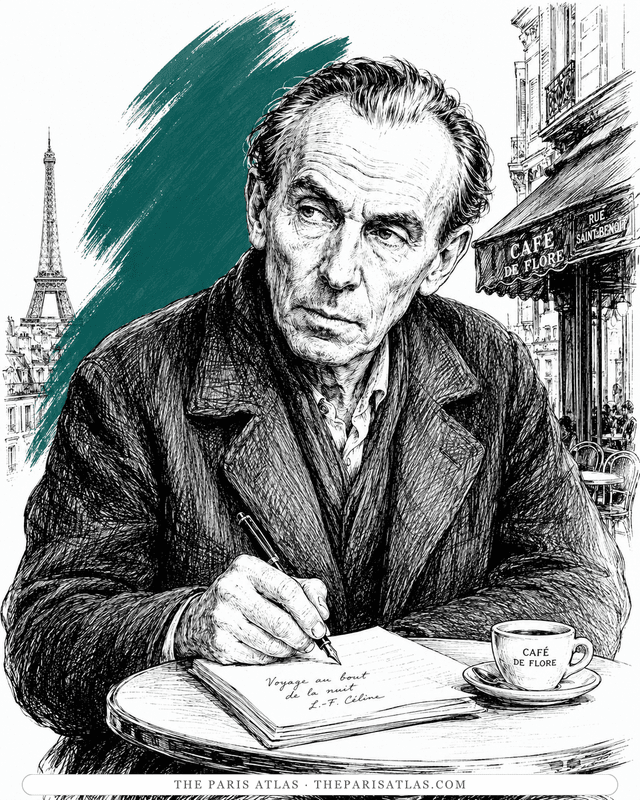
Louis-Ferdinand Céline
The doctor of the Paris slums who wrote the century's blackest, funniest novel — and changed the sound of French prose.
View author
Mark Twain
The Missouri newspaperman who became America's most famous writer, and whose first book made its reputation partly out of Paris: in 1867 he arrived with a shipload of American tourists, renamed his guide Ferguson, watched the high-kicking can-can through his fingers and wrote it all down. He kept coming back — and was living in Paris in the mid-1890s, broke, while finishing the novel he considered his best, Personal Recollections of Joan of Arc.
View author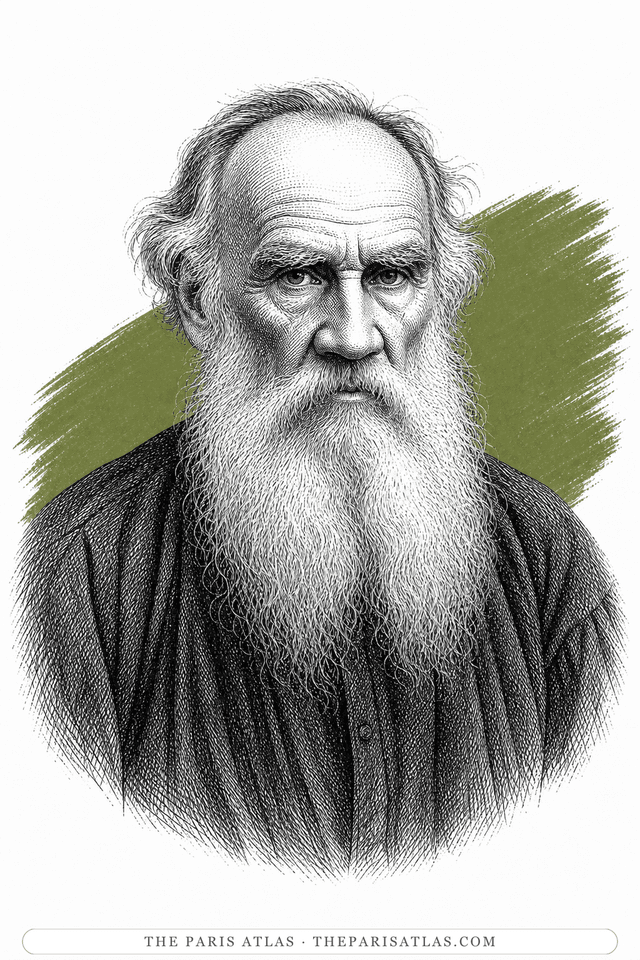
Leo Tolstoy
Russian novelist who wrote War and Peace and Anna Karenina, then renounced the life that produced them. He spent six weeks in Paris in 1857, and on one April morning went to watch a man beheaded in the street — an hour he said destroyed his belief in progress and in the state, and which he was still writing about twenty-two years later.
View author