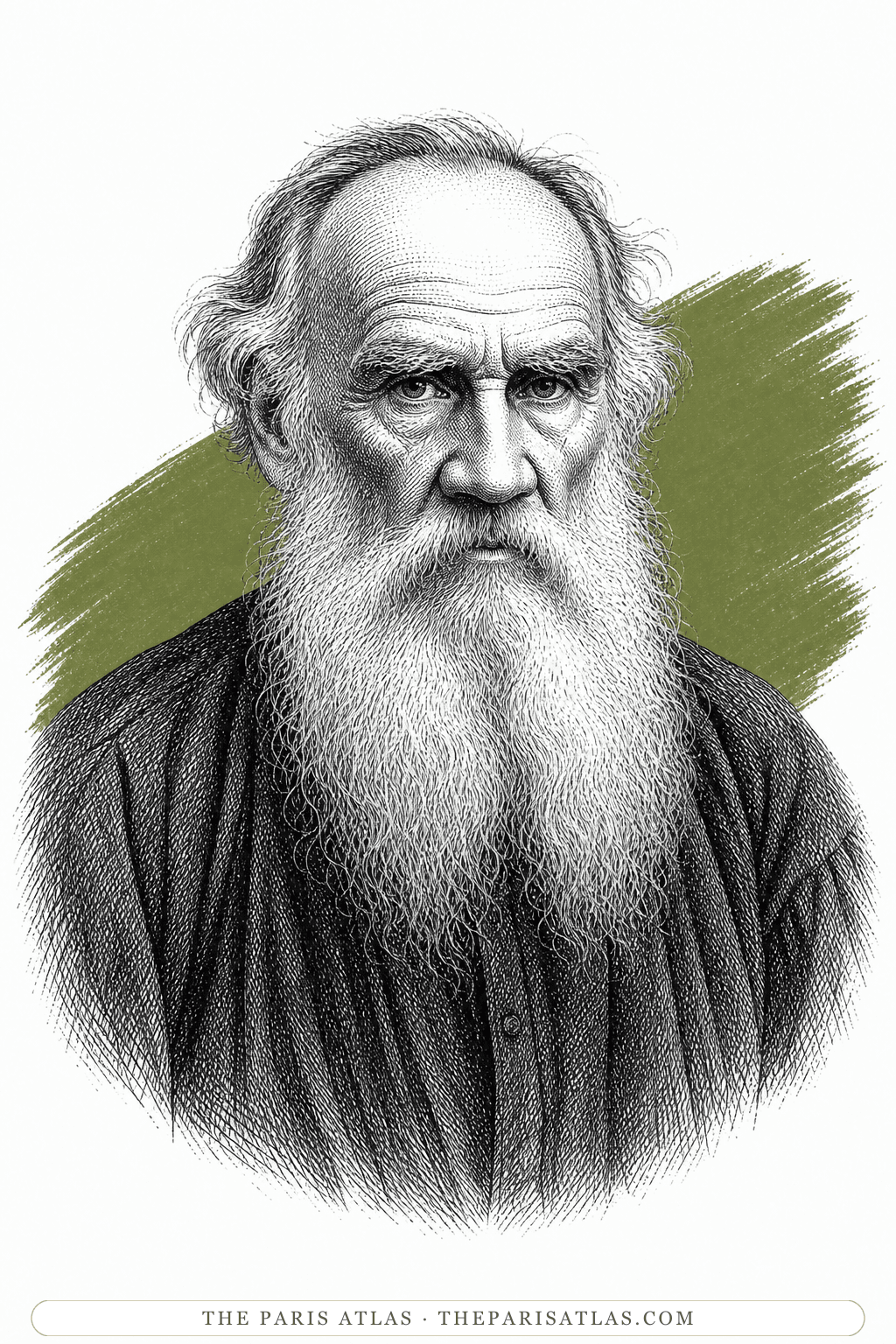
Anna Karenina
Leo Tolstoy
Anna Karenina
Tolstoy's earlier novel of a woman society will not forgive. Here the man who wronged her tries to pay for it.
Read our takeResurrection
Leo Tolstoy
by Leo Tolstoy
A prince sits on a jury and recognises the prisoner as the young servant he seduced and abandoned ten years before.
Prince Dmitri Nekhlyudov is called for jury service in a provincial town. The prisoner is Katusha Maslova, a prostitute accused of poisoning a merchant for his money. Nekhlyudov recognises her as the girl who grew up in his aunts' house, whom he seduced one Easter and left with a hundred-rouble note. Through a careless mistake by the jury she is sentenced to four years of hard labour in Siberia. Nekhlyudov decides to put right what he did. He appeals for her in St Petersburg, gives away his land, and follows her convoy to Siberia. Leo Tolstoy finished the novel to raise money for the Doukhobors, a religious sect persecuted for refusing military service, and it appeared in 1899.[1][2]
The story came from a real case. Aylmer Maude, Tolstoy's biographer and translator, says it was a court case that the jurist Anatoly Koni, a senator, told Tolstoy about. Tolstoy began writing it, then put it aside. He had qualms about spending time on a novel for educated readers while the poor were still oppressed.[2]
What brought him back to it was the Doukhobors. They were a Christian sect in the Caucasus, persecuted in the 1890s for refusing to learn war, and Tolstoy helped raise money for them to emigrate. He sold the right of first publication to the St Petersburg weekly Niva for 12,000 roubles. The book grew so much during revision that the publisher, Adolf Marx, added another 10,000. The censor cut a good deal, in one place almost a whole chapter.[2]
Louise Maude, Aylmer Maude's wife, translated it into English as the instalments came out. In her preface to the 1900 American edition she says Tolstoy completely rewrote the story in the last year and a half. All his proceeds, she writes, went to the Doukhobors, about 7,300 of whom had settled in Canada. Her own earnings from the translation went to the same cause.[3][2]
On 28 April three prisoners are brought to court in a provincial town. They are accused of poisoning a Siberian merchant, Smelkov, at the Hotel Mauritania and stealing his money. One of them gives her name as Lubov and then as Katerina Maslova. Among the jurors is Prince Dmitri Nekhlyudov, who recognises her. She is Katusha, the half-servant, half-ward he knew at his aunts' country house.[1]
The story goes back ten years. As a student Nekhlyudov spent a pure, happy summer with Katusha. Three years later, now an officer, he stayed with his aunts over Easter, seduced her, and left her a hundred-rouble note. She became pregnant and was dismissed. The baby died, and after several places as a servant she ended up in a licensed brothel.[1]
The jury means to find her innocent of intending to kill. The jurors forget to write without intent to take life, and the court sentences her to four years of hard labour in Siberia. Nekhlyudov is overcome with shame. He visits her in prison, asks her forgiveness and tells her he will marry her. She turns on him and says he wants to save himself through her in the life to come.[1]
Nekhlyudov goes to his estates and gives his land to the peasants on terms they can manage. In St Petersburg he takes Maslova's appeal and other prisoners' cases to officials, a general, senators and Toporov, who runs the Church's governing body, the Holy Synod. The Senate rejects her appeal. He sets out after her prison convoy to Siberia, travelling beside a group of political prisoners.[1]
On the march Maslova changes. She stops drinking, befriends the political prisoners, especially Mary Pavlovna, and is courted by one of them, Vladimir Simonson. Nekhlyudov's petition succeeds. The prosecutor Selenin writes that the Committee of Petitions has reduced her sentence, so she will not have to do hard labour. When Nekhlyudov brings the news, she tells him that where Simonson goes she will follow. He understands she is refusing his sacrifice, whether out of love for Simonson or for him.
The same night, in a Siberian inn, Nekhlyudov reads the Gospels, which an Englishman visiting the prisons has given him. He reads the Sermon on the Mount and the parable of the vineyard and decides that the only duty of every man is to keep these laws. The book ends as a new life begins for him. How that new period will end, the last sentence says, time alone will prove.
The first page sets the terms. The story opens on a spring morning, and in the town everything is glad, the plants, the birds, the insects and the children. Only the grown-up men and women go on cheating and tormenting one another. In the prison office, the text says, what counts is not the spring but a numbered notice ordering three prisoners to court.
The trial chapters are close to comedy. The presiding judge is thinking about a red-haired woman he means to meet that evening. Another judge has been told by his wife there will be no dinner for him. The jury argues over wording and sends a woman to hard labour by leaving out a phrase. Nobody in the court means her harm, and nobody takes responsibility. Later the Senate in St Petersburg rejects her appeal. Its chairman is in a bad temper that day because another man got the post he wanted.
Tolstoy was just as hard on the Church. Book I describes a service in the prison chapel in plain physical detail, step by step, with no reverence. In Book II the official in charge of the Church, Toporov, is a dull man whose job is to defend with force an institution that claims no human force can shake it.
The complete French translation came out in Paris in 1900. The translator was Teodor de Wyzewa, and the publisher was the Librairie académique Didier, Perrin et Cie at 35 quai des Grands-Augustins, on the Left Bank of the Seine. The title page prints the book's two epigraphs from the Gospels. One is Jesus telling Peter to forgive not seven times but seventy times seven. The other is Let him who is without sin cast the first stone.
Two years later the story was on the Paris stage. Henry Bataille's play Résurrection, a drama in five acts after Tolstoy, opened at the Odéon theatre on 14 November 1902. The Bibliothèque nationale de France's record names Berthe Bady as Maslova. In London a stage version at His Majesty's Theatre also drew crowds, and Aylmer Maude says it made the novel sell.
Tolstoy had given up his copyright in everything written after 1881, and that made trouble. Other Russian papers began reprinting the Niva instalments as they appeared, and Adolf Marx, who had paid for them, objected. Tolstoy asked the papers to wait until the serial was finished, and they agreed.
Aylmer Maude thought the novel as strong as War and Peace, written more than thirty years earlier. He also thought it more strenuously moral, and plain-spoken about sex. For a while Mudie's Library and W. H. Smith's bookstalls in Britain boycotted it as immoral. Maude's one complaint was the ending. Tolstoy, he wrote, does not seem to know what his hero is to do with himself.
Though hundreds of thousands had done their very best to disfigure the small piece of land on which they were crowded together, by paving the ground with stones, scraping away every vestige of vegetation, cutting down the trees, turning away birds and beasts, and filling the air with the smoke of naphtha and coal, still spring was spring, even in the town.
You've got pleasure out of me in this life, and want to save yourself through me in the life to come.
To atone for my sin, not by mere words, but in deed. I have made up my mind to marry you.
A woman goes to hard labour because the jury forgets a phrase. The trial chapters show how that happens without anyone meaning it.
She refuses to be anyone's redemption, and she makes her own choice at the end.
Written in his seventies, for a cause, by a writer who had said novels no longer mattered to him.
Henry Bataille's version opened at the Odéon in 1902, two years after the Paris translation.
A rich, idle prince who finds himself on the jury trying the woman he seduced, and sets out to make amends.
The illegitimate daughter of a village woman, raised in Nekhlyudov's aunts' house, seduced by him, and convicted of a murder she did not commit.
A beautiful young revolutionary among the political prisoners, who befriends Maslova on the march.
A young political prisoner, ill with consumption, whose story of how he became a revolutionary Nekhlyudov hears on the march.
The head of the Holy Synod, the body that ran the Russian Church, whom Nekhlyudov visits about persecuted sectarians.
A political prisoner with his own ideas about life, who falls in love with Maslova on the march.
1890s
Leo Tolstoy writes part of the novel from a case told to him by Anatoly Koni, then puts it aside.
1898
Tolstoy takes the book up again to raise money for the Doukhobors' emigration to Canada.
1899
The novel appears in weekly instalments in the St Petersburg magazine Niva, cut by the censor.
1900
Dodd, Mead publishes Louise Maude's English translation in New York.
1900
Perrin publishes Teodor de Wyzewa's complete French translation in Paris.
14 November 1902
Henry Bataille's stage version opens at the Odéon in Paris, with Berthe Bady as Maslova.
1966
Penguin Classics publishes Rosemary Edmonds's translation.

Anna Karenina
Leo Tolstoy
Tolstoy's earlier novel of a woman society will not forgive. Here the man who wronged her tries to pay for it.
Read our take
Another judge's world, seen from inside a man who realises too late that his correct life was wrong.
Read our take
Victor Hugo's novel of a convict and the law, which Tolstoy named in What Is Art? as the highest kind of art.
Read our take
Aleksandr Solzhenitsyn's day in a Soviet labour camp, sixty years after Tolstoy followed a convoy to Siberia.
Read our takeA prince, Dmitri Nekhlyudov, serves on a jury and recognises the accused, Katusha Maslova, as the young woman he seduced years before. When she is wrongly sent to hard labour in Siberia, he tries to make amends and follows her there.
He finished it to raise money for the Doukhobors, a Christian sect persecuted for refusing military service, who were emigrating to Canada. He sold the first Russian publication rights to the magazine Niva and gave the proceeds to the cause.
The story began with one. Aylmer Maude says the story came from a court case that the jurist Anatoly Koni told Tolstoy about.
Maslova's sentence is reduced, and she chooses to go with a political prisoner, Vladimir Simonson, rather than marry Nekhlyudov. Nekhlyudov spends the night reading the Gospels, and a new life begins for him. The last sentence says only time will show how it ends.
Yes, in its publication. Perrin published the complete French translation in Paris in 1900. Henry Bataille's stage version opened at the Odéon theatre on 14 November 1902.
Louise Maude's, as published by Dodd, Mead in New York in 1900. She translated the novel as it appeared and gave her earnings to the Doukhobors.
Explore authors with a similar voice, perspective, and influence.
French writer and philosopher whose novels, memoirs, and social analysis examined freedom, gender, responsibility, aging, and the material conditions that shape a life.
View author
American novelist and composer whose expatriate fiction explores dislocation, unstable intimacy, fatalism, and North Africa.
View author
The Brooklyn dropout who arrived in Paris broke at thirty-eight and wrote the exuberant, banned books that ended American censorship.
View authorThe sources below include the primary text, editions, scholarship, archival materials, and other records that informed this page. They document Resurrection, its publication, and its place in literary history.


The 1900 printing, used for every quotation and for Louise Maude's preface on the Doukhobors.
The Paris translation of 1900, with its imprint and the novel's two Gospel epigraphs.

Record of Henry Bataille's play at the Odéon, 14 November 1902, with Berthe Bady as Maslova.
Library record confirming ISBN 9780140441840 as the 1966 Penguin edition.
The primary text represented by this page, used for descriptions of the work’s contents and for any quoted passages shown here.
The primary text is the baseline reference for every book page. Additional references document publication history, interpretation, and historical context where that evidence is available.
 Explore more resources