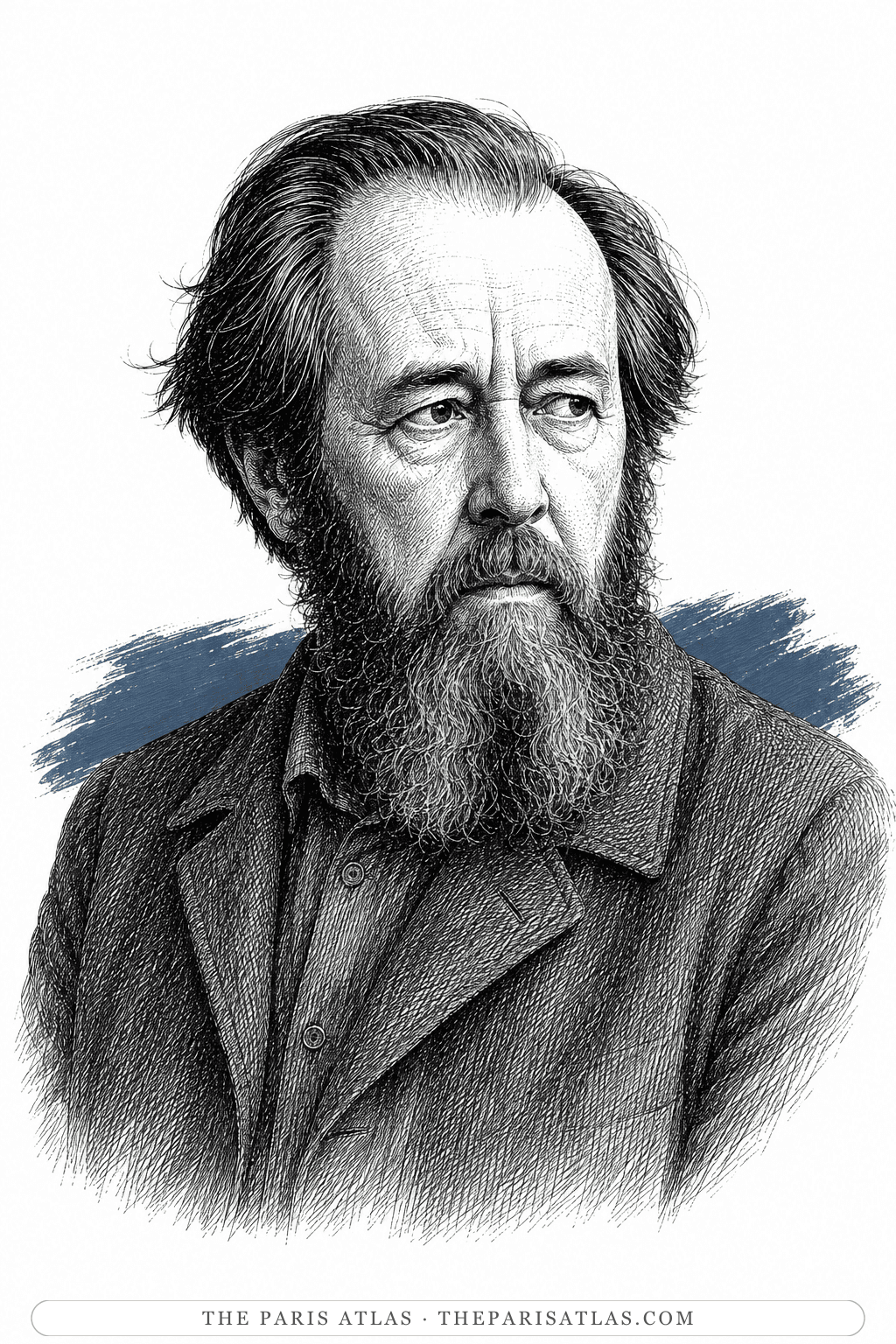
Russian novelist who wrote War and Peace and Anna Karenina, then renounced the life that produced them. He spent six weeks in Paris in 1857, and on one April morning went to watch a man beheaded in the street — an hour he said destroyed his belief in progress and in the state, and which he was still writing about twenty-two years later.
5 books on our shelves
Details
Lived
1828–1910
Born
1828
Birthplace
Yasnaya Polyana, Russia
Died
1910
Place of death
Astapovo, Russia
Nationality
Russian
Married
Sofya Andreyevna Behrs · 1862–1910
Roles
AuthorPhilosopher
About Leo Tolstoy
Leo Tolstoy wrote the two novels most often named when people argue about the greatest ever written — War and Peace and Anna Karenina — and then spent the last thirty years of his life insisting that novels did not matter. He was born in 1828 on the family estate at Yasnaya Polyana, about 120 miles south of Moscow, and died in 1910 in a railway stationmaster's house, having run away from home at eighty-two.
Paris holds one morning of that life, and it is the morning everything turned on. Tolstoy arrived in the city on 21 February 1857, aged twenty-eight, a well-off young count with two war books behind him and no particular purpose. He liked it enormously. Then on 6 April he got up at seven, went to watch a public execution by guillotine, and could not sleep afterwards. He left the city two days later, on 8 April. What he saw there is the hinge of his religious crisis: he described it in his diary that evening, and again twenty-two years later in Confession, the book in which he explains why he stopped believing in almost everything he had been raised to believe.
A count with nothing to do
Tolstoy was born on 28 August 1828 at Yasnaya Polyana — the name means "bright glade" — the estate in Tula province that his family had held for generations and where he would live, write and be buried. He was orphaned young, left the university at Kazan on the Volga without a degree, ran up gambling debts, and then followed his elder brother Nikolai into the army. He served in the Caucasus, the mountainous frontier region between the Black Sea and the Caspian where Russia was fighting to hold its southern border, and, from late 1854, in the siege of Sevastopol during the Crimean War — the conflict in which Britain and France fought Russia over the Black Sea, and in which Sevastopol, Russia's naval fortress in the Crimea, was besieged for eleven months. The three Sevastopol sketches he sent back from the bombardment made his name: reportage from inside a siege, written by an officer under fire. He left the army in November 1856, famous at twenty-eight and unsure what to do next.[1]
What he did next was go abroad for the first time. He travelled by post-chaise — a hired horse-drawn coach that changed horses at staging posts along the road — to Warsaw, took the railway west, and reached Paris on 21 February 1857. There is a small confusion of dates around him that is worth clearing up once: Russia still used the older Julian calendar, which in the nineteenth century ran twelve days behind the Gregorian calendar used in western Europe and thirteen days behind it from 1900, so Russian sources give one date and French sources another. All the Paris dates here are the French ones — the dates Tolstoy himself used while he was in the city.[1]
He stayed about six weeks and was happy. He wrote to his friend the critic Vasily Botkin on 5 April that he had been in Paris nearly two months — six weeks, in fact — and could not foresee the town ceasing to interest him: "the fine arts give me such delight: the Louvre, Versailles, the Conservatoire, the concerts, the theatres, the lectures at the Collège de France and at the Sorbonne, above all this social liberty of which we have no idea in Russia." The Conservatoire is the state music academy, whose orchestra gave the city's most serious concerts; the Collège de France is the institution founded in 1530 whose lectures by leading scholars are free and open to anyone who walks in; the Sorbonne is the old University of Paris. He went to the Musée du Louvre, to the racecourse, to the theatre to see the Italian tragic actress Adelaide Ristori. He watched hundreds of working men with their toolbags under the benches learning to read music at sight by a new teaching method, and remembered it years later when he started a school for peasant children on his own estate. He also saw a good deal of Ivan Turgenev, the Russian novelist who had settled in Paris — a friendship that was permanently difficult, and that would later break down into a challenge to a duel before the two men made it up in 1878.[2]
6 April 1857
Executions in France were public until 1939, carried out in the open street in front of a prison at dawn, using the guillotine — the machine, adopted during the Revolution, that beheads by dropping a weighted blade. Tolstoy went deliberately. He said afterwards that he had wanted to test his own feelings. On the morning of Monday 6 April 1857 he rose at seven, drove out to watch a man be killed, and wrote in his diary that night:
Got up ill at seven, and went to see an execution. A stout white neck and chest; he kissed the Gospels and then—death. How senseless! The impression it made was strong and will not go for nothing. I am not a political man. Morals and art I know, love, and can deal with. ... The guillotine long kept me awake and compelled me to reflect.[2]
The next morning he woke late and unwell, and, as he put it, "suddenly a simple and sensible idea occurred to me—to leave Paris." He packed, dined with Turgenev, and on 8 April took the train and then a night coach for Switzerland, weeping when he said goodbye. He told the cousin he went to stay with in Geneva that he had gone to see the execution to test his feelings, could not sleep afterwards and did not know what to do with himself. Six weeks of galleries, lectures and concerts ended in two days because of one hour on a Paris street.[2]
He was still writing about it twenty-two years later. In Confession, the short autobiographical book he wrote in 1879 explaining his loss and recovery of religious faith, the Paris execution is the moment his belief in progress collapsed — "progress" meaning the nineteenth-century confidence that history was carrying humanity steadily upward, and that the institutions of a modern state were the proof. "When I saw the head separate from the body," he wrote, "and how they both thumped into the box at the same moment, I understood, not with my mind but with my whole being, that no theory of the reasonableness of our present progress can justify this deed; and that though everybody from the creation of the world, on whatever theory, had held it to be necessary, I know it to be unnecessary and bad." The conclusion he drew is the seed of everything he argued for the rest of his life: that the judge of right and wrong is not the state, not the majority and not history, but the individual conscience.[3]
The two big novels, plainly
In 1862 Tolstoy married Sofya Andreyevna Behrs, eighteen to his thirty-four; they had thirteen children, and she copied out his manuscripts by hand, repeatedly. Two years later he began the book that became War and Peace, published in instalments from 1865 and finished in 1869. It is a novel about Russia during the Napoleonic wars of 1805 to 1812, when the French emperor Napoleon invaded and reached Moscow before his army was destroyed by the retreat. It follows several aristocratic families — the anxious, wealthy Pierre; the disillusioned soldier Andrei; the young Natasha — through courtships, battles, a burning Moscow and an argument, carried on in the novel's own voice, that no general or emperor actually directs events, which are made instead by millions of small human decisions nobody controls. It is long because an argument like that cannot be asserted, only demonstrated, and demonstrating it takes hundreds of lives on the page.[1]
Anna Karenina followed, published in instalments from 1875 to 1877. It is a smaller and colder book, set in Tolstoy's own present day. A married woman in high society falls in love with a cavalry officer, leaves her husband and son for him, and is destroyed less by the affair than by the social machinery that punishes her while forgiving him. Running beside her story is a second one — Levin, a landowner trying to farm honestly, to marry well and to work out whether life means anything — which is Tolstoy arguing with himself in public. Readers who want to know where his religious crisis came from can watch it beginning in Levin's chapters.
The crisis, and the church that expelled him
By his fifties Tolstoy was one of the most celebrated writers alive and, by his own account, close to suicide — hiding a rope from himself, unable to answer the question of what his life was for. Confession, written in 1879, is the record of how he got out: not through the Russian Orthodox Church he was born into — the established church of the empire, tied to the tsar and to the army it blessed, an alliance he came to find intolerable — but through a stripped-down reading of the Gospels in which the teaching of Jesus is a practical ethic and the miracles are beside the point. From it came the positions he is known for outside the novels — refusal of violence in all forms, refusal of oaths and armies and courts, distrust of private property, and a plain personal life of manual work and vegetarian food, conducted, awkwardly, on a large inherited estate.[3]
The state answered by censoring and seizing his religious books; the church answered on 22 February 1901 with an edict of the Holy Synod, its governing council, announcing that it did not reckon Tolstoy a member and that he had "insolently risen against the Lord." It was read as an excommunication and it made him more popular, not less. His wife wrote to the Synod in protest. He himself became the most-watched private man in Russia: pilgrims, disciples, journalists and police all turned up at Yasnaya Polyana, and the household became a place of permanent conflict over his will, his copyrights and his convictions.[4]
The one great Russian contemporary he never met was Fyodor Dostoevsky, the novelist of Crime and Punishment and The Brothers Karamazov and the only writer of the age regularly ranked alongside him. Dostoevsky wanted to visit Yasnaya Polyana, asked Turgenev whether he would be welcome, was told something discouraging about Tolstoy's mood, and dropped the idea; he died about a year later without the two ever meeting, having admired Tolstoy's work from the first and publicly praised Anna Karenina. Tolstoy read the news of the death in early 1881 and it shook him.
Astapovo
On 28 October 1910 — Russian dating; 10 November in the west — Tolstoy left home in the night at the age of eighty-two, with his doctor and one daughter, to escape his family and live simply somewhere else. He had no passport — the internal document every Russian needed in order to travel legally inside the empire, let alone leave it. Travelling third class, he stood a long time on the open platform at the end of the carriage in rain and a sharp wind, and there, probably, caught the cold that killed him. He spent a night at a monastery hotel, visited his sister at her convent, and set off again meaning to reach Rostov-on-Don and get papers to leave Russia altogether.[4]
He fell ill on the train, and the doctor decided they had to stop at the next station, which happened to be Astapovo, a small junction in Ryazan province. The stationmaster gave up his house. Tolstoy's temperature was near 104 degrees Fahrenheit, about 40 Celsius; he took it well, remarking half-jokingly that it was checkmate. Within days the station was full of reporters, photographers, newsreel cameramen, the provincial governor, an emissary from the prime minister and gendarmes — the empire's uniformed political police, sent to watch the crowd — with people living in railway carriages shunted into the sidings and the telegraph office collapsing under the traffic. He died there at seven minutes past six on the morning of 7 November 1910 — 20 November in the west — after a week's illness. The train carrying his body home moved slowly, because crowds had gathered at every station on the line. He was buried on 9 November on a wooded knoll at Yasnaya Polyana, ringed by nine oaks, on the spot where he and his brothers had played as children and where his elder brother Nicholas, in a childhood game the family never forgot, was said to have buried a green stick with the secret of universal happiness written on it. The Holy Synod forbade memorial services in the churches. There were no speeches at the graveside. The estate is a museum today, and so is the stationmaster's house at Astapovo.[5]
Life events
1828
Born on 28 August at Yasnaya Polyana, the family estate in Tula province, south of Moscow.
— Aylmer Maude, The Life of Tolstoy: First Fifty Years (1911)
1854–1855
Serves in the Crimean War, including the siege of Sevastopol; the Sevastopol sketches he writes under bombardment make his reputation.
— Aylmer Maude, The Life of Tolstoy: First Fifty Years (1911)
1857
Reaches Paris on 21 February on his first trip abroad, and stays about six weeks — the Louvre, the Sorbonne and Collège de France lectures, the theatres, the concerts.
— Aylmer Maude, The Life of Tolstoy: First Fifty Years (1911); Leo Tolstoy, edited by Aylmer Maude and translated by Louise Maude, The Private Diary of Leo Tolstoy, 1853-1857 (1927)
1857
9 to 14 March: goes to Dijon with the novelist Ivan Turgenev, and begins the story Albert.
— Leo Tolstoy, edited by Aylmer Maude and translated by Louise Maude, The Private Diary of Leo Tolstoy, 1853-1857 (1927)
1857
6 April: rises at seven and watches a public execution by guillotine in Paris. He cannot sleep afterwards; two days later he leaves the city for Switzerland.
— Leo Tolstoy, edited by Aylmer Maude and translated by Louise Maude, The Private Diary of Leo Tolstoy, 1853-1857 (1927); Aylmer Maude, The Life of Tolstoy: First Fifty Years (1911)
1862
Marries Sofya Andreyevna Behrs, who becomes the copyist of his manuscripts.
— Aylmer Maude, The Life of Tolstoy: First Fifty Years (1911)
1865–1869
War and Peace appears in instalments and is completed in November 1869.
— Aylmer Maude, The Life of Tolstoy: First Fifty Years (1911)
1875–1877
Anna Karenina appears in instalments.
— Aylmer Maude, The Life of Tolstoy: First Fifty Years (1911)
1879
Writes Confession, in which the Paris execution of 1857 is the moment his belief in progress broke.
— Leo Tolstoy, My Confession, My Religion, The Gospel in Brief (1899); Aylmer Maude, The Life of Tolstoy: Later Years (1911)
1881
Dostoevsky dies without the two novelists ever having met; the news depresses Tolstoy badly.
— Aylmer Maude, The Life of Tolstoy: Later Years (1911)
1901
The Holy Synod issues its edict of 22 February declaring that the Orthodox Church does not reckon Tolstoy a member — read everywhere as excommunication.
— Aylmer Maude, The Life of Tolstoy: Later Years (1911)
1910
Leaves home on 28 October at eighty-two, falls ill on the train, and is taken off at Astapovo station.
— Aylmer Maude, The Life of Tolstoy: Later Years (1911)
1910
Dies in the stationmaster's house at Astapovo at 6.07 a.m. on 7 November, amid reporters, newsreel cameras and police; buried two days later in the forest at Yasnaya Polyana.
— Aylmer Maude, The Life of Tolstoy: Later Years (1911)
Who Leo Tolstoy Inspired
People who found inspiration in Leo Tolstoy’s work.
Solzhenitsyn read War and Peace at ten and set out to be his generation's Tolstoy; August 1914 answers War and Peace at its own scale, and even opens with a young man visiting Tolstoy to argue with him. The argument is the influence: Solzhenitsyn absorbed the panoramic war novel and rejected its thesis that individuals cannot move history.
Did Tolstoy really watch a man being guillotined in Paris?
Yes, on the morning of 6 April 1857. He was twenty-eight, on his first trip outside Russia, and he went on purpose — he later said he wanted to test his own feelings. Executions in France were carried out in public in the street until 1939. His diary that night records the man's neck and chest, that he kissed the Gospels and was then killed, and that the guillotine kept Tolstoy awake for a long time afterwards. He left Paris two days later.
What did the execution change?
His belief that progress and the state could justify themselves. Writing about it in Confession twenty-two years later, he said that when he saw the head and the body thump into the box he understood "not with my mind but with my whole being" that no theory of progress could justify the act, and that the arbiter of good and evil was therefore not what people say and do, but his own heart. The refusal of state violence that runs through his later work — and that Mohandas Gandhi, who corresponded with him and built a settlement named after him in South Africa, took up and carried into the Indian independence movement — starts on that Paris street.
Who was executed that morning?
Tolstoy does not name him, and neither do the sources this page is built from. The diary entry and Confession describe the man only physically. He was a criminal condemned by a French court and put to death in the ordinary public way of the period. His name cannot be verified, so none is given.
How long was Tolstoy in Paris, and what did he do there?
About six weeks, from 21 February to 8 April 1857. He wrote that the Louvre, Versailles, the Conservatoire (the state music academy), the concerts, the theatres and the free public lectures at the Collège de France and the Sorbonne, the old University of Paris, delighted him, and that the social liberty of the city was something Russians had no idea of. He went to the races, saw the tragic actress Adelaide Ristori on stage, watched working men being taught to sight-read music, and spent time with the novelist Ivan Turgenev, who lived in Paris. He also broke off for a few days in March to visit Dijon.
What is War and Peace actually about?
Russia during the Napoleonic wars of 1805 to 1812, told through several aristocratic families — Pierre, Andrei, Natasha — as the French invasion reaches and burns Moscow and then collapses on the retreat. Alongside the story Tolstoy argues, in his own voice, that no general or emperor really steers events: history is made by millions of ordinary decisions that nobody is in charge of. He published it in instalments from 1865 and finished it in 1869.
What is Anna Karenina about?
A married woman in Russian high society leaves her husband and son for a cavalry officer, and is destroyed by a society that punishes her and forgives him. Beside her story runs a second one about Levin, a landowner trying to farm honestly and work out what life is for — Tolstoy thinking aloud about the questions that would soon produce his religious crisis. It appeared in instalments from 1875 to 1877.
Did Tolstoy and Dostoevsky ever meet?
No. They were the two towering Russian novelists of the same decades and never came face to face. Dostoevsky wanted to visit Tolstoy at Yasnaya Polyana and asked Turgenev whether he would be welcome; Turgenev described Tolstoy's mood in a way that put him off, and Dostoevsky died about a year later, in 1881, without the meeting. He had admired Tolstoy's writing from the start and had praised Anna Karenina in public.
How did Tolstoy die?
He left home in the night on 28 October 1910, aged eighty-two, to get away from his family and live plainly, taking his doctor and one daughter. He caught cold standing on the open platform of a third-class carriage in the rain, fell ill on the train, and was taken off at Astapovo, a small railway junction, where the stationmaster gave up his house. He died there at 6.07 a.m. on 7 November 1910, a week after arriving, with the station besieged by journalists, newsreel cameras and police. He was buried on 9 November on a wooded knoll at Yasnaya Polyana, in a grave dug by the village peasants; the Holy Synod forbade memorial services in the churches, and there were no speeches at the graveside.
Connections and Sources
Leo Tolstoy’s connections to people, places, and works, with the sources behind each one.
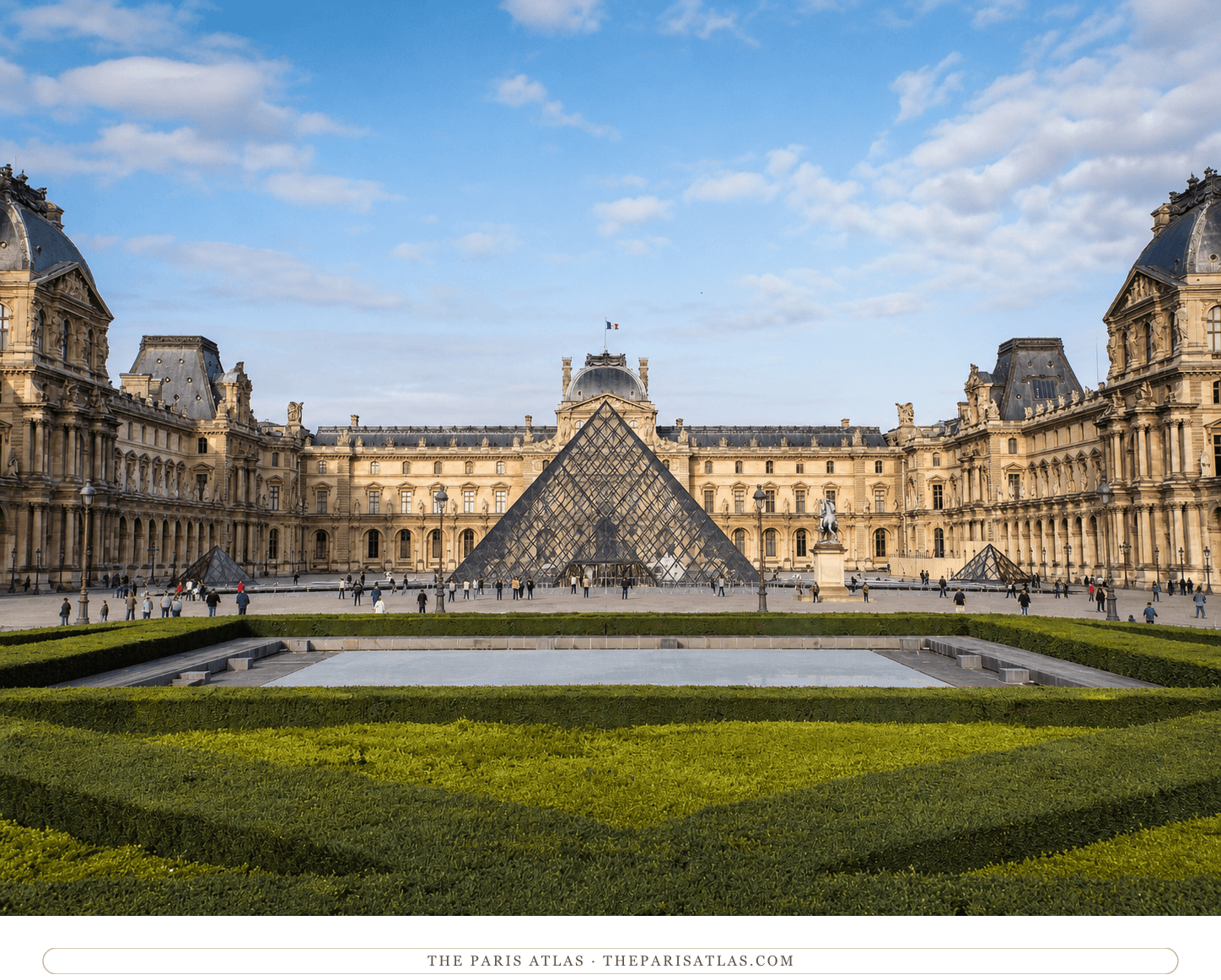
Tolstoy names the Louvre himself. Writing to his friend the critic Vasily Botkin from Paris on 5 April 1857 — the day before he went to watch a public execution and left the city — he listed what was keeping him there. The museum heads the list. He was twenty-eight and on his first journey outside Russia; the visit belongs to the six happy weeks that the guillotine ended.
— Aylmer Maude, The Life of Tolstoy: First Fifty Years (1911), Chapter VI, Travels Abroad; Leo Tolstoy, edited by Aylmer Maude and translated by Louise Maude, The Private Diary of Leo Tolstoy, 1853-1857 (1927)
P
Visited · 1857
paris
Tolstoy's only stay in Paris: he arrived on 21 February 1857, on his first trip outside Russia, and left on 8 April, two days after watching a man guillotined in the street. He told his aunt he had spent a month and a half in the city and had been so happy there that every night he regretted the day had gone so fast. The execution he saw on 6 April became, twenty-two years later, the turning point of Confession.
— Leo Tolstoy, edited by Aylmer Maude and translated by Louise Maude, The Private Diary of Leo Tolstoy, 1853-1857 (1927), Diary, February to April 1857; Aylmer Maude, The Life of Tolstoy: First Fifty Years (1911), Chapter VI, Travels Abroad
Solzhenitsyn read War and Peace at ten and set out to be his generation's Tolstoy; August 1914 answers War and Peace at its own scale, and even opens with a young man visiting Tolstoy to argue with him. The argument is the influence: Solzhenitsyn absorbed the panoramic war novel and rejected its thesis that individuals cannot move history.
— Node I: August 1914
References
References
The sources below include biographies, scholarly essays, interviews, and primary materials that informed this page. They reflect both the historical record and ongoing critical conversations about Leo Tolstoy and their work.
These references anchor the page in the documented record and in the scholarly conversations around Leo Tolstoy. Every claim on this page traces back to one or more of the works listed here.




 View source