Anna Karenina
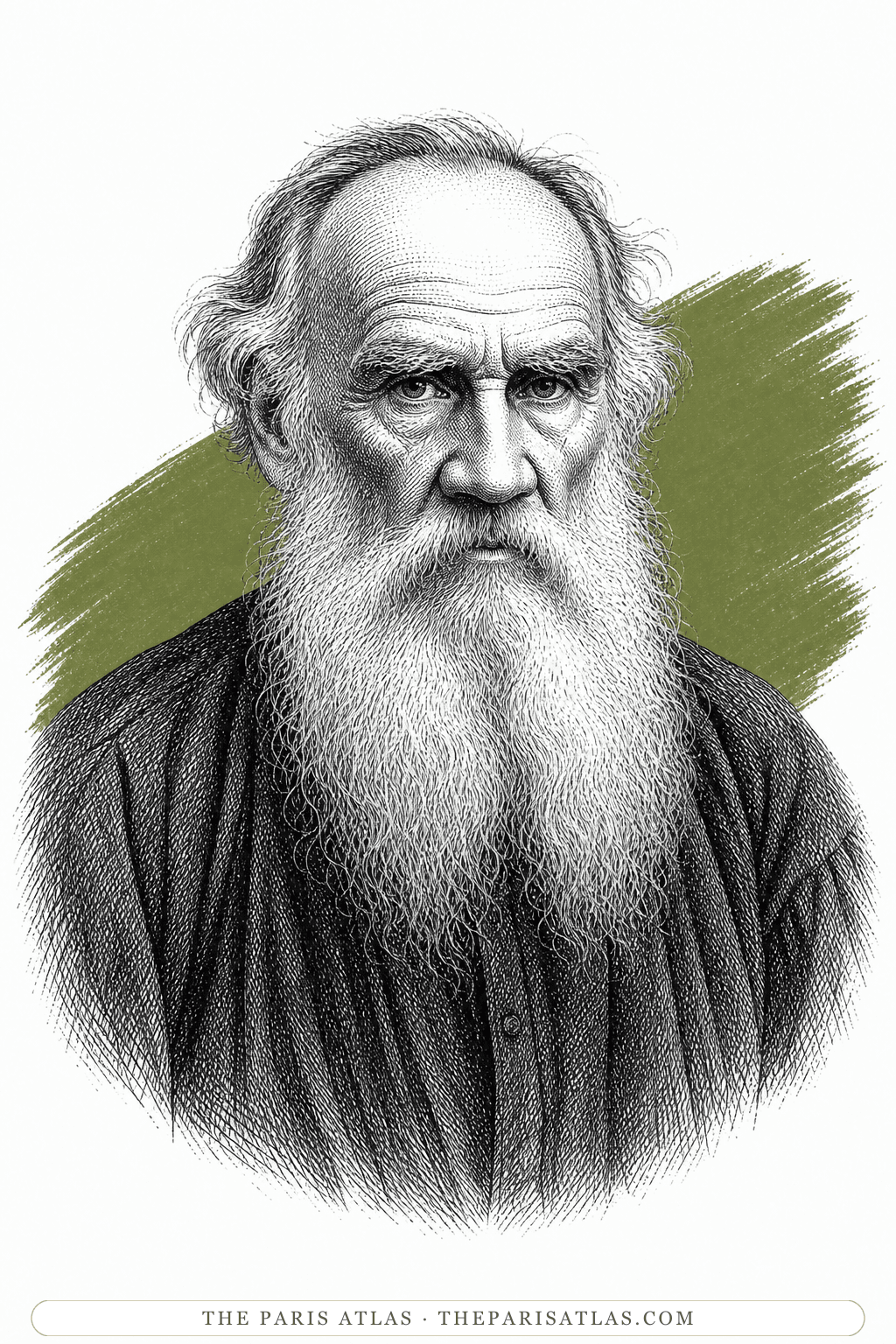
Leo Tolstoy
Anna Karenina
Tolstoy's next novel, written a few years later, with the same interest in marriage and in one man looking for a reason to live.
Read our takeWar and Peace
Leo Tolstoy
by Leo Tolstoy
Three young Russians grow up while Napoleon's armies march from Austerlitz to a burning Moscow and back out again.
War and Peace follows a handful of Russian noble families from 1805, when Russia joins the war against Napoleon, to the French invasion of 1812 and the years after it. Pierre Bezukhov is a clumsy, kind young man who suddenly inherits one of the largest fortunes in Russia. His friend Prince Andrew Bolkonski is a proud officer tired of society. Natasha Rostova is the youngest daughter of a warm, careless family that is running out of money. The novel follows all three through battles, marriages, a duel, a broken engagement, the burning of Moscow and the French retreat. Between the chapters of story, Leo Tolstoy argues in his own voice that generals and emperors control far less than they think. He began the book in 1864, and the first part appeared in a Moscow magazine in 1865.[1][2]
Leo Tolstoy first meant to write a novel about the Decembrists, the officers who rose against Tsar Nicholas I in December 1825. While planning it he found himself going back to the years those men had grown up in, the wars with Napoleon. He put the Decembrist novel aside and began War and Peace in 1864. In a letter to the poet Afanasy Fet that November he said the hard part was weighing millions of possible combinations for his characters and choosing a millionth part of them.[2]
The first part came out in the Moscow monthly the Russian Messenger in 1865, under the title The Year 1805. Its editor, Mikhail Katkov, paid 500 roubles for every printed sheet of sixteen pages. The whole novel then appeared as a book in six volumes, the last in 1869. Later editions rearranged it, first into five volumes and then into four.[2][3]
Tolstoy took his characters partly from his own family. His biographer and translator Aylmer Maude, who knew him, says Tolstoy's grandfather Count Ilya Tolstoy appears in the book as the old Count Rostov. His wife's younger sister, Tanya Behrs, was one of the models for Natasha. His wife, Sofya, copied out the manuscript again and again. Her brother later said seven times, a figure Maude warned should not be taken literally.[2]
The book opens in July 1805 at an evening party in St Petersburg, where the guests talk in French about Napoleon. Pierre Bezukhov, just home after being educated abroad, says the wrong things. His friend Prince Andrew Bolkonski leaves his pregnant wife, Lise, with his father and sister at the family estate, Bald Hills, and goes to war. Pierre's father dies, and Pierre becomes a count and one of the richest men in Russia. Prince Vasili Kuragin quickly marries him to his beautiful daughter Hélène.[1]
At the Battle of Austerlitz in December 1805, Prince Andrew picks up a fallen flag and leads a charge. He is wounded and lies on his back looking at the sky, and Napoleon, riding past, seems small to him. Andrew gets home on the night Lise dies giving birth to their son. In Moscow, Pierre fights a duel with Dolokhov, whom he suspects of being Hélène's lover, and wounds him. Pierre then joins the Freemasons, looking for a reason to live.[1]
In 1809 Andrew stays a night at the Rostovs' country house at Otradnoe and hears Natasha at an open window, too happy to sleep. He meets her again at her first grand ball in St Petersburg, and they become engaged. His father insists they wait a year, and Andrew goes abroad. While he is away, Natasha is charmed by Anatole Kuragin, Hélène's brother, who is secretly married. She agrees to run away with him. The plan is stopped, and she breaks off the engagement.[1]
In June 1812 Napoleon invades Russia. At the Battle of Borodino, Pierre wanders the field in a white hat, and Andrew is badly wounded by a shell. In a field hospital Andrew sees Anatole Kuragin's leg being cut off and feels pity for him. The Russian commander, Kutuzov, gives up Moscow without another battle. The Rostovs empty their carts of furniture to carry wounded soldiers, and among the wounded is Andrew. Natasha finds him and nurses him.[1]
Pierre stays in burning Moscow, meaning to kill Napoleon, and is arrested by the French. He watches prisoners shot as supposed arsonists and expects to die himself. In captivity he meets Platon Karataev, a peasant soldier whose calm acceptance of life changes him. Andrew dies in Yaroslavl with Natasha and his sister, Princess Mary, beside him. During the French retreat Karataev falls too sick to march and is shot by the guards. Partisans led by Denisov and Dolokhov free Pierre, and in the same raid the youngest Rostov son, Petya, is killed.
Hélène dies. Pierre and Natasha meet again after the war and marry. Nicholas Rostov, Natasha's brother, is with the Russian army in Paris when he hears his father has died leaving huge debts. He marries Princess Mary, whose money saves the family. The first epilogue ends in 1820 with both families together at Bald Hills. Andrew's son, Nicholas, dreams of glory beside Pierre. The second epilogue is an essay on free will and the forces that move history.
The Russian original of War and Peace opens in French: Eh bien, mon prince. Gênes et Lucques ne sont plus que des apanages, des поместья, de la famille Buonaparte. The one Russian word in the middle, поместья, means estates. Anna Pavlovna Scherer, a lady at the Empress's court, is greeting her first guest, and her speech slides between French and Russian. Her invitations went out in French. Prince Vasili answers, the narrator says, in the refined French in which Russian grandfathers not only spoke but thought. For long stretches of the opening chapters the Russian aristocracy speaks the language of the country it is about to fight.
Aylmer Maude explained why this matters for translators. In Tolstoy's novels, he wrote, there are two sets of people. One is a court set who keep speaking French. The other is a plain Russian set who do not. An English translation can keep that contrast, while a French one loses it, because everybody has to speak French. Natasha is the novel's best example of the second set. She was brought up by a French émigrée governess, yet at her uncle's house in the country she dances a Russian peasant dance nobody taught her.
Tolstoy stops the story many times to argue with historians. His case is that the so-called great men of history count for very little. Napoleon in 1812 believes his will decides the fate of empires, and the book shows him wrong again and again. Kutuzov, the old Russian commander, does better because he knows he cannot control events and does not pretend to. The second epilogue drops the characters entirely and sets out the argument as an essay on freedom and necessity.
Tolstoy himself defended the book's odd shape. In an article of 1868, Some Words about War and Peace, he asked why millions of people had killed one another when everyone knew killing was wrong. His answer then was that it was inevitable, like bees killing one another in autumn. Aylmer Maude pointed out that Tolstoy believed war was inevitable when he wrote the novel. The idea that people should refuse to fight came to him later.
Paris is where Pierre was educated, and the novel returns to that more than once. Andrew's wife, Lise, teases Anatole Kuragin that she has heard about his doings in Paris. In occupied Moscow in 1812, Pierre stops a half-mad man from shooting a French officer, Captain Ramballe. Over dinner the grateful captain says he would have taken Pierre for a Parisian. Pierre answers that he spent years in Paris. In the first epilogue, Nicholas Rostov is with the Russian army in Paris in 1814 when he hears that his father has died.
The first French translation came out in Paris from Hachette in 1879, in three volumes. The title page named the translator only as une Russe, a Russian woman. The novelist Ivan Turgenev sent a set to Gustave Flaubert around New Year 1880. Flaubert wrote back that it was first-rate. What a painter, he exclaimed, and what a psychologist. He thought the first two volumes sublime. The third, he said, collapsed, because Tolstoy repeated himself and started philosophising.
Flaubert kept recommending it anyway. On 25 January 1880 he told his friend Madame Roger des Genettes to read the novel, three enormous volumes from Hachette. He called it a novel of the first order, even though the last volume failed. Turgenev copied Flaubert's first reaction into a letter to Tolstoy.
Well, prince, so Genoa and Lucca have become mere family estates of the Buonapartes.
How is it I did not see that lofty sky before? How happy I am to have recognized it at last! Yes, all is vanity, all is falsehood, except that infinite heaven.
Yes, the oak is right, a thousand times right,
Pierre, Andrew and Natasha are young in 1805 and changed by 1820. The book gives them seven years of mistakes to do it in.
Tolstoy had fought at Sevastopol, and he shows Austerlitz and Borodino as confusion, noise and luck rather than plans on a map.
The Rostovs' name-day party, the wolf hunt, the Christmas games and the money trouble take up as much room as the war.
The court characters speak French, and the plainer Russians do not. The book uses the difference to show who belongs where.
The illegitimate son of a rich count, educated abroad, who inherits a fortune and spends the book looking for a reason to live.
A proud, clever officer who wants glory, finds it empty on the field at Austerlitz, and falls in love with Natasha.
The youngest Rostov daughter, all life and feeling, who is engaged to Andrew, nearly runs off with Anatole, and ends the book as Pierre's wife.
Prince Vasili's beautiful daughter, admired by all St Petersburg, who marries Pierre for his money.
Hélène's handsome, idle brother, secretly married to a Polish landowner's daughter, who tries to carry Natasha off.
A cold, fearless officer and gambler, who fights Pierre, fleeces Nicholas at cards, and later leads partisans.
The Rostovs' poor orphan cousin, brought up with Natasha, who loves Nicholas and gives him up.
Prince Nicholas Bolkonski, Andrew and Mary's father, a retired general who runs Bald Hills by the clock.
A peasant soldier Pierre meets as a prisoner, whose stories and patience change Pierre's life.
The real Russian commander, old and half-blind, who lets events run and gives up Moscow to save the army.
The real French emperor, shown as a man who believes he controls events that are carrying him along.
Andrew's plain, devout sister, who lives with their harsh father at Bald Hills and marries Nicholas Rostov.
Natasha's elder brother, a cheerful hussar officer who loses a fortune at cards, and later saves the family estate.
1864
Leo Tolstoy puts aside a novel about the Decembrists and begins War and Peace.
1865
The first part appears in the Russian Messenger in Moscow under the title The Year 1805.
April 1868
Ivan Turgenev writes to Afanasy Fet that he has just finished the fourth volume and that its best things have never been bettered.
1868
Tolstoy publishes the article Some Words about War and Peace.
1869
The sixth and last volume of the book edition comes out.
1879
Hachette publishes the first French translation in Paris, in three volumes.
January 1880
Gustave Flaubert reads the French translation and calls it first-rate.
1922–1923
Louise and Aylmer Maude's translation is first published in The World's Classics, in three volumes.
November 1956
Paramount releases King Vidor's film, with Audrey Hepburn as Natasha and Henry Fonda as Pierre.
1969
The Soviet film of War and Peace wins the Academy Award for Foreign Language Film.
2010
Oxford World's Classics reissues the Maude translation, edited by Amy Mandelker.

Anna Karenina
Leo Tolstoy
Tolstoy's next novel, written a few years later, with the same interest in marriage and in one man looking for a reason to live.
Read our take
The short novel that gives, in eighty pages, the questions about death that Prince Andrew asks on the field at Austerlitz.
Read our take
Victor Hugo's novel of the same era, which also stops the story for Waterloo and for long arguments about history.
Read our take
Charles Dickens's novel of ordinary lives caught in a French upheaval, published ten years before this one.
Read our takeRussian noble families living through Napoleon's wars, from 1805 to the French invasion of 1812 and after. The story follows Pierre Bezukhov, Prince Andrew Bolkonski and Natasha Rostova through battles, marriages and the burning of Moscow. Leo Tolstoy also argues that generals and emperors control far less than they believe.
Fifteen books and two epilogues. The 2010 Oxford World's Classics edition of the Maude translation runs to about 1,350 pages, and the first Russian book edition filled six volumes.
Because the Russian aristocracy of 1805 spoke French among themselves. Tolstoy wrote their conversations in French in the Russian original, starting with the first words, Eh bien, mon prince. English translations usually put the French into English and sometimes keep a few phrases.
Louise and Aylmer Maude's, as first published by Oxford University Press in The World's Classics in 1922 and 1923. Aylmer Maude knew Tolstoy personally. The Maude translation is still in print from Oxford.
Yes. Pierre was educated in Paris and tells a French officer in occupied Moscow that he spent years there. Nicholas Rostov is with the Russian army in Paris in 1814. The first French translation was published in Paris by Hachette in 1879, and Gustave Flaubert praised it.
The families are invented, but Napoleon, Tsar Alexander I, Kutuzov and other commanders are real. Aylmer Maude says Tolstoy's grandfather appears as old Count Rostov, and Tolstoy's sister-in-law Tanya Behrs was one model for Natasha.
Prince Andrew dies of his Borodino wound. Pierre survives captivity, and after the war he marries Natasha. Nicholas Rostov marries Princess Mary. The book ends with an essay on history and free will.
Explore authors with a similar voice, perspective, and influence.
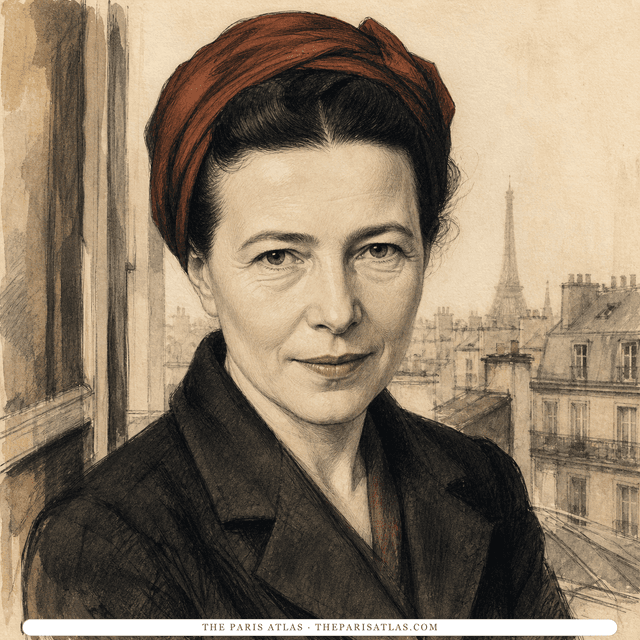
French writer and philosopher whose novels, memoirs, and social analysis examined freedom, gender, responsibility, aging, and the material conditions that shape a life.
View author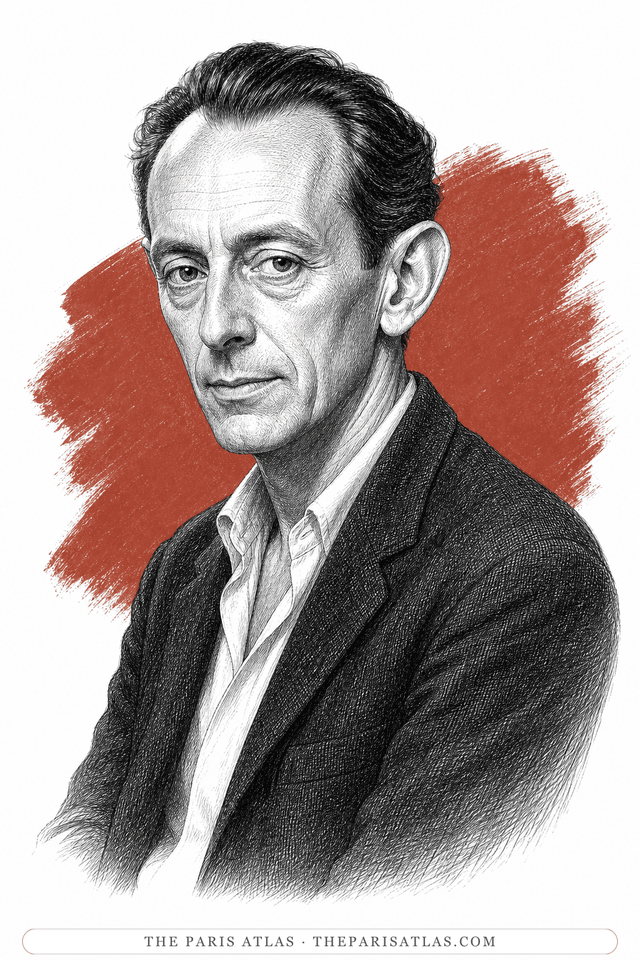
American novelist and composer whose expatriate fiction explores dislocation, unstable intimacy, fatalism, and North Africa.
View author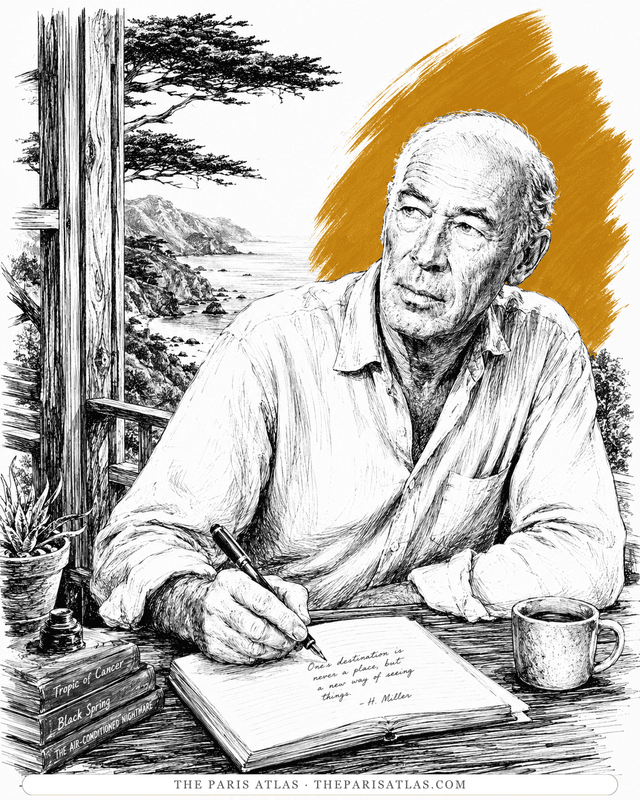
The Brooklyn dropout who arrived in Paris broke at thirty-eight and wrote the exuberant, banned books that ended American censorship.
View authorThe sources below include the primary text, editions, scholarship, archival materials, and other records that informed this page. They document War and Peace, its publication, and its place in literary history.

The Maudes' translation as first published. Source of the publication note and of the quotations from Books I to IV.
Source of the quotations from Books V to X.
The Russian original, cited for its French opening lines.

Catalogue record for the first French translation, Paris, 1879.
Flaubert's letter of 25 January 1880 and the editor's note quoting his thanks to Turgenev.
Release date, director, principal cast and distributor of the 1956 film.
War and Peace, from the USSR, as winner of the Foreign Language Film award.
Library record confirming ISBN 9780199232765 as the 2010 Oxford edition of the Maude translation, edited by Amy Mandelker.
The primary text represented by this page, used for descriptions of the work’s contents and for any quoted passages shown here.
The primary text is the baseline reference for every book page. Additional references document publication history, interpretation, and historical context where that evidence is available.
 Explore more resources