Middlemarch
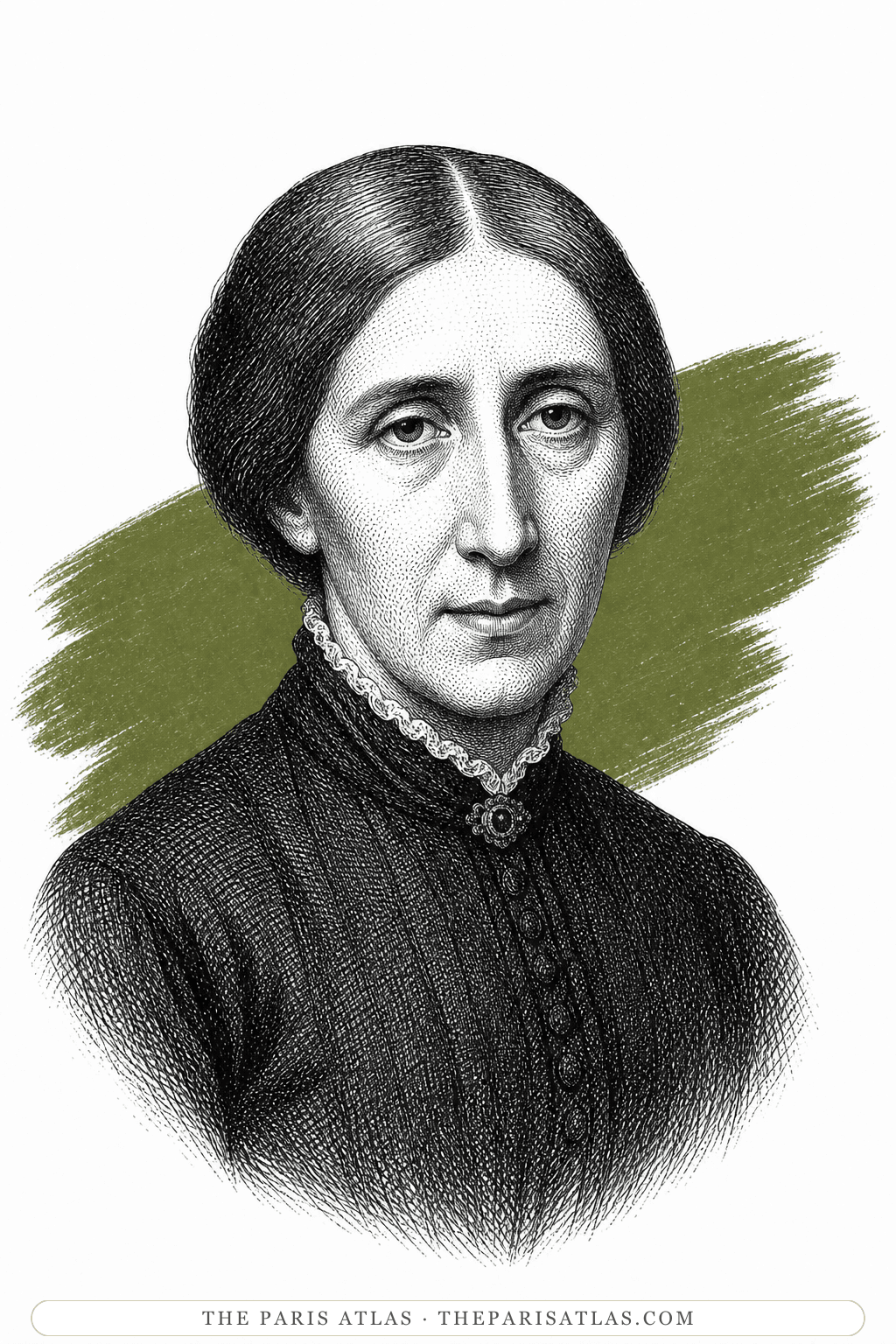
George Eliot
Daniel Deronda
George Eliot
by George Eliot
A spoiled young beauty marries for money and is trapped, while the young man who once watched her gamble discovers who his parents were.
Daniel Deronda is George Eliot's last novel, published in eight parts in 1876. The story opens at a German spa, where Gwendolen Harleth, twenty and used to getting her way, is losing at roulette. Daniel Deronda, the ward of a rich English baronet, is watching her. Her family's money is gone, and she marries the cold, wealthy Henleigh Grandcourt to save them, despite knowing a secret about him. Deronda saves a young Jewish singer, Mirah, from drowning herself. Helping her find her family leads him to his own. The two stories cross and pull apart.
In October 1872, while she waited for the last part of Middlemarch to appear, George Eliot and George Henry Lewes took the waters at Homburg in Germany. She wrote to John Blackwood that the Kursaal, the casino, was a hell to her. The saddest sight there was a young lady of twenty-six in the grip of gambling, and seeing her young, fresh face among the hags and brutally stupid men made George Eliot cry.[1]
The novel opens in a casino of the same kind, at an invented spa called Leubronn. Its first chapter begins with a motto about stories having to start somewhere: men can do nothing without the make-believe of a beginning. The story itself begins with a question in Deronda's mind about the girl at the roulette table: was she beautiful or not beautiful?[2]
The book is set in 1865 and 1866, closer to its own time than any of George Eliot's other novels. Characters talk about the rinderpest cattle plague and the Jamaica rising. Late in the book, Genoa waits for news of the war against Austria and the battle of Sadowa.[2]
Gwendolen Harleth, clever, proud and very pretty, is gambling at Leubronn when a letter from her mother tells her that the family's money has been lost in a bank failure. To pay her fare home she pawns a necklace. The next morning it comes back to her, wrapped in a handkerchief with a scrap of note-paper, and she knows at once that the stranger who stared at her across the table has redeemed it. His name is Daniel Deronda.[2]
The story then goes back to the year before. Gwendolen and her widowed mother have moved to Offendene, a house in the English countryside. There Gwendolen meets Henleigh Grandcourt, the heir to a baronet's estates, who is bored, rich and interested in her. On an outing, a woman called Lydia Glasher takes her aside at the Whispering Stones. She tells Gwendolen that she has lived with Grandcourt for years and that he is the father of her children. Gwendolen promises to keep the secret and runs off to Leubronn.[2]
Deronda was brought up by Sir Hugo Mallinger and has never been told who his parents were. One summer evening, rowing on the Thames near Kew, he sees a girl about to drown herself and stops her. She is Mirah Lapidoth, a Jewish singer who has run away from a bad father and is searching London for her mother and brother. Deronda takes her to his friends the Meyricks in Chelsea.[2]
Gwendolen, home and facing a post as a governess in a bishop's family, accepts Grandcourt after all. On her wedding night she opens the case of family diamonds he has sent her and finds a letter from Lydia cursing her, and she screams again and again. Grandcourt turns out to be a quiet tyrant. Gwendolen begins to rely on Deronda as the one person who might help her become better.[2]
Looking for Mirah's family among the Jews of London, Deronda meets Mordecai, a poor, dying Jewish scholar who dreams of a national home for his people. Mordecai believes Deronda is the man who will carry on his work. He turns out to be Mirah's lost brother, Ezra Mordecai Cohen.[2]
Deronda is summoned to Genoa by his mother, the Princess Halm-Eberstein. She was once a famous singer called the Alcharisi. She tells him he is a Jew. She had given him to Sir Hugo to raise as an English gentleman, to free him from the Jewish life her own father had forced on her.
Gwendolen and Grandcourt are in Genoa too. Out sailing, Grandcourt is knocked overboard by the sail and calls for the rope. Gwendolen hesitates, then jumps in after him, and he drowns. She tells Deronda that she saw her wish outside her. Deronda tells her she must live to be better.
Back in England, Deronda tells Gwendolen that he is going to marry Mirah. He is going to the East to help restore a political existence to his people. She is shattered, but on his wedding day she writes that it shall be better with her because she has known him. Mordecai dies in Deronda's and Mirah's arms before they can set out.
Paris is a place the characters pass through rather than a setting. Gwendolen grew up roving from one foreign watering-place or Parisian apartment to another, and hated every set of hired furniture. When she asks the pianist Klesmer whether she could go on the stage, she says she saw plain actresses playing ladies in Paris.
Grandcourt, too, uses the city as a stop on the way. After Gwendolen runs from him to Leubronn, he orders his man Lush to arrange for the Paris train. He then stays behind in Paris for several days before going on to court her in England.
George Eliot's own route home from Homburg in October 1872 went the same way. She and Lewes travelled to Paris overnight and came away with headaches, disgust at the shops of the rue de la Paix, and the sight of the ruined Hôtel de Ville. In 1875, with the book still unfinished, she heard a rumour that it would represent French life. She called that hardly more ridiculous than the idea that she would describe American society.
Calmann Lévy published a French translation by Ernest David in Paris in 1882, in two volumes.
George Eliot expected trouble over the Jewish story. In April 1876, with the book half out, she wrote in her journal that sales were running ahead of Middlemarch at the same stage. She added that the Jewish element seemed likely to satisfy nobody. By June the Jewish part seemed to be creating strong interest.
On 29 October 1876 she explained herself in a letter to Harriet Beecher Stowe. The usual attitude of Christians towards Jews, she wrote, was either more impious or more stupid, she hardly knew which, when set against their own professed principles. So she had felt urged to treat Jews with as much sympathy and understanding as she could.
She went further in the same letter. The English showed arrogance, she wrote, towards all the Eastern peoples they came into contact with, and she called it a national disgrace. She mocked educated people who made small jokes about eating ham. They hardly know that Christ was a Jew, she wrote.
The novel has two plots that share one man. In Gwendolen's story Deronda is the conscience she cannot marry. In Mirah and Mordecai's story he is a young man finding out who he is. The eight books are named for the turns in these stories, from The Spoiled Child to Gwendolen Gets Her Choice, Mordecai, and The Mother and the Son.
Gwendolen never learns to share Deronda's new purpose. When he tells her he is going to the East, she asks whether she can understand the ideas or whether she is too ignorant. Her last letter is not a love letter. She promises to try to become one of the best of women, who make others glad that they were born.
Was she beautiful or not beautiful? and what was the secret of form or expression which gave the dynamic quality to her glance?
Men can do nothing without the make-believe of a beginning.
I only know that I saw my wish outside me.
A heroine who is selfish, frightened and fascinating, and who changes more than almost anyone else in George Eliot.
A young man watches a young woman lose at roulette and wonders whether she is beautiful. The next chapter she pawns her necklace, and he buys it back.
A villain who is quiet, bored and polite. His control over Gwendolen is shown through small, cold moments.
George Eliot knew English readers might resist a Jewish hero, and wrote the Jewish chapters anyway to challenge their prejudice.
A proud, clever, beautiful girl of twenty, the spoiled eldest daughter of a widow, who marries for money when her family is ruined.
The handsome, thoughtful young ward of Sir Hugo Mallinger, who does not know who his parents were.
The bored, languid, wealthy heir to his uncle's baronetcy, who marries Gwendolen and sets out to master her.
A young Jewish singer who has run away from her father and is searching for her lost mother and brother.
Ezra Mordecai Cohen, a poor, dying Jewish scholar who dreams of a homeland for his people and turns out to be Mirah's brother.
Grandcourt's former mistress and the mother of his children, who warns Gwendolen not to marry him.
The genial baronet who has brought Deronda up, and Grandcourt's uncle.
A brilliant musician, part German, part Slav and part Jewish, who tells Gwendolen the truth about her talent and marries the heiress Catherine Arrowpoint.
Deronda's mother, once a famous singer and actress known as the Alcharisi, who gave him away as a baby.
October 1872
At Homburg, George Eliot watches a young woman of twenty-six gambling in the Kursaal, and writes that it made her cry.
October 1872
She and George Henry Lewes return to England through Paris.
December 1875
She hears a rumour that the new novel will represent French life, and laughs it off.
1 February 1876
Blackwood publishes Book I, The Spoiled Child.
12 April 1876
Her journal says sales are ahead of Middlemarch's, and that the Jewish element seems likely to satisfy nobody.
3 June 1876
Book V has just come out, and sales have exceeded Middlemarch's from the beginning.
29 October 1876
She writes to Harriet Beecher Stowe explaining why she wrote the Jewish chapters.
1882
Calmann Lévy publishes Ernest David's French translation in Paris.
1996
Penguin Classics publishes Terence Cave's edition.

Middlemarch
George Eliot
The Mill on the Floss
George Eliot
Another George Eliot novel that ends in water, with a heroine judged by the people around her.
Read our takeAnna Karenina
Leo Tolstoy
Leo Tolstoy's novel of an unhappy marriage in high society, published in parts at the same time, 1875 to 1877.
Read our takeThe Minister's Wooing
Harriet Beecher Stowe
A novel by Harriet Beecher Stowe, the friend George Eliot wrote to about the Jewish chapters in October 1876.
Read our takeTwo linked stories. Gwendolen Harleth marries a rich, cruel man to save her family. Daniel Deronda, who helps her, discovers that he was born a Jew and decides to devote his life to his people.
In eight monthly parts by Blackwood, beginning on 1 February 1876. The novel was George Eliot's last.
No. The novel is set in England, at a German spa and in Genoa. Paris is only mentioned: Gwendolen grew up partly in Parisian apartments, and Grandcourt stops there on his way back to England.
Her letters and journal, as John Walter Cross published them, name no model. In 1872 she watched a young woman of twenty-six gambling at Homburg and wrote that it made her cry, and the novel opens with Gwendolen at a roulette table.
She told Harriet Beecher Stowe that the usual Christian attitude to Jews was more impious or more stupid, she hardly knew which, and that she felt urged to treat them with sympathy and understanding.
Deronda marries Mirah and plans to go to the East. Gwendolen writes on his wedding day that it shall be better with her because she has known him. Mordecai dies before they leave.
Explore authors with a similar voice, perspective, and influence.
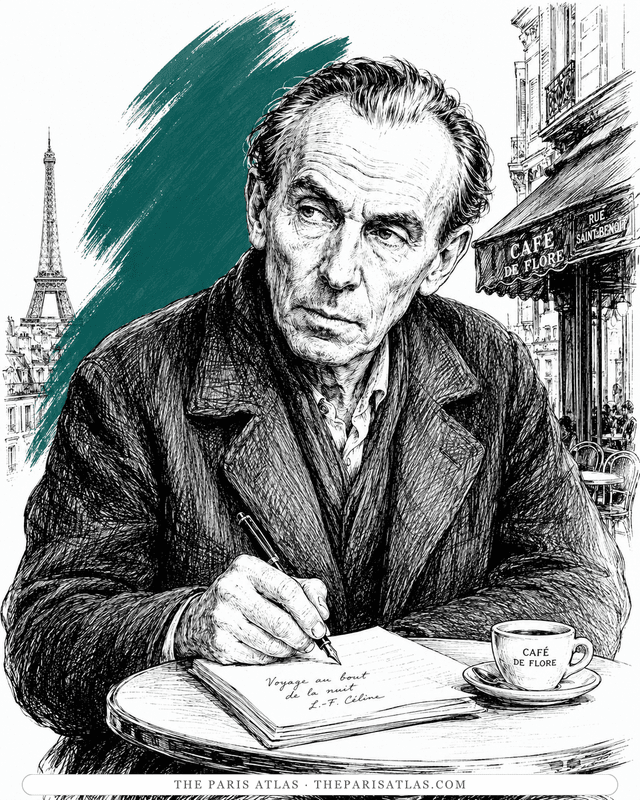
The doctor of the Paris slums who wrote the century's blackest, funniest novel — and changed the sound of French prose.
View author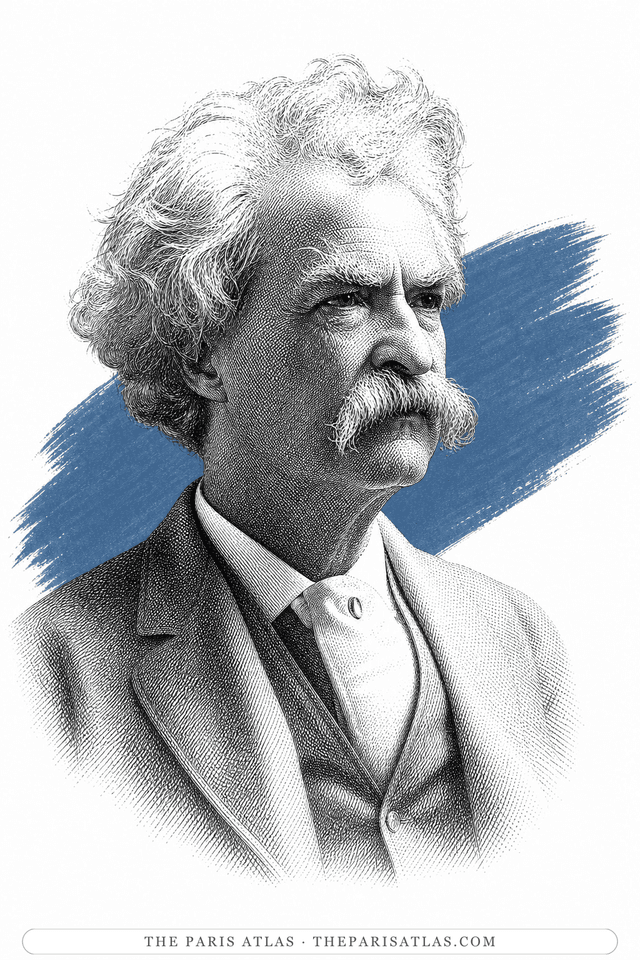
The Missouri newspaperman who became America's most famous writer, and whose first book made its reputation partly out of Paris: in 1867 he arrived with a shipload of American tourists, renamed his guide Ferguson, watched the high-kicking can-can through his fingers and wrote it all down. He kept coming back — and was living in Paris in the mid-1890s, broke, while finishing the novel he considered his best, Personal Recollections of Joan of Arc.
View author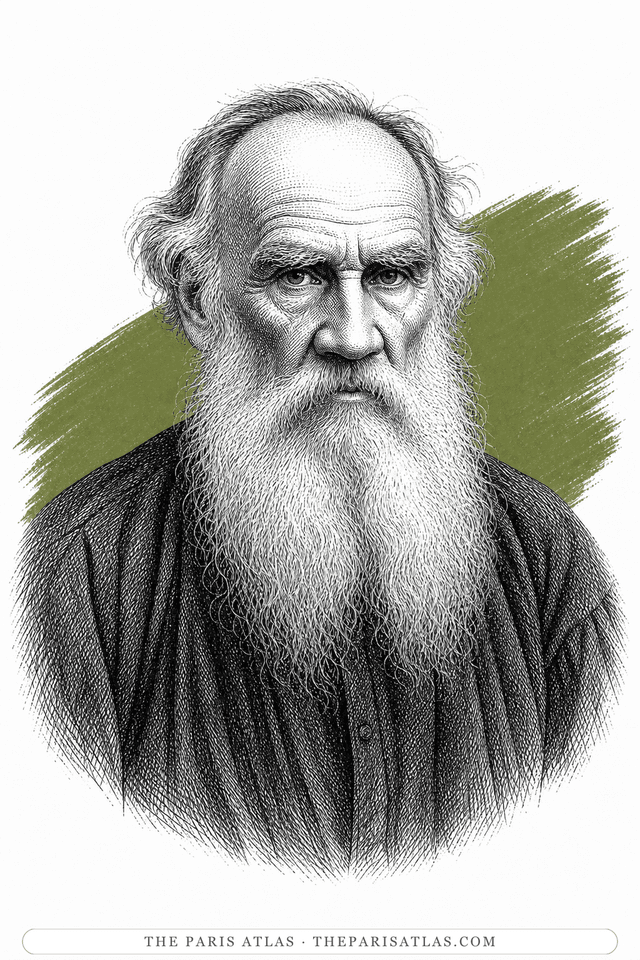
Russian novelist who wrote War and Peace and Anna Karenina, then renounced the life that produced them. He spent six weeks in Paris in 1857, and on one April morning went to watch a man beheaded in the street — an hour he said destroyed his belief in progress and in the state, and which he was still writing about twenty-two years later.
View authorThe sources below include the primary text, editions, scholarship, archival materials, and other records that informed this page. They document Daniel Deronda, its publication, and its place in literary history.

George Eliot's own letters and journal on Homburg, Paris, publication and the Jewish chapters.

Catalogue record for the French translation.
Selected ISBN, page count and editor.
Library record confirming ISBN 9780140434279 as the Penguin Classics edition.
The primary text represented by this page, used for descriptions of the work’s contents and for any quoted passages shown here.
The primary text is the baseline reference for every book page. Additional references document publication history, interpretation, and historical context where that evidence is available.
 Explore more resources