The Connecticut minister's daughter whose anti-slavery novel Uncle Tom's Cabin (1852) became the most explosive book of the nineteenth century and made her famous on two continents. In the summer of 1853 she came to Paris straight from a British tour that had mobbed her — and found, to her enormous relief, a city where nobody recognised her at all.
5 books on our shelves
Details
Lived
1811–1896
Born
14 June 1811
Birthplace
Litchfield, Connecticut
Birth name
Harriet Elisabeth Beecher
Died
1896
Place of death
Hartford, Connecticut
Nationality
American
Profession
Novelist and anti-slavery campaigner
Major works
Uncle Tom's Cabin, A Key to Uncle Tom's Cabin, Sunny Memories of Foreign Lands, Dred, The Minister's Wooing
Married
Calvin Ellis Stowe · 1836–1886
Roles
AuthorActivist
About Harriet Beecher Stowe
Harriet Beecher Stowe wrote one book that changed history and thirty that did not. Uncle Tom's Cabin, serialised in an abolitionist newspaper through 1851 and published as a book in 1852, put the cruelty of American slavery — above all the selling of children away from their mothers — in front of readers who had managed not to think about it, and it sold on a scale nothing had sold on before. It made her, overnight, one of the most famous women alive.
In 1853 that fame took her to Europe, and the trip produced her second-best-known book: Sunny Memories of Foreign Lands, published the following year. Britain received her as a public event — breakfasts with Macaulay, dinners at Lord Shaftesbury's, anti-slavery meetings at Exeter Hall. Then she crossed to Paris on 4 June, and the tone of the book changes completely. 'At last I have come into dreamland,' she wrote. 'I am released from care; I am unknown, unknowing.' Paris was where the most famous author in the world got to be nobody for a few weeks, and where she could explore the Louvre after weeks of public appearances.
A Beecher of Litchfield
She was born Harriet Elisabeth Beecher on 14 June 1811 in Litchfield, Connecticut, into the most publicly argumentative family in nineteenth-century America. Her father, Lyman Beecher, was a famous Calvinist preacher; all seven of her brothers became ministers, one of them the celebrity orator Henry Ward Beecher; her eldest sister Catharine pioneered serious education for girls, and her youngest half-sister Isabella helped found the National Woman Suffrage Association. Their mother died when Harriet was five. The children argued current affairs at the dinner table as training, and Harriet decided early that her own way of shaping the world would be writing.[1]
In 1832 the family moved to Cincinnati, Ohio, where Lyman took over a theological seminary and where Harriet — across the river from slave-holding Kentucky — met fugitives from slavery for the first time. There she married Calvin Ellis Stowe, a professor of theology, and had six of her seven children. In the summer of 1849 her eighteen-month-old son Samuel Charles died of cholera, and she later said that this was one of the things that made Uncle Tom's Cabin possible: it taught her what an enslaved mother felt when her child was sold.
Uncle Tom's Cabin, and what it argued
In 1850 the United States passed the Fugitive Slave Act, which compelled citizens of free states to help capture escaped slaves. In 1851 Gamaliel Bailey, publisher of the Washington abolitionist weekly The National Era, commissioned Stowe to write, in her own phrase, a word-picture of slavery. She expected three or four chapters and wrote more than forty, a chapter a week; the book came out complete in 1852.[1]
The novel follows two enslaved people sold away from the same Kentucky farm. Eliza runs north with her small son, crossing the Ohio River on breaking ice, and reaches Canada. Tom, a devout middle-aged man, goes the other way — sold down the river, sold again, and finally beaten to death by the planter Simon Legree for refusing to say where two women have escaped to. The argument the book makes is deliberately narrow and impossible to sidestep: slavery is not a political question but a domestic one; it takes children from mothers and kills good men; and every reader who tolerates it is answerable. It worked. The effect, Frederick Douglass wrote, was amazing, instantaneous and universal — no book on the subject had so generally touched the American heart. It also enraged the South, and Stowe was accused of inventing her atrocities, so in 1853 she published A Key to Uncle Tom's Cabin, a whole volume of the court records, advertisements and testimony behind the fiction.
The serious modern criticism is not that the book is untrue but that its picture of Black character is a white author's, and a damaging one. Tom's saintly endurance — he forgives Legree while dying under his whip — became a template for Black passivity, and 'Uncle Tom' is now a racial insult, as the museum in Stowe's own house states plainly. The unlicensed stage versions did most of the damage: the touring 'Tom shows' of the later nineteenth century used minstrel conventions, with white actors in blackface, and turned Tom into a shuffling comic servant. In 1949 James Baldwin opened his career with the essay 'Everybody's Protest Novel', which attacks Uncle Tom's Cabin head-on as sentimentality standing in for humanity — a book in which the Black characters are moral counters rather than people. Both things are true of it: it was a weapon that worked, and its portraiture did lasting harm.[2]
Andover, March 1853: Frederick Douglass comes to dinner
Before sailing for Europe, Stowe sent to Rochester, New York, for Frederick Douglass — the escaped slave who had become the most formidable Black orator and newspaper editor in America — and asked him to spend a day at her house in Andover, Massachusetts. She had a proposal. Admirers in Britain were raising a large sum of money to present to her, and she wanted to spend it on something permanent for free Black Americans; what, she asked, would do the most good?[3]
Douglass argued against a purely academic institution and for a series of workshops where Black students could learn trades — iron, wood, leather — alongside a plain English education, on the grounds that poverty was the root of everything else. Stowe agreed, and asked him to put it in a letter she could show her supporters in England; he wrote it on 8 March 1853. It is the reason the European tour mattered politically as well as personally. The sequel was a disappointment he never got over: on her return she reconsidered, and the industrial school was never built.[3]
Paris, 1853: dreamland
The party — Stowe, her brother the Rev. Charles Beecher, who kept the journal for the Continental leg, and their travelling companions — left London on 4 June 1853, crossed from Folkestone to Boulogne, and reached Paris that evening past the windmills of Montmartre. They were taken in by American friends who rented the ground floor of an old mansion in the rue de Verneuil, in the Faubourg Saint-Germain, the quarter of the old French nobility: a gateway, a paved courtyard, a waxed parquet floor, a garden outside the window. 'French life is different from any other,' wrote Charles Beecher, who kept the journal for the Continental leg. 'Elsewhere you do as the world pleases; here you do as you please yourself.'[4]
At last I have come into dreamland; into the lotus-eater's paradise; into the land where it is always afternoon. I am released from care; I am unknown, unknowing.[4]
What she did with the freedom was look at pictures. The Musée du Louvre was a short walk across the Seine. In Letter XXXI she describes its paintings and antiquities, and singles out the armless Greek statue then called the Venus de Milon as her favourite. The catalogue-led tours and timed studies of individual works belong to Charles Beecher's journal. So do the accounts of the party's sermon at the Madeleine, shopping day and evening view from the Arc de Triomphe; they are her brother's narration of the visit.[4]
The Parisian who took charge of her was Louise Swanton Belloc. With her friend Adélaïde de Montgolfier she had made what Charles Beecher calls the best French translation of Uncle Tom's Cabin. Her husband Jean-Hilaire Belloc was a painter and director of the École Impériale de Dessin — the government's free drawing school for the working classes. Charles records Stowe's portrait sitting on 13 June, among the plaster arms and legs and the fireless stove. Belloc decided to paint her looking away rather than at the viewer, following Charpentier's observation that she always looked around her: 'en observatrice, mais pas en curieuse' — with the air of observation, but not of curiosity. Charles also records the publisher and bookseller Gervais Charpentier's visit to the studio. Charpentier said that in thirty-five years in the trade he had known nothing like the success of her book, and reported Alfred de Musset's praise: this leaves us all behind — all, all, miles behind.[4]
She left on 22 June for Switzerland, Germany and the Rhine, and came back to Paris in August for a second stay. This time she lodged inside the drawing school itself, in a room Madame Belloc had filled with flowers and engravings. She went round the students' prize work — plaster casts of leaves and vine branches, skeletons copied bone by bone — and concluded that French feeling for beauty was not affectation but training. One August morning the Bellocs took her to call on Pierre-Jean de Béranger, the most popular songwriter in France, who had not yet had breakfast at eleven and ate his chop and coffee while they all talked. Her verdict on French conversation is the best sentence in the book: it is like the gambols of a thistledown, or the rainbow changes in soap bubbles, and one laughs with tears in one's eyes.[4]
Hartford, and after
She went on writing for another quarter-century: the anti-slavery novel Dred (1856), the New England novels, The American Woman's Home (1869) with her sister Catharine, and Lady Byron Vindicated (1871), a defence of a friend that dragged her into a scandal of her own. After the Civil War the Stowes wintered in Mandarin, Florida, where she bought an orange grove and her brother Charles ran a school for freed people. From 1873 she lived at 77 Forest Street in Hartford, Connecticut, in a brick Gothic cottage in the Nook Farm neighbourhood — where her nearest neighbour was Mark Twain, a generation younger, whose family and hers went to the same lawn parties. The house is now the Stowe Center, and open to visitors.[5]
She corresponded for years with writers she never met. In 1869 she wrote out of the blue to George Eliot in England, addressing her as 'dear friend'; Eliot, who found the letter waiting after nine weeks of travel, wrote back that she valued very highly the warrant to call her friend, and the two women exchanged letters for the rest of Eliot's life without ever being in the same room. Stowe died in Hartford in 1896. The line everyone quotes about her — Abraham Lincoln greeting her as 'the little woman who wrote the book that made this great war' — the Library of Congress records carefully as something Stowe herself reported, not as a transcript, and it should be repeated on that footing. The Orwell essay on Rudyard Kipling pays her the sideways compliment that lasts better: Kipling, Orwell wrote, is as a poet what Harriet Beecher Stowe was as a novelist — a writer whose obvious faults never quite explain why the work refuses to die.[6]
Life events
1811
Born on 14 June in Litchfield, Connecticut, sixth of eleven children of the preacher Lyman Beecher.
— About Harriet Beecher Stowe
1832
Moves with the family to Cincinnati, Ohio, across the river from slave-holding Kentucky; marries the theology professor Calvin Ellis Stowe in 1836.
— About Harriet Beecher Stowe
1849
Her eighteen-month-old son Samuel Charles dies of cholera — a grief she later credited as one of the sources of Uncle Tom's Cabin.
— About Harriet Beecher Stowe
1851
Begins Uncle Tom's Cabin as a weekly serial in the abolitionist paper The National Era, expecting four chapters and writing more than forty.
— About Harriet Beecher Stowe; The African-American Odyssey: Abolition, Anti-Slavery Movements
1852
Uncle Tom's Cabin is published as a book and makes her internationally famous.
— The African-American Odyssey: Abolition, Anti-Slavery Movements
1853
Sends for Frederick Douglass and hosts him at Andover in early March to plan how to spend the British testimonial money; his letter setting out the case for an industrial school is dated 8 March.
— Frederick Douglass, Life and Times of Frederick Douglass, Written by Himself (1882 printing) (1882)
1853
Publishes A Key to Uncle Tom's Cabin, the documentary evidence behind the novel, in answer to accusations that she invented it.
— Frequently Asked Questions
1853
Leaves London on 4 June and reaches Paris the same evening; lodges in the rue de Verneuil in the Faubourg Saint-Germain and visits the Louvre, describing its art in Letter XXXI.
Sits on 13 June for the painter Jean-Hilaire Belloc, husband of her French translator Louise Swanton Belloc, who paints her 'en observatrice' — looking away.
Returns to Paris in August, lodging inside the Imperial School of Design that Belloc directed, and calls with him on the songwriter Pierre-Jean de Béranger.
Writes for the first time to George Eliot, who answers warmly; the two correspond for the rest of Eliot's life without ever meeting.
— George Eliot, edited by J. W. Cross, George Eliot's Life, as Related in Her Letters and Journals, Vol. 3 (1885)
1873
Settles at 77 Forest Street in the Nook Farm neighbourhood of Hartford, Connecticut, a lawn away from Mark Twain; she lives there for twenty-three years.
— About Harriet Beecher Stowe; Frequently Asked Questions
1896
Dies at Hartford, aged eighty-five. Her Forest Street house is now the Stowe Center.
— About Harriet Beecher Stowe
People Harriet Beecher Stowe Knew
Relationships with other people, with sources for each connection.
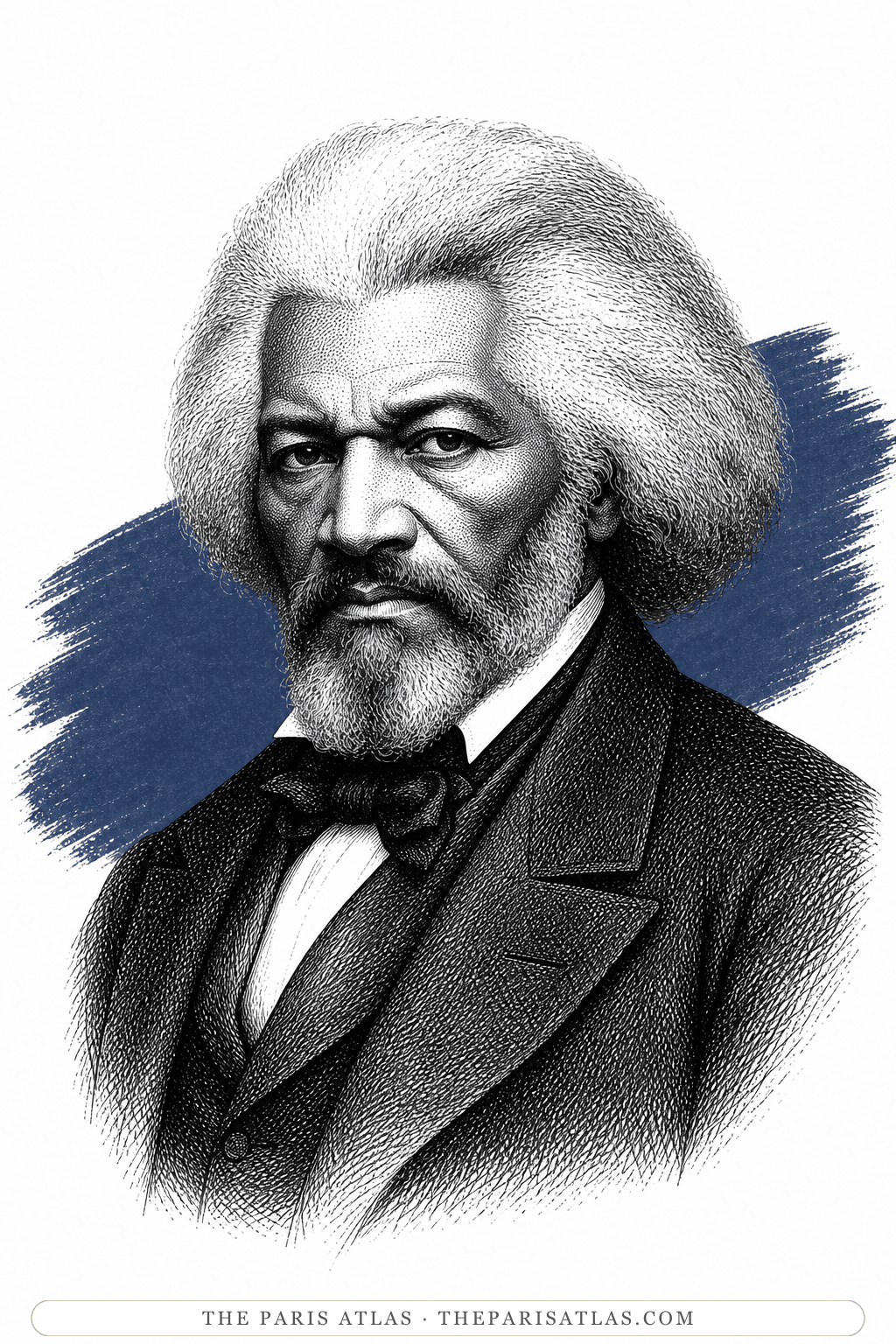
Shortly before sailing for Europe in 1853, Stowe sent to Rochester for Douglass and asked him to spend a day at her house in Andover, Massachusetts. Her question was what to do with the money British admirers were raising for her; she wanted a monument to Uncle Tom's Cabin that would outlast the book's first effect. Douglass argued against a purely academic institution and for workshops where free Black Americans could learn trades alongside a plain English education, on the ground that poverty was the root of everything else, and she asked him to put it in a letter she could carry to England — dated Rochester, 8 March 1853. He then defended her in print while she was abroad, against American papers accusing her of pocketing British money. On her return she reconsidered, and the school was never founded; he recorded the disappointment in his autobiography without softening it.
— Frederick Douglass, Life and Times of Frederick Douglass, Written by Himself (1882 printing) (1882), Chapter VIII, "John Brown and Mrs. Stowe"
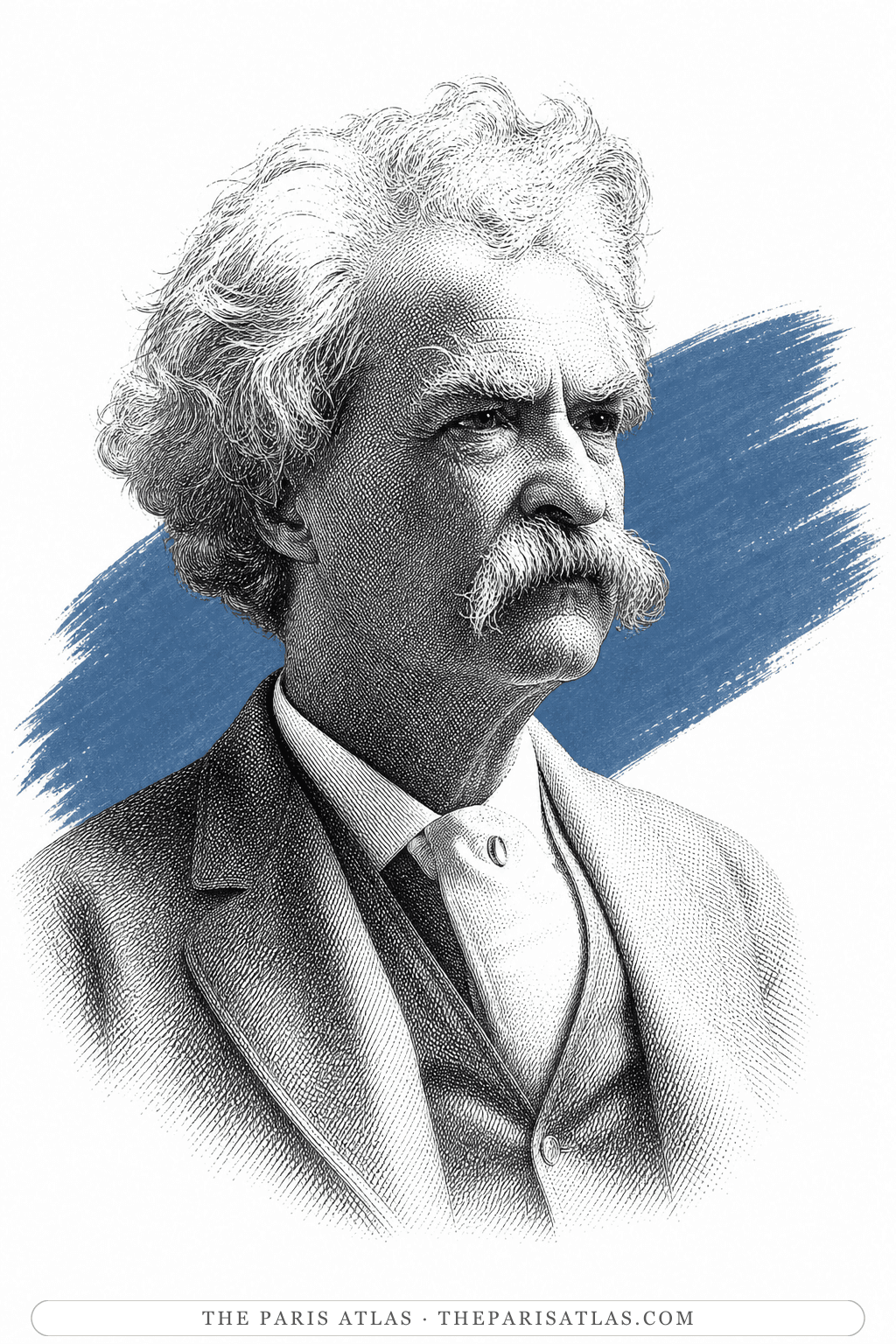
They were neighbours. Both households belonged to Nook Farm, a Hartford enclave of well-off reformers and writers: Stowe moved into the brick cottage at 77 Forest Street in 1873, and Samuel Clemens and his wife — who had first rented a house from Stowe's sister and brother-in-law — moved into the one they had built next door in 1874. The connection ran through the Beecher family before either arrived: Stowe's brother Henry Ward Beecher helped Clemens negotiate terms for The Innocents Abroad and introduced him to his future wife's family, and another brother, Thomas Beecher, performed the marriage. The two families socialised regularly at neighbourhood parties for the rest of Stowe's life. Both houses are museums today.
— Frequently Asked Questions; About Harriet Beecher Stowe
Stowe's second anti-slavery novel, about a North Carolina plantation, a court ruling that made the master's power absolute, and a rebel preacher hiding in the swamp.
A love story set in Newport after the Revolution, written in grief after Stowe's son drowned, with a real minister who preached against the slave trade.
3.8
Harriet Beecher Stowe’s Places
The cataloged places connected to Harriet Beecher Stowe — through the books, and through the documented record.
Places you can enter today appear first, followed by addresses to see from outside and sites that have vanished.
She rested and looked at art. She arrived on 4 June 1853, straight from a British tour on which she had been received as a celebrity. Her first Paris letter in Sunny Memories of Foreign Lands opens with relief. She writes that she is released from care, unknown and unknowing. She lodged with American friends in the rue de Verneuil in the Faubourg Saint-Germain and described the Louvre's paintings and sculpture in Letter XXXI. Her brother Charles Beecher's journal records the party's outings and her portrait sitting with Jean-Hilaire Belloc, whose wife had translated Uncle Tom's Cabin into French. She left on 22 June and came back in August, lodging inside the government drawing school Belloc directed and calling on the songwriter Béranger.
What is Sunny Memories of Foreign Lands?
Stowe's account of the 1853 European tour, published in two volumes in 1854, in the form of letters home. Volume one covers the first part of the British tour, including anti-slavery meetings and the Stafford House reception. Volume two continues in Britain — with Macaulay, Lady Byron, Mrs Gaskell and Thackeray — before following the party to Paris and the rest of the Continent. She wrote the letters; the journal sections interleaved through the Continental part are by her brother, the Rev. Charles Beecher, who travelled with her, as the book's own preface says. She published it partly to answer people at home who were misrepresenting what she had been doing abroad.
What is the story of Uncle Tom's Cabin?
Two enslaved people are sold away from the same Kentucky farm and go in opposite directions. Eliza escapes north with her small son, famously crossing the Ohio River on breaking ice, and reaches Canada. Tom, a devout middle-aged man, is sold down the river, passes through the kindly household of the St. Clare family, and ends on the plantation of Simon Legree, who has him beaten to death for refusing to betray two women who have run. The novel's argument is that slavery is not an abstract political question but a domestic atrocity that separates mothers from children and kills good men, and that anyone who tolerates it is implicated.
Why is 'Uncle Tom' an insult now?
Because of what happened to the character after the book. In the novel Tom is meant as a Christ-like figure whose refusal to betray others costs him his life; at the time many readers took him as heroic. But his forgiveness of the man beating him to death also reads as submission, and the unlicensed stage adaptations of the later nineteenth century made it far worse — the touring 'Tom shows' borrowed minstrel conventions, cast white actors in blackface, and turned him into a shuffling comic servant. 'Uncle Tom' became, and remains, a slur for a Black person thought subservient to white people. The Stowe Center, which keeps her house, says so directly on its own website.
Did Stowe and Frederick Douglass know each other?
Yes. In early March 1853, before sailing for Europe, she invited him from Rochester to spend a day at her house in Andover, Massachusetts, and asked what she should do with the money British admirers were raising for her. Douglass argued for workshops where free Black Americans could learn trades alongside a basic education, rather than a purely academic school, and she asked him to put it in a letter she could carry to England; he wrote it on 8 March 1853. He defended her in print while she was abroad, when American papers accused her of pocketing British money. Then, on her return, she changed her mind, and the industrial school was never founded — a disappointment he recorded in his autobiography without softening it.
Did Abraham Lincoln really call her the little woman who started the war?
The story comes from Stowe. The Library of Congress records that on meeting President Lincoln she reported him saying, 'So you're the little woman who wrote the book that made this great war' — and it presents the line as her account of the meeting rather than as a documented quotation. It is worth repeating on exactly those terms: a famous remark preserved by one of the two people in the room.
Can you visit Harriet Beecher Stowe's house?
Yes. She lived at 77 Forest Street in the Nook Farm neighbourhood of Hartford, Connecticut, from 1873 until her death in 1896, and the brick Victorian Gothic cottage is now the Stowe Center for Literary Activism, a museum and research library open for tours. Mark Twain's much larger house stands next door; the two families were neighbours and socialised regularly. She wrote more than thirty books across a fifty-one-year career, and several of the later ones — Dred, The Minister's Wooing, Palmetto Leaves, Poganuc People — were written in Connecticut and Florida after Uncle Tom's Cabin had swamped everything else she did.
Connections and Sources
Harriet Beecher Stowe’s connections to people, places, and works, with the sources behind each one.
Shortly before sailing for Europe in 1853, Stowe sent to Rochester for Douglass and asked him to spend a day at her house in Andover, Massachusetts. Her question was what to do with the money British admirers were raising for her; she wanted a monument to Uncle Tom's Cabin that would outlast the book's first effect. Douglass argued against a purely academic institution and for workshops where free Black Americans could learn trades alongside a plain English education, on the ground that poverty was the root of everything else, and she asked him to put it in a letter she could carry to England — dated Rochester, 8 March 1853. He then defended her in print while she was abroad, against American papers accusing her of pocketing British money. On her return she reconsidered, and the school was never founded; he recorded the disappointment in his autobiography without softening it.
— Frederick Douglass, Life and Times of Frederick Douglass, Written by Himself (1882 printing) (1882), Chapter VIII, "John Brown and Mrs. Stowe"
They were neighbours. Both households belonged to Nook Farm, a Hartford enclave of well-off reformers and writers: Stowe moved into the brick cottage at 77 Forest Street in 1873, and Samuel Clemens and his wife — who had first rented a house from Stowe's sister and brother-in-law — moved into the one they had built next door in 1874. The connection ran through the Beecher family before either arrived: Stowe's brother Henry Ward Beecher helped Clemens negotiate terms for The Innocents Abroad and introduced him to his future wife's family, and another brother, Thomas Beecher, performed the marriage. The two families socialised regularly at neighbourhood parties for the rest of Stowe's life. Both houses are museums today.
— Frequently Asked Questions; About Harriet Beecher Stowe
Stowe reached Paris on 4 June 1853, a year after Uncle Tom's Cabin had made her one of the most recognised women in the world and straight from a British tour that had treated her as a public event. She lodged with American friends in the rue de Verneuil, in the Faubourg Saint-Germain, and the Louvre was her first request. In Letter XXXI of Sunny Memories she describes its paintings and antiquities and names the armless Greek statue then called the Venus de Milon as her favourite. The catalogue-led visits described in the interleaved journal are narrated by her brother Charles Beecher, whom the book's preface identifies as its author.
— Harriet Beecher Stowe, Sunny Memories of Foreign Lands, Volume 2 (1854), Letter XXXI
References
References
The sources below include biographies, scholarly essays, interviews, and primary materials that informed this page. They reflect both the historical record and ongoing critical conversations about Harriet Beecher Stowe and their work.
These references anchor the page in the documented record and in the scholarly conversations around Harriet Beecher Stowe. Every claim on this page traces back to one or more of the works listed here.





 View source