Uncle Tom's Cabin
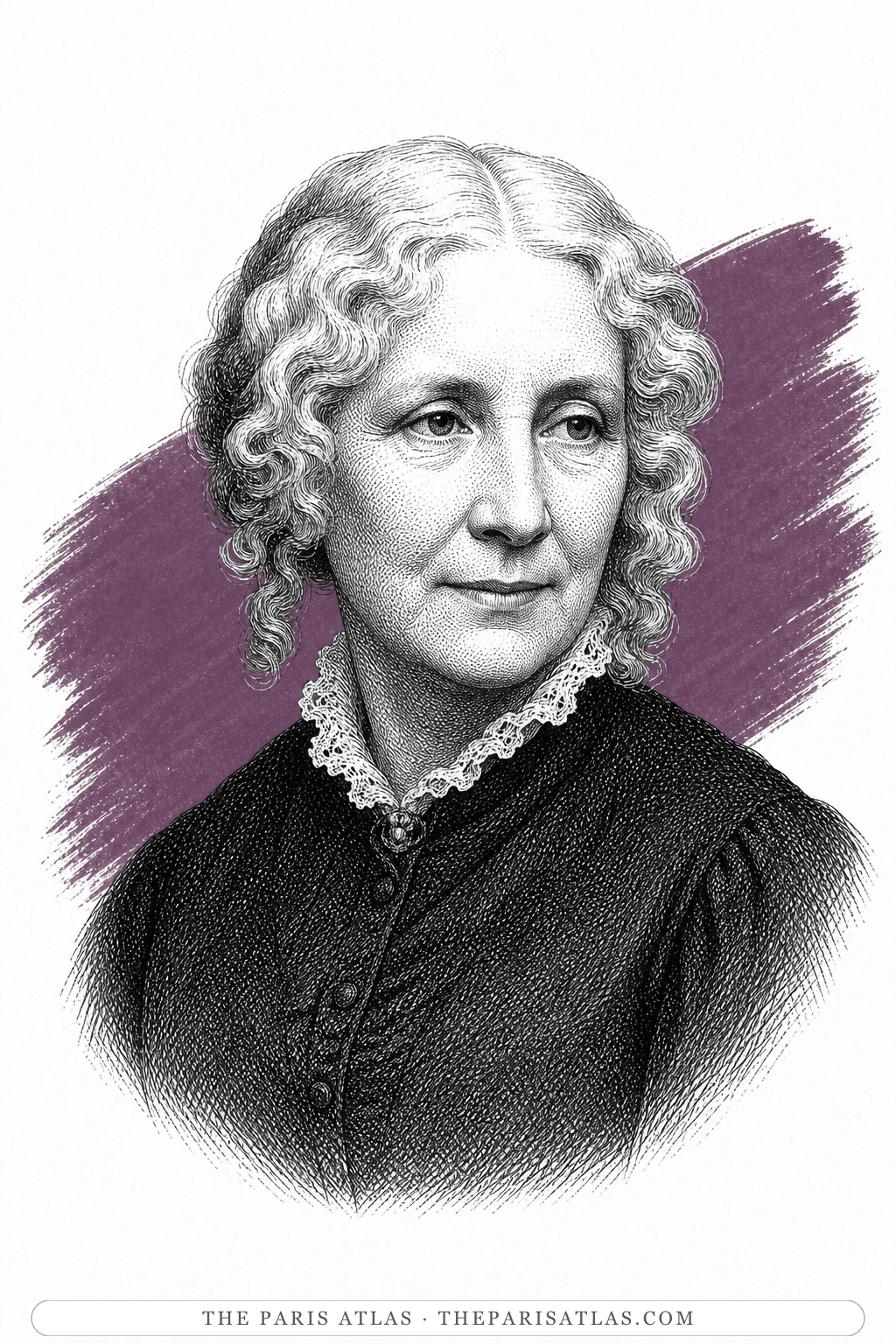
Harriet Beecher Stowe
Uncle Tom's Cabin
The novel whose success paid for the journey and made every meeting in volume one possible.
Read our takeSunny Memories of Foreign Lands
Harriet Beecher Stowe
Stowe's letters from the 1853 tour that Uncle Tom's Cabin paid for: mobbed in Britain, left alone in Paris, and happiest in the Louvre.
Sunny Memories of Foreign Lands is Harriet Beecher Stowe's account of her 1853 journey through Britain and Europe, published in two volumes in 1854. Uncle Tom's Cabin had made her famous, and the anti-slavery society of Glasgow invited her over. The first volume covers the British tour: crowded meetings in Glasgow and Edinburgh, a dinner opposite Charles Dickens in London, and the reception at Stafford House. The second volume follows her to Paris on 4 June 1853, where she was relieved to be unknown and delighted in the Louvre. The book also contains her defence of the Duchess of Sutherland against stories of the Highland clearances, which Donald McLeod answered with a book of his own.
Stowe sailed in April 1853 at the invitation of the anti-slavery society of Glasgow.[1] The letters are Stowe's, written to her family and friends as she travelled and gathered into a book after she came home. Her preface says the continental journal printed between the letters is by her brother, the Rev. Charles Beecher, who travelled with her. She says she published the letters mainly to answer people who were misrepresenting what she had done abroad.[2]
The preface also answers the obvious objection in advance. If the book shows everything in rose colour, Stowe writes, why not? These were the impressions of a most agreeable visit. Phillips, Sampson and Company published it in Boston in 1854 with illustrations from designs by Hammatt Billings.[2] Sampson Low and Routledge published London editions the same year.[3]
Volume one begins with the voyage and the arrival in Liverpool in April 1853, then goes north through Glasgow, Edinburgh and Aberdeen. In Edinburgh she is presented with the national penny offering, a thousand gold sovereigns on a silver tray, collected in small sums from people who could hardly spare them.[2]
On the evening she reaches London she is taken to the Lord Mayor's annual dinner for the judges of England, and finds Charles Dickens sitting directly opposite her. A judge sits down beside her to say he has been reading the legal part of A Key to Uncle Tom's Cabin. The Duchess of Sutherland receives her at Stafford House. The address from the women of Britain to the women of America against slavery had by then collected more than half a million signatures.[2]
Volume two continues in London, where she lunches with Lady Byron, the widow of Lord Byron, and hears her praise William and Ellen Craft, who had escaped from slavery in the South. On 4 June the party crosses from Folkestone to Boulogne and reaches Paris that night. After three weeks in Paris they travel through Switzerland, Germany and down the Rhine, and Stowe returns to Paris for a second stay in August.[4]
The tone changes the moment the book reaches Paris. In Britain Stowe had been a public event for two months. In Paris she writes that she has come into dreamland, into the land where it is always afternoon, and that she is released from care, unknown and unknowing. She has a room opening onto a little garden, and her time is her own.
The party stayed with American friends who rented the ground floor of an old mansion in the rue de Verneuil, in the Faubourg Saint-Germain. Charles Beecher's journal notes that the house belonged to a marquis loyal to the old royal family, who lived in the country and let it out. On their first Sunday they walked to the Madeleine and heard a sermon on charity, and were startled to find that Paris kept no Sabbath.
Her first request was the Musée du Louvre, a short walk away. She went back again and again. Her favourite piece was the armless statue she calls the Venus de Milon, dug up on the island of Milos and given to Paris, she writes, with old Louis-Philippe as bridegroom by proxy. She liked the sculpture better than the paintings, because it never distorted a hand or a face the way the painters did.
Her guide in Paris was Louise Swanton Belloc, who with Adélaïde de Montgolfier had made what Charles Beecher calls the best French translation of Uncle Tom's Cabin. Her husband, the painter Jean-Hilaire Belloc, directed the government's drawing school. Charles's journal records Stowe sitting for him in his studio on 13 June. Belloc decided to paint her looking away, following Charpentier's observation that she always looked around her, with the air of an observer, but not of curiosity.
While she sat, the publisher Charpentier came in. Charles Beecher's journal records him saying that in thirty-five years as a bookseller he had never known a success like Uncle Tom's Cabin. Charpentier said he had found the poet Alfred de Musset reading it, and that Musset told him the book left them all miles behind. The journal spells the poet's name as De Musée.
Stowe came back in August and stayed in the drawing school itself, in a room Madame Belloc had filled with flowers and engravings. The Bellocs took her to call on the poet and songwriter Pierre-Jean de Béranger, who had not had breakfast at eleven and ate his chop in front of them. Her description of French conversation comes from that visit: like the gambols of a thistledown, or the rainbow changes in soap bubbles.
The book's least sunny legacy is Letter XVII. American papers had printed stories that the Duchess of Sutherland's family had turned tenants out into the snow and burned their cottages. Stowe calls them absurd. She says the stories exaggerate changes made on the Sutherland estates in 1811, when the Highlands were turned from military holdings into farms, and she defends the changes as progress.
Donald McLeod answered her. His reply was printed for him in Toronto in 1857, under a title that turns hers inside out: Gloomy Memories in the Highlands of Scotland versus Mrs. Harriet Beecher Stowe's Sunny Memories. Its subtitle calls the clearances the extirpation of the Celtic race from the Highlands. Stowe had been the Duchess of Sutherland's guest at Stafford House that May.
At last I have come into dreamland; into the lotus-eater's paradise; into the land where it is always afternoon. I am released from care; I am unknown, unknowing;
My first, of course, was the Louvre. It is close by us. Think of it. To one who has starved all a life, in vain imaginings of what art might be, to know that you are within a stone's throw of a museum full of its miracles
Conversation in a French circle seems to me like the gambols of a thistle down, or the rainbow changes in soap bubbles. One laughs with tears in one's eyes.
If the criticism be made that every thing is given couleur de rose, the answer is, Why not?
Three weeks in June 1853 and a second stay in August: the Louvre, the rue de Verneuil, the Belloc studio and a call on Béranger. Stowe was never happier in the book than in Paris.
Mass meetings, the penny offering, Stafford House and half a million women's signatures. Volume one shows the novel's effect on Britain at first hand.
Stowe's defence of the Duchess of Sutherland provoked Donald McLeod's Gloomy Memories. Reading both shows how an anti-slavery hero could defend her own hosts.
1853
Stowe sails for Liverpool in April at the invitation of the anti-slavery societies of Glasgow.
1853
In London she meets Charles Dickens at the Lord Mayor's dinner and is received at Stafford House by the Duchess of Sutherland.
1853
The party reaches Paris on 4 June and stays in the rue de Verneuil. Stowe sits for Jean-Hilaire Belloc on 13 June and leaves for Switzerland on 22 June.
1853
Stowe returns to Paris in August, lodges in the government drawing school, and calls on Béranger.
1854
Phillips, Sampson and Company publish Sunny Memories of Foreign Lands in two volumes. London editions follow.
1857
Donald McLeod's reply, Gloomy Memories in the Highlands of Scotland, is printed for him in Toronto.

Uncle Tom's Cabin
Harriet Beecher Stowe
The novel whose success paid for the journey and made every meeting in volume one possible.
Read our takeA Key to Uncle Tom's Cabin
Harriet Beecher Stowe
Published the same spring. A London judge had just read its legal chapters when he met Stowe at the Lord Mayor's dinner.
Read our take
Mark Twain's book about Americans in Paris and Europe, fourteen years later, by the man who became Stowe's neighbour in Hartford.
Read our takeThe Minister's Wooing
Harriet Beecher Stowe
The novel Stowe went back to Europe to publish in 1859, when Lady Byron, whom she first met on this tour, praised it.
Read our takeHarriet Beecher Stowe's letters from her 1853 tour of Britain and Europe, published in two volumes in 1854. Volume one covers Britain and volume two the rest of the journey, including Paris. Her brother Charles Beecher wrote the journal sections in volume two.
She arrived on 4 June 1853 and stayed with American friends in the rue de Verneuil. She visited the Louvre, sat for a portrait by Jean-Hilaire Belloc, and called on the songwriter Béranger on a second visit in August.
Because Stowe chose to record the pleasant side of the trip. Her preface says that if readers think everything is shown in rose colour, the answer is, why not? Donald McLeod answered her in 1857 with Gloomy Memories.
She sat opposite him at the Lord Mayor's dinner for the judges of England in London in 1853, and was surprised at how young he looked. She describes it in Letter XIII.
Donald McLeod's reply to Stowe's defence of the Duchess of Sutherland, printed in Toronto in 1857. The full title sets his Gloomy Memories in the Highlands of Scotland against her Sunny Memories, and calls the clearances the extirpation of the Celtic race.
Both volumes are free from Project Gutenberg, as ebooks 13945 and 6931. Modern print reprints are also available, including the 2005 Cosimo Classics edition.
Explore authors with a similar voice, perspective, and influence.
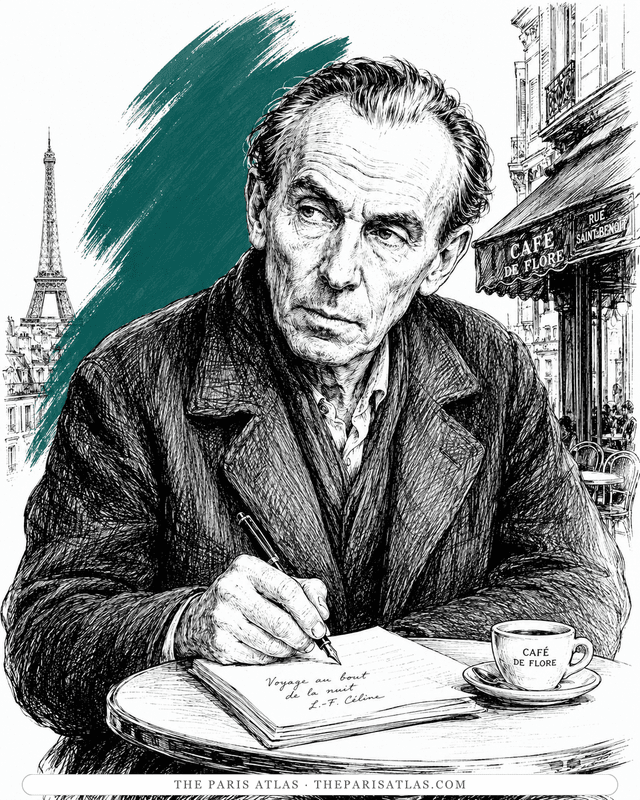
The doctor of the Paris slums who wrote the century's blackest, funniest novel — and changed the sound of French prose.
View author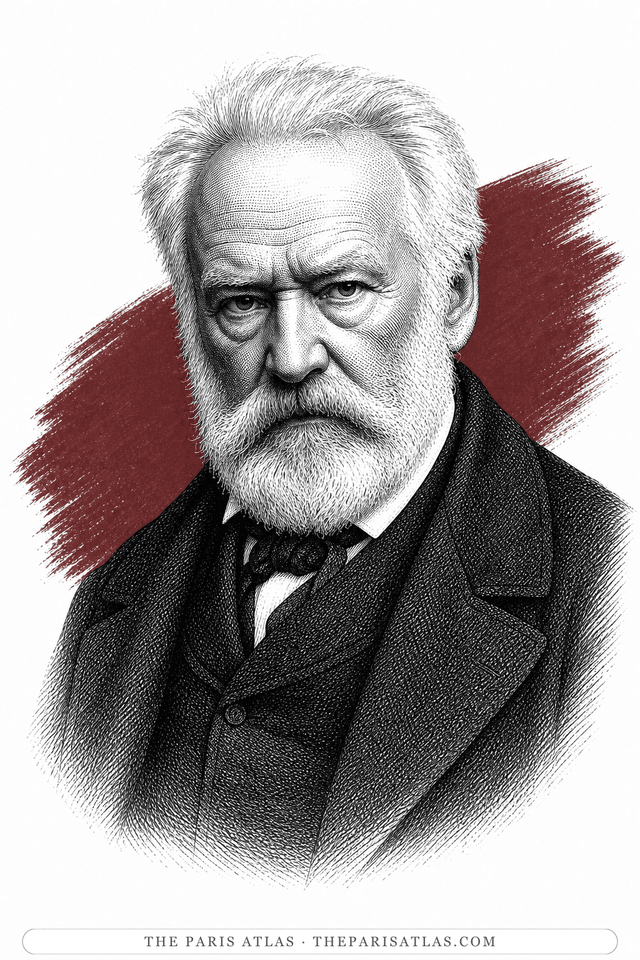
Poet, novelist and playwright who spent sixteen years in an apartment on the Place des Vosges that is now his museum, wrote a novel about Notre-Dame that shamed France into repairing the cathedral, spent nineteen years in exile for opposing the emperor Napoleon III, and was buried in the Panthéon — the Paris monument where France buries its most honoured dead — in 1885 after a funeral that brought roughly two million people into the streets of Paris.
View author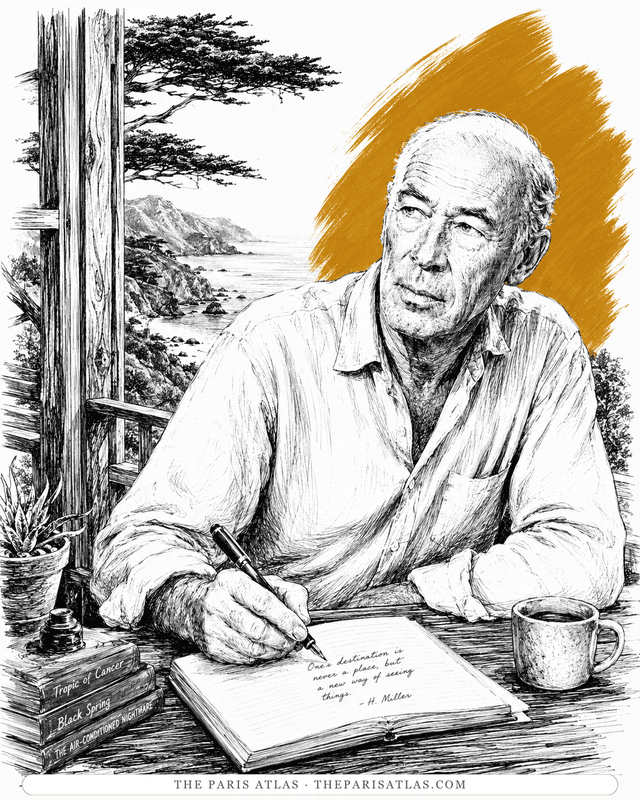
The Brooklyn dropout who arrived in Paris broke at thirty-eight and wrote the exuberant, banned books that ended American censorship.
View authorThe sources below include the primary text, editions, scholarship, archival materials, and other records that informed this page. They document Sunny Memories of Foreign Lands, its publication, and its place in literary history.

The family biography, for the Glasgow invitation and the April 1853 sailing.
Library catalogue records, for the 1854 Boston and London editions and the later reprints.
The primary text of volume two, for Lady Byron and the Paris letters and journal. Every quotation was checked word for word against it.

Donald McLeod's 1857 reply, for its title and subtitle.
The primary text represented by this page, used for descriptions of the work’s contents and for any quoted passages shown here.
The primary text is the baseline reference for every book page. Additional references document publication history, interpretation, and historical context where that evidence is available.
 Explore more resources