
The Adventures of Tom Sawyer
Twain's childhood novel likewise makes vanity, public performance and imagined adventures sources of comedy.
Read our take
by Mark Twain
An American pleasure voyage becomes a comedy about tourists, famous sights and the expectations they bring with them.
Published in 1869, The Innocents Abroad is Mark Twain's account of the 1867 Quaker City excursion to Europe and the eastern Mediterranean. He turns sightseeing, discomfort and the behavior of his fellow travelers into a comic narrative, with Paris, Rome, Jerusalem and Egypt among its destinations. The book reworks newspaper correspondence and includes a self-portrait whose confident judgments invite scrutiny of their own.
The preface promises a traveler looking with his own eyes. The chapters repeatedly test that promise against guidebooks, reputations and fantasies formed before departure. A disappointing Paris shave receives the scale of a catastrophe because the narrator had imagined a palace of comfort.
The comedy sometimes interrupts itself. At the Château d'If, the narrator imagines the passing years of isolated prisoners. Inside St. Peter's, familiar American measurements fail to make an enormous building comprehensible. His changes of pace make wonder and unease part of the same journey as the jokes.
Twain's targets include boastful Americans and souvenir hunters who try to damage monuments. Yet his own descriptions also contain national and racial prejudices. The conclusion's praise of travel as a remedy for narrowness is best read beside those limits, along with his admission that memory has already made the journey more pleasant.
Twain's narrator repeatedly resists the admiration that guides and earlier travelers seem to require. A celebrated object can disappoint him; an ordinary inconvenience can take over the account. This reversal gives the book much of its comedy. The supposedly uneducated tourist refuses to conceal boredom merely because a place has cultural prestige.
Yet his plain-speaking manner is also a performance. He selects incidents, prolongs jokes and arranges comparisons to produce a recognizable voice. The claim to report only what he sees should therefore be read alongside his skill at entertaining an American audience. Refusing one script does not leave him without a script of his own.
The Quaker City excursion supplies an itinerary, companions and expectations before individual discoveries begin. Hotels, transport, guides and admission arrangements shape what can be seen. The narrator may imagine a direct encounter with history, but much of the journey arrives through paid intermediaries.
Souvenir hunting exposes another form of possession. Travelers want to take fragments of celebrated places home as proof that they have been there. The joke falls on the tourists' appetite as well as the people selling them an experience. A journey undertaken for knowledge can repeatedly become a competition to accumulate evidence of status.
At the Château d'If, the narrator distinguishes the appeal of fictional prisoners from the traces of actual confinement. The episode asks why a familiar story can command more feeling than an unfamiliar person's suffering. Literature gives a place imaginative force, but recognition can become a substitute for attention.
Descriptions of famous buildings create a related difficulty of scale. Comparisons with things at home make unfamiliar structures legible to an American reader, while also revealing how persistently the traveler measures the world through his own experience. The book's observations are strongest when their measuring habits remain visible.
Near the conclusion, Twain presents travel as a remedy for prejudice and narrowness. The claim gives the excursion a larger purpose than sightseeing. It also invites the reader to test the preceding narrative against the standard the narrator announces.
The test produces mixed results. He punctures American pretensions and distrusts compulsory reverence, but his descriptions of foreign populations also reproduce contempt and sweeping judgments. The inconsistency belongs to the book's argument about seeing: movement across borders supplies opportunities to revise an outlook, while the traveler can still carry that outlook into every new encounter.
The preface and excursion arrangements; the Château d'If and European sightseeing episodes; souvenir collecting; and the concluding claims about travel and prejudice.
This book is a record of a pleasure trip.
Travel is fatal to prejudice, bigotry and narrow-mindedness
Paris exposes the distance between imagined luxury and ordinary inconvenience. The reader gets to watch a traveler defend his own taste while continually revising his plans.
The St. Peter's passage follows the difficulty of seeing scale. Figures, comparisons and a workman on a rope offer different ways to understand the same space.
The conclusion admits that unpleasant incidents have faded. That change lets readers reconsider the confident judgments made during the voyage.
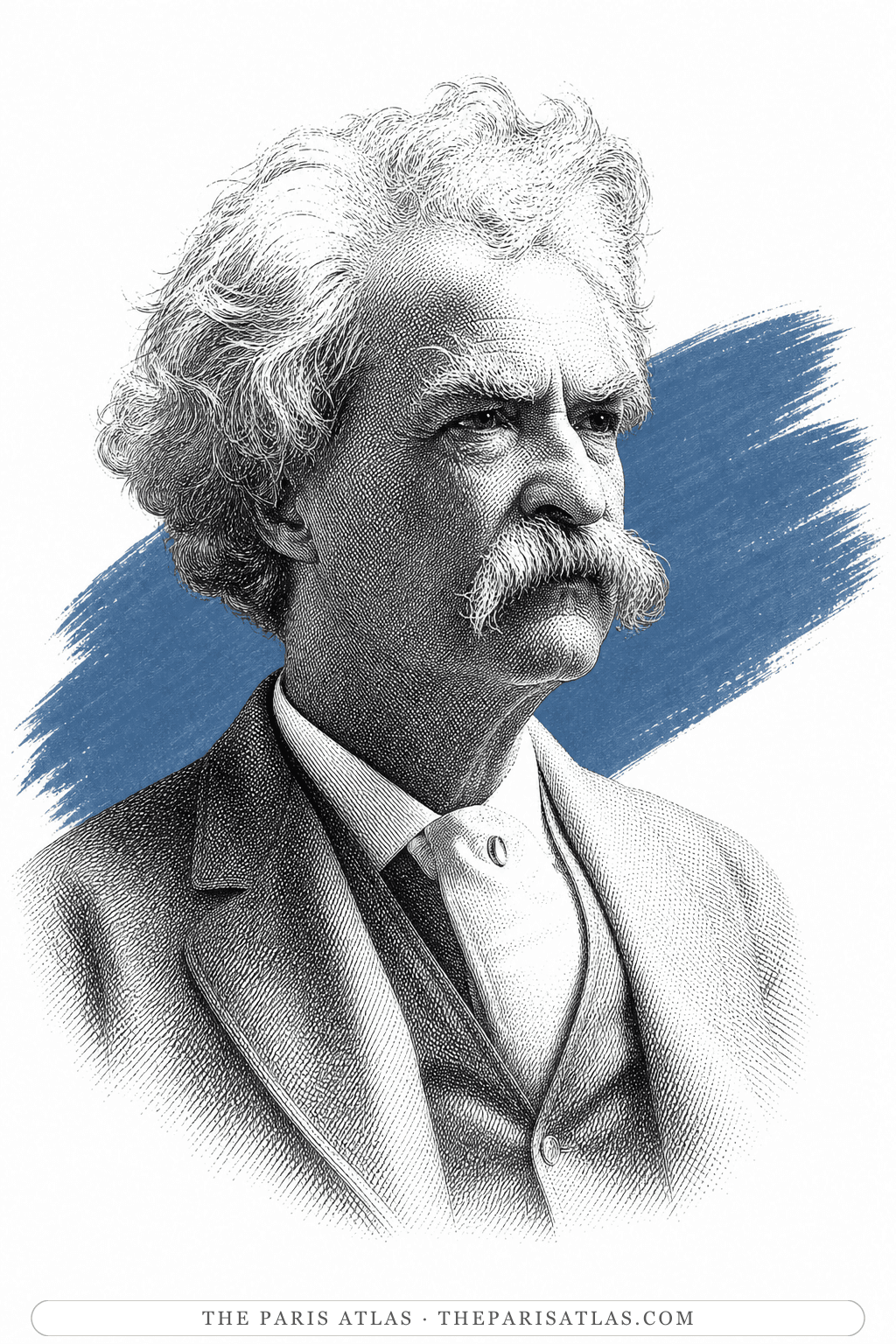
The first-person traveler, whose confident comic judgments coexist with curiosity, impatience and changing memories.
1867
Twain joins the Quaker City excursion and writes correspondence about the journey.
1869
The American Publishing Company publishes The Innocents Abroad in Hartford.
2007
Signet publishes the selected 560-page edition on April 3, with Michael Meyer's introduction and Leslie A. Fiedler's afterword.

Twain's childhood novel likewise makes vanity, public performance and imagined adventures sources of comedy.
Read our take
The later river novel puts a narrator's inherited assumptions under sustained pressure.
Read our take
Martha Gellhorn's travel memoir makes difficult journeys and frustrated expectations the basis of its humor.
Read our takeIt is a comic travel memoir based on Twain's 1867 excursion, first published in 1869. Exaggeration and crafted dialogue are part of its nonfiction storytelling.
It was the excursion ship that carried Twain and his fellow passengers on the voyage. After their overland journeys, he repeatedly describes returning to it as coming home.
Yes. Twain writes about arriving by rail, hotels, a disappointing shave, billiards and other encounters. The Paris chapters frequently set an imagined experience against what he actually reports finding.
The New Pilgrim's Progress plays on the idea of pilgrimage. The excursion combines European sightseeing with visits to places associated with biblical history.
Yes. Its preface identifies reused portions of letters to the Daily Alta California, New York Tribune and New York Herald. The resulting book arranges the material as a sustained travel account.
The selected Signet paperback appeared on April 3, 2007, ISBN 9780451530493, with 560 pages. It includes an introduction by Michael Meyer and an afterword by Leslie A. Fiedler.
Explore authors with a similar voice, perspective, and influence.
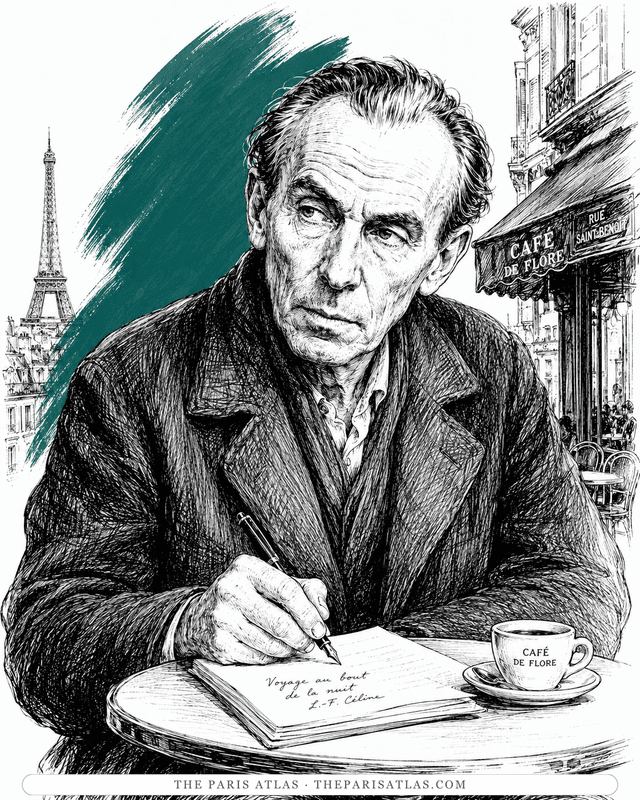
The doctor of the Paris slums who wrote the century's blackest, funniest novel — and changed the sound of French prose.
View author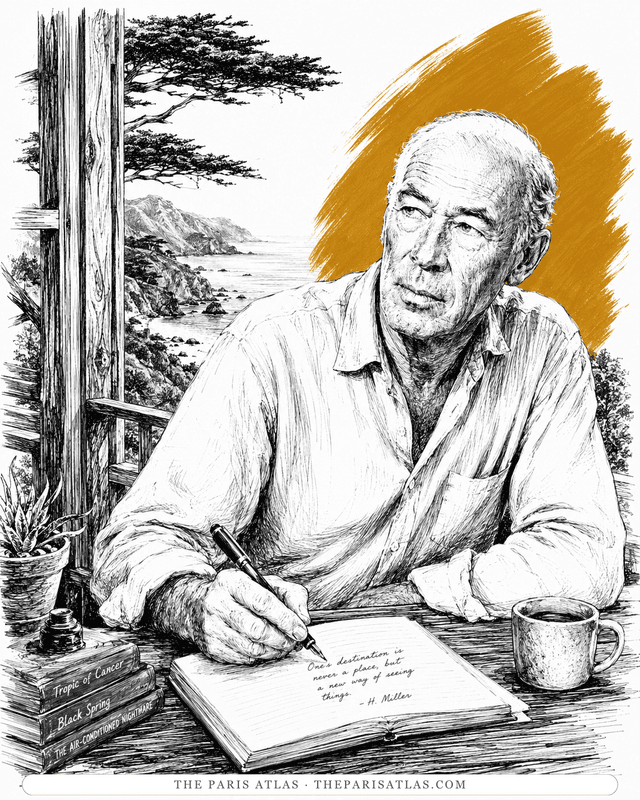
The Brooklyn dropout who arrived in Paris broke at thirty-eight and wrote the exuberant, banned books that ended American censorship.
View author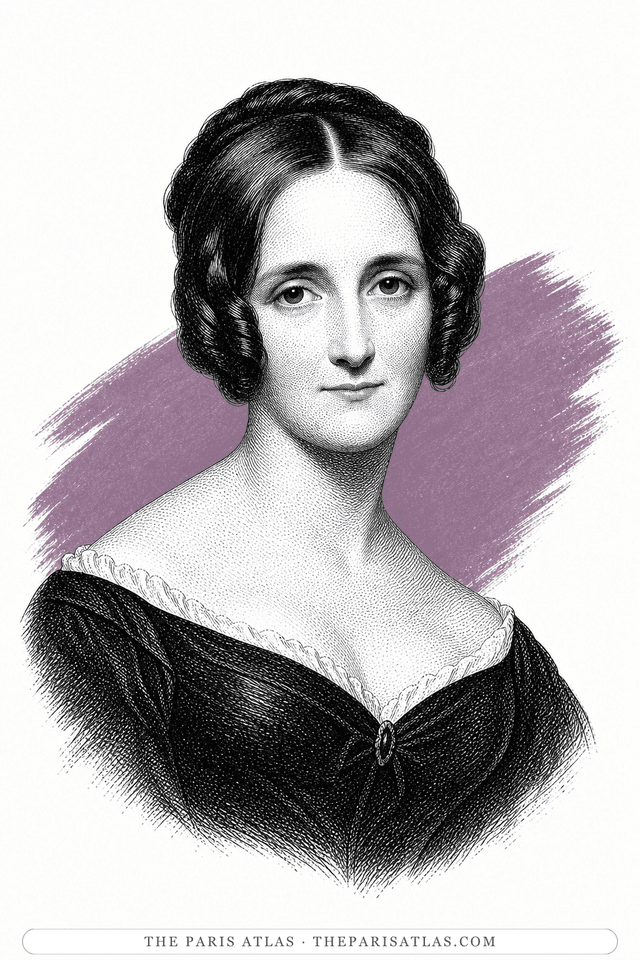
The author of Frankenstein, who first saw Paris at sixteen as a runaway. In the summer of 1814 she crossed from England to Calais with the poet Percy Bysshe Shelley and her stepsister Claire Clairmont, spent a week trapped in an expensive Paris hotel with no money, then bought a donkey and walked south-east across a France still wrecked by the Napoleonic wars. That journey became her first published book. Two years later, on a lake in Switzerland, she began her second.
View authorThe sources below include the primary text, editions, scholarship, archival materials, and other records that informed this page. They document The Innocents Abroad, its publication, and its place in literary history.


The primary text represented by this page, used for descriptions of the work’s contents and for any quoted passages shown here.
Primary text for the six narrator readings, selected travel episodes, newspaper acknowledgment and quotations. This citation uses only The Innocents Abroad.

University of California Libraries' digitized original edition, including its 1869 Hartford publication and singular Pilgrim's subtitle.
Selected ISBN, April 2007 issue, 560-page extent, introduction and afterword credits.
The 1867 voyage and the reworking of newspaper travel letters into the 1869 book. The museum page's description of this as his first book is not adopted here.
The primary text is the baseline reference for every book page. Additional references document publication history, interpretation, and historical context where that evidence is available.
 Explore more resources