Twenty Thousand Leagues Under the Seas
Jules Verne
Twenty Thousand Leagues Under the Seas
Verne's other journey around the world, made under water and without a timetable.
Read our takeAround the World in Eighty Days
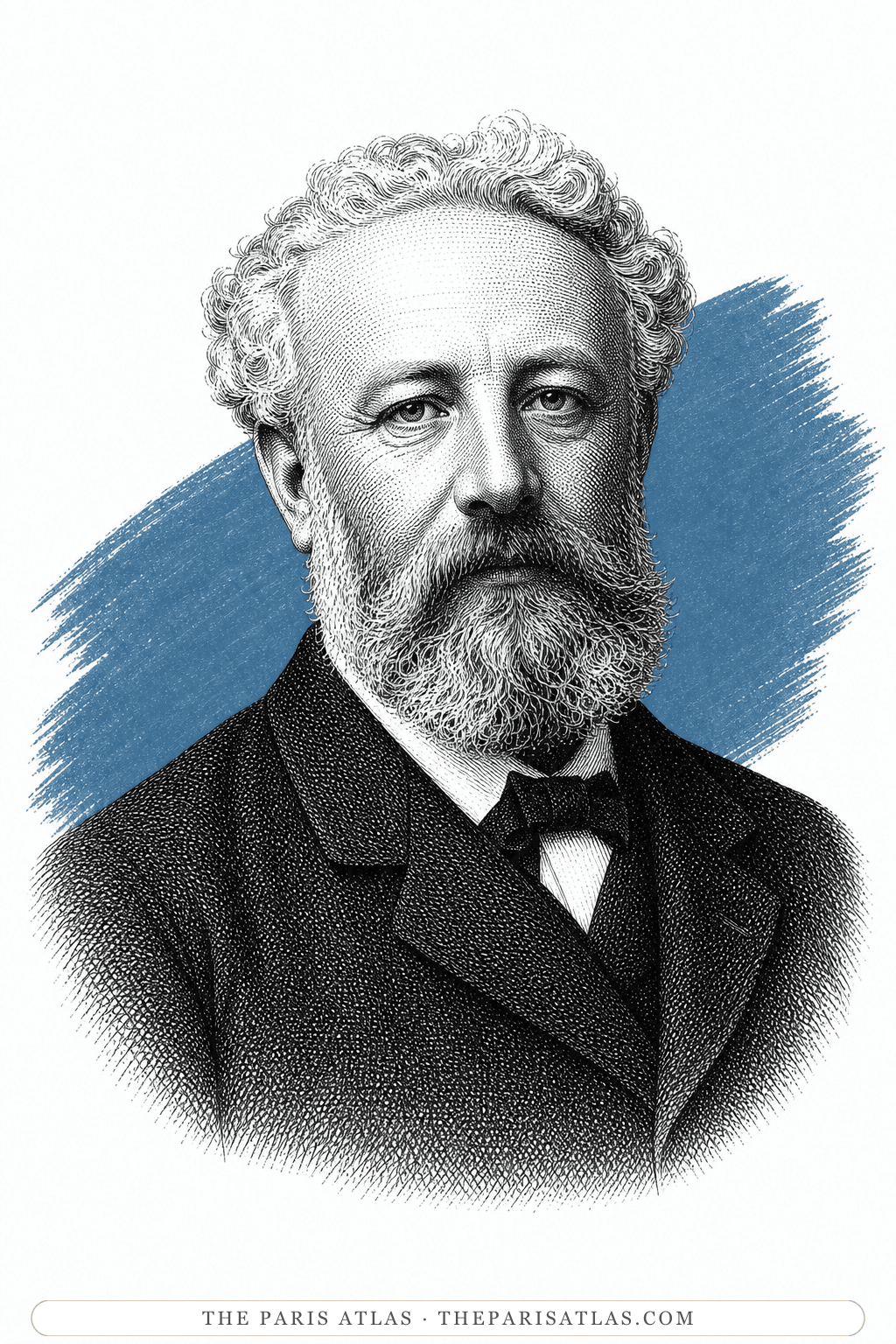
Jules Verne
by Jules Verne
A London gentleman bets half his fortune that he can circle the globe in eighty days, and takes a Parisian valet with him.
On 2 October 1872 Phileas Fogg, a wealthy and very punctual Englishman, bets the members of his London club twenty thousand pounds that he can go around the world in eighty days. He leaves that evening with his new servant, Passepartout, a Frenchman who took the job because he wanted a quiet life. A police detective named Fix follows them, convinced that Fogg has robbed the Bank of England. The journey runs by train, steamer, elephant and sledge through Suez, Bombay, Calcutta, Hong Kong, Yokohama, San Francisco and New York. Jules Verne published the novel in daily instalments in the Paris newspaper Le Temps from 6 November to 22 December 1872.[1][2]
The route is not invented. In Chapter III one of Fogg's club friends reads out a timetable printed in the newspaper. London to Suez takes seven days by rail and steamer. Then come thirteen days to Bombay, three to Calcutta, thirteen to Hong Kong and six to Yokohama. The last legs are twenty-two days to San Francisco, seven to New York and nine back to London. The total is eighty days. The Encyclopedia of Science Fiction notes that Verne worked the journey out from travel services that already existed. The same entry says he based Fogg's trip on a real journey by the American businessman and traveller George Francis Train.[3][2]
Le Temps printed the first chapters on the front page of its issue of 6 November 1872 and the ending on 22 December 1872. Pierre-Jules Hetzel published the book in Paris in 1873, with drawings by Alphonse de Neuville and Léon Benett. The first English translation, by George Makepeace Towle, came out in Boston the same year. Towle's text is out of copyright and is the one Project Gutenberg offers as ebook 103.[4][5][6][7][1]
Passepartout is the book's Parisian. Verne introduces him as a true Parisian of Paris who has worked for five years as a valet in London. When Fogg announces the trip, Passepartout hopes they will go only as far as Paris, since he would like to see the city again. Fogg's notebook shows they do go through it: arrival on Thursday 3 October at 7.20 in the morning, departure at 8.40. Passepartout gets eighty minutes of Paris, seen from the carriage between two railway stations.[1][3]
Phileas Fogg lives at No. 7 Savile Row in London, goes to the Reform Club every day at the same minute, and has just sacked a servant for bringing his shaving water at eighty-four degrees Fahrenheit instead of eighty-six. His new man, Passepartout, is a Frenchman who wants a quiet post. The same evening a club conversation about a robbery at the Bank of England turns to how small the world has become. Fogg bets twenty thousand pounds that he can go around it in eighty days. He leaves by the 8.45 train and must be back in the club by 8.45 on the evening of Saturday 21 December.[1]
Detective Fix of Scotland Yard decides that the calm gentleman spending money everywhere is the bank robber, and follows him from Suez. In India the railway line turns out to be unfinished, so Fogg buys an elephant named Kiouni. In the forest the travellers rescue a young Parsi widow, Aouda, who is about to be burned alive on her dead husband's funeral pyre. Passepartout misses the boat at Hong Kong after Fix drugs him with opium, and ends up performing with a troupe of acrobats in Yokohama.[1]
In America a band of Sioux attack their train, and Passepartout is carried off. Fogg goes back to rescue him and loses the train. The party crosses the frozen plains of Nebraska on a sledge fitted with a sail. In New York they miss the Liverpool steamer by forty-five minutes. Fogg hires a small steamship, the Henrietta, then buys it outright, and burns its woodwork in the boilers to keep it going across the Atlantic.[1]
At Liverpool Fix arrests Fogg. By the time Fix learns that the real robber was caught three days earlier, the London express has gone. Fogg hires a special train, reaches London five minutes too late, and goes home believing he has lost. The next evening Aouda asks him to marry her, and he tells her he loves her. Passepartout runs to arrange the wedding for the next day, Monday, and at the clergyman's house he learns that the next day is Sunday. The day is still Saturday 21 December. Fogg rushes to the Reform Club and walks in as the clock strikes a quarter to nine.
Travelling east, Fogg had gained a day without noticing. Each degree of longitude crossed towards the sun shortens the day by four minutes, and 360 degrees add up to twenty-four hours. He had spent almost nineteen thousand pounds on the way, so the win left him with little money. He shares the rest between Passepartout and Fix, and marries Aouda two days later. The narrator asks whether anyone would not make the tour of the world for less.
The bet rests on one piece of news. A club member points out that the section of the Great Indian Peninsula Railway between Rothal and Allahabad has just opened. With that line in service, the printed timetable adds up to exactly eighty days. Fogg's answer to every objection, from bad weather to shipwreck, is that the eighty days include them. The rest of the book tests that claim one delay at a time.
Verne credits the timetable to the London Morning Chronicle. George Makepeace Towle's 1873 translation, printed in Boston, gives it to the Daily Telegraph instead, and the change runs through the book. The Encyclopedia of Science Fiction says the novel is not science fiction at all, because every train and steamer Fogg uses was running when Verne wrote.
Paris read the story first, a few columns at a time, at the foot of the front page of Le Temps. The last instalment, on 22 December 1872, carried the chapter that tells readers Fogg had won his bet by a day he did not know he had. The dates in the story fall close to the dates of publication. The race ends on 21 December 1872, one day before the newspaper printed its ending.
Verne then turned the novel into a play with the dramatist Adolphe d'Ennery. The published text says it was first performed in Paris at the Théâtre de la Porte Saint-Martin on 7 November 1874. The show had five acts, a prologue and fifteen scenes. The play was still being staged at the Théâtre du Châtelet in January 1898, as a catalogue record of that production shows. The national library notes that the stage versions of this book and of Michel Strogoff added to Verne's fortune.
Fogg keeps his notebook to the minute but never checks the date against anyone else's. Going east, he sees the sun cross the meridian eighty times, while his friends in London see it seventy-nine times. Passepartout's family watch, which he has kept on London time the whole way, would have shown the mistake if it had shown the date as well as the hour.
The last chapter adds a joke at Fogg's expense. The morning after the wedding, Passepartout works out that they could have done the trip in seventy-eight days by not crossing India. Fogg answers that then he would not have saved Aouda, and quietly shuts the door. Verne ends by asking what Fogg really brought home, and answers his own question: a wife who made him the happiest of men.
As for Passepartout, he was a true Parisian of Paris.Quant à Jean, dit Passepartout, un vrai Parisien de Paris
He knew that in this world account must be taken of friction, and that friction retards, he never rubbed against anybody.Il savait que dans la vie il faut faire la part des frottements, et comme les frottements retardent, il ne se frottait à personne.
Phileas Fogg had, without suspecting it, gained one day on his journey, and this merely because he had travelled constantly eastward.Phileas Fogg avait, «sans s'en douter», gagné un jour sur son itinéraire,--et cela uniquement parce qu'il avait fait le tour du monde en allant vers l'est
Nothing, say you? Perhaps so; nothing but a charming woman, who, strange as it may appear, made him the happiest of men! Truly, would you not for less than that make the tour around the world?Rien, dira-t-on? Rien, soit, si ce n'est une charmante femme, qui--quelque invraisemblable que cela puisse paraître--le rendit le plus heureux des hommes! En vérité, ne ferait-on pas, pour moins que cela, le Tour du Monde?
Fogg's notebook logs every arrival and departure to the minute, so a reader always knows how many hours he has in hand.
The former acrobat and fireman who wanted a quiet job ends up on a circus stage in Yokohama and a prisoner of the Sioux. He does most of the book's suffering and most of its jokes.
Fogg loses the bet and then wins it, because of a day he gained by travelling east.
The story ran in the Paris daily Le Temps in 1872 and filled Paris theatres from 1874, at the Porte Saint-Martin and later the Châtelet.
A rich, silent Londoner who lives by the clock and bets twenty thousand pounds on a timetable.
Fogg's new valet, a Parisian and a former acrobat and fireman, who took the job to have a quiet life.
A Scotland Yard detective who is sure Fogg robbed the Bank of England and follows him around the world to arrest him.
A young Parsi widow rescued from her husband's funeral pyre in India, who travels the rest of the way with Fogg.
6 November 1872
Le Temps prints the first instalment on its front page in Paris.
22 December 1872
Le Temps prints the last instalment, the chapter that explains Fogg's lost day.
1873
Pierre-Jules Hetzel publishes the illustrated book edition in Paris, with drawings by Alphonse de Neuville and Léon Benett.
1873
James R. Osgood publishes George Makepeace Towle's English translation in Boston.
7 November 1874
The stage version by Adolphe d'Ennery and Jules Verne opens at the Théâtre de la Porte Saint-Martin in Paris.
January 1898
The play is being staged at the Théâtre du Châtelet in Paris.
27 March 1957
Michael Todd's film version wins the Academy Award for Best Picture, one of its five Oscars.

Twenty Thousand Leagues Under the Seas
Jules Verne
Verne's other journey around the world, made under water and without a timetable.
Read our takeFrom the Earth to the Moon
Jules Verne
Another Verne story built on a wager and a calculation, with a Frenchman in the thick of it.
Read our take
Mark Twain's comic account of a real steamer tour of 1867, published three years before Fogg set out.
Read our takeKim
Rudyard Kipling
Rudyard Kipling's India, travelled by road and railway and seen from inside rather than from a carriage window.
Read our takeNo. Nobody in the novel travels by balloon. In Chapter XXXII Fogg thinks about crossing the Atlantic by balloon and rules it out as too risky and not practical. He travels by train, steamer, elephant, sledge and a steamship he buys.
He has not arrived late. Travelling east, he gained a day without noticing, so the day he thinks is Sunday is still Saturday 21 December. His servant finds out the next morning, and Fogg reaches the Reform Club on the stroke of 8.45.
The Encyclopedia of Science Fiction says Verne based Fogg's trip on a real journey by the American businessman George Francis Train. Fogg's character, a silent Londoner who lives by the clock, is Verne's invention.
Only eighty minutes of the story. Fogg's notebook records arriving in Paris at 7.20 on the morning of 3 October and leaving at 8.40. Passepartout, a Parisian, sees the city from a carriage between stations.
In daily instalments in the Paris newspaper Le Temps, from 6 November to 22 December 1872. Hetzel published the illustrated book in 1873, and George Makepeace Towle's English translation came out in Boston the same year.
Yes. Verne and Adolphe d'Ennery adapted it for the Théâtre de la Porte Saint-Martin in Paris, where it opened on 7 November 1874. The Théâtre du Châtelet was still staging it in 1898.
Explore authors with a similar voice, perspective, and influence.
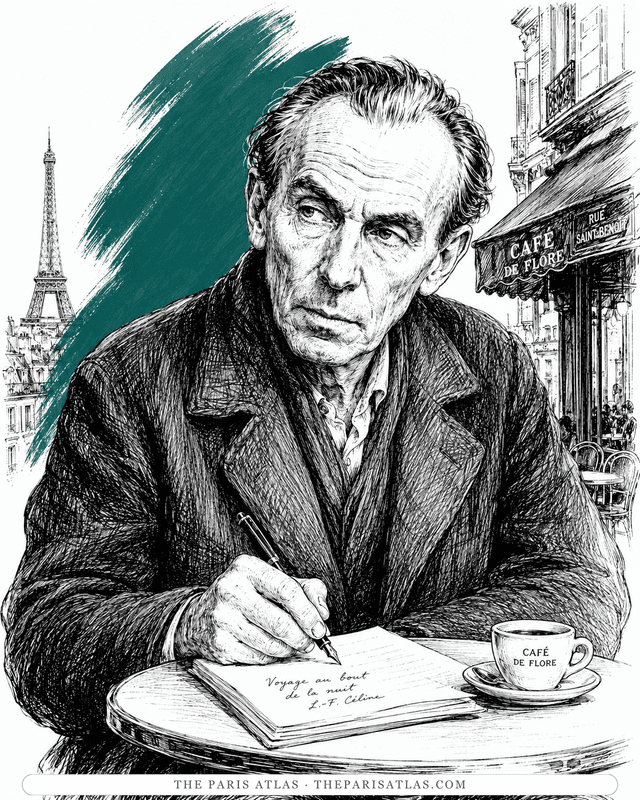
The doctor of the Paris slums who wrote the century's blackest, funniest novel — and changed the sound of French prose.
View author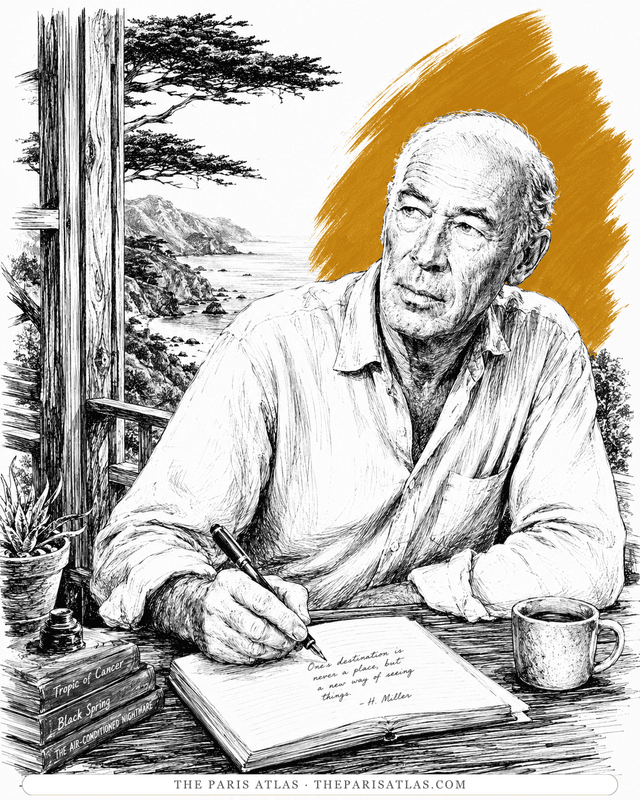
The Brooklyn dropout who arrived in Paris broke at thirty-eight and wrote the exuberant, banned books that ended American censorship.
View author
French writer and philosopher whose novels, memoirs, and social analysis examined freedom, gender, responsibility, aging, and the material conditions that shape a life.
View authorThe sources below include the primary text, editions, scholarship, archival materials, and other records that informed this page. They document Around the World in Eighty Days, its publication, and its place in literary history.


The Le Temps issue carrying the first instalment.
The Le Temps issue carrying the chapter in which Fogg wins.
Catalogue record of the 1873 illustrated Hetzel edition.

Scan of the 1873 Osgood edition, whose title page names Towle as translator.
The published play, recording its first performance at the Porte Saint-Martin on 7 November 1874.
Catalogue record of the play in performance at the Théâtre du Châtelet, January 1898.
The national library on the stage versions and Verne's fortune.
Publisher page for Michael Glencross's Penguin Classics translation.
The 29th Academy Awards: Best Picture for Michael Todd's film.
The primary text represented by this page, used for descriptions of the work’s contents and for any quoted passages shown here.
The primary text is the baseline reference for every book page. Additional references document publication history, interpretation, and historical context where that evidence is available.
 Explore more resources