The Paris AtlasCharting the artists, works, and places worth returning to.
  • Author
  • Playwright
· French · 1828–1905

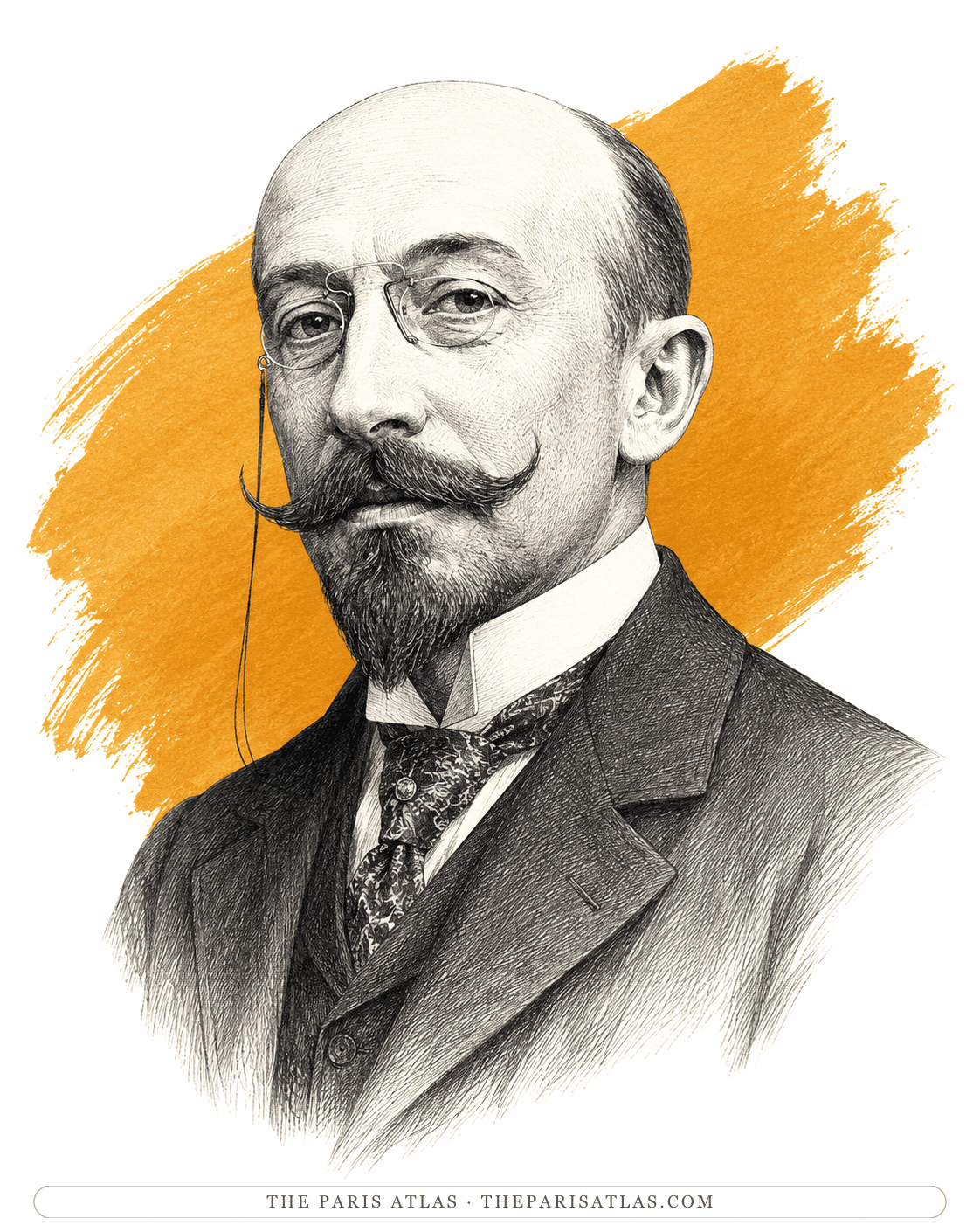
Jules Verne

Author of the sixty-two adventure novels known as the Voyages extraordinaires — the 'extraordinary journeys' — including Twenty Thousand Leagues Under the Seas and Around the World in Eighty Days. Sent to Paris to study law, he was pulled into the theatre instead, got his first play staged with the help of the novelist Alexandre Dumas, and in 1862 met the publisher Pierre-Jules Hetzel, who put him under a contract for two books a year that he kept for over forty years.

Details

Lived
1828–1905
Born
1828
Birthplace
Nantes
Died
1905
Place of death
Amiens
Nationality
French
Roles
AuthorPlaywright

About Jules Verne

Jules Verne invented the modern adventure novel of science: a submarine captain at war with the surface world, a balloon crossing Africa, a journey to the centre of the earth, a bet that a man can circle the globe in eighty days. He was born in Nantes on the Atlantic coast in 1828, in a family of shipowners and lawyers, and grew up beside the port watching sailing ships come up the Loire. His father sent him to Paris to study law.

He studied it, and spent his time in the city's theatres and literary salons, the private drawing-room gatherings where writers and readers met. Alexandre Dumas, then the most successful writer in France, took him up and introduced him around, and Verne's first play was staged in 1850 when he was twenty-two. The decisive meeting came twelve years later. In 1862 he brought a manuscript about a balloon flight across Africa to the publisher Pierre-Jules Hetzel, who told him to rebuild it as a novel; the result, Five Weeks in a Balloon, began a series that ran to sixty-two books. Hetzel also refused one of them, a bleak novel about a future Paris, and that manuscript stayed unpublished for 131 years.

A law student who kept going to the theatre

Verne was born in Nantes on 8 February 1828. The family expected a legal career, and he was sent to Paris to read law, which he did between 1846 and 1850. What he found in Paris was the literary world: the salons, where writers and their readers met in private drawing rooms, and the theatres. Among the people he met was Alexandre Dumas, author of The Three Musketeers and at that point the most bankable writer in France, who introduced the young Verne into literary circles.

It was through Dumas that Verne's first play, Les Pailles rompues ('The Broken Straws'), reached the stage in 1850. Verne was twenty-two. He stayed in the theatre business rather than the law: from 1851 to 1855 he was secretary of the Théâtre-Lyrique, one of the Paris opera houses, and he went on writing plays and libretti, the texts of operas. He married Honorine Deviane, a young widow, on 10 January 1857; their son Michel was born on 4 August 1861. To support the household he worked as a stockbroker at the Paris exchange, and he was still doing it in 1862.

Hetzel, and the two books a year

In 1862 Verne took a manuscript about a balloon flight across Africa to Pierre-Jules Hetzel, a Paris publisher with a strong list of authors and a strong opinion about everything on it. Hetzel told him the material would work better as a proper novel; Verne rewrote it quickly, and Cinq semaines en ballon — Five Weeks in a Balloon — was published in 1863. Then Hetzel put him under contract to deliver a minimum of two volumes a year. Verne honoured it for more than forty years.

The series that came out of that contract was called the Voyages extraordinaires, the 'extraordinary journeys', and it ran to sixty-two novels: Voyage au centre de la Terre (Journey to the Centre of the Earth) in 1864, De la Terre à la Lune (From the Earth to the Moon) in 1865, Vingt mille lieues sous les mers (Twenty Thousand Leagues Under the Seas) in 1869 and 1870, Le Tour du monde en quatre-vingts jours (Around the World in Eighty Days) in 1872. Most appeared first in instalments, many of them in the Magasin d'éducation et de récréation, the family magazine Hetzel founded with the educationist Jean Macé to make instruction entertaining. Hetzel then reissued them as large illustrated volumes in a format he reserved for Verne alone, and the books' success and the publisher's became difficult to separate. The film-maker Georges Méliès took Verne's moon novel as the starting point for A Trip to the Moon in 1902.

The novel Hetzel refused

Early in the partnership, around 1860 to 1863, Verne wrote a book about a future Paris. It follows a young man who wants to write poetry through a city that has no use for him, a society run on business and technology: it has motor cars, trains driven through tubes by compressed air, machines that calculate, and machines that send writing across distances. Hetzel refused to publish it. The Encyclopedia of Science Fiction, the standard reference work of the genre, calls the refusal notorious, and reads it as nothing more sinister than the everyday bluntness of a hard publisher taken to an extreme.

The manuscript stayed in the family. It was kept in a safe that no one opened until 1989, when Verne's great-grandson had it unlocked and found the book inside. Paris au XXe siècle was published in 1994, 131 years after it was written and 89 years after its author's death; Richard Howard's English translation, Paris in the Twentieth Century, followed in 1996. It is the least characteristic thing Verne wrote, because it does not end well: the city freezes, and the young man is last seen alone among the graves.

Amiens

Verne left Paris in 1871 and settled in Amiens, his wife's home town, about 120 kilometres north of the capital. He kept writing to the contract, sailed when he could, and in 1888 was elected to the city council, where he served until 1902. In 1886 his nephew Gaston shot him in the leg; the wound left him with a limp and ended the sea voyages. He lost the hearing in one ear in 1903.

He died at Amiens on 24 March 1905, of a diabetic crisis, and was buried in the Madeleine cemetery there under a monument by the sculptor Albert Roze. The Voyages extraordinaires had by then made him one of the most translated authors in the world, and the contract he signed with Hetzel in 1862 outlasted them both: books continued to appear in the series after his death.

Life events

  1. 1828

    Born in Nantes on 8 February, into a family of shipowners and lawyers.

    Jules Verne, une vie; Jules Verne, aux frontières de l'impossible

  2. 1846

    Sent to Paris to study law, which he reads until 1850 while spending his time in the literary salons.

    Jules Verne — littérature; Jules Verne, aux frontières de l'impossible

  3. 1850

    His first play, Les Pailles rompues, is staged with the help of Alexandre Dumas, who had introduced him into literary circles. Verne is twenty-two.

    Jules Verne — littérature; Jules Verne, une vie; Jules Verne, aux frontières de l'impossible

  4. 1851

    Secretary of the Théâtre-Lyrique, one of the Paris opera houses, until 1855.

    Jules Verne — littérature

  5. 1857

    Marries Honorine Deviane on 10 January; their son Michel is born in 1861.

    Jules Verne, une vie

  6. 1862

    Brings his balloon manuscript to the publisher Pierre-Jules Hetzel, who has him rebuild it as a novel and signs him to a minimum of two volumes a year.

    Jules Verne, une vie; Jules Verne; Verne, Jules

  7. 1863

    Cinq semaines en ballon is published and begins the Voyages extraordinaires, which will run to sixty-two novels.

    Jules Verne, aux frontières de l'impossible; Jules Verne

  8. c. 1863

    Writes Paris au XXe siècle, a novel about a future Paris. Hetzel refuses to publish it.

    Verne, Jules

  9. 1869

    Vingt mille lieues sous les mers appears, following Voyage au centre de la Terre in 1864 and De la Terre à la Lune in 1865.

    Jules Verne, aux frontières de l'impossible; Jules Verne

  10. 1871

    Leaves Paris and settles in Amiens, his wife's home town.

    Jules Verne, une vie

  11. 1886

    Shot in the leg by his nephew Gaston. The wound leaves him lame and ends his sea voyages.

    Jules Verne

  12. 1888

    Elected to the Amiens city council, where he serves until 1902.

    Jules Verne, une vie; Jules Verne — littérature

  13. 1905

    Dies at Amiens on 24 March of a diabetic crisis, and is buried in the Madeleine cemetery under a monument by Albert Roze.

    Jules Verne, une vie

  14. 1994

    Paris au XXe siècle is published, 131 years after it was written, from a manuscript found in a family safe opened in 1989.

    Verne, Jules; William Butcher, Jules Verne: The Definitive Biography (2006)

People they knew

Documented connections — every one carries its source.

Alexandre Dumas

  • Author
  • Playwright
  • Journalist

Mentored by · 1850

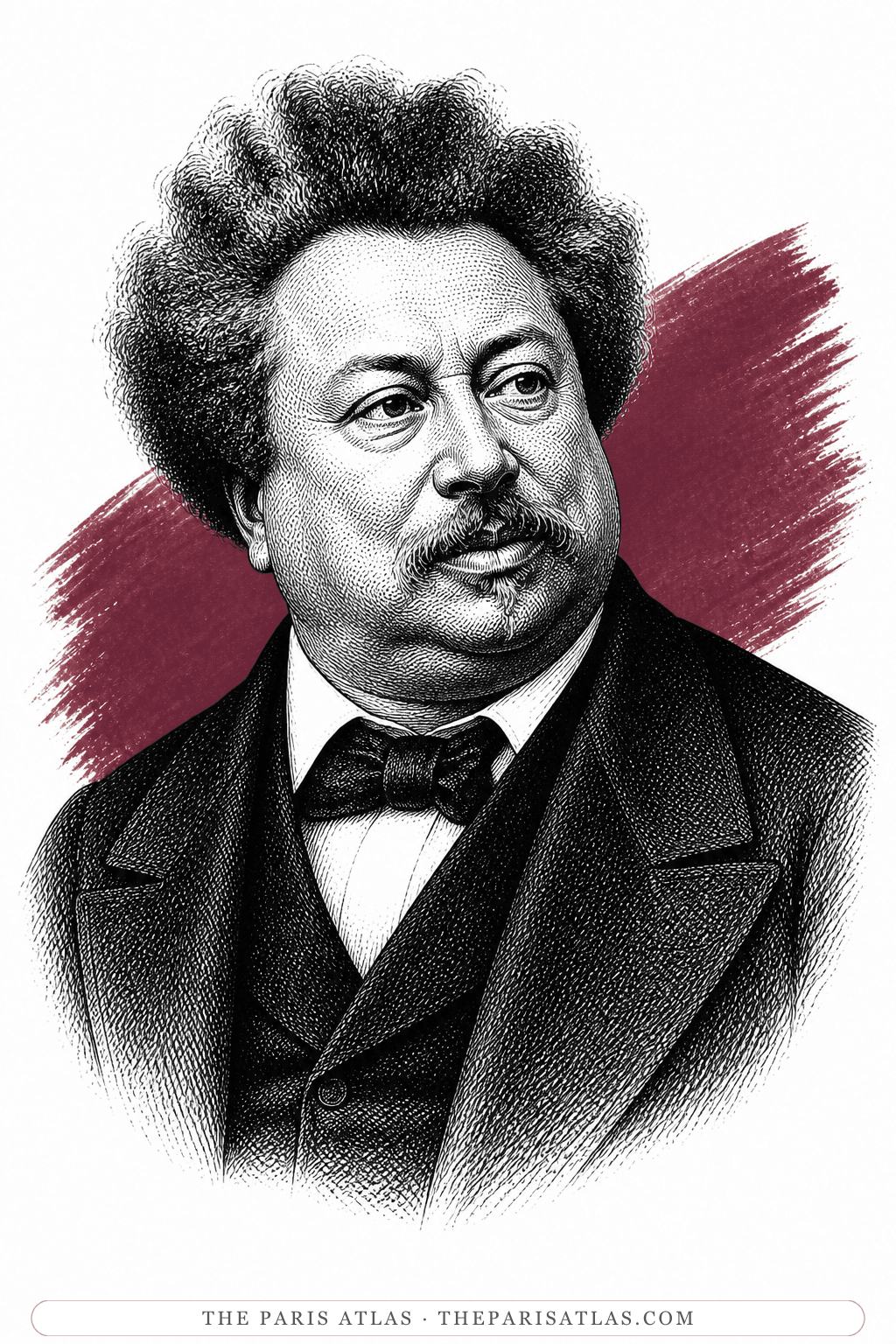
Verne came to Paris to read law and found the literary salons instead, where he met Dumas — by then the most successful writer in France. Dumas introduced him into literary circles, and Verne's first play, Les Pailles rompues, reached the stage in 1850 through him. Verne was twenty-two; the Hetzel contract that made his career was still twelve years away.
Jules Verne — littérature; Jules Verne, une vie; Jules Verne, aux frontières de l'impossible

Who drew from them

Influence running outward — the writers and artists who built on their work.

Illustrated portrait of Georges Méliès

Georges Méliès

Méliès built A Trip to the Moon on Verne's From the Earth to the Moon and its sequel, taking the cannon-launched projectile straight from the novels. Verne was fifty-three years older and still alive when the film appeared in 1902; he died three years later.

Méliès, Georges; Verne, Jules

Questions about Jules Verne

Did Jules Verne live in Paris?

Yes, for about twenty-five years. He was sent from Nantes to Paris to study law in 1846, stayed on after qualifying, worked as secretary of the Théâtre-Lyrique opera house from 1851 to 1855 and then as a stockbroker at the Paris exchange, and wrote the first of his famous novels there. He left the city in 1871 and settled in Amiens, where he died in 1905.

Did Alexandre Dumas help Jules Verne?

He did. Verne met Dumas, the author of The Three Musketeers and then the most successful writer in France, in the Paris literary salons, and Dumas introduced him into literary circles. Verne's first play, Les Pailles rompues, reached the stage in 1850 thanks to Dumas. Verne was twenty-two at the time.

Who was Jules Verne's publisher?

Pierre-Jules Hetzel, whom Verne met in 1862. Hetzel took the balloon manuscript Verne brought him, told him to rework it as a novel, published it in 1863 as Five Weeks in a Balloon, and then signed Verne to deliver at least two volumes a year. Verne kept to that contract for more than forty years. Hetzel also founded the family magazine Magasin d'éducation et de récréation with the educationist Jean Macé, where much of Verne's work appeared first, and issued the novels as large illustrated volumes in a format he used for Verne alone.

What are the Voyages extraordinaires?

The name Verne's publisher, Pierre-Jules Hetzel, gave to the series of adventure novels, which runs to sixty-two books. They take a reader to places that were unreached or unreachable: the poles, the centre of the earth, the deep ocean, the moon. The best known are Journey to the Centre of the Earth (1864), From the Earth to the Moon (1865), Twenty Thousand Leagues Under the Seas (1869–1870) and Around the World in Eighty Days (1872).

What is Paris in the Twentieth Century?

A novel Verne wrote around 1860 to 1863 about a future Paris, which his publisher Hetzel refused to publish. It follows a young man who wants to write poetry through a city given over to business and technology, with motor cars, trains pushed through tubes by compressed air, calculating machines and machines that transmit writing over distance. It ends grimly: the city freezes shut and the young man is last seen alone in a cemetery. The manuscript stayed in the family in a safe that was not opened until 1989; the book was published in French in 1994 and in Richard Howard's English translation in 1996.

Was Jules Verne's novel really found in a safe?

Yes. The manuscript of Paris au XXe siècle (Paris in the Twentieth Century) passed down through Verne's descendants inside a safe that nobody opened for generations. His great-grandson had it unlocked in 1989 and the novel was inside. It appeared in print in 1994, 131 years after Verne wrote it and 89 years after he died.

How did Jules Verne die?

Of a diabetic crisis, at Amiens on 24 March 1905, aged seventy-seven. His health had been poor for years: in 1886 his nephew Gaston shot him in the leg, leaving him lame and ending the sailing voyages he loved, and he lost the hearing in one ear in 1903. He is buried in the Madeleine cemetery at Amiens beneath a monument carved by Albert Roze.

Sourced claims

Every connection the graph holds for Jules, with the evidence behind it.

Influenced · 1902

Georges Méliès

Méliès built A Trip to the Moon on Verne's From the Earth to the Moon and its sequel, taking the cannon-launched projectile straight from the novels. Verne was fifty-three years older and still alive when the film appeared in 1902; he died three years later.

Méliès, Georges; Verne, Jules

Mentored by · 1850

Alexandre Dumas

Verne came to Paris to read law and found the literary salons instead, where he met Dumas — by then the most successful writer in France. Dumas introduced him into literary circles, and Verne's first play, Les Pailles rompues, reached the stage in 1850 through him. Verne was twenty-two; the Hetzel contract that made his career was still twelve years away.

Jules Verne — littérature; Jules Verne, une vie; Jules Verne, aux frontières de l'impossible

References

References

The sources below include biographies, scholarly essays, interviews, and primary materials that informed this page. They reflect both the historical record and ongoing critical conversations about Jules Verne and their work.

  1. 1Jules Verne, une vie

    Centre International Jules Verne, Amiens

    The Verne research centre at Amiens on the life, dates and family.

    View source
  2. 2Jules Verne, aux frontières de l'impossible

    Bibliothèque nationale de France, BnF Essentiels

    National library article on Verne, Hetzel and the Voyages extraordinaires.

    View source
  3. 3Jules Verne

    Encyclopédie Larousse

    Encyclopedia entry: works, dates, the Hetzel contract.

    View source
  1. 4Jules Verne — littérature

    Encyclopédie Larousse

    Encyclopedia literature entry: the Dumas introduction and the theatre years.

    View source
  2. 5Verne, Jules

    The Encyclopedia of Science Fiction (Clute, Langford, Sleight, eds.)

    Reference entry covering the refusal and rediscovery of Paris au XXe siècle.

    View source
  3. 6Jules Verne: The Definitive Biography

    Thunder's Mouth Press, 2006

    Standard English-language biography.

i
Why these sources are here

These references anchor the page in the documented record and in the scholarly conversations around Jules Verne. Every claim on this page traces back to one or more of the works listed here.

Explore more resources
Browse all authors