The Paris AtlasCharting the artists, works, and places worth returning to.
  • Author
  • Playwright
  • Journalist
· French · 1802–1870

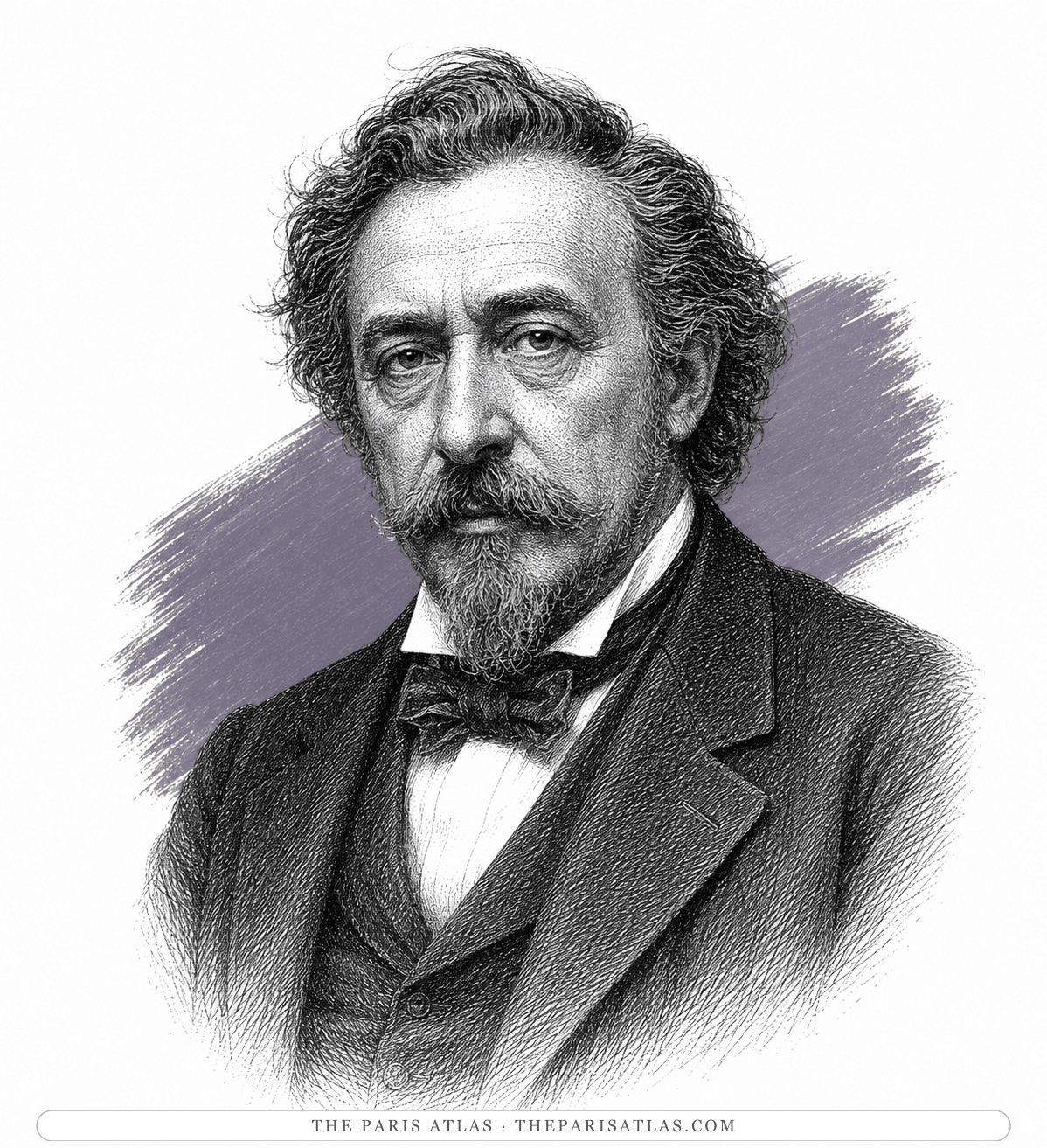
Alexandre Dumas

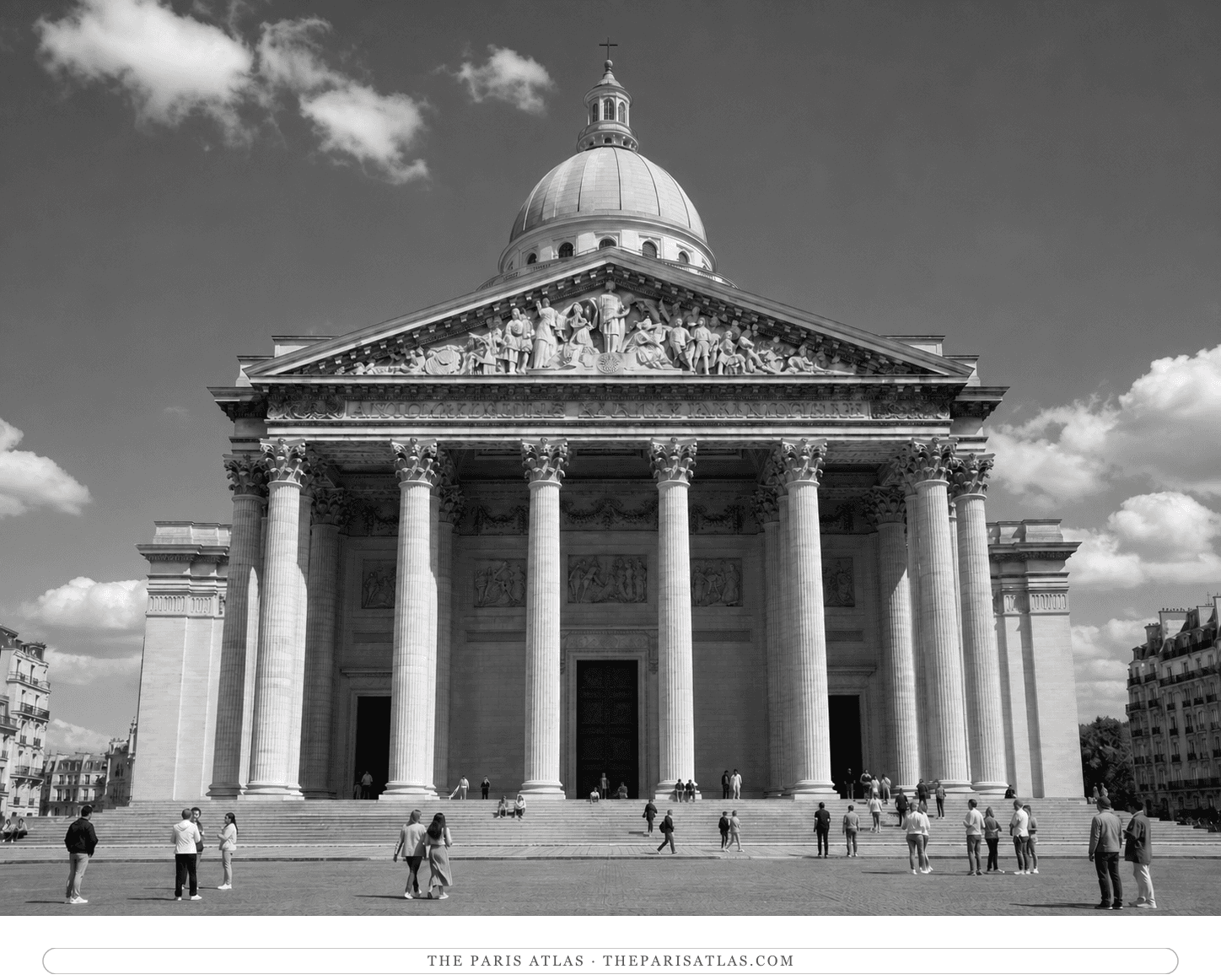
Author of The Three Musketeers and The Count of Monte Cristo, who arrived in Paris in his early twenties as a copying clerk, conquered the city's theatres at twenty-six, wrote more than three hundred volumes with a team of collaborators, built and lost a château outside Paris in under three years, and was moved into the Panthéon — the Paris monument where France buries its most honoured dead — in 2002. His father was the highest-ranking man of African descent to command in a European army.

Details

Lived
1802–1870
Born
1802
Birthplace
Villers-Cotterêts, Aisne
Died
1870
Place of death
Puys, near Dieppe
Nationality
French
Roles
AuthorPlaywrightJournalist
Also known as
Alexandre Dumas père

About Alexandre Dumas

Alexandre Dumas wrote the adventure novels that much of the world still reads first: The Three Musketeers, with its four swordsmen and its motto about all for one, and The Count of Monte Cristo, in which a man wrongly imprisoned for years escapes and spends the rest of the book taking his revenge. He was born in 1802 in Villers-Cotterêts, a small town north-east of Paris, came to the capital in his early twenties with no money and very good handwriting, and by 1829 had the biggest theatrical success in France.

The success was industrial. Dumas ran a workshop of collaborators, the most important of them a former schoolteacher named Auguste Maquet, and produced more than three hundred volumes. With the money he built a château at Port-Marly, west of Paris, held a housewarming for six hundred people in July 1847, and sold the place at a loss twenty months later with creditors at his back. He died in 1870, and in 2002 the French state moved his coffin to the Panthéon, the domed monument in Paris where the nation buries the people it honours. The life behind the adventure novels was his father's: General Thomas-Alexandre Dumas, born in a French slave colony and the highest-ranking man of African descent to lead a European army.

The general his son kept rewriting

Thomas-Alexandre Dumas was born in 1762 at Jérémie, in Saint-Domingue, the French sugar colony that is now Haiti. His father was a French nobleman, Antoine Alexandre Davy de la Pailleterie; his mother, Marie-Cessette Dumas, was a Black woman his father held in slavery. The son was brought to France and educated there, and when he enlisted in the army in 1786 as an ordinary private he did it under his mother's surname rather than his father's title. He was Dumas from then on.

The French Revolution opened the ranks to ability, and he rose through them fast. He commanded the Army of the Pyrenees in 1792 and 1793, the Army of the Alps in 1794, and the cavalry of the Army of the Orient in Egypt in 1798, and he made his name in the Tyrol, the alpine region on what is now the Austrian-Italian border. Tom Reiss, whose biography of him won the Pulitzer Prize in 2013, describes him as the highest-ranking man of African descent ever to lead a European army. In Egypt he quarrelled with Napoleon Bonaparte, and on the voyage home he was captured and held prisoner at Taranto in southern Italy. He came out with his health destroyed and died at Villers-Cotterêts in 1806, when his son was not yet four, leaving the family poor. A man of great physical courage, wrongly imprisoned for years and released ruined, is also the plot of The Count of Monte Cristo.

Paris, and the handwriting that got him in

Dumas came to Paris in his early twenties with no money and no connections, and what he had was a clear, fast hand. In 1822 he took a clerk's post copying documents for the duc d'Orléans — Louis-Philippe, the king's cousin, who would himself become king in 1830. The job paid badly and left him time, which he spent reading in his employer's library and going to the theatre almost nightly. That was the education.

The Comédie-Française, the French state theatre, accepted his historical drama Henri III et sa cour in 1828. It opened on 11 February 1829 and was a triumph on the first night. Antony followed in 1831 and La Tour de Nesle in 1832, and Dumas was, at not yet thirty, one of the two men who had broken the old rules of French drama. The other was Victor Hugo, whose Hernani opened at the same theatre a year after Henri III, in February 1830, and whose supporters had to shout the traditionalists down to get it heard.

The workshop, and Auguste Maquet

In the 1840s Dumas moved from the stage to the newspapers and into the form the Larousse dictionary defines as the roman-feuilleton: an adventure novel published in episodes in a daily paper, holding its readers by turning the plot over and over. Les Trois Mousquetaires appeared in 1844, Le Comte de Monte-Cristo across 1844 and 1845, La Reine Margot in 1845. He wrote more than three hundred volumes in his life and invented, by the tally kept at the museum now in his former house, thousands of characters.

He did not do it alone, and the arrangement is worth stating plainly because it is often described as a scandal and was not a secret. Dumas worked with collaborators, of whom the most important was Auguste Maquet, a former schoolteacher born in 1813. Maquet supplied ideas and the historical research and drafted material; Dumas then wrote the book — reshaping the material, speeding the action, cutting chapters into each other so each instalment ended where a reader would come back. The names on the covers were Dumas's. Maquet later went to court over the credit and the money, and the division of labour between the two men has been argued about ever since.

A château, and twenty months

At the peak of the money Dumas bought land on the hillside at Port-Marly, west of Paris, and hired the architect Hippolyte Durand to build what he wanted: a small Renaissance-style château facing a Gothic pavilion set in water. Sculptors covered the front with portraits of playwrights, with Dumas himself over the entrance and his motto on the pediment — "J'aime qui m'aime", "I love those who love me". On the first floor, craftsmen he had brought back from Tunis worked a salon in carved plaster arabesques. He named the estate the Château de Monte-Cristo, after his own best-selling novel, and named the little pavilion in the water the Château d'If, after the island prison the novel's hero escapes from; the titles of his books were carved on its walls and Edmond Dantès, the hero himself, on its front. He wrote in it.

The housewarming was held on 25 July 1847 in front of a crowd of friends, admirers and people who had simply come to look. By 1848 his creditors had caught up with him, and on 22 March 1849 he sold the whole estate for 31,000 gold francs, far less than it had cost to build. He left for Belgium in 1851. The château survived him, was threatened with demolition in 1969, and was saved by three neighbouring town councils acting with the Société des Amis d'Alexandre Dumas, the society of his admirers. It is a museum now, and open to visitors.

Puys, Villers-Cotterêts, and the Panthéon

Dumas kept working and kept losing money. He ran his own newspaper, Le Mousquetaire, from 1854 to 1857, and in 1860 sailed to Italy to join the general Giuseppe Garibaldi's campaign to unify that country, staying on in Naples. He married the actress Ida Ferrier, and he had two children whom he legally recognised — Alexandre, born in 1824, who became a well-known novelist and playwright in his own right, and Marie-Alexandrine, born in 1831. He died on 5 December 1870 at Puys, near Dieppe on the Normandy coast, aged sixty-eight, and was buried at Villers-Cotterêts where he was born.

He stayed in the village cemetery for 132 years. On 30 November 2002, in the bicentenary year of his birth, President Jacques Chirac had his coffin carried into the Panthéon in Paris after a national tribute — the same honour, and the same building, that had received Victor Hugo in 1885.

Life events

  1. 1762

    His father, Thomas-Alexandre Dumas, is born at Jérémie in Saint-Domingue, the colony that is now Haiti, to a French nobleman and Marie-Cessette Dumas, a Black woman held in slavery.

    Thomas Alexandre Davy de la Pailleterie, dit Dumas; Tom Reiss, The Black Count: Glory, Revolution, Betrayal, and the Real Count of Monte Cristo (2012)

  2. 1798

    General Dumas commands the cavalry of the Army of the Orient in Egypt, quarrels with Napoleon Bonaparte, and is imprisoned at Taranto on the way home.

    Thomas Alexandre Davy de la Pailleterie, dit Dumas; Tom Reiss, The Black Count: Glory, Revolution, Betrayal, and the Real Count of Monte Cristo (2012)

  3. 1802

    Alexandre Dumas is born on 24 July at Villers-Cotterêts, north-east of Paris.

    Alexandre Dumas, dit Alexandre Dumas père

  4. 1806

    His father dies at Villers-Cotterêts, health broken by the imprisonment, leaving the family poor. Dumas is not yet four.

    Alexandre Dumas; Thomas Alexandre Davy de la Pailleterie, dit Dumas

  5. 1822

    Arrives in Paris with no money and takes a clerk's post copying documents for the duc d'Orléans, the future king Louis-Philippe.

    Alexandre Dumas, dit Alexandre Dumas père; Alexandre Dumas

  6. 1829

    Henri III et sa cour opens at the Comédie-Française on 11 February and is a triumph on the first night.

    Alexandre Dumas; Alexandre Dumas, dit Alexandre Dumas père

  7. 1844

    Les Trois Mousquetaires appears, and Le Comte de Monte-Cristo begins, written with the collaborator Auguste Maquet.

    Alexandre Dumas, dit Alexandre Dumas père; Alexandre Dumas

  8. 1847

    Holds the housewarming for his new château at Port-Marly on 25 July, in front of a crowd of friends, admirers and onlookers.

    Le château

  9. 1849

    Pursued by creditors, sells the château on 22 March for 31,000 gold francs, far below what it cost to build; he leaves for Belgium two years later.

    Le château

  10. 1854

    Runs his own newspaper, Le Mousquetaire, until 1857.

    Alexandre Dumas, dit Alexandre Dumas père

  11. 1860

    Sails to Italy to join Giuseppe Garibaldi's campaign for unification, and stays on in Naples.

    Alexandre Dumas, dit Alexandre Dumas père

  12. 1870

    Dies on 5 December at Puys, near Dieppe, aged sixty-eight, and is buried at Villers-Cotterêts.

    Alexandre Dumas, dit Alexandre Dumas père; Alexandre Dumas

  13. 2002

    On 30 November, in the bicentenary year of his birth, his coffin is carried into the Panthéon after a national tribute ordered by President Jacques Chirac.

    Quelles sont les grandes figures du Panthéon ?; Alexandre Dumas

People they knew

Documented connections — every one carries its source.

Jules Verne

  • Author
  • Playwright

Mentored · 1850

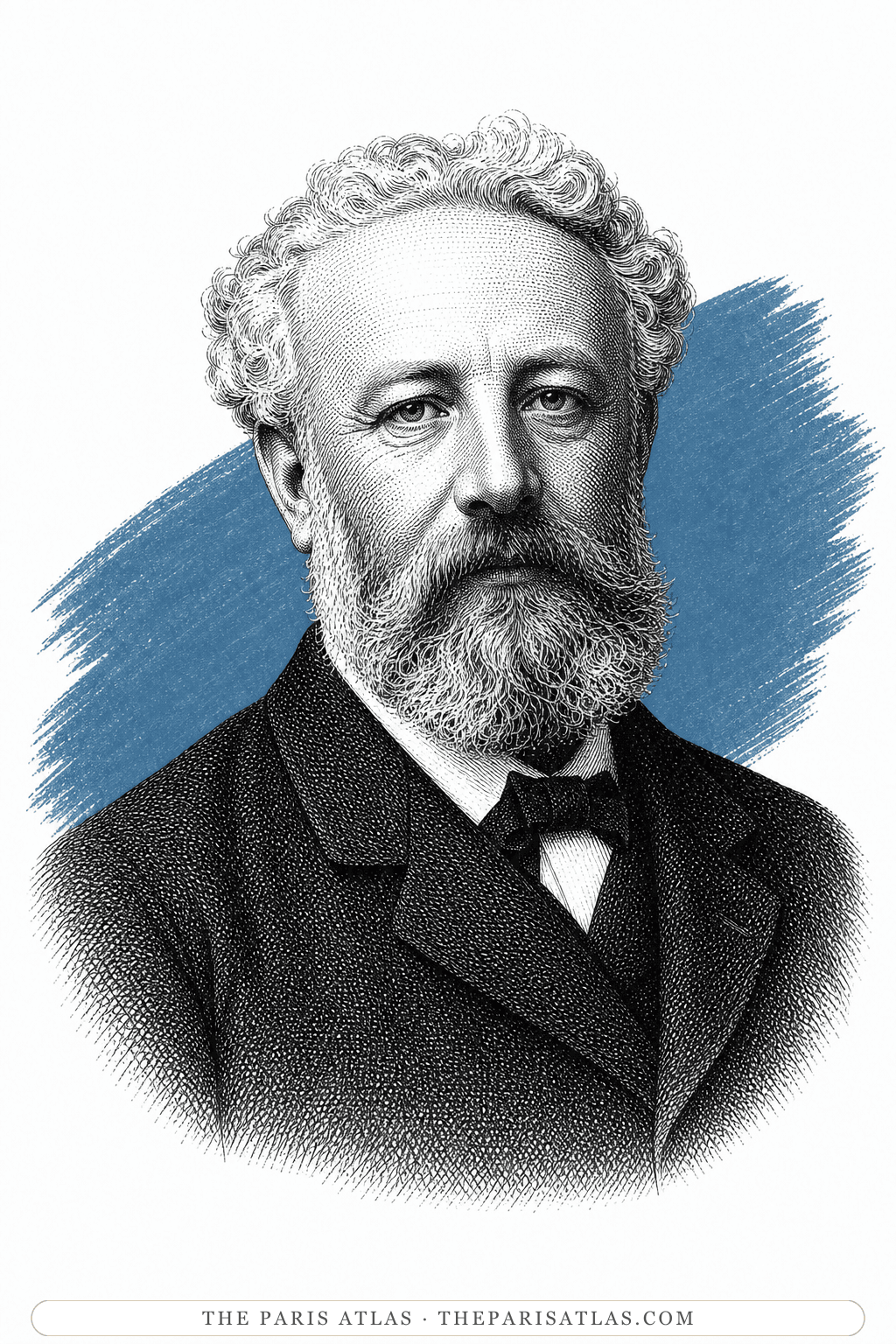
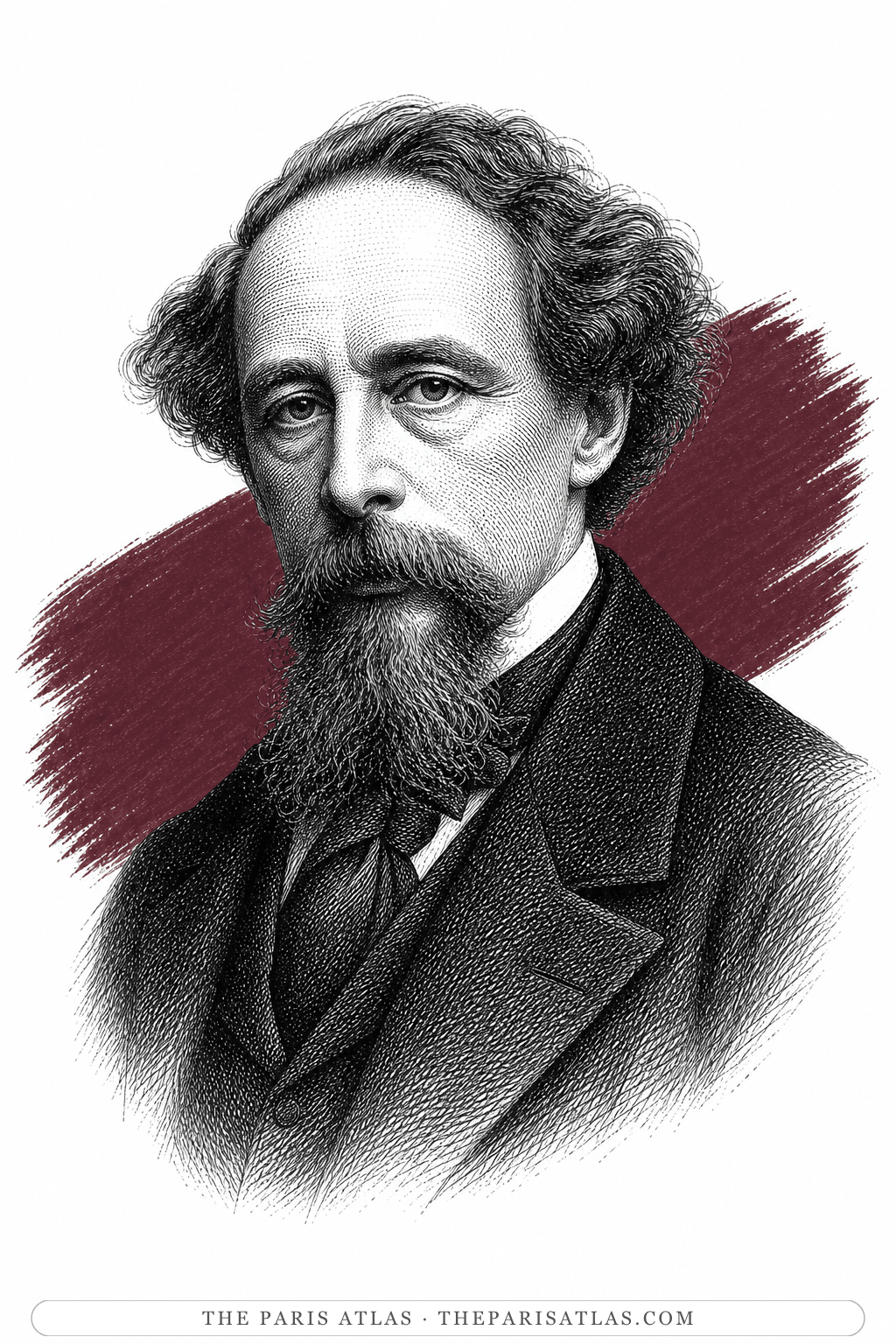
Verne came to Paris to read law and found the literary salons instead, where he met Dumas — by then the most successful writer in France. Dumas introduced him into literary circles, and Verne's first play, Les Pailles rompues, reached the stage in 1850 through him. Verne was twenty-two; the Hetzel contract that made his career was still twelve years away.
Jules Verne — littérature; Jules Verne, une vie; Jules Verne, aux frontières de l'impossible

Questions about Alexandre Dumas

Who was Alexandre Dumas?

A French novelist and playwright, born in 1802 and died in 1870, who wrote The Three Musketeers and The Count of Monte Cristo. He came to Paris in his early twenties as a copying clerk, had his first theatrical success at the Comédie-Française in 1829, and then wrote adventure novels in instalments for the daily newspapers, producing more than three hundred volumes with the help of collaborators. He is sometimes called Alexandre Dumas père — 'the father' — to distinguish him from his son of the same name, also a writer.

Was Alexandre Dumas Black?

He was of African descent through his father. General Thomas-Alexandre Dumas was born in 1762 in Saint-Domingue, the French colony that is now Haiti, to a French nobleman and Marie-Cessette Dumas, a Black woman whom that nobleman held in slavery. The general was brought to France, enlisted in 1786 under his mother's name rather than his father's title, and rose to command French armies. The general's grandson — the novelist's own son — was also named Alexandre Dumas.

Who was Alexandre Dumas's father?

General Thomas-Alexandre Dumas, one of the most senior officers of the French revolutionary armies. He commanded the Army of the Pyrenees in 1792 and 1793, the Army of the Alps in 1794, and the cavalry of the Army of the Orient in Egypt in 1798, and distinguished himself in the Tyrol. Tom Reiss's biography The Black Count, which won the Pulitzer Prize in 2013, describes him as the highest-ranking man of African descent ever to lead a European army. He quarrelled with Napoleon Bonaparte in Egypt, was imprisoned at Taranto in Italy on the way home, and died in 1806 with his health destroyed, when his son was not yet four.

Did Alexandre Dumas write his own books?

He wrote them, but he did not work alone, and this was known at the time. Dumas ran a workshop of collaborators; the most important was Auguste Maquet, a former schoolteacher born in 1813, who supplied ideas, historical research and draft material. Dumas then wrote the finished book, reshaping the material and cutting the chapters so each newspaper instalment ended on a hook. Only Dumas's name appeared on the covers. Maquet went to court over the credit and the payment, and how the work divided between them is still debated.

What is the Château de Monte-Cristo?

The house Dumas built for himself at Port-Marly, west of Paris, with the money from his novels. The architect Hippolyte Durand designed a Renaissance-style château facing a Gothic writing pavilion standing in water, which Dumas named the Château d'If after the island prison in The Count of Monte Cristo. The housewarming was on 25 July 1847. He sold the estate on 22 March 1849 for 31,000 gold francs with creditors pursuing him. It was saved from demolition in 1969 by three local town councils and the Société des Amis d'Alexandre Dumas, and is now a museum open to visitors.

Why is Alexandre Dumas in the Panthéon?

Because the French state decided in 2002 to place him among the national figures buried there. He had lain in the cemetery at Villers-Cotterêts, his birthplace, since 1870. On 30 November 2002, in the bicentenary year of his birth, President Jacques Chirac had his coffin carried into the Panthéon in Paris after a national tribute. Victor Hugo had entered the same building in 1885.

Where did Alexandre Dumas die?

At Puys, near Dieppe on the Normandy coast, on 5 December 1870, aged sixty-eight. His money had gone long before: creditors forced the sale of his château at Port-Marly in 1849, and he left France for Belgium in 1851. He was buried at Villers-Cotterêts, his birthplace, and stayed there for 132 years before the transfer to the Panthéon in 2002.

Sourced claims

Every connection the graph holds for Alexandre, with the evidence behind it.

Mentored · 1850

Jules Verne

Verne came to Paris to read law and found the literary salons instead, where he met Dumas — by then the most successful writer in France. Dumas introduced him into literary circles, and Verne's first play, Les Pailles rompues, reached the stage in 1850 through him. Verne was twenty-two; the Hetzel contract that made his career was still twelve years away.
Jules Verne — littérature; Jules Verne, une vie; Jules Verne, aux frontières de l'impossible

References

References

The sources below include biographies, scholarly essays, interviews, and primary materials that informed this page. They reflect both the historical record and ongoing critical conversations about Alexandre Dumas and their work.

  1. 1Alexandre Dumas, dit Alexandre Dumas père

    Encyclopédie Larousse

    Encyclopedia biography — the dated spine of the life.

    View source
  2. 2Roman-feuilleton — définition

    Dictionnaire de français Larousse

    The dictionary entry behind this page's gloss of the roman-feuilleton, the serial form Dumas industrialised.

    View source
  3. 3Alexandre Dumas

    Château de Monte-Cristo, Le Port-Marly

    The museum in his own house on his life and working method.

    View source
  4. 4Le château

    Château de Monte-Cristo, Le Port-Marly

    The building, the housewarming, the sale, and the 1969 rescue.

    View source
  1. 5Thomas Alexandre Davy de la Pailleterie, dit Dumas

    Encyclopédie Larousse

    Encyclopedia entry for his father, the general.

    View source
  2. 6The Black Count: Glory, Revolution, Betrayal, and the Real Count of Monte Cristo

    Crown, 2012

    Pulitzer-winning biography of General Thomas-Alexandre Dumas.

  3. 7Quelles sont les grandes figures du Panthéon ?

    Centre des monuments nationaux

    The Panthéon on the 2002 transfer.

    View source
i
Why these sources are here

These references anchor the page in the documented record and in the scholarly conversations around Alexandre Dumas. Every claim on this page traces back to one or more of the works listed here.

Explore more resources
Browse all authors