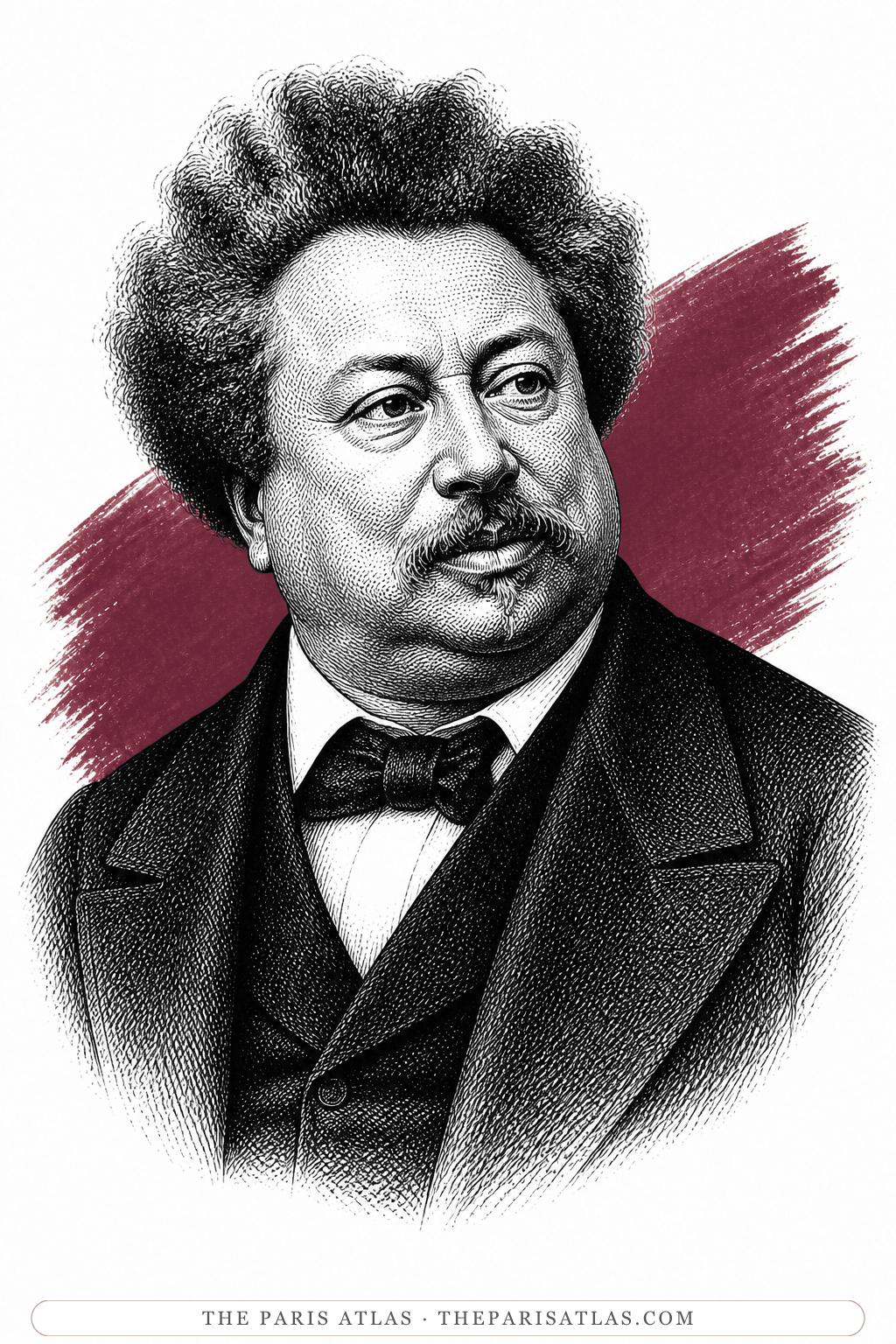
The Three Musketeers
Alexandre Dumas
The Three Musketeers
The first book, set twenty years earlier. Milady's execution at Béthune, which this novel keeps returning to, happens at its end.
Read our takeTwenty Years After
Alexandre Dumas
The four musketeers at forty, split by a civil war in Paris and reunited under a scaffold in London.
Alexandre Dumas published Twenty Years After in daily parts in the newspaper Le Siècle between January and August 1845, as the sequel to The Three Musketeers. The year is 1648. Cardinal Richelieu and Louis XIII are dead, and Cardinal Mazarin governs France for the regent Anne of Austria while Paris rises against him in the revolt called the Fronde. D'Artagnan is still a lieutenant of musketeers, twenty years on. Sent to find his three old friends, he discovers what twenty years have done. Athos is a country gentleman raising a boy named Raoul, Aramis is an abbé with a duchess for a mistress, and Porthos is rich and wants a title. Two of them serve Mazarin and two serve the rebels. The book then carries all four to England, where King Charles I is on trial for his life and where the son of the woman they executed twenty years earlier is waiting for them.[1][2]
The novel appeared in Le Siècle from 21 January to 2 August 1845 and was published the same year in Paris by Baudry in ten volumes. The catalogue of the Bibliothèque nationale de France records both facts on the entry for that first edition. Auguste Maquet, the former schoolteacher who was Dumas's chief collaborator through the 1840s, worked on it. The Larousse encyclopedia credits him with the research and preparatory drafts for the Musketeers trilogy. Project Gutenberg lists him beside Dumas on the title page of its edition. The English text most readers have met is an anonymous nineteenth-century translation in ninety chapters, which runs the French chapters together in places. The French text on the Société des Amis d'Alexandre Dumas site is divided into more than ninety.[2][3][1][4]
The history behind the plot is real. In 1648 the Paris parliament and the Paris crowd rose against Cardinal Mazarin's taxes. The arrest of the councillor Pierre Broussel brought barricades into the streets, and the regent Anne of Austria took the young Louis XIV out of the city by night to Saint-Germain. Across the Channel, the Scots handed King Charles I to the English parliament, and Oliver Cromwell's army had him tried and beheaded at Whitehall. Dumas threads the four musketeers through both crises. The duc de Beaufort, the Coadjutor Jean-François Paul de Gondi, Mazarin, Anne of Austria, Cromwell and Charles I are all real people. Mordaunt, the son of Milady de Winter, and Raoul de Bragelonne, the boy Athos is raising, are invented.[1]
Paris is the book's first setting. Mazarin plots in the Palais Royal, and d'Artagnan lodges at the Hôtel de la Chevrette in the Rue Tiquetonne. The friends meet on the Place Royale, Beaufort is held in the keep at Vincennes, and the barricades go up around the church of Saint-Eustache. A stage version followed within months: Les Mousquetaires, a five-act drama by Dumas and Maquet with a prologue set at the inn at Béthune, opened at the Théâtre de l'Ambigu-Comique on 27 October 1845.[1][5]
Cardinal Mazarin, frightened by the mood of Paris in 1648, sends d'Artagnan to bring the four musketeers back into royal service. D'Artagnan releases the Comte de Rochefort, his old enemy, from the Bastille, then rides out to find his friends. Aramis, now the Abbé d'Herblay at Noisy-le-Sec, refuses him and turns out to be the lover of the duchesse de Longueville, one of the leaders of the Fronde. Porthos, a rich widower at Pierrefonds, agrees on the promise of a barony. Athos, at the château de Bragelonne near Blois, plays the host and gives nothing away. In Paris, Athos and Aramis help the duc de Beaufort escape from the keep at Vincennes with the help of Athos's silent servant Grimaud, and the four men meet on opposite sides of the road. They swear on the Place Royale to fight the civil war without ever fighting each other.[1]
Raoul de Bragelonne, the fifteen-year-old Athos has brought up, leaves for the army. On the road he and the Comte de Guiche come across a dying man: the executioner of Béthune, who beheaded Milady de Winter twenty years before, stabbed by a monk who heard his confession. The monk is Milady's son, John Francis de Winter, called Mordaunt, now an agent of Oliver Cromwell. In Paris the crowd rises when Broussel is arrested. Barricades close the streets around Saint-Eustache and the Palais Royal, and d'Artagnan gets the queen and the boy king out of the city to Saint-Germain by driving them in the Coadjutor's own carriage. Athos and Aramis go to England to serve the captive Charles I; Mazarin sends d'Artagnan and Porthos there too, on the same ship as Mordaunt.[1]
In England the four meet again and join forces. Charles I, sold by the Scots, becomes Cromwell's prisoner, and Mordaunt kills his uncle Lord de Winter in the rout. The friends follow him to London and try every plan they have to save him from the trial and the scaffold.[1]
The rescue fails. D'Artagnan and Porthos hire themselves out as the carpenters who build the scaffold at Whitehall, and the friends spirit away the executioner, but a masked man takes the axe. Athos waits under the boards. Charles I speaks to him through a gap, tells him of a million in gold hidden at Newcastle, kneels, says the word "Remember!" and dies; the king's blood runs down onto Athos. The masked executioner was Mordaunt. At Cromwell's house d'Artagnan corners him, but he escapes through a secret door. Mordaunt then lures the four onto a felucca called the Lightning whose wine casks are packed with gunpowder. They discover the trick, slip away in the longboat, and watch the ship blow up. Mordaunt swims to them and begs for his life; Athos pulls him aboard, and Mordaunt drags him under the water. Athos surfaces alone. Mordaunt's body floats past with Athos's dagger in its chest.
Back in France, the friends fight on opposite sides at Charenton, and d'Artagnan and Porthos are arrested at Compiègne and locked up at Mazarin's château at Rueil, where Athos is soon held too. D'Artagnan and Porthos break out, catch Mazarin alone at the hidden staircase to his treasury, and hold him until he signs the treaty that ends the Fronde. The queen signs d'Artagnan's commission as captain of the musketeers and Porthos's patent as a baron. On the day the court re-enters Paris d'Artagnan kills the Comte de Rochefort in a street fight without knowing who he is. Then everyone goes home: Aramis to Noisy-le-Sec, Athos and Raoul to Bragelonne, Porthos to his barony, d'Artagnan to his new rank.
The title is the method. Dumas moves the calendar from 1628 to 1648 and lets the gap do the work a plot usually does. D'Artagnan is forty, still a lieutenant, and tells Athos in Chapter XV that he has worn his cuirass for twenty years without going forward or backward. Athos, who drank and brooded in the first book, has sobered into a father; he says in Chapter XIV that raising Raoul changed him. Aramis has a convent cell at Noisy-le-Sec with damask hangings and a duchess. Porthos has buried a rich wife and now wants the one thing money cannot buy him, a title. Each reunion in Chapters IX to XIV is a scene of a man being measured against his younger self.
The measuring is not kind. In Chapter XXVII d'Artagnan tells Porthos that civil war is not what divides the four of them; age is, and the honest feelings of youth have given way to interest, ambition and selfishness. Aramis says the same to Athos a few pages later: men are so made, and we are not always twenty years old. The meeting on the Place Royale in Chapter XXVIII is the book's answer. Athos opens it by pointing out that nobody failed to turn up. The oath they swear there is a smaller thing than the old motto, a promise not to hurt each other, and the novel spends the next sixty chapters testing whether even that will hold.
The novel came out in daily instalments in Le Siècle from 21 January to 2 August 1845, and the chapters end the way instalments have to end, on something that makes the reader buy tomorrow's paper. Chapter XXIII closes with the duc de Beaufort out of Vincennes and shouting "Free! free! free!" Chapter XXIV closes on the narrator promising that a small street accident, d'Artagnan's horse knocking down an old man who turns out to be Broussel, came near to endangering the monarchy. Chapter XLIII ends with Mordaunt on a rock above the friends' boat, shouting his threat to meet them in England.
The London chapters push the device as far as it goes. Chapter LXVI ends with Athos back in his room after the execution, seeing the king's blood on his own fingers and fainting. Chapter LXVII ends with a single word from Athos, "Fatality!", as the friends learn that the masked executioner was Mordaunt. Chapter LXXI ends with Mordaunt and Captain Groslow agreeing that this time the devil himself will not save the four men, which is the reader's cue that a trap is set and the next day's paper will spring it. Dumas also uses the endings to hand the reader information the characters do not have, so that suspense comes from waiting for the friends to catch up.
Auguste Maquet, born in Paris in 1813, was a teacher of literature when the poet Gérard de Nerval introduced him to Dumas in 1839. The Larousse encyclopedia describes him as the chief of Dumas's many collaborators. It credits him with the documentation and preparatory work for the Musketeers trilogy, the Reine Margot cycle and The Count of Monte Cristo, and for their stage adaptations. Project Gutenberg prints his name under Dumas's on the title page of Twenty Years After. The Société des Amis d'Alexandre Dumas dates the start of the collaboration to 1844 and records that in 1845, the year this novel appeared, Dumas sued the journalist Eugène de Mirecourt over a pamphlet calling the operation a novel factory. The partnership ended in 1856 after Maquet sued Dumas over money he was owed.
The collaboration produced a play almost at once. Les Mousquetaires, a drama in five acts and twelve scenes by Dumas and Maquet, opened at the Théâtre de l'Ambigu-Comique in Paris on 27 October 1845, less than three months after the serial ended. The printed text, published by Marchant the same year, opens with a prologue called L'auberge de Béthune, the inn where Milady de Winter was executed at the end of The Three Musketeers. The play therefore begins where the first novel stops and then dramatises this one. Dumas and Maquet went back to the material again in 1849 with La Jeunesse des mousquetaires at Dumas's own Théâtre-Historique.
Dumas names his Paris exactly. Mazarin sits in Cardinal Richelieu's old rooms at the Palais Royal in Chapter I and reaches the queen through a private corridor in Chapter IV. On the night patrol of Chapter II the cardinal rides past the theatre Richelieu built for his play Mirame and hears that the citizens are talking of barricades in the Rue Saint-Denis. D'Artagnan lodges in the Rue Tiquetonne at the Hôtel de la Chevrette, at the sign of the Roe, and finds Aramis's old servant Bazin working as a beadle at Notre-Dame. The four friends choose the Place Royale for their meeting in Chapter XXVIII, the square where the novel's gentlemen go to settle quarrels. The duc de Beaufort is locked in the keep at Vincennes, and the Abbé Scarron's salon is in the Rue des Tournelles.
When the city rises in Chapter XLVII the geography turns into a battle map. The Coadjutor walks at night past the crowd building barricades in the square in front of Saint-Eustache, down the Rue de la Monnaie to the river, and finds the Pont Neuf under guard. Broussel is arrested at his house in the Rue Cocatrix. In Chapter LII d'Artagnan finds the Coadjutor's carriage with its coachman asleep and uses it to drive the queen and the boy king out of the Palais Royal toward Saint-Germain. The fighting of Chapter LXXVIII happens at Charenton, just outside the walls, and the treaty is forced from Mazarin at Rueil, his château to the west. In the last chapters Aramis goes to the duchesse de Longueville at the Hôtel de Ville and the court comes home through the Rue Saint-Honoré.
’tis not civil war that disunites us. It is that we are each of us twenty years older; it is that the honest emotions of youth have given place to suggestions of interest, whispers of ambition, counsels of selfishness.
our presence here is the best proof of former friendship; not one of us has failed the others at this rendezvous; not one has, therefore, to reproach himself.
I have worn my cuirass these twenty years, kept down in this inferior rank, without going forward or backward, hardly half living. In fact, I am dead.
Dumas moves the clock twenty years and asks what the four have become: a stalled lieutenant, a father, a worldly priest, a rich man who wants a title. The reunions in the first fifteen chapters are the best character writing in the trilogy.
Athos stands beneath the boards at Whitehall while the king speaks to him through a gap. Dumas builds the rescue attempt over twelve chapters and then lets it fail, which the first novel never dared.
Milady's son has a real grievance: four men and an executioner killed his mother in secret. Dumas gives him the axe, the gunpowder ship and the last swim, and lets Athos feel pity for him at the end.
The barricades of August 1648, the Coadjutor's night walk, the flight of the queen in a borrowed carriage: the Fronde chapters are a city map of the Right Bank as it stood in the seventeenth century.
Forty years old and still a lieutenant of musketeers, sent by Mazarin to gather the friends he has not seen in twenty years.
The gravest of the four, now a country gentleman at Bragelonne raising a boy he does not call his son.
A priest with damask hangings, a duchess, and a sword he still knows how to use.
Rich, widowed, enormously strong, and unhappy for want of a barony.
Milady de Winter's son, raised in disgrace, now Cromwell's agent and the four friends' pursuer.
Richelieu's Italian successor, hated by Paris, who hires two musketeers and ends the book as their prisoner.
The fifteen-year-old Athos is raising, who leaves for the army and gives the next novel its title.
Athos's servant, silent by training for fifteen or twenty years, who gets Beaufort out of Vincennes and is the first to see Athos surface after the fight with Mordaunt.
D'Artagnan's old servant, now a Frondeur, who carries Aramis behind him on his horse and is among the men at the barricades.
Porthos's servant, grown fat and comfortable at Pierrefonds, seasick on the crossing to England and thrown into the sea by his master to save his life.
The duchess who once travelled as Marie Michon, and who recognises in Raoul the son of one night twenty years before.
The old enemy, released from the Bastille by d'Artagnan and turned Frondeur, who dies on d'Artagnan's sword in the last riot.
The real general of the parliamentary army and Mordaunt's master, from whose house the four friends chase Mordaunt after the execution.
The real Coadjutor of Paris, later Cardinal de Retz, who walks the barricades at night and whose carriage carries the queen out of Paris.
The king the four friends fail to save, who speaks his last word to Athos through the boards of the scaffold.
The queen regent, forty-six in the chapter that names her, who has forgotten the men who saved her once and needs them again.
A royal prince locked in the keep at Vincennes, whose escape by rope ladder starts the Fronde chapters.
21 January 1845
The first daily instalment appears in the Paris newspaper Le Siècle.
2 August 1845
The serial ends in Le Siècle. Baudry publishes the novel in Paris in ten volumes the same year.
1845
Dumas sues the journalist Eugène de Mirecourt over the pamphlet Fabrique de romans, which attacked his use of collaborators such as Auguste Maquet.
27 October 1845
Les Mousquetaires, a five-act drama by Dumas and Maquet with a prologue at the inn at Béthune, opens at the Théâtre de l'Ambigu-Comique in Paris.
1847–1850
Le Vicomte de Bragelonne, the sequel, runs in Le Siècle from 20 October 1847 to 12 January 1850.
17 February 1849
La Jeunesse des mousquetaires by Dumas and Maquet opens at the Théâtre-Historique, Dumas's own Paris theatre.
1856
The collaboration with Auguste Maquet ends after Maquet sues Dumas over money he is owed.
16 May 1989
The Return of the Musketeers, Richard Lester's film of the novel with Michael York, Oliver Reed and Frank Finlay, is classified for British cinemas.
2008
Oxford World's Classics issues the current edition, edited with an introduction and notes by David Coward.


The Three Musketeers
Alexandre Dumas
The first book, set twenty years earlier. Milady's execution at Béthune, which this novel keeps returning to, happens at its end.
Read our takeThe Man in the Iron Mask
Alexandre Dumas
The last part of Le Vicomte de Bragelonne, where the story of the four friends and of Raoul ends.
Read our takeThe Count of Monte Cristo
Alexandre Dumas
Dumas's other novel of 1844–46, published in daily parts at the same time, with a revenge plot that runs the opposite way to Mordaunt's.
Read our takeQueen Margot
Alexandre Dumas
The Paris of an earlier civil war, published in the same year, with the Louvre instead of the Palais Royal.
Read our take
Another novel that puts invented people at a real execution, fourteen years later and from the other side of the Channel.
Read our takeYes. Alexandre Dumas published it in 1845, a year after the first book, and it picks up d'Artagnan, Athos, Porthos and Aramis in 1648, twenty years after the events of the first novel. It is the second of three books; Le Vicomte de Bragelonne, whose last part is known in English as The Man in the Iron Mask, is the third.
No. The novel explains what it needs from the first book, including Milady de Winter's execution, which drives the villain's revenge. Reading the first book first makes the reunions and the ending land harder.
The revolt of the Paris parliament, the Paris crowd and then the great nobles against Cardinal Mazarin's government during the childhood of Louis XIV, beginning in 1648. The barricades, the arrest of Broussel and the court's flight to Saint-Germain in the novel are historical events.
Yes. The four friends go to England to try to save the king, and the execution at Whitehall is described from beneath the scaffold, where Athos is hiding. The trial and the death are historical; the rescue attempt is invented.
The son of Milady de Winter, the villainess the four friends had executed at the end of The Three Musketeers. In this novel he works for Oliver Cromwell and hunts the men who killed his mother. He is Dumas's invention.
The Oxford World's Classics edition edited by David Coward is the standard annotated text. The free Project Gutenberg text is the anonymous nineteenth-century translation, which is public domain and is the version quoted here; it runs some of the French chapters together.
No, but he did much of the research and preparatory drafting. The Larousse encyclopedia credits Maquet with the documentation for the Musketeers trilogy, Project Gutenberg lists him as co-author, and the 1845 stage version carries both names. Dumas wrote the published text, and the partnership ended in court in 1856 over money.
Richard Lester's The Return of the Musketeers (1989), with Michael York, Oliver Reed, Frank Finlay and Kim Cattrall, is the film of this novel. Most Musketeers films use only the first book.
Explore authors with a similar voice, perspective, and influence.
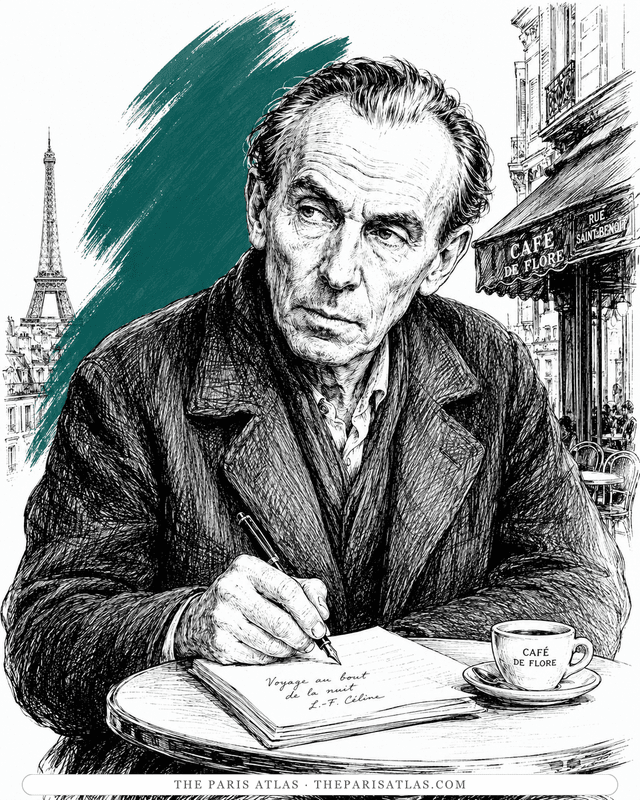
The doctor of the Paris slums who wrote the century's blackest, funniest novel — and changed the sound of French prose.
View author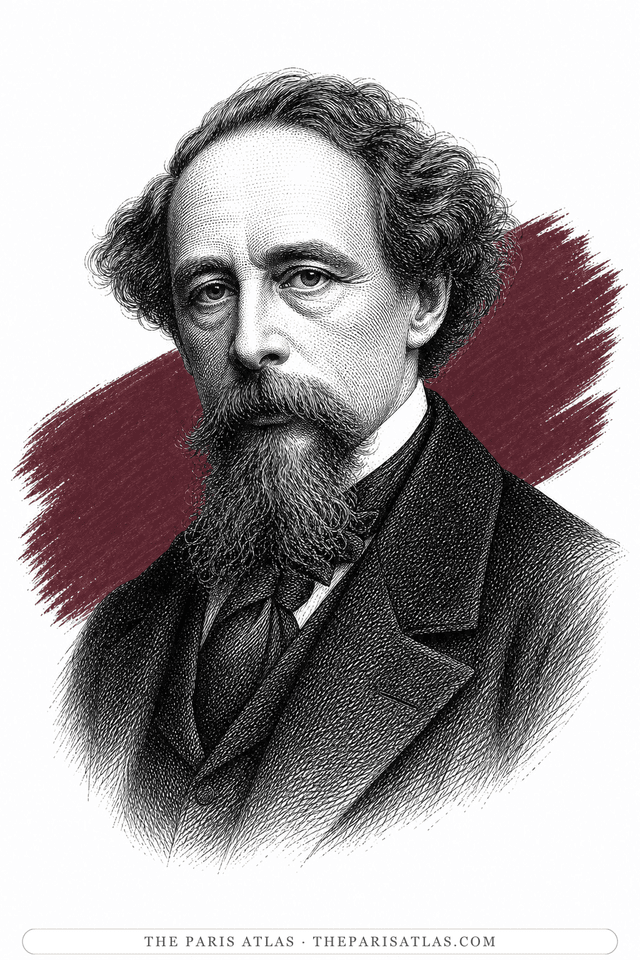
The most popular English novelist of the nineteenth century, who was never a Paris resident in the ordinary sense but kept coming back for twenty-five years: one winter in a rented mansion on the rue de Courcelles, a second winter on the Champs-Élysées writing Little Dorrit, repeated compulsive visits to the Paris Morgue — the riverside building where the city displayed its unidentified dead to the public — and a novel of the French Revolution, A Tale of Two Cities, that has shaped how English readers picture Paris ever since.
View author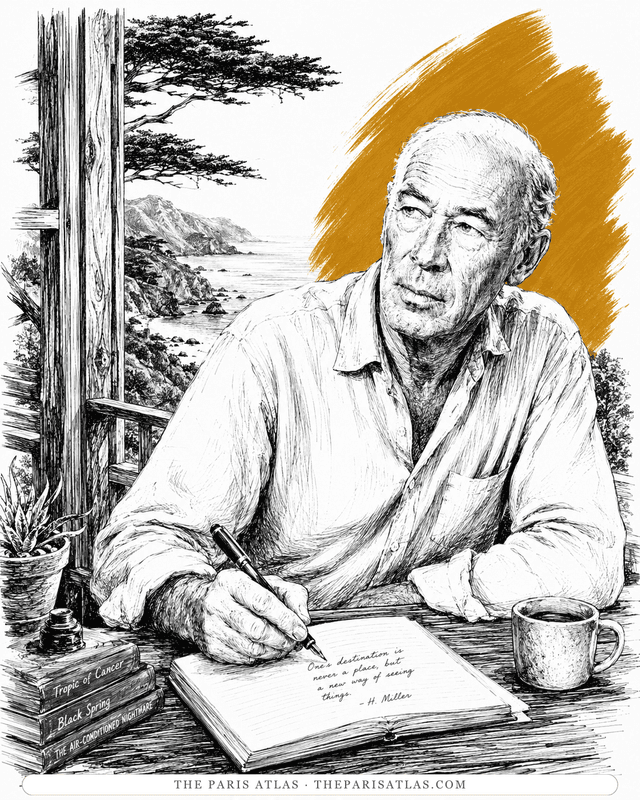
The Brooklyn dropout who arrived in Paris broke at thirty-eight and wrote the exuberant, banned books that ended American censorship.
View authorThe sources below include the primary text, editions, scholarship, archival materials, and other records that informed this page. They document Twenty Years After, its publication, and its place in literary history.

The primary text: the anonymous nineteenth-century English translation in ninety chapters. Every quotation, chapter reference and plot detail was checked against it. Chapter numbers follow this translation, not the French.
The Bibliothèque nationale de France catalogue record of the first Baudry edition, which gives the serial dates in Le Siècle (21 January to 2 August 1845) and the ten-volume book publication the same year.
The Larousse entry on Maquet: his dates, his introduction to Dumas by Gérard de Nerval in 1839, and his documentation work on the Musketeers trilogy. It also records the end of the collaboration in 1856 after his lawsuit over money.
The French text and its chapter list, used to confirm that the English translation runs French chapters together and to check the French chapter titles.
The BnF record of the printed play by Dumas and Maquet, giving its five acts, its prologue at the inn at Béthune, the publisher Marchant and the first performance at the Théâtre de l'Ambigu-Comique on 27 October 1845.
The Société des Amis d'Alexandre Dumas chronology, for the start of the Maquet collaboration in 1844 and the 1845 lawsuit against Eugène de Mirecourt over his pamphlet on the novel factory.
The Larousse entry on Dumas, for the outline of his career in the 1840s.
A BnF catalogue record for a 1988 omnibus of the four novels, whose notes give the serial dates of Le Vicomte de Bragelonne in Le Siècle (20 October 1847 to 12 January 1850).
The BnF record of the printed play La Jeunesse des mousquetaires by Dumas and Maquet, with its first performance at the Théâtre-Historique on 17 February 1849.
Open Library edition record for the Oxford World's Classics text, edited by David Coward: ISBN, 2008 date and 845 pages. The record does not name the translator.
The British Board of Film Classification record of Richard Lester's 1989 film: director, production year, principal cast and the cinema classification date of 16 May 1989.
The primary text represented by this page, used for descriptions of the work’s contents and for any quoted passages shown here.
The primary text is the baseline reference for every book page. Additional references document publication history, interpretation, and historical context where that evidence is available.
 Explore more resources