D'Artagnan
Forty years old and still a lieutenant of musketeers, sent by Mazarin to gather the friends he has not seen in twenty years.
A captain's commission after twenty years as a lieutenant, and his three friends back at his side to earn it with.
The book
Twenty Years After
Alexandre Dumas
At a glance
- Lieutenant of the king's musketeers, later captain
- Forty, in the chapter titled for it
- The Hôtel de la Chevrette, Rue Tiquetonne, at the sign of the Roe
- Cardinal Mazarin, with Porthos
Who they are in the book
Spoiler-freeD'Artagnan opens the book as the man the first novel left him: a lieutenant in the king's musketeers whose career stopped moving in 1628. He lodges cheaply at the Hôtel de la Chevrette in the Rue Tiquetonne, with a landlady who is fond of him. Cardinal Mazarin, needing men he can trust while Paris turns against him, hears his name from the queen and sends for him. D'Artagnan takes the commission, takes the cardinal's money, and takes note that this Italian is not Richelieu.
He spends the first part of the book riding across France to find Athos, Porthos and Aramis. He spends the rest of it inventing the plans that keep the four of them alive. The borrowed carriage that gets the queen out of Paris is his idea, and so are the carpenters' disguise at Whitehall, the escape from Rueil and the capture of Mazarin in his own treasury. He wants a captaincy and says so plainly, and by the last chapter he has it.
How D'Artagnan Is Portrayed
- Twenty years in the same rankIn Chapter XV he tells Athos he has worn his cuirass for twenty years, kept down in an inferior rank, going neither forward nor backward, hardly half living. His words are: in fact, I am dead.
- The Bastille errandIn Chapter III Mazarin sends him to the Bastille to collect a prisoner. The prisoner turns out to be the Comte de Rochefort, the old enemy of the first book, and the two men ride back through Paris in the same carriage.
- The landlady and the SwissIn Chapter VI a six-foot Swiss has moved into his room. D'Artagnan, in a grey cloak and barely five feet tall, takes him out to fight at night, wounds him twice, and comes back to the Rue Tiquetonne to his chamber and his hostess.
- Driving the Coadjutor's carriageIn Chapter LII he finds the Coadjutor's own carriage at a door with the coachman asleep on the box, takes the reins, and drives the queen and the boy king out of the Palais Royal through the barricaded city.
- Carpenter at WhitehallIn Chapter LXIV he and Porthos present themselves with an axe, a hammer and nails as the workmen hired to build the king's scaffold, on the strength of a letter from the executioner's assistant.
- Threat and penIn Chapter LXXXV he and Porthos break into Mazarin's private stair at Rueil and catch the cardinal at his treasury. Chapter LXXXVIII is titled for what follows: more is done with a threat and a pen than with a sword, and the queen signs his commission.
D'Artagnan quotes
’tis not civil war that disunites us. It is that we are each of us twenty years older; it is that the honest emotions of youth have given place to suggestions of interest, whispers of ambition, counsels of selfishness.
I have worn my cuirass these twenty years, kept down in this inferior rank, without going forward or backward, hardly half living. In fact, I am dead.
He gets the captaincy in Chapter LXXXVIII, after holding Mazarin prisoner until the queen signs. On the day the court re-enters Paris in Chapter LXXXIX he runs his sword through the leader of a street attack on the royal coach. Only then does he see that the man is the Comte de Rochefort, whom he had freed from the Bastille at the start of the book and called a friend. Rochefort dies holding his hand.
If you like Twenty Years After


If you like Alexandre Dumas
Explore authors with a similar voice, perspective, and influence.
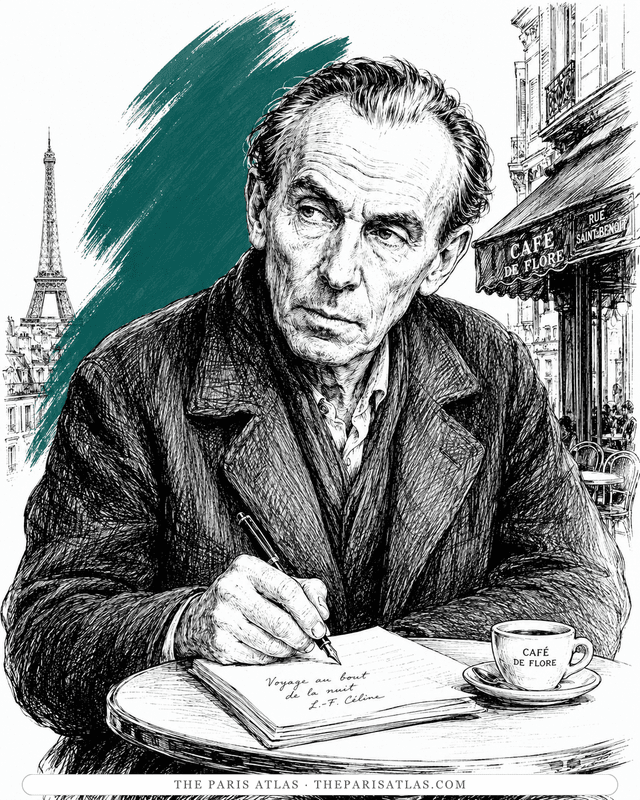
Louis-Ferdinand Céline
The doctor of the Paris slums who wrote the century's blackest, funniest novel — and changed the sound of French prose.
View author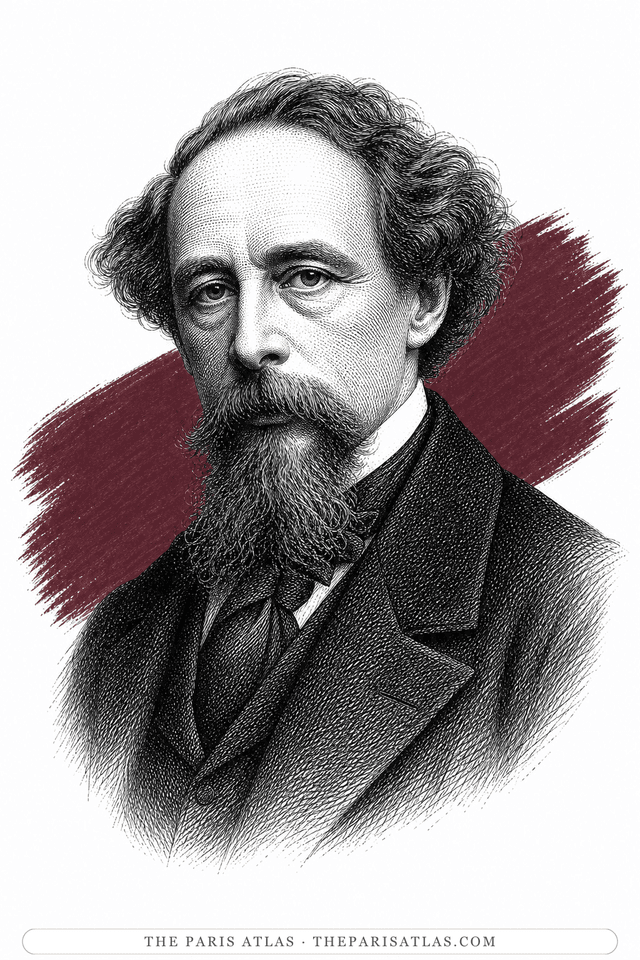
Charles Dickens
The most popular English novelist of the nineteenth century, who was never a Paris resident in the ordinary sense but kept coming back for twenty-five years: one winter in a rented mansion on the rue de Courcelles, a second winter on the Champs-Élysées writing Little Dorrit, repeated compulsive visits to the Paris Morgue — the riverside building where the city displayed its unidentified dead to the public — and a novel of the French Revolution, A Tale of Two Cities, that has shaped how English readers picture Paris ever since.
View author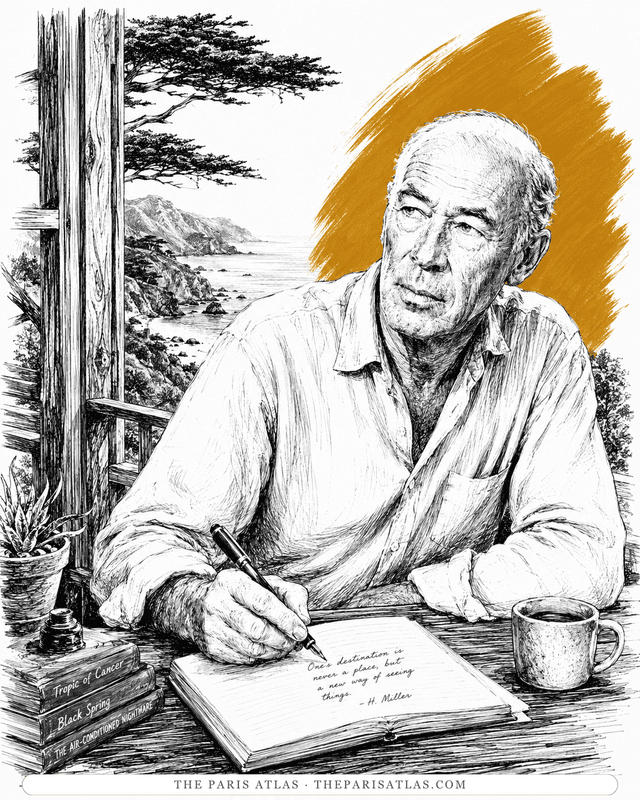
Henry Miller
The Brooklyn dropout who arrived in Paris broke at thirty-eight and wrote the exuberant, banned books that ended American censorship.
View author