Cardinal Mazarin
Richelieu's Italian successor, hated by Paris, who hires two musketeers and ends the book as their prisoner.
To keep power without spending money or blood, and to be obeyed the way Richelieu was.
The book
Twenty Years After
Alexandre Dumas
At a glance
- First minister of France for the regent Anne of Austria
- The Palais Royal; later Saint-Germain and his château at Rueil
- Jules Mazarin, 1602–1661
Who they are in the book
Spoiler-freeJules Mazarin, the real first minister of France during the regency of Anne of Austria, opens the novel sitting in Richelieu's old rooms at the Palais Royal and knowing that he is not Richelieu. The crowd shouts against him in the streets, the parliament defies him, and the great nobles despise him. Dumas draws him as clever, frightened, mean with money and shameless about it.
He hires d'Artagnan and Porthos with promises he intends to keep as late as possible. He survives the barricades, flees Paris with the queen, and rules from Saint-Germain and Rueil until d'Artagnan and Porthos corner him at his treasury and make him sign the peace.
How Cardinal Mazarin Is Portrayed
- Richelieu's shadeChapter I is titled for it: the shade of Cardinal Richelieu still lingers in the room, and the narrator says plainly that the shade was Mazarin, alone and defenceless and well aware of it.
- A cheat at cardsIn Chapter IV the narrator reports, on the authority of the memoirist Brienne, that Mazarin cheated at the card table and called it using his advantages. He decides not to begin his game with d'Artagnan until he knows all the Gascon's cards.
- The private corridorIn the same chapter he goes to the queen by the corridor that joins his apartments to hers in the Palais Royal, and the narrator marks it with a footnote as a real feature of the palace.
- Gascons and ItaliansIn Chapter V, bargaining with d'Artagnan over the cost of a journey, he says, laughing, that these Gascons almost beat the Italians in effrontery.
- Mazarin as kingIn Chapter LXXXI, with the queen at Saint-Germain and Paris in arms, he offers his resignation in a speech designed to be refused. The queen says nothing of it and orders the peace conferences to open at Rueil.
- Caught at the orange treeIn Chapter LXXXV d'Artagnan notices an orange tree in a tub pushed out of its place and finds beneath it the staircase to the cardinal's treasury. Mazarin is taken there, among his gold.
In Chapter LXXXVII he signs the treaty ending the Fronde with d'Artagnan and Porthos standing over him, and in Chapter LXXXVIII he tries to divide the four friends by warning each against the others, and fails. He rides back into Paris between d'Artagnan and Porthos in Chapter LXXXIX, still minister.
If you like Twenty Years After


If you like Alexandre Dumas
Explore authors with a similar voice, perspective, and influence.

Louis-Ferdinand Céline
The doctor of the Paris slums who wrote the century's blackest, funniest novel — and changed the sound of French prose.
View author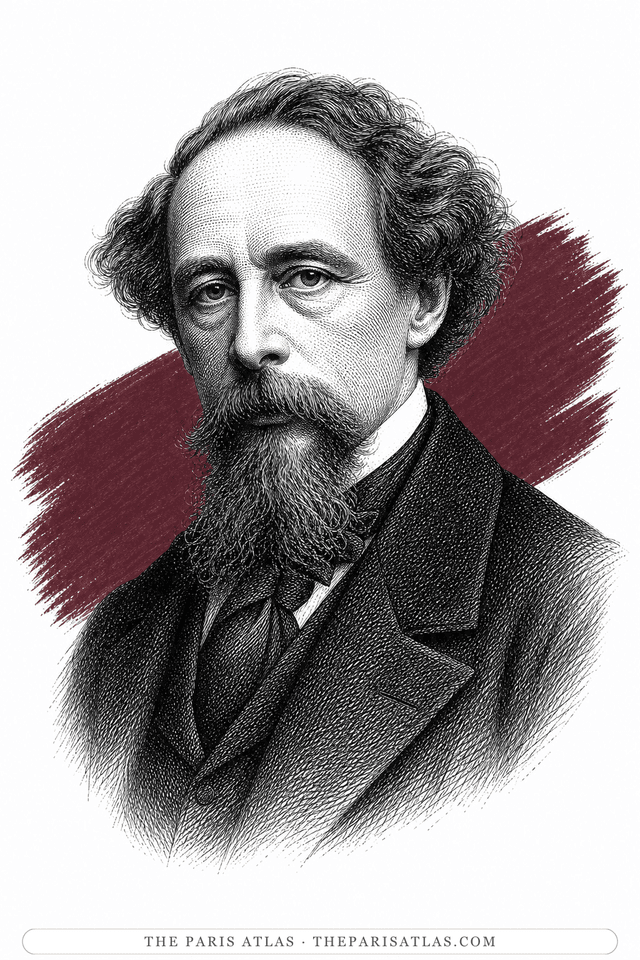
Charles Dickens
The most popular English novelist of the nineteenth century, who was never a Paris resident in the ordinary sense but kept coming back for twenty-five years: one winter in a rented mansion on the rue de Courcelles, a second winter on the Champs-Élysées writing Little Dorrit, repeated compulsive visits to the Paris Morgue — the riverside building where the city displayed its unidentified dead to the public — and a novel of the French Revolution, A Tale of Two Cities, that has shaped how English readers picture Paris ever since.
View author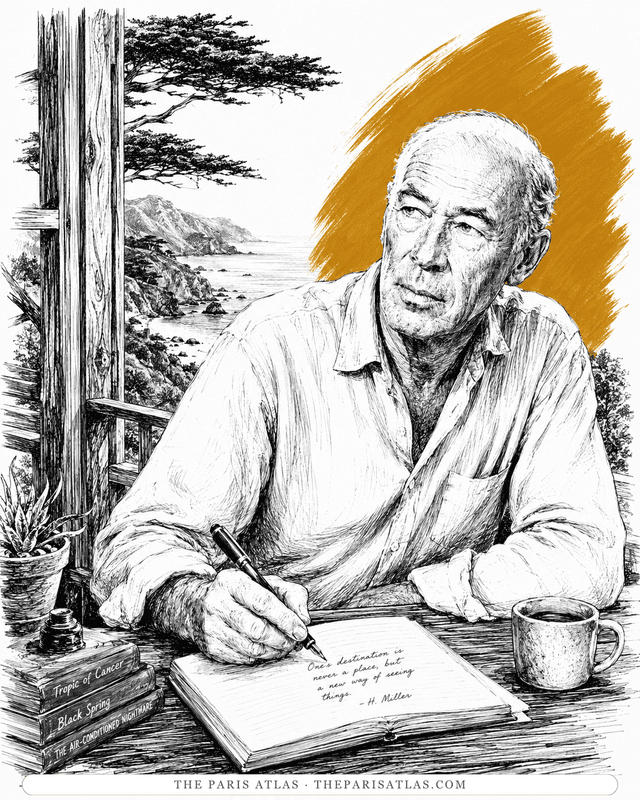
Henry Miller
The Brooklyn dropout who arrived in Paris broke at thirty-eight and wrote the exuberant, banned books that ended American censorship.
View author