Athos, the Comte de La Fère
The gravest of the four, now a country gentleman at Bragelonne raising a boy he does not call his son.
To make Raoul an accomplished gentleman, and to serve a cause he can call honourable.
The book
Twenty Years After
Alexandre Dumas
At a glance
- The Comte de La Fère, of the château de Bragelonne near Blois
- Raoul, his ward, and Grimaud, his servant who barely speaks
- The Fronde, with Aramis; then Charles I in England
Who they are in the book
Spoiler-freeAthos has left the musketeers and lives on his estate near Blois as the Comte de La Fère. When d'Artagnan finds him in Chapters XIII and XIV he is sober, calm and barely aged, and he explains the change in one word: Raoul, the boy of fifteen he has brought up. He receives d'Artagnan as a friend, listens to the cardinal's offer, and turns it down without saying so.
He has chosen the other side. With Aramis he helps the duc de Beaufort escape from Vincennes, and in England he serves Charles I because a king in trouble is a cause he can respect. The execution at Whitehall, which he hears from beneath the scaffold, is the centre of the book, and his fight with Mordaunt in the sea is its end.
How Athos, the Comte de La Fère Is Portrayed
- What Raoul changedIn Chapter XIV he tells d'Artagnan that he was dried up like a withered tree, attached to nothing, and that Raoul worked the change his friend can see in him.
- Marie MichonIn Chapter XX he brings Raoul to Madame de Chevreuse, who once travelled as a needlewoman from Tours called Marie Michon. She and Athos recognise each other as the boy's parents without saying it aloud.
- The cathedral at Saint-DenisIn Chapter XXII he furbishes a sword for Raoul, gives him his counsel on how a gentleman should live, and after the boy rides off goes into the cathedral to kneel and pray in its darkest corner.
- Up, sire!In Chapter LVI Charles I has just learned that the Scots have betrayed him. Athos tells the king that this is no time for recrimination but a time to show himself a king and a gentleman, and that three men at least will not betray him.
- Under the scaffoldIn Chapter LXVI he stands beneath the boards at Whitehall while the king kneels and speaks to him in French through a gap. The axe falls on the word "Remember!" and the king's blood runs down onto his brow.
- The dagger in the seaIn Chapter LXXIII Mordaunt drags him under the water. Athos comes up alone and Mordaunt floats past with a gold-hilted dagger in his chest. Asked why, Athos says only that he has a son and wished to live.
Athos, the Comte de La Fère quotes
our presence here is the best proof of former friendship; not one of us has failed the others at this rendezvous; not one has, therefore, to reproach himself.
this is not a moment for recrimination, but a time to show yourself a king and a gentleman. Up, sire! up! for you have here at least three men who will not betray you.
I have a son. I wished to live
Athos survives the book and returns to Bragelonne with Raoul in Chapter XC, telling d'Artagnan that he is nothing more than a plain country gentleman now. The million in gold Charles I described to him under the scaffold, buried at Newcastle for the king's eldest son, is a thread the next novel picks up.
If you like Twenty Years After


If you like Alexandre Dumas
Explore authors with a similar voice, perspective, and influence.
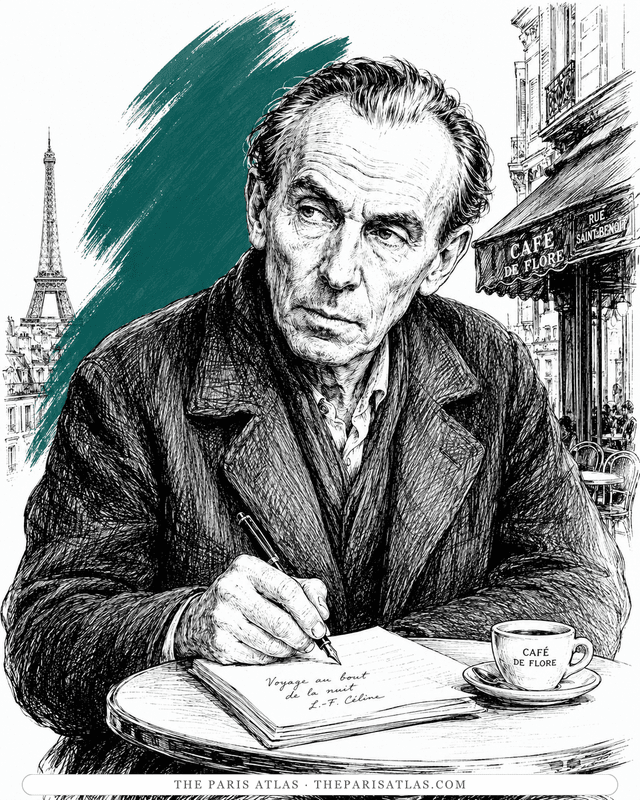
Louis-Ferdinand Céline
The doctor of the Paris slums who wrote the century's blackest, funniest novel — and changed the sound of French prose.
View author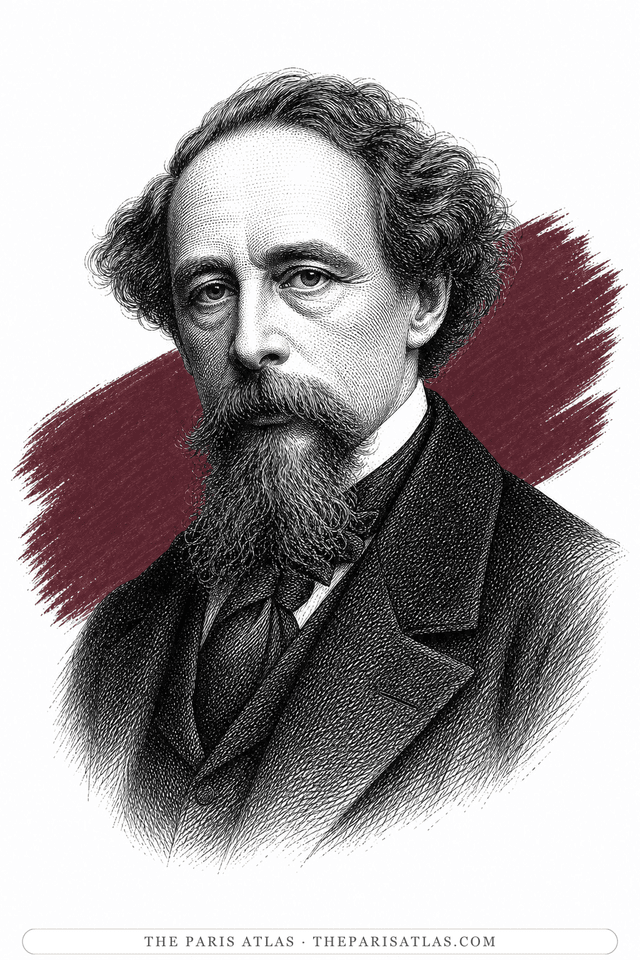
Charles Dickens
The most popular English novelist of the nineteenth century, who was never a Paris resident in the ordinary sense but kept coming back for twenty-five years: one winter in a rented mansion on the rue de Courcelles, a second winter on the Champs-Élysées writing Little Dorrit, repeated compulsive visits to the Paris Morgue — the riverside building where the city displayed its unidentified dead to the public — and a novel of the French Revolution, A Tale of Two Cities, that has shaped how English readers picture Paris ever since.
View author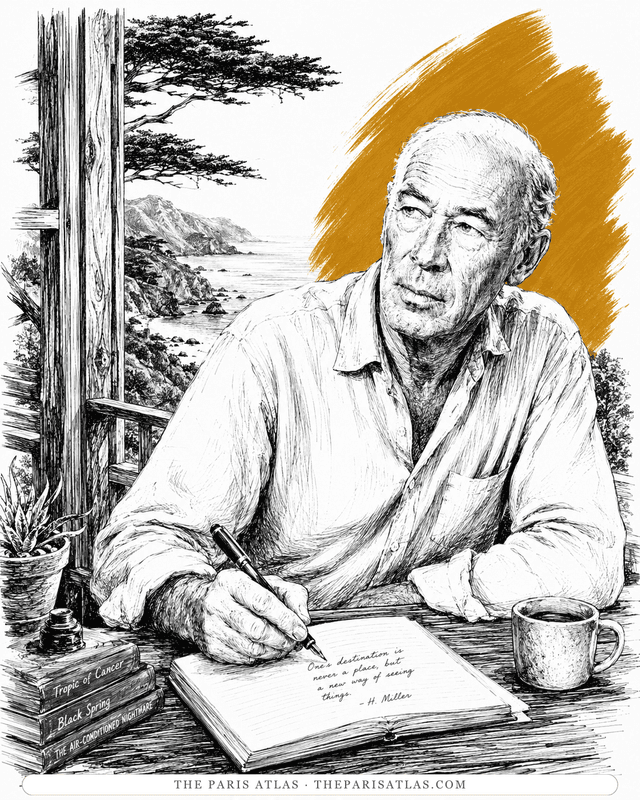
Henry Miller
The Brooklyn dropout who arrived in Paris broke at thirty-eight and wrote the exuberant, banned books that ended American censorship.
View author