Charles I of England
The king the four friends fail to save, who speaks his last word to Athos through the boards of the scaffold.
The book
Twenty Years After
Alexandre Dumas
At a glance
- King of England, prisoner of the Scots and then of Cromwell
- Charles I, 1600–1649
Who they are in the book
Spoiler-freeCharles Stuart is the real king of England, in the novel already beaten in the field and in the hands of the Scots army when Athos and Aramis reach him. Dumas makes him dignified, unlucky and stubborn, a man who refuses to run because he has fought too long, and who meets his death with more composure than anyone around him.
How Charles I of England Is Portrayed
- Sold by the ScotsIn Chapter LV he tells his new French officers that the Scots, among whom he was born, have sold him to Parliament, and that the shame of a treble treason will fall on their heads.
- Cromwell's prisonerChapter LVI ends with couriers riding across England and Europe to announce that Charles Stuart is the prisoner of Oliver Cromwell.
- The scaffold outside the windowIn Chapter LXV he is woken at Whitehall by hammering and learns from his servant Parry that the scaffold is being built level with his window.
- Remember!In Chapter LXVI he tells the executioner to strike only when he says the word, speaks through the boards to Athos about a million in gold at Newcastle, and calls out "Remember!" as the axe falls.
Charles I of England quotes
this is not a moment for recrimination, but a time to show yourself a king and a gentleman. Up, sire! up! for you have here at least three men who will not betray you.
I leave you to brave the tempest; I go before you to a kingdom which knows no storms. Farewell.
He is beheaded at Whitehall in Chapter LXVI. The masked man who takes the axe is Mordaunt; the four friends had already spirited away the real executioner.
If you like Twenty Years After


If you like Alexandre Dumas
Explore authors with a similar voice, perspective, and influence.
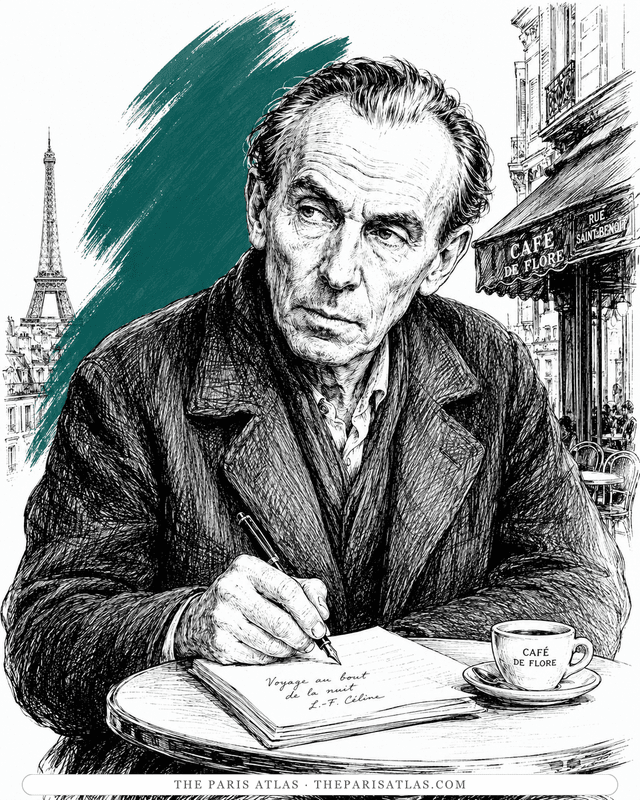
Louis-Ferdinand Céline
The doctor of the Paris slums who wrote the century's blackest, funniest novel — and changed the sound of French prose.
View author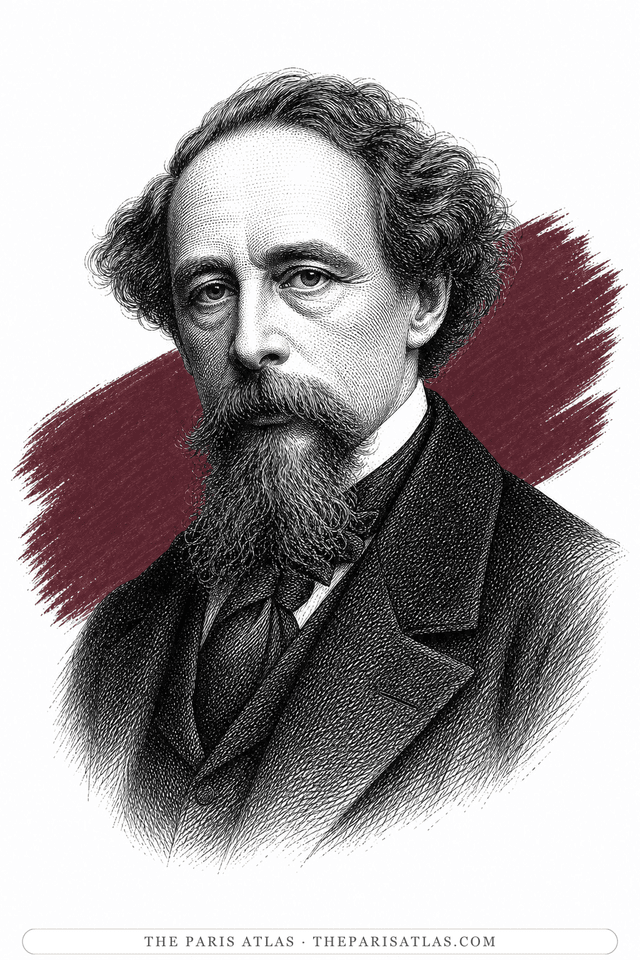
Charles Dickens
The most popular English novelist of the nineteenth century, who was never a Paris resident in the ordinary sense but kept coming back for twenty-five years: one winter in a rented mansion on the rue de Courcelles, a second winter on the Champs-Élysées writing Little Dorrit, repeated compulsive visits to the Paris Morgue — the riverside building where the city displayed its unidentified dead to the public — and a novel of the French Revolution, A Tale of Two Cities, that has shaped how English readers picture Paris ever since.
View author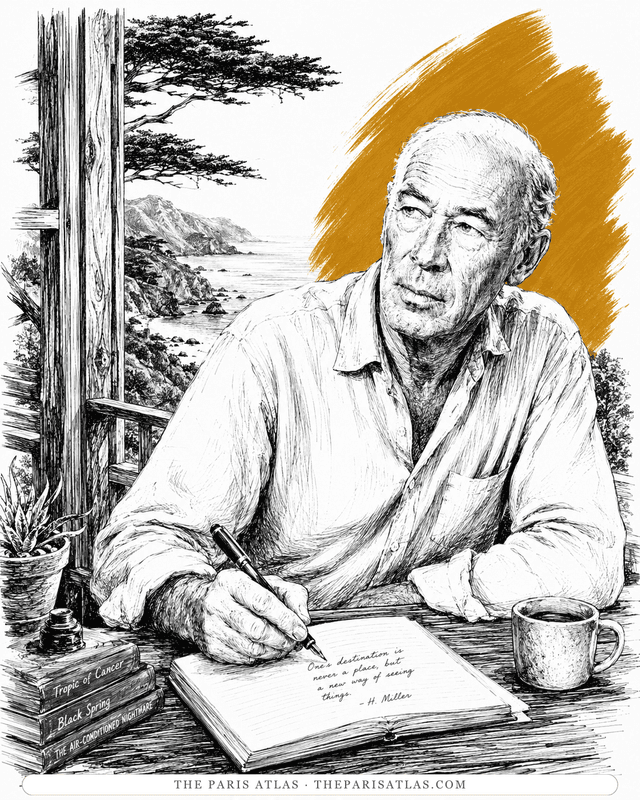
Henry Miller
The Brooklyn dropout who arrived in Paris broke at thirty-eight and wrote the exuberant, banned books that ended American censorship.
View author