The duc de Beaufort
A royal prince locked in the keep at Vincennes, whose escape by rope ladder starts the Fronde chapters.
The book
Twenty Years After
Alexandre Dumas
At a glance
- A prince of the blood, prisoner at Vincennes, then a leader of the Fronde
- François de Vendôme, duc de Beaufort, 1616–1669
Who they are in the book
Spoiler-freeFrançois de Vendôme, duc de Beaufort, a grandson of Henri IV and a real leader of the Fronde, has been held in the keep at Vincennes for five years when the novel opens. Dumas plays him as a brave man of no learning, popular with the Paris crowd, whose escape is engineered by Athos and Aramis through Grimaud.
How The duc de Beaufort Is Portrayed
- Portraits in charcoalIn Chapter XVII, having failed at poetry, he draws portraits of Cardinal Mazarin on the walls of his cell with a piece of coal.
- Grimaud as gaolerIn Chapter XVIII he takes Grimaud, placed among his guards, for an enemy, and comes to trust him only when he understands that the man's stupidity is a blind.
- Forty methods of escapeChapter XXIII is titled for one of the forty methods he claims to have of getting out. The method is a rope ladder, a pie, and two horses waiting beyond the moat.
- Free!The same chapter ends with him outside the walls, shouting the word three times.
If you like Twenty Years After


If you like Alexandre Dumas
Explore authors with a similar voice, perspective, and influence.
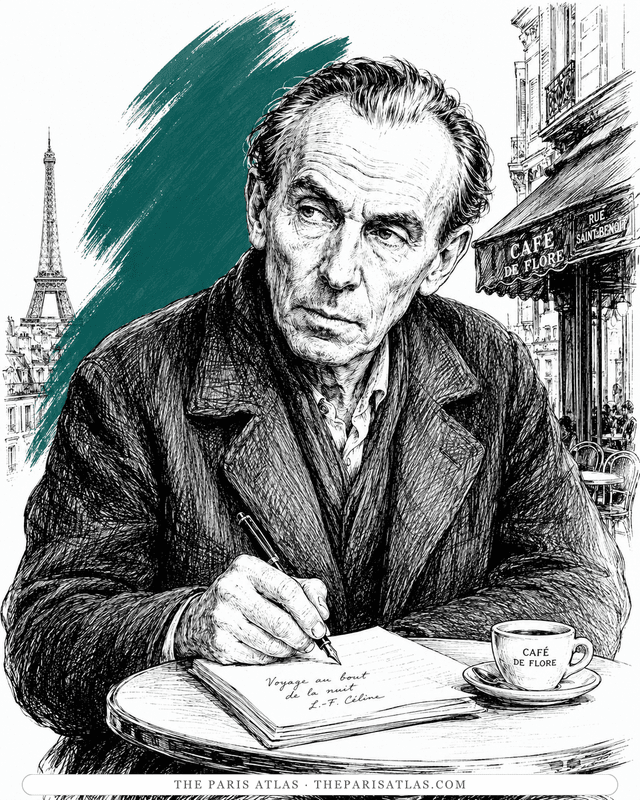
Louis-Ferdinand Céline
The doctor of the Paris slums who wrote the century's blackest, funniest novel — and changed the sound of French prose.
View author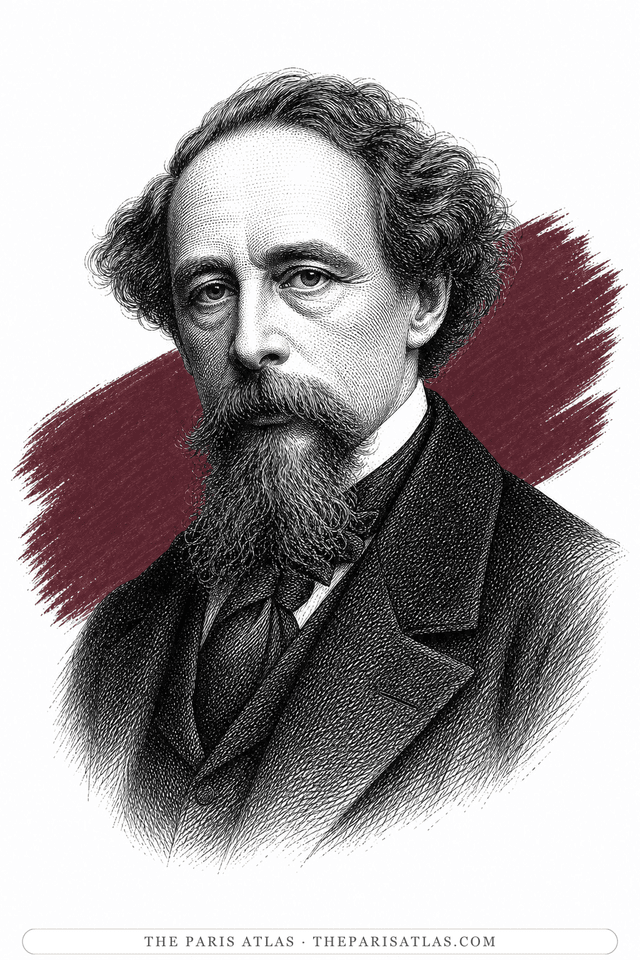
Charles Dickens
The most popular English novelist of the nineteenth century, who was never a Paris resident in the ordinary sense but kept coming back for twenty-five years: one winter in a rented mansion on the rue de Courcelles, a second winter on the Champs-Élysées writing Little Dorrit, repeated compulsive visits to the Paris Morgue — the riverside building where the city displayed its unidentified dead to the public — and a novel of the French Revolution, A Tale of Two Cities, that has shaped how English readers picture Paris ever since.
View author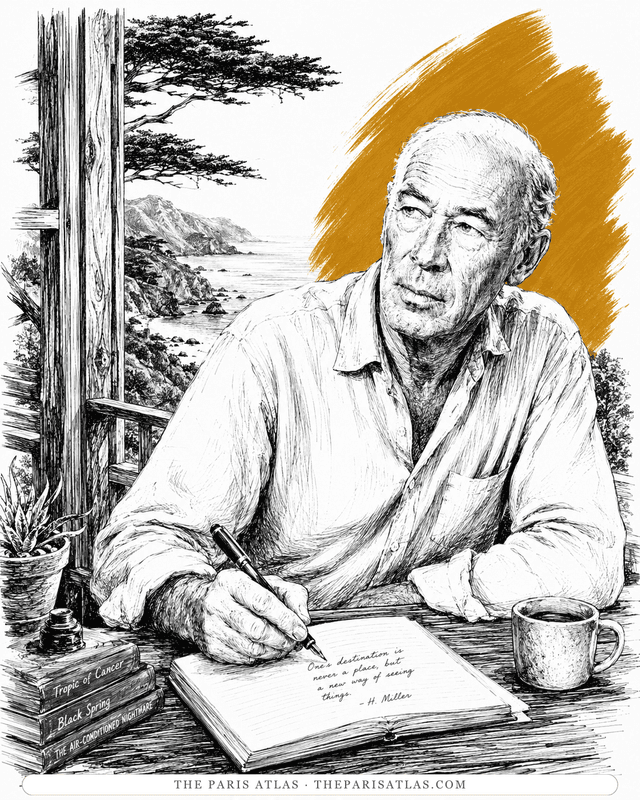
Henry Miller
The Brooklyn dropout who arrived in Paris broke at thirty-eight and wrote the exuberant, banned books that ended American censorship.
View author