Aramis, the Abbé d'Herblay
A priest with damask hangings, a duchess, and a sword he still knows how to use.
To keep a foot in the church, the court and the bedroom at once, and to be on the winning side when the Fronde ends.
The book
Twenty Years After
Alexandre Dumas
At a glance
- The Abbé d'Herblay, at a convent in Noisy-le-Sec
- The duchesse de Longueville, a leader of the Fronde
- Bazin, later a beadle at Notre-Dame
Who they are in the book
Spoiler-freeAramis has taken orders and lives at a convent in Noisy-le-Sec under the name of the Abbé d'Herblay, where the rule is severe after nine at night and his room has hangings of damask and carpets from Alençon. D'Artagnan finds him in Chapter IX by following a man who climbs out of a window at night. He is a Frondeur and the lover of the duchesse de Longueville, and he says no to Mazarin's offer with great politeness.
He is the schemer of the rebel pair. He plans Beaufort's escape, carries the Coadjutor's messages, and in England is the one who says that they may build a scaffold but cannot make an executioner. In the last chapters he talks the duchesse de Longueville into accepting the peace, and takes the credit for her conversion.
How Aramis, the Abbé d'Herblay Is Portrayed
- The convent at NoisyIn Chapter IX d'Artagnan finds his cell furnished with damask hangings, carpets from Alençon and a bed that looks nothing like a monk's, and hears Bazin explain that the Jesuit fathers permit a lie told for a good purpose.
- Few massesIn the same chapter Aramis says that as a musketeer he mounted guard as seldom as he could and that as an abbé he says as few masses as he can, then returns to the subject of his duchess.
- A Frondeuse's crucifixIn Chapter XXVIII the four swear their oath on the Place Royale on a crucifix Aramis produces. D'Artagnan whispers that they have just sworn on the crucifix of a Frondeuse.
- Beaufort's escapeIn Chapters XXIII and XXIV he and Athos wait beyond the moat at Vincennes with horses while Grimaud, whom they have placed in the keep as a guard, gets the duc de Beaufort down a rope ladder.
- No executionerIn Chapter LXIV, inside the prison at Whitehall, he tells the king that his enemies may raise a scaffold but cannot make an executioner, because the friends have already carried the man off.
- Persuading the duchessIn Chapter LXXXIX he goes to the duchesse de Longueville at the Hôtel de Ville and lays out the money and the governorship the peace gives her. He then pretends to believe her resistance was real, so that he can claim to have overcome it.
Aramis, the Abbé d'Herblay quotes
Men are so made; and we are not always twenty years old.
He ends the book unharmed, telling his friends in Chapter XC that there is nothing left to do in Paris now the Fronde is over and that the duchesse de Longueville has invited him to Noisy-le-Sec. His ambitions grow much larger in the next novel.
If you like Twenty Years After


If you like Alexandre Dumas
Explore authors with a similar voice, perspective, and influence.
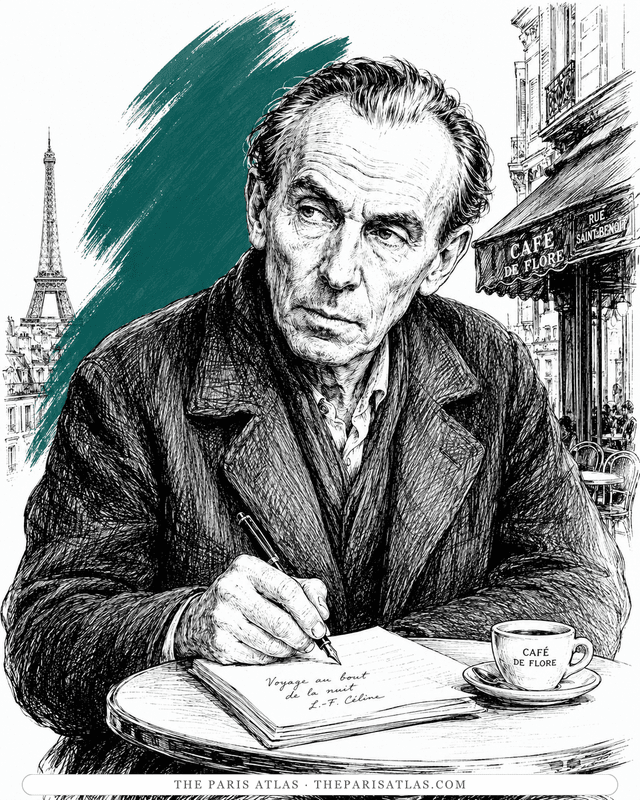
Louis-Ferdinand Céline
The doctor of the Paris slums who wrote the century's blackest, funniest novel — and changed the sound of French prose.
View author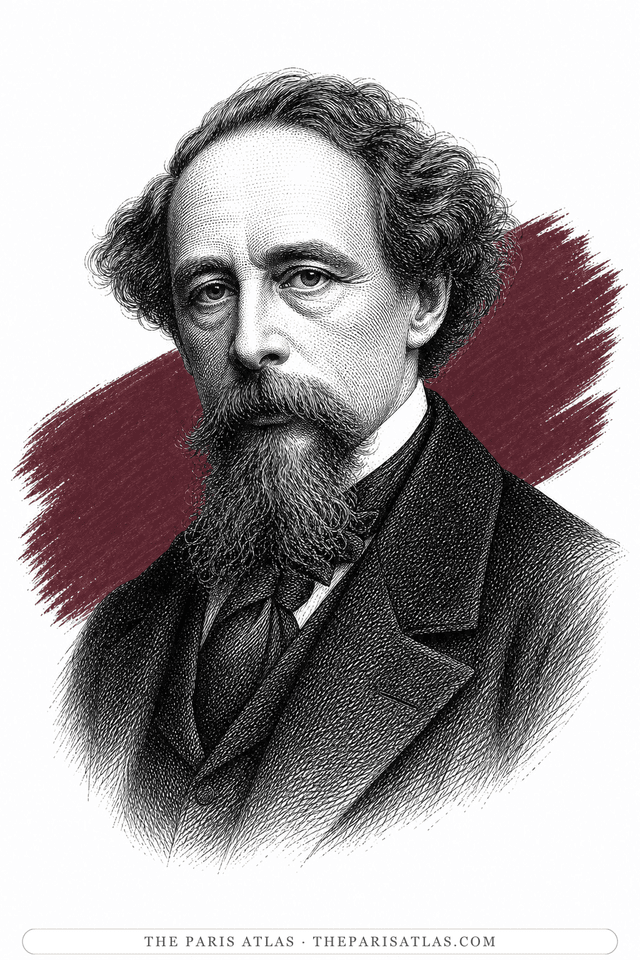
Charles Dickens
The most popular English novelist of the nineteenth century, who was never a Paris resident in the ordinary sense but kept coming back for twenty-five years: one winter in a rented mansion on the rue de Courcelles, a second winter on the Champs-Élysées writing Little Dorrit, repeated compulsive visits to the Paris Morgue — the riverside building where the city displayed its unidentified dead to the public — and a novel of the French Revolution, A Tale of Two Cities, that has shaped how English readers picture Paris ever since.
View author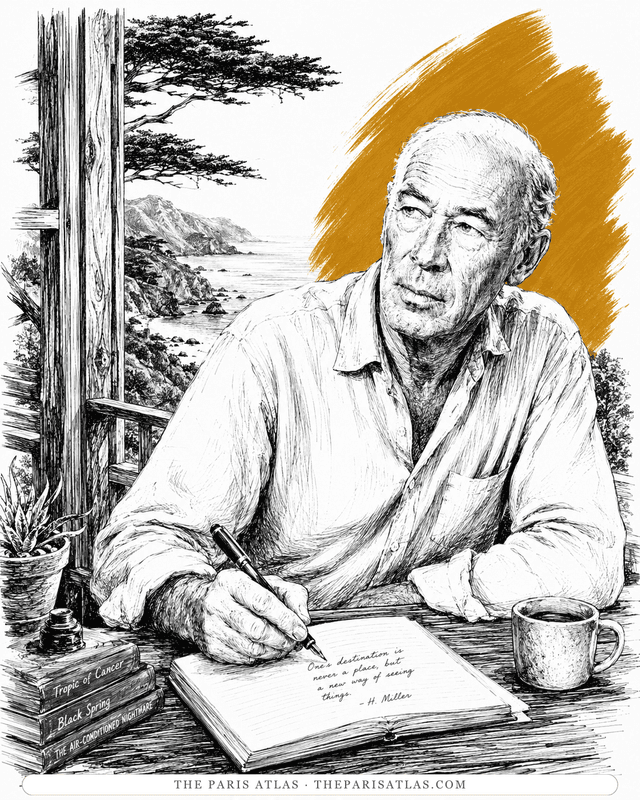
Henry Miller
The Brooklyn dropout who arrived in Paris broke at thirty-eight and wrote the exuberant, banned books that ended American censorship.
View author