
Candide
The later tale again tests reassuring explanations of suffering, but its final household turns toward work rather than a royal reward.
Read our take
by Voltaire
A perceptive young Babylonian discovers that sound reasoning offers little protection from jealous rulers and judges who protect their own interests.
Voltaire's philosophical tale follows Zadig through failed relationships, court service, enslavement and a search for Queen Astarte. His intelligence repeatedly gets him into trouble as well as out of it. First published as Memnon, histoire orientale in 1747, the work appeared in an expanded form under the title Zadig in 1748.
Zadig is introduced as educated, prosperous and well disposed toward other people. Those advantages do not prevent an attack, a broken engagement or an unhappy marriage. He withdraws to study nature, only to discover that noticing more than others can make him look guilty.
The tale moves between Babylon's court and a series of encounters abroad. Judges, merchants, priests and physicians often protect their own interests while claiming to act for justice, religion or health. Zadig's solutions work by observing what these people actually do and want.
The setting is an invented ancient world drawn through an eighteenth-century French tale. Its palaces, religious customs, tournaments and sudden reversals serve the satire. They should not be used as documentary descriptions of Babylonian or Arabian life.
Zadig's judgments bring him to the attention of King Moabdar, who appoints him as a minister. Zadig and Queen Astarte fall in love, and the king's jealousy puts their lives in danger. A warning reaches the queen, who arranges for Zadig to leave before he can be killed.
Abroad, Zadig is enslaved after defending a woman against an attacker. His intelligence wins the merchant Setoc's confidence. He persuades the widow Almona to reject a ritual death, but priests who lose income through the change turn against him; Almona then helps secure his release.
Zadig eventually finds Astarte among the slaves of the wealthy Ogul. He obtains her freedom by offering to cure Ogul, using exercise and moderation instead of a supposed magical remedy. Astarte returns to Babylon and sends word of a contest that will choose her husband and the new ruler.
Zadig wins the fighting contest, but Itobad steals his white armor and claims the victory. In despair, Zadig travels with a hermit whose theft, arson and killing of a boy appear outrageous. The hermit reveals himself as the angel Jesrad and claims that apparently evil events serve a larger design. Zadig questions him, but the angel leaves as another objection begins.
Returning to Babylon, Zadig answers the riddles set for the candidates and challenges Itobad to combat. He proves his skill, recovers his armor and is chosen as king and Astarte's husband. The conclusion describes a just, prosperous reign, while the disturbing means of the angel's lesson remain part of what the reader must assess.
Zadig's deductions about the queen's dog and the king's horse depend on traces rather than direct sight. The authorities interpret his accurate descriptions as evidence that he has taken the missing animals. Intelligence creates danger because officials confuse knowing something with having participated in it.
The episode establishes a recurring gap between an action and the account powerful people choose to make of it. Zadig can explain his reasoning, but he cannot ensure that evidence will be assessed without greed, jealousy or convenience. His ability remains valuable without functioning as protection against institutions.
When Zadig persuades Almona to reject ritual death, the priests lose income as well as authority. Their hostility reveals a material interest behind their defense of custom. The tale turns an apparently theological dispute into a question about who benefits from keeping the practice in place.
The cure offered to Ogul makes a comparable move. Exercise and moderation work against the attraction of an exotic remedy that promises improvement without a changed life. Zadig's practical reasoning succeeds by examining conduct and incentives, even in a world full of spectacular reversals.
The hermit's acts seem criminal before he identifies himself as Jesrad. His explanation asks Zadig to accept that theft, arson and the killing of a boy prevent worse events or prepare better ones. Authority thus shifts from human observation to a claimed knowledge of consequences no ordinary witness can inspect.
Zadig objects, and another objection begins as the angel departs. That interruption matters to the reading of the episode. The tale contains an argument for providence without giving its skeptical listener a completed exchange in which every difficulty has been answered. Recognition of an angel is not the same as a demonstration that the reader must find the lesson satisfactory.
Itobad's stolen armor lets him claim the outward signs of a victory he did not win. The later riddles and renewed combat allow Zadig to establish his ability through acts that can be witnessed. The distinction between appearance and evidence, already present in the animal episode, becomes part of the resolution.
The marriage and just reign supply the rewards expected from a philosophical adventure tale. They do not make each earlier injury deserved or necessary. A happy outcome and the unsettling lesson of Jesrad remain together, leaving the relation between personal success and the world's justice open to examination.
The anonymous 1749 English text: the dog and horse, Almona's reprieve, Ogul's cure, the contests, and chapters XVII–XVIII on Jesrad and the conclusion.
Zadig describes a dog and a horse he has never seen by interpreting the marks they left. The scene makes careful observation exciting and then shows why authorities might punish it.
A widow's public duty, a doctor's promised remedy and a priest's indignation change meaning when Zadig asks what people gain from them.
The hero receives a conventional reward, but the preceding encounter with Jesrad asks how far a claim about providence can excuse harm.
1747
The work first appears as Memnon, histoire orientale, with an anonymous London imprint whose actual place of publication is uncertain.
1748
An expanded form appears under the title Zadig ou la Destinée.
1749
John Brindley publishes the anonymous English translation in London, with eighteen chapters; this is the text used for the readings below.
1978
Penguin Classics issues the selected US Zadig and L'Ingénu omnibus on November 30, translated and introduced by John Butt.

The later tale again tests reassuring explanations of suffering, but its final household turns toward work rather than a royal reward.
Read our take
The essays give more direct arguments about judgment, freedom, religious authority and useful conduct.
Read our take
Twain's travel writing offers another encounter between inherited expectations and the people who profit from them.
Read our takeThe first form appeared in 1747 as Memnon, histoire orientale. An expanded version followed in 1748 under the title Zadig. Those dates describe stages of one work.
Memnon, histoire orientale is the earlier title of Zadig. Memnon ou la sagesse humaine is a separate tale, so a bibliography must distinguish the full titles.
Zadig infers the animals' features from tracks and other traces without seeing them. Authorities suspect him because he knows so much, making the episode both a demonstration of reasoning and a satire of judgment.
No. An injury to his left eye appears threatening near the beginning, but he recovers. Treating him as permanently blind would contradict the early episode.
Zadig solves the court's riddles, defeats the rival who stole his armor and becomes king with Astarte as queen. Just before that reward, an angel's claim to justify suffering leaves him trying to ask another question.
No. ISBN 9780140441260 identifies Penguin's 1978 US omnibus Zadig and L'Ingénu, translated by John Butt. Its 192 pages belong to the combined volume. The chapter readings quote an earlier anonymous English translation.
Explore authors with a similar voice, perspective, and influence.
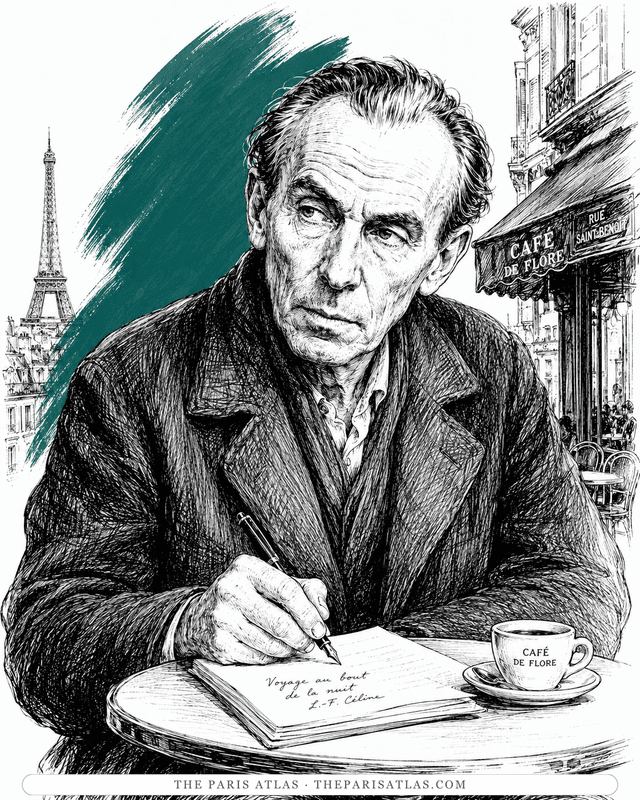
The doctor of the Paris slums who wrote the century's blackest, funniest novel — and changed the sound of French prose.
View author
The Brooklyn dropout who arrived in Paris broke at thirty-eight and wrote the exuberant, banned books that ended American censorship.
View author
The Geneva-born writer who arrived in Paris in 1742 with a new system for writing down music, earned his living copying other people's scores by the page, and then wrote the books — The Social Contract, Émile, the Confessions — that got him chased out of France and, sixteen years after his death, carried into the Panthéon by the Revolution.
View authorThe sources below include the primary text, editions, scholarship, archival materials, and other records that informed this page. They document Zadig, its publication, and its place in literary history.


The primary text represented by this page, used for descriptions of the work’s contents and for any quoted passages shown here.
Complete primary narrative for the plot, character readings and quotations; eighteen-chapter English arrangement.
Catalogue of Memnon, histoire orientale, dated 1747. Records the London imprint while questioning the actual publication place.
Description of an examined 1748 Lyon edition and the change from the 1747 Memnon title. Only the years and title history are used; the listing's more detailed issue chronology is not repeated.
Critical-edition contents distinguish Zadig from the separate Memnon ou la sagesse humaine.
Selected omnibus's US date, ISBN, extent and John Butt's translation and introduction.
The primary text is the baseline reference for every book page. Additional references document publication history, interpretation, and historical context where that evidence is available.
 Explore more resources