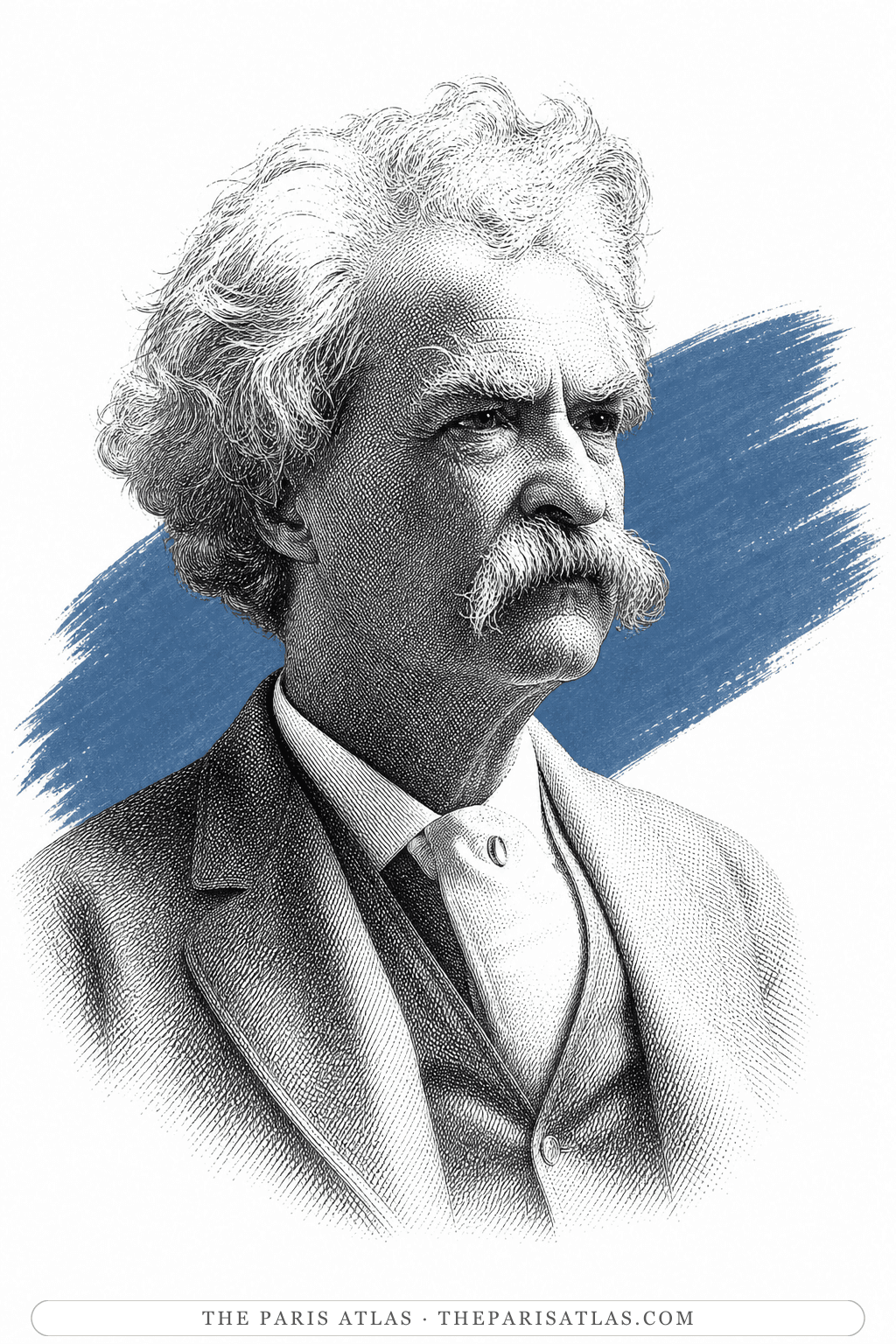
Mark Twain, the traveler
The first-person traveler, whose confident comic judgments coexist with curiosity, impatience and changing memories.
He wants to enjoy the excursion, judge famous places for himself and turn what he sees into a story worth telling.
The book

Who they are in the book
Spoiler-freeTwain constructs a narrator who distrusts received opinions while bringing strong expectations of his own. His preface's claim to impartial vision is a proposition that readers can test against the chapters that follow.
How Mark Twain, the traveler Is Portrayed
- Listening to patriotic performanceIn Chapter X, the Fourth of July speeches at sea become predictable repetitions of national greatness. The narrator includes his own countrymen among the travelers whose habits deserve scrutiny.
- Imagining a prisoner's timeIn Chapter XI, the scratched walls of the Château d'If lead him to imagine years of isolation. His comparison with an ordinary life passing outside the prison interrupts the rhythm of sightseeing comedy.
- A luxurious fantasy meets a shaveIn Chapter XII, a shabby Paris back room replaces his imagined palatial barbershop. His extravagant account of the shave exposes the expectations he has brought to the city.
- Learning how to see scaleIn Chapter XXVI, measurements and comparisons fail to make St. Peter's look as large as he knows it is. The tiny appearance of a suspended workman finally gives him a bodily measure of the space.
- Watching a souvenir hunterIn Chapter LVII, he describes a fellow traveler's attempts to break Egyptian monuments with a hammer. The absurd labor makes the tourist's desire to possess a fragment look destructive.
- Admitting what memory changesIn the Conclusion, he says the disagreeable incidents have faded and he would gladly sail again. That admission makes the traveler at home a different judge from the impatient man abroad.
If you like The Innocents Abroad


If you like Mark Twain
Explore authors with a similar voice, perspective, and influence.
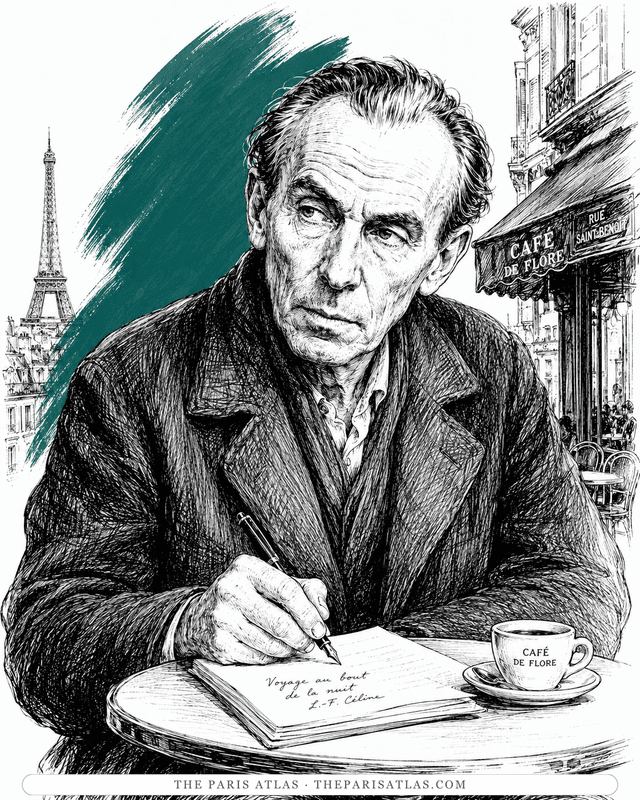
Louis-Ferdinand Céline
The doctor of the Paris slums who wrote the century's blackest, funniest novel — and changed the sound of French prose.
View author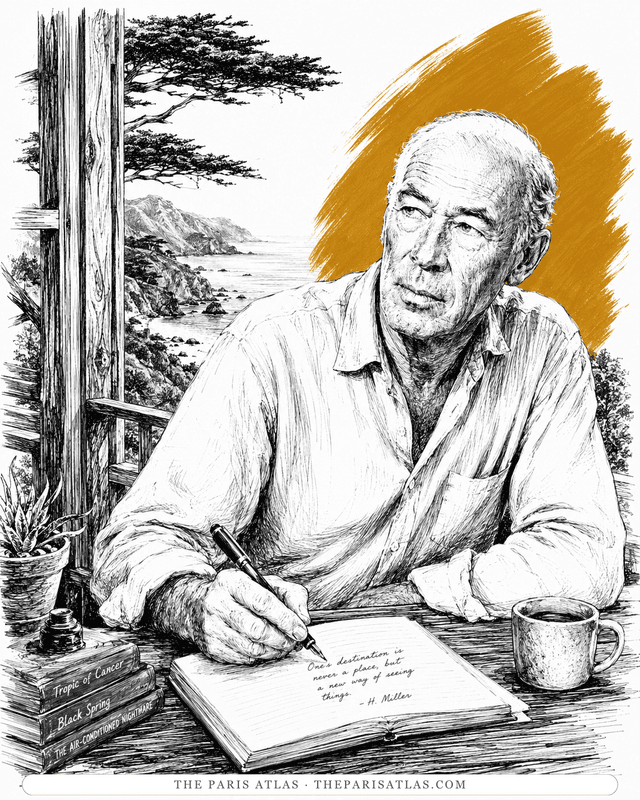
Henry Miller
The Brooklyn dropout who arrived in Paris broke at thirty-eight and wrote the exuberant, banned books that ended American censorship.
View author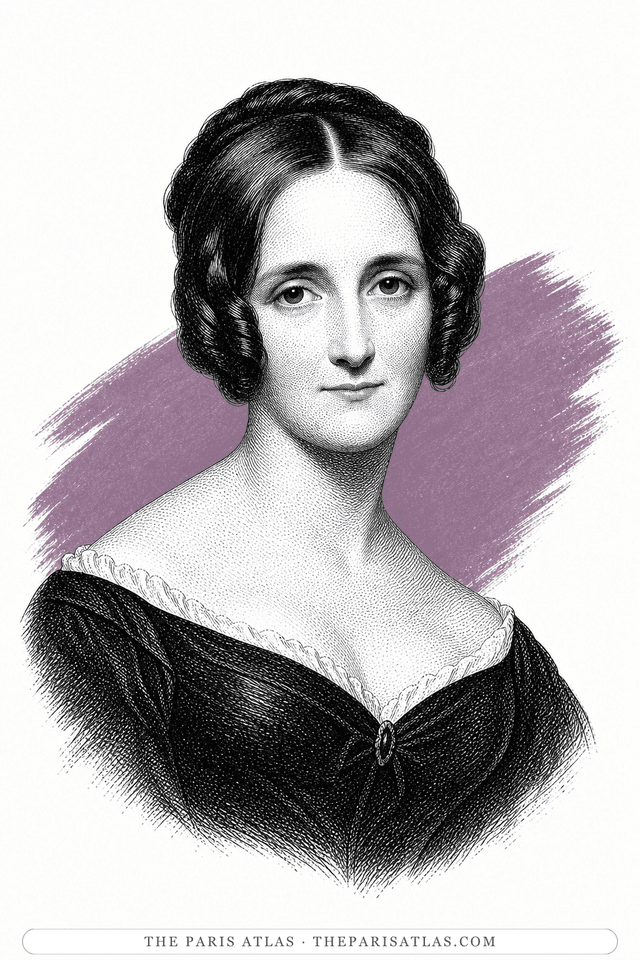
Mary Shelley
The author of Frankenstein, who first saw Paris at sixteen as a runaway. In the summer of 1814 she crossed from England to Calais with the poet Percy Bysshe Shelley and her stepsister Claire Clairmont, spent a week trapped in an expensive Paris hotel with no money, then bought a donkey and walked south-east across a France still wrecked by the Napoleonic wars. That journey became her first published book. Two years later, on a lake in Switzerland, she began her second.
View author