

The Sheltering Sky
The novel that made him, written in Tangier three years after he settled there.
Read our take
by Paul Bowles
Paul Bowles wrote his autobiography at fifty-nine and told almost nothing. William S. Burroughs called it Without Telling.
Putnam published Paul Bowles's autobiography in 1972, when he was sixty-one and had lived in Tangier for a quarter of a century. It moves at speed from a childhood near the Finger Lakes in upstate New York through Paris, Berlin, Mexico, Ceylon and Morocco. Gertrude Stein, Aaron Copland, Jean Cocteau, Tennessee Williams, Gore Vidal, Peggy Guggenheim, Christopher Isherwood and Allen Ginsberg all pass through it. What it does not do is disclose anything. His own sexuality, his wife's, the shape of their marriage, what he felt about any of it — none of that is in the book. Reviewers noticed immediately, and the nickname stuck.
The title was not new. Bowles had used Without Stopping in 1929 for an unfinished book of fiction, and reused it forty years later for the autobiography.
The reticence is the book's defining quality and was read that way from the start. Virgil Thomson, who had taught Bowles composition and knew him for decades, reviewed it in The New York Review of Books and wrote that the stories simply do not get told: Bowles "hints at their existence; that is all". Thomson added that "his reticence covers also himself. No friendship is declared, no love admitted."
One thing does come close to the surface. Jane Bowles had suffered a stroke in 1957 and was in decline; she died the year after the book appeared. Thomson thought the despair of that approaching loss was the single emotion the book almost admits, and that the rest, family matters aside, is "one long in-color newsreel".
Bowles's own telling of arriving at eighteen, meeting Gertrude Stein, and being sent to Tangier on her advice — including Stein's verdict that he was "a manufactured savage".
Burroughs called it Without Telling. Virgil Thomson, who had known Bowles for forty years, wrote that he "hints at their existence; that is all". A memoir this evasive is a document about evasion.
Thomson, no easy reviewer, called the account of Bowles's forebears and his boyhood near the Finger Lakes "utterly charming", and thought the book never matched it again.
1929
Bowles uses the title Without Stopping for an unfinished book of fiction. He reuses it for the autobiography forty-three years later.
1972
G. P. Putnam's Sons publishes Without Stopping in New York; Peter Owen publishes it in London the same year.
1972
Virgil Thomson reviews it in The New York Review of Books under the title "Untold Tales", writing that Bowles "simply declines to tell them" and that "no friendship is declared, no love admitted".
1973
Jane Bowles dies in Málaga, a year after the book appears.
1989
In the Times Literary Supplement, John Ryle records that Bowles is "perhaps the only autobiographer whose friends have complained not of what he wrote about them, but of his lack of indiscretion", and that William Burroughs called the book "Without Telling".


The novel that made him, written in Tangier three years after he settled there.
Read our take
The travel essays, which say more about what Bowles thought than the autobiography does.
Read our take
Fez in 1954, which he was living through while the autobiography's middle chapters take place.
Read our take
Paul Bowles's autobiography, published by Putnam in New York in 1972. It runs from his childhood in upstate New York through Paris, Berlin, Mexico, Ceylon and Morocco, and ends with him long settled in Tangier.
Because it discloses almost nothing. Bowles leaves out his own sexuality, his wife Jane's, and the nature of their marriage, and declares no friendships or loves. John Ryle recorded the nickname in the Times Literary Supplement in 1989, noting that Bowles's friends complained not about what he wrote but about his lack of indiscretion.
Yes, and it is the primary source for them. Bowles reached Paris at eighteen, met Stein on a later visit, and went to Tangier on her advice. He reprints her verdict on him: that he was the most spoiled and self-indulgent young man she had ever seen, and "a manufactured savage".
Virgil Thomson, who had taught Bowles composition, reviewed it in The New York Review of Books and called it a travelogue whose stories never get told. Kirkus found it "unexpectedly low-toned and matter-of-fact" and concluded that "the man — and surely he exists — is altogether impermeable".
The 1972 first edition runs to 379 pages. The current American paperback is the Harper Perennial edition of 2006; Peter Owen's 2004 paperback is the British one. The Ecco editions from 1985 onward add a plate section and an index.
No. The Library of America published two Bowles volumes — the three early novels, and the collected stories with the travel writing and Up Above the World. The autobiography is in neither.
Explore authors with a similar voice, perspective, and influence.
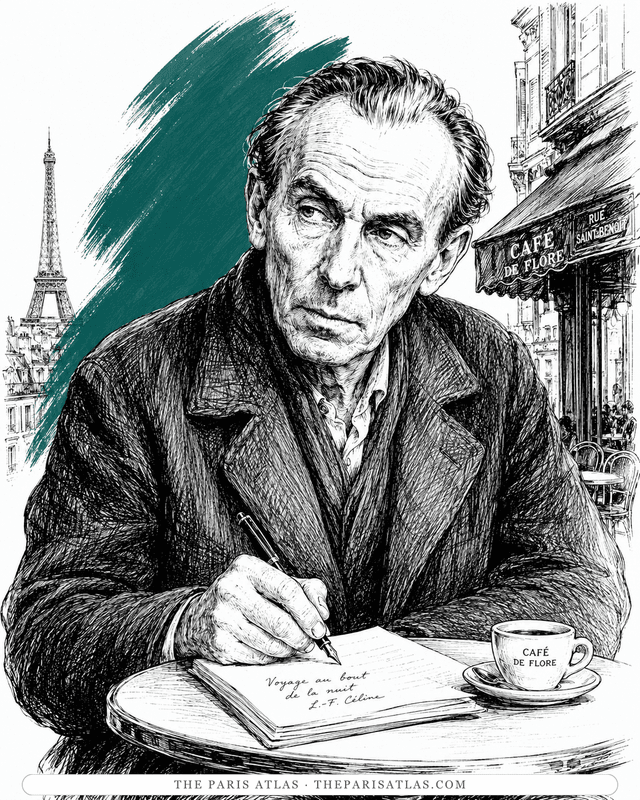
The doctor of the Paris slums who wrote the century's blackest, funniest novel — and changed the sound of French prose.
View author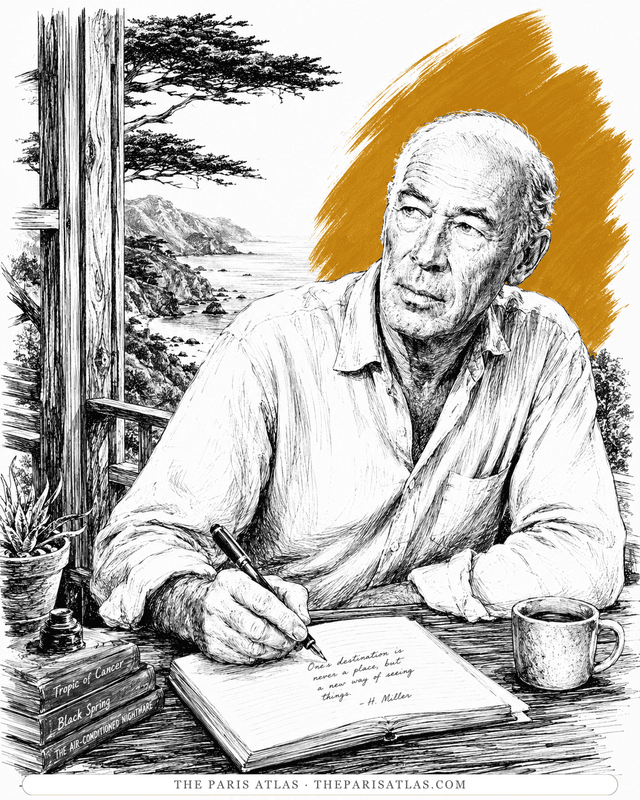
The Brooklyn dropout who arrived in Paris broke at thirty-eight and wrote the exuberant, banned books that ended American censorship.
View author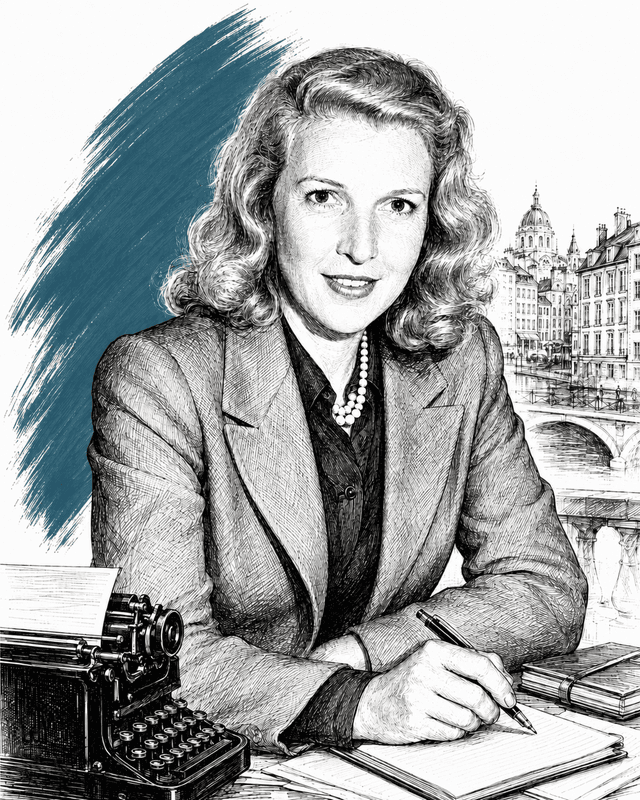
War correspondent who covered the Spanish Civil War, D-Day, and conflicts across five more decades; Hemingway's third wife, 1940–1945.
View authorThe sources below include the primary text, editions, scholarship, archival materials, and other records that informed this page. They document Without Stopping, its publication, and its place in literary history.

Virgil Thomson's 1972 review, the fullest contemporary account of what the book withholds.
The Kirkus notice, quoted on the book's tone.
John Ryle in the Times Literary Supplement, the source for Burroughs's nickname for the book.
The Library of America's author record, which confirms the autobiography is in neither LOA volume.
Robert Craft's 1989 essay, which compares the memoir with Sawyer-Laucanno's biography.
The primary text is the baseline reference for every book page. Additional references document publication history, interpretation, and historical context where that evidence is available.
 Explore more resources