

Without Stopping
The autobiography these letters correct — the same life, told with the reticence taken out.
Read our take
by Paul Bowles
More than four hundred letters across sixty-three years, selected from seven thousand pages — and far more forthcoming than the autobiography.
Jeffrey Miller edited this for Farrar, Straus and Giroux in 1994. It prints over four hundred letters, from 1928 to 1991, chosen out of some seven thousand pages addressed to a hundred and forty correspondents. Gertrude Stein, Aaron Copland, Virgil Thomson, William S. Burroughs, Tennessee Williams, Charles-Henri Ford and Jane Bowles all receive letters here. It is the book to read against Without Stopping: where the autobiography declines to say anything, the letters say a great deal, including the things Bowles would not have chosen to print about himself.
Miller's introduction sets out the scale of what he was working from: roughly seven thousand pages, addressed to a hundred and forty people. He also notes that Bowles consented to the inclusion of several letters he would not have selected himself.
The earliest letter Miller records is not in the body of the book. Bowles wrote it on 4 January 1915, aged four: "Dear Miss Anna, Thank you for the erector. I have been making letters with it…" The collection proper opens in the summer of 1928, with a letter to Daniel Burns from Jamaica, New York, and closes in Tangier in 1991.
The volume is organised by decade, with a chronology, an Arabic glossary, a biographical glossary of correspondents, notes and an index. Kirkus put the value of it plainly: about a quarter is "dead wood — chat about agents, contracts, fees", and the rest is "a fascinating, tonic history of the counterculture".
Without Stopping was nicknamed Without Telling. These letters, printed with Bowles's consent including ones he would not have picked, are where the telling happens.
Gertrude Stein, Aaron Copland, Virgil Thomson, Tennessee Williams, William S. Burroughs, Charles-Henri Ford and Jane Bowles, from 1928 to 1991.
"No one can ever heap enough insults upon me to suit my taste… Other people's indifference is the only horror" — written to Charles-Henri Ford on a train between Algiers and Fez in January 1948.
1915
Writes the earliest letter Miller could find, on 4 January, aged four: "Dear Miss Anna, Thank you for the erector."
1928
The collection proper opens with a letter to Daniel Burns, written in the summer from Jamaica, New York.
1948
Writes to Charles-Henri Ford on 25 January, on a train between Algiers and Fez: "Other people's indifference is the only horror."
1991
The last letters in the book are written from Tangier.
1994
Farrar, Straus and Giroux publish In Touch in New York, edited by Jeffrey Miller; HarperCollins publishes it in London in October.
1995
Mark Ford reviews the British edition in the London Review of Books on 9 March, under the title "His v. Hers".


The autobiography these letters correct — the same life, told with the reticence taken out.
Read our take
The travel essays, written across the same decades as much of this correspondence.
Read our take

The late book whose design Bowles explains in one of the letters printed here.
Read our takeA selection of Paul Bowles's letters, edited by Jeffrey Miller and published by Farrar, Straus and Giroux in 1994. It prints over four hundred letters written between 1928 and 1991, chosen from roughly seven thousand pages addressed to a hundred and forty correspondents.
Among many others: Gertrude Stein, Aaron Copland, Virgil Thomson, Tennessee Williams, William S. Burroughs, Charles-Henri Ford and his wife Jane Bowles. The book includes a biographical glossary of the correspondents.
It is far more revealing. Without Stopping, published in 1972, discloses almost nothing about Bowles's private life — Burroughs called it Without Telling. Miller notes that Bowles consented to the inclusion of several letters here that he would not have chosen himself.
Miller records one written on 4 January 1915, when Bowles was four years old: "Dear Miss Anna, Thank you for the erector. I have been making letters with it…" The collection proper begins in the summer of 1928.
No, and its reviewers said so. Kirkus reckoned about a quarter is "dead wood — chat about agents, contracts, fees", while calling the rest "a fascinating, tonic history of the counterculture".
The Noonday Press paperback of 1995 is the standard American edition at 636 pages. The Farrar, Straus and Giroux hardcover of 1994 runs to 604 pages with a plate section, and there is a digital edition from 2014.
Explore authors with a similar voice, perspective, and influence.
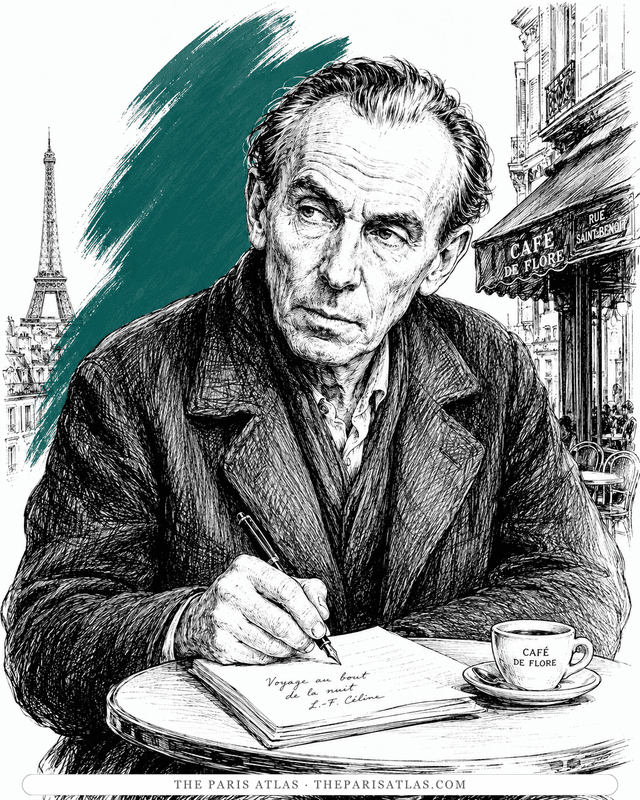
The doctor of the Paris slums who wrote the century's blackest, funniest novel — and changed the sound of French prose.
View author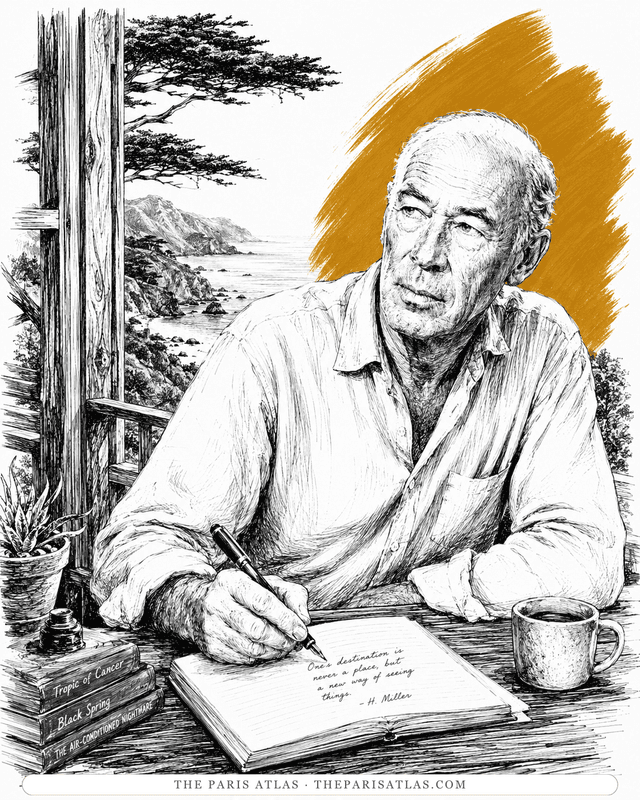
The Brooklyn dropout who arrived in Paris broke at thirty-eight and wrote the exuberant, banned books that ended American censorship.
View author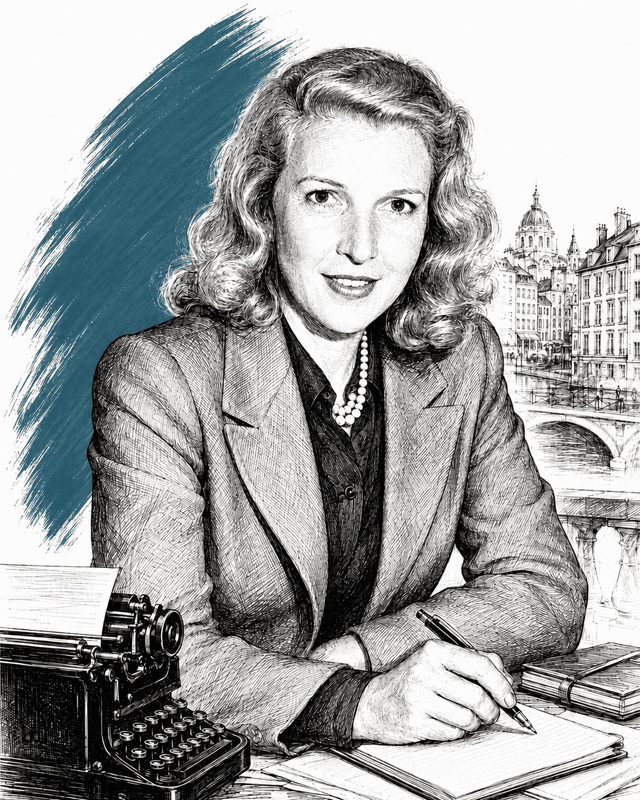
War correspondent who covered the Spanish Civil War, D-Day, and conflicts across five more decades; Hemingway's third wife, 1940–1945.
View authorThe sources below include the primary text, editions, scholarship, archival materials, and other records that informed this page. They document In Touch: The Letters of Paul Bowles, its publication, and its place in literary history.

The primary text represented by this page, used for descriptions of the work’s contents and for any quoted passages shown here.
The book itself, and the source for Miller's account of the selection and for the letters quoted here.

The Kirkus notice, quoted on how much of the collection is business correspondence.
Mark Ford's review of the British edition in the London Review of Books.
The Library of America's author record, which confirms the letters are in neither LOA volume.
The primary text is the baseline reference for every book page. Additional references document publication history, interpretation, and historical context where that evidence is available.
 Explore more resources