

Their Heads Are Green and Their Hands Are Blue
The travel essays, where Bowles writes about Morocco as himself rather than through history.
Read our take
by Paul Bowles
Eleven short passages of Moroccan history, from a Carthaginian sailing past the coast around 500 BC to the day before yesterday.
Peter Owen published this in London in 1982. It is ninety-two pages and it is not a novel, whatever the American publisher's jacket said. Bowles arranged eleven sections in chronological order. One runs to about sixty words and a few are the length of short stories. They begin with Morocco's Atlantic coastline as the Carthaginian traveller Hanno would have seen it around 500 BC, and end with a translated anti-American song popular in the 1950s. Several of the episodes turn on the relations between Muslims, Jews and Christians. Bowles described the design himself: a journey across time, with stops along the way that interested him.
The form has no obvious name, which is why it gets mislabelled. Ecco promoted it in America as a novel. Reviewing it in The Bloomsbury Review, Grove Koger rejected the description outright and said the book resembles nothing so much as a suite — a form Bowles had used in his composing days.
Bowles set out his intention in a letter to Richard Peabody on 26 January 1983, after Peabody compared the book to William Carlos Williams's In the American Grain: "I meant it to be a journey across time, with stops here and there along the way; naturally I chose stops which interested me."
It appeared almost unremarked. Koger, writing five years later, said its publication "was greeted with virtual silence; perhaps critics found the book too brief or elusive to get an easy grip on".
Grove Koger's reading is that this is a suite, not a novel — a musical form applied to history, by a man who had spent fifteen years writing scores before he wrote fiction.
It opens with the coast as Hanno the Carthaginian would have seen it around 500 BC and closes within living memory.
"I meant it to be a journey across time, with stops here and there along the way; naturally I chose stops which interested me." Bowles rarely stated a design that plainly.
1981
The Missouri Review prints an excerpt as "from Points In Time" in its Winter 1981–82 issue, before book publication.
1982
Peter Owen publishes Points in Time in London: 92 pages, at £6.95.
1983
Writes to Richard Peabody on 26 January that he meant the book as "a journey across time, with stops here and there along the way".
1984
Ecco Press publishes the first American edition in New York, promoting it as a novel.
1987
Grove Koger reviews it in The Bloomsbury Review, rejects the novel label, calls it a suite, and notes that its publication "was greeted with virtual silence".
2006
Harper Perennial reissues it in America under the expanded title Points in Time: Tales from Morocco.


The travel essays, where Bowles writes about Morocco as himself rather than through history.
Read our take
The novel about one Moroccan political crisis, at the length this book refuses.
Read our take
The late stories from the year before, and the other book of his seventies.
Read our take
The 1977 collection, where he had already started working from Tangier legend rather than travel.
Read our takeA short book of eleven historical passages about Morocco, arranged in chronological order, published by Peter Owen in London in 1982. It runs to ninety-two pages.
No, although Ecco marketed the American edition as one. There are no continuing characters and no narrative through-line. Reviewing it in The Bloomsbury Review, Grove Koger called it a suite — a musical form, from a writer who had been a composer first. HarperCollins still credits Bowles with four novels, and this is not one of them.
It opens with the Moroccan Atlantic coastline as the Carthaginian traveller Hanno would have seen it around 500 BC, and reaches as far as an anti-American song popular in Morocco in the 1950s.
In a letter of 26 January 1983 he wrote: "I meant it to be a journey across time, with stops here and there along the way; naturally I chose stops which interested me." He was replying to a reader who had compared the book to William Carlos Williams's In the American Grain.
Peter Owen, London, 1982. The Ecco Press edition of 1984 is the first American printing and a reprint of that text, although booksellers often attach its ISBN to 1982 London copies.
No. Despite the title of the second volume, Collected Stories & Later Writings, Points in Time is in neither of the two Library of America books.
Explore authors with a similar voice, perspective, and influence.
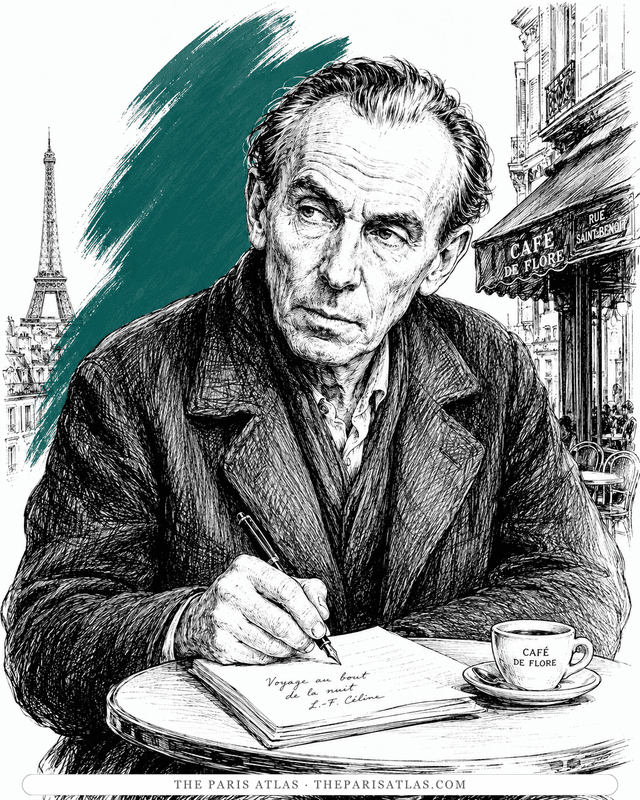
The doctor of the Paris slums who wrote the century's blackest, funniest novel — and changed the sound of French prose.
View author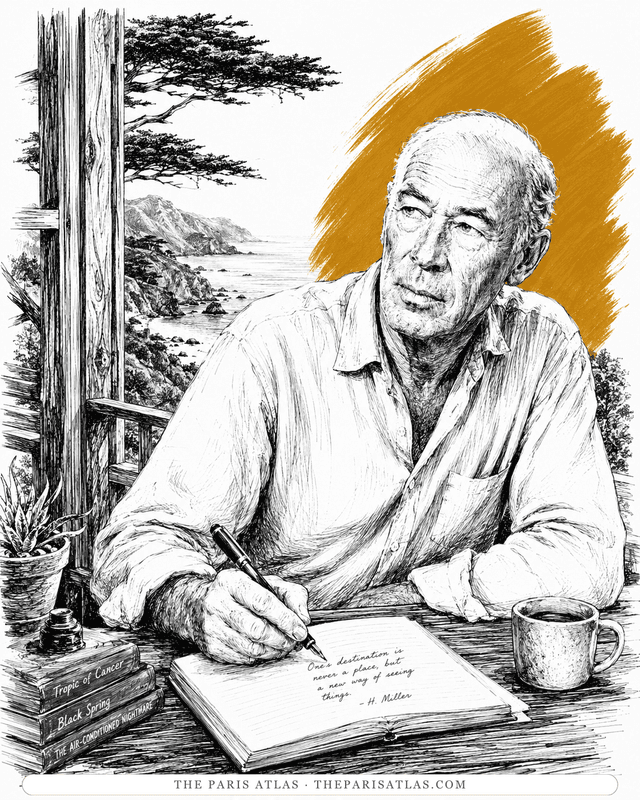
The Brooklyn dropout who arrived in Paris broke at thirty-eight and wrote the exuberant, banned books that ended American censorship.
View author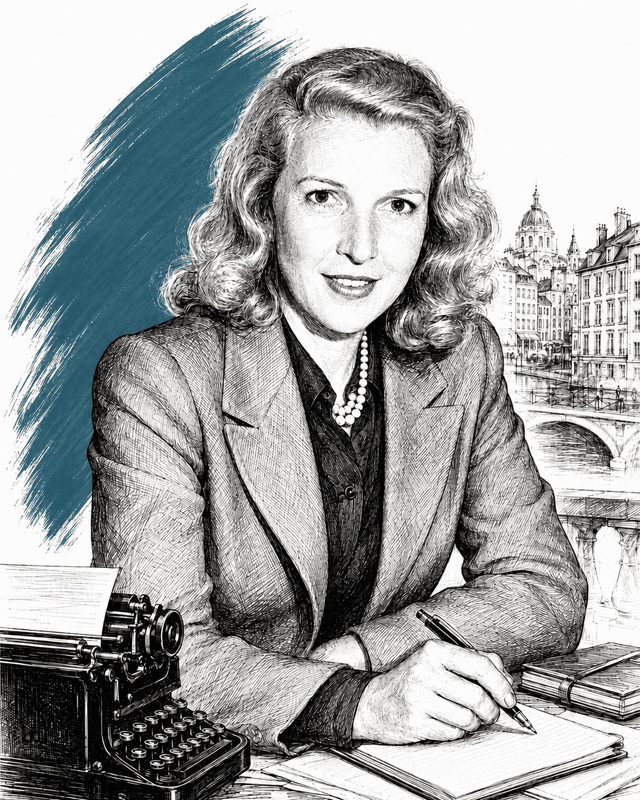
War correspondent who covered the Spanish Civil War, D-Day, and conflicts across five more decades; Hemingway's third wife, 1940–1945.
View authorThe sources below include the primary text, editions, scholarship, archival materials, and other records that informed this page. They document Points in Time, its publication, and its place in literary history.

The primary text represented by this page, used for descriptions of the work’s contents and for any quoted passages shown here.

The Library of America's author record, which confirms this book is in neither LOA volume.
Grove Koger's 1987 review, the fullest published account of the book's form and its reception.
The collected letters, which print Bowles's own statement of what he meant the book to be.
Open Library edition records, used to separate the 1982 London first edition from the 1984 American reprint.
The primary text is the baseline reference for every book page. Additional references document publication history, interpretation, and historical context where that evidence is available.
 Explore more resources