

Things Gone and Things Still Here
The collection immediately before it, from four years earlier, and the other Black Sparrow book.
Read our take
by Paul Bowles
Thirteen late stories about houses, money and the people who end up owning both. Bowles was seventy when Black Sparrow published it.
Black Sparrow Press published Midnight Mass in Santa Barbara in 1981, thirty years after The Sheltering Sky. The thirteen pieces were written between 1976 and 1981, and most of them turn on property: who holds a house, who works in it, and who is still there at the end. In the title story a Westerner repairs the Tangier house he grew up in, fills it with Christmas guests, and loses it to a Moroccan painter. "The Eye" reconstructs the slow poisoning of a Canadian named Duncan Marsh. The longest piece, the novella "Here to Learn", follows a young Moroccan woman taken up in turn by a series of affluent Europeans — and it was Bowles's own favourite in the book.
Bowles told the scholar Allen Hibbard, in a letter of 15 February 1983, that he liked "Here to Learn" best of the volume. He had wanted to write such a tale since 1955, when he met the woman it came from. The last he had heard, she was married to someone in the State Department and living outside Washington.
Hibbard placed the book as the point where the late style arrives: the same economy as ever, but with "that pellucid, bonelike quality we associate with Beckett's later work", achieved partly by dropping quotation marks around dialogue so that speech, description and the narrator's irony run together.
The British edition is a different book and is routinely miscatalogued as a reprint. Peter Owen published Midnight Mass and Other Stories in London in 1985 with twenty stories, sixteen North African and four set in Sri Lanka or Kuala Lumpur, and a glossary of Moroccan and Spanish terms compiled by Bowles.
Allen Hibbard describes the same economy as the early stories but with "that pellucid, bonelike quality we associate with Beckett's later work" — achieved partly by removing the quotation marks from dialogue.
He told Hibbard that "Here to Learn" was the one he liked best, that he had wanted to write it since 1955 when he met the woman behind it, and what became of her afterwards.
The early stories are about travellers coming apart in the desert. These are about houses, servants, money and possession — the concerns of a man who had lived in one city for thirty-four years.
1976
Begins the stories that will make up the collection. He is sixty-five and has lived in Tangier for twenty-nine years.
1981
Black Sparrow Press publishes Midnight Mass in Santa Barbara: 162 pages, with 350 copies numbered and signed and 26 handbound and lettered.
1981
"In the Red Room" is also issued on its own as a signed limited chapbook by Sylvester & Orphanos in Los Angeles.
1983
Writes to Allen Hibbard on 15 February that he likes "Here to Learn" best of the volume, and had wanted to write such a tale since meeting its model in 1955.
1984
John Updike selects "In the Red Room" for The Best American Short Stories 1984.
1985
Peter Owen publishes Midnight Mass and Other Stories in London — a larger, twenty-story book, not a reprint of the American edition.
2002
The Library of America collects the thirteen American contents in Paul Bowles: Collected Stories & Later Writings.


The collection immediately before it, from four years earlier, and the other Black Sparrow book.
Read our take
The 1950 collection, and the measure of how far the late style has travelled.
Read our take

The Tangier novel, where the city is a place to arrive rather than a place to have lived in for decades.
Read our takeA collection of thirteen late stories by Paul Bowles, published by Black Sparrow Press in Santa Barbara in 1981. They were written between 1976 and 1981, when Bowles was in his late sixties and had lived in Tangier for three decades.
Midnight Mass, The Little House, The Dismissal, Here To Learn, Madame and Ahmed, Kitty, The Husband, At the Krungthep Plaza, The Empty Amulet, Bouayad and the Money, Rumor and a Ladder, The Eye, and In the Red Room.
No, and this trips up bibliographies. Peter Owen published Midnight Mass and Other Stories in London in 1985 with twenty stories and a glossary — sixteen set in North Africa and four in Sri Lanka or Kuala Lumpur. It is often filed as a reprint of the thirteen-story American edition. It is a different, larger book.
"Here to Learn", the novella-length piece about a young Moroccan woman taken up in turn by a series of well-off Europeans. He wrote to the scholar Allen Hibbard in 1983 that it was his favourite in the volume and that he had wanted to write it since 1955, when he met the woman it came from.
The economy is the same but the surface is harder. Allen Hibbard describes "that pellucid, bonelike quality we associate with Beckett's later work", achieved partly by dropping quotation marks from dialogue. The subject has shifted too: the early stories are about travellers coming apart abroad, these about houses, money and who ends up owning them.
Thirteen titles, which the Library of America prints in full. Sources that say twelve are most likely counting twelve short stories plus the novella "Here to Learn" separately.
Explore authors with a similar voice, perspective, and influence.
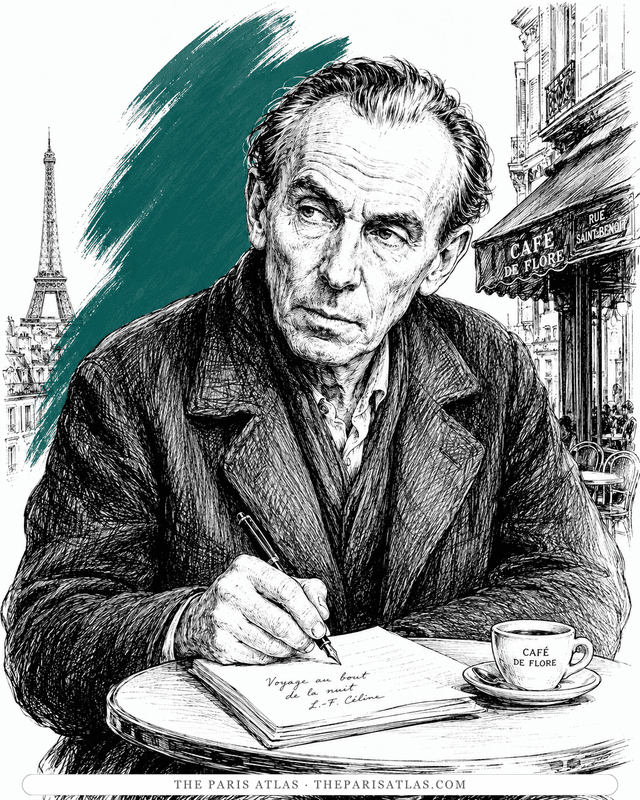
The doctor of the Paris slums who wrote the century's blackest, funniest novel — and changed the sound of French prose.
View author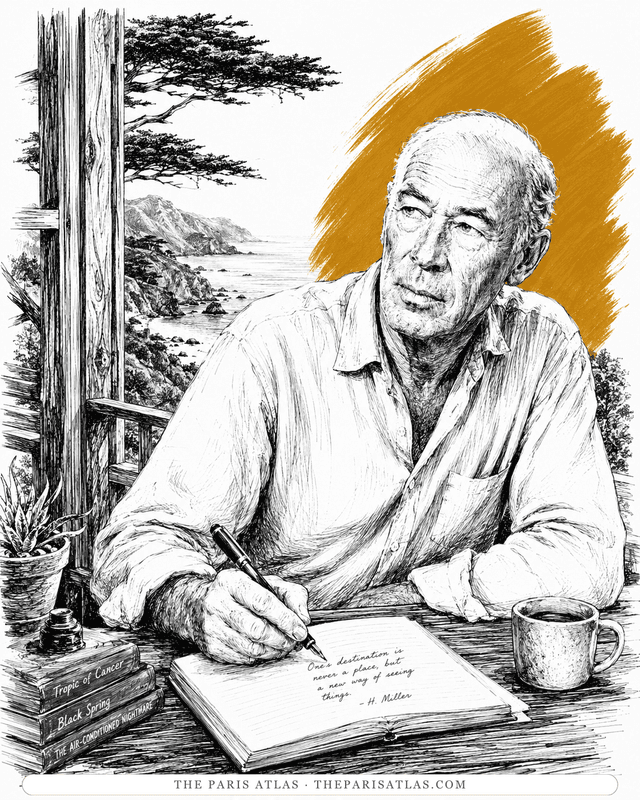
The Brooklyn dropout who arrived in Paris broke at thirty-eight and wrote the exuberant, banned books that ended American censorship.
View author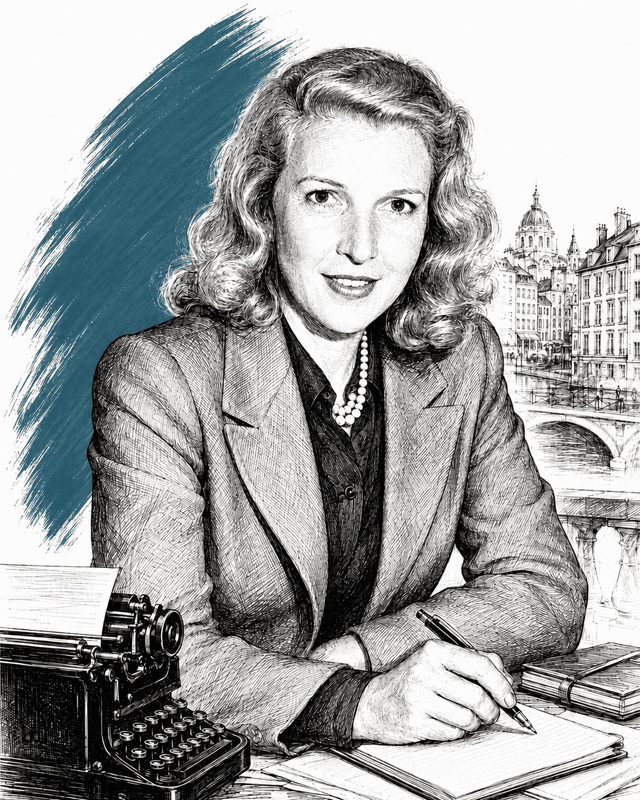
War correspondent who covered the Spanish Civil War, D-Day, and conflicts across five more decades; Hemingway's third wife, 1940–1945.
View authorThe sources below include the primary text, editions, scholarship, archival materials, and other records that informed this page. They document Midnight Mass, its publication, and its place in literary history.

The primary text represented by this page, used for descriptions of the work’s contents and for any quoted passages shown here.

The Library of America volume, and the authority for the thirteen contents of the American edition.
The Library of America's author record.
Open Library edition records, used to separate the 1981 Black Sparrow issues from the different 1985 Peter Owen book.
Robert Craft's 1989 essay on Bowles, for the late-career context.
The primary text is the baseline reference for every book page. Additional references document publication history, interpretation, and historical context where that evidence is available.
 Explore more resources