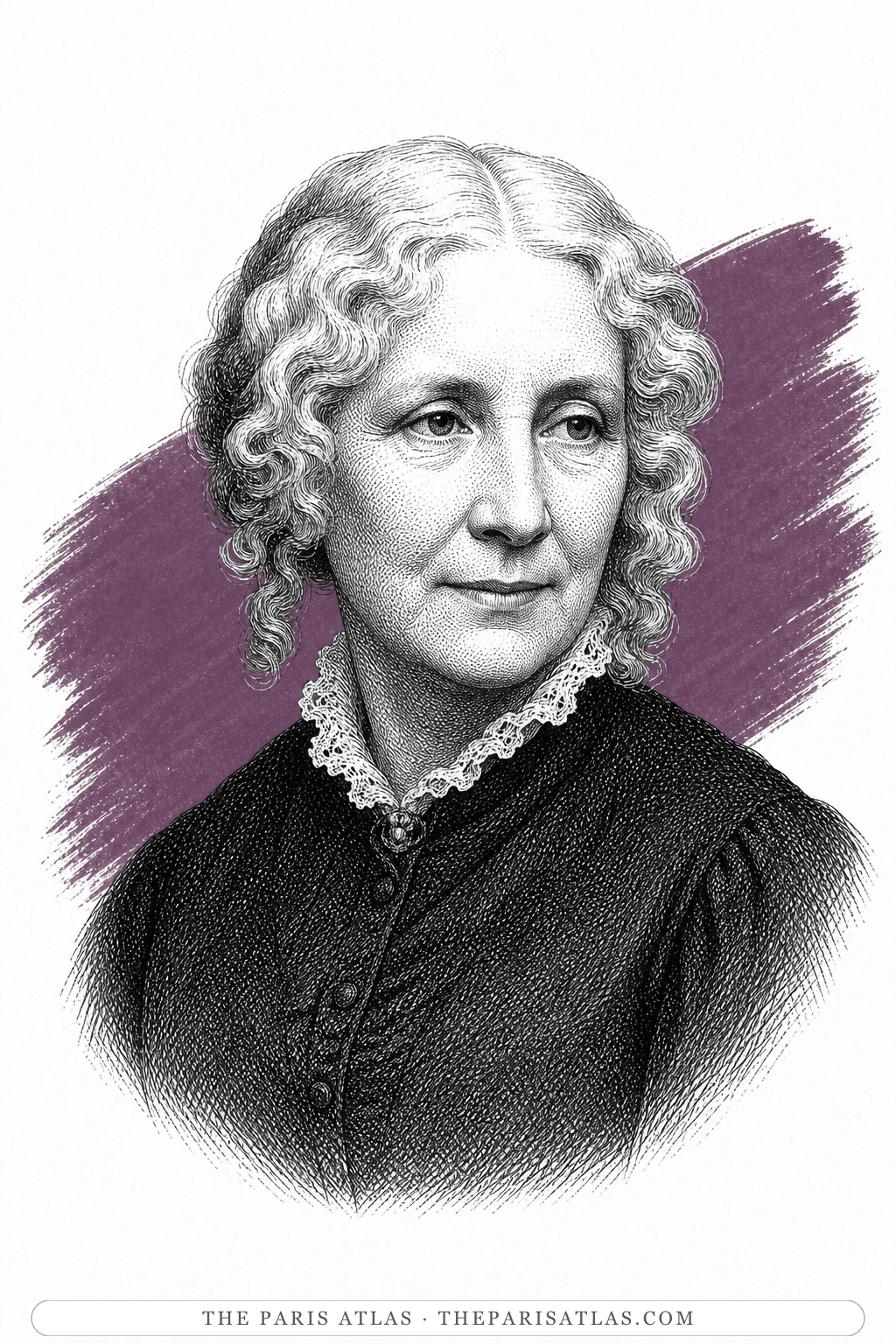
Uncle Tom's Cabin
Harriet Beecher Stowe
Uncle Tom's Cabin
The first anti-slavery novel. Dred is its deliberate opposite, a man who resists.
Read our takeDred
Harriet Beecher Stowe
Stowe's second anti-slavery novel, about a North Carolina plantation, a court ruling that made the master's power absolute, and a rebel preacher hiding in the swamp.
Dred is the novel Harriet Beecher Stowe published in 1856, four years after Uncle Tom's Cabin. Nina Gordon is the young owner of a North Carolina plantation, and Edward Clayton is the idealistic lawyer she means to marry. Harry, who runs her estate, is her half-brother, born enslaved. Clayton takes a case on behalf of an enslaved woman, and loses it on appeal to his own father's ruling that a master's power must be absolute. In the Great Dismal Swamp lives Dred, a runaway who preaches from the Bible and plans a revolt. The book sold 100,000 copies in Britain in four weeks, and Stowe spent the following winter in Paris.
Stowe wrote Dred in 1855 and the spring of 1856, using material she had gathered for A Key to Uncle Tom's Cabin. Her son's biography says the story was suggested by Nat Turner's revolt in Virginia in 1831, one of whose men was named Dred.[1] The novel's first appendix prints extracts from The Confessions of Nat Turner.[2]
In her preface Stowe says the question in front of the American people was whether to establish slavery over new territories where it had been forbidden. If they chose it, she wrote, let them do it with their eyes open. She also admits one liberty. She put into the mouth of one of her characters the actual 1829 decision of Judge Thomas Ruffin of North Carolina, word for word.[2]
Phillips, Sampson and Company published the novel in Boston in two volumes in 1856, and Sampson Low published it in London the same year.[3] Stowe reached England in the middle of August to arrange the British edition. Her letters home report that Sampson Low sold 50,000 copies in two weeks and 100,000 in four, while the Athenaeum, the Record and the Edinburgh attacked it.[1]
Nina Gordon has inherited Canema, a plantation in North Carolina, and has come home from a fashionable New York boarding school to run it. She is flirtatious, and she tells Harry she is engaged to three men at once. Harry, who manages the estate for her, is the son of her late father, Colonel Gordon, by an enslaved woman. He is educated and capable and still her property. His wife, Lisette, belongs to another owner.[2]
Nina settles on Edward Clayton, a serious young lawyer whose father is a judge on the state's highest court. Her brother, Tom Gordon, is a violent drunk who hates Harry. Milly, an older enslaved woman who belongs to Nina's aunt, is hired out to a man who beats her over the head while drunk and shoots at her when she runs. Clayton takes the case against him to court and wins it before a jury.[2]
On appeal, the case comes before Clayton's father. Judge Clayton hates the doctrine he has to announce, but he rules that the hirer had the full rights of a master and that a master's power must be absolute. Edward gives up the law. Out in the Great Dismal Swamp, Dred, a runaway who lives by the Bible and his rifle, is gathering fugitives and preaching judgment on the slaveholders.[2]
Cholera reaches Canema and Nina dies, asking Clayton to care for her people. The estate passes to Tom Gordon. When Tom Gordon raises a cane to him, Harry strikes back, and then flees to Dred in the swamp. Clayton's neighbours warn him that teaching his own slaves to read and write breaks the law, and a mob attacks a preacher who defends the enslaved.
Tom Gordon leads a drunken hunting party into the swamp after a fugitive. Dred goes out alone to save the man and comes back with a bullet in his chest. He dies among the fugitives and is buried in the swamp. Harry, Lisette and the others escape north. Clayton frees his own slaves and takes them to a settlement in Canada. In the last chapter Milly, now free in New York, has raised dozens of homeless children, Black and white.
The chapter called The Legal Decision is the centre of the book. Stowe gives Judge Clayton the actual words of Judge Thomas Ruffin in State v. Mann, the North Carolina case of 1829 that she had already printed in A Key to Uncle Tom's Cabin. The judge admits the harshness of the rule and says every person must repudiate it as a moral principle. He still announces, in capitals in the printed text, that the power of the master must be absolute to render the submission of the slave perfect.
Stowe's argument is that decent men administered slavery, and that decency made no difference. Judge Clayton is kind and honest, and the law leaves him no choice. His son's answer is to leave the profession. Stowe's preface says she had no personal acquaintance with Ruffin and that the character who speaks his words is invented.
Dred is not a forgiving character. Stowe makes him the son of Denmark Vesey, a free Black carpenter hanged in Charleston in July 1822 for planning a revolt. His mother is described as Mandingo. As a boy of fourteen he watched his father go to his death. Later he killed an overseer who tried to break him, and escaped into the swamp. He reads the Hebrew prophets and speaks almost entirely in their language.
He is Stowe's answer, four years on, to Uncle Tom. Where Tom forgives, Dred prophesies revolt. The novel never lets the revolt happen. Dred dies rescuing a fugitive from Tom Gordon's hunting party, and the surviving characters escape north instead of fighting. The real revolt is in the back of the book, where Stowe printed Nat Turner's Confessions.
The book also has a second Tom. Old Tiff is an enslaved man who gives his life to the children of a poor white family after their mother dies. He is written in comic dialect and praised for his devotion, like the faithful servants of Uncle Tom's Cabin. The rebel and the servant share the same novel.
Stowe arrived in Paris in early November 1856 with her sister Mrs. Perkins and her daughters, meaning to learn French. They lodged at 19 rue de Clichy in a household of twenty-one, mostly Americans there for the same reason. A young English sculptor in the house, Miss Durant, was studying with Baron de Triqueti. She took Stowe to his studio, and he said at once that Stowe should sit for her. Stowe spent her days that November sitting for the bust.
Paris was reading Dred. Stowe wrote home that three French gentlemen at a party had just read it in English, that the Revue des Deux Mondes had reviewed it with long extracts, and that La Presse had reviewed it just as warmly. She thought French critics understood her subtle shades of meaning better than English ones did.
She spent her evenings at the salons of Madame Mohl and of Madame Belloc, her French translator. She was told that Uncle Tom's Cabin had reached the workmen of the Faubourg Saint-Antoine. In January 1857 the schoolboys there gave her half their dinner money for the slaves, and she kept one five-franc coin to hang round her youngest son's neck.
If the people are to establish such a system, let them do it with their eyes open, with all the dreadful realities before them.
An army of heavy clouds swept in a moment across the moon; then came a broad, dazzling, blinding sheet of flame, concentrating itself on the top of a tall pine near where Dred was standing.
I don't make no distinctions of color,--I don't believe in them.
Dred plans a revolt and quotes the prophets of judgment. Set beside Uncle Tom, he shows how far Stowe moved in four years, and how far she did not.
Stowe puts Judge Thomas Ruffin's real 1829 decision into a novel. The chapter is the clearest account of how slave law worked that any novel of the period offers.
Stowe spent the winter of 1856 to 1857 in Paris and found French readers already discussing it. The Revue des Deux Mondes and La Presse both reviewed it.
A runaway living in the Great Dismal Swamp, the son of Denmark Vesey, who speaks in the words of the Hebrew prophets and plans a revolt that never comes.
The young owner of Canema plantation, flirtatious and kind, who grows up over the first half of the book and dies of cholera.
A young lawyer and slaveholder who believes the law can protect the enslaved. His own father's ruling proves him wrong.
Nina's half-brother and her property. Runs the plantation, is persecuted by Tom Gordon, and finally joins Dred in the swamp.
Nina's brother, drunk and violent, who inherits the plantation and hunts runaways in the swamp.
An enslaved woman who has lost all her children to sale. Shot by the man she is hired to, and the subject of the case that goes to the high court.
Edward's father, a humane judge who announces in court, in Judge Thomas Ruffin's real words, that a master's power must be absolute.
An enslaved man devoted to the children of a poor white family, written in comic dialect as a second faithful servant.
1822
Denmark Vesey is hanged in Charleston on 2 July for planning a revolt. Stowe makes him Dred's father.
1829
Judge Thomas Ruffin of North Carolina decides State v. Mann. Stowe later gives his words to Judge Clayton.
1831
Nat Turner's revolt in Virginia. One of his men is named Dred, and Stowe prints extracts from his Confessions as an appendix.
1856
Dred is published in Boston by Phillips, Sampson and Company and in London by Sampson Low. Stowe reaches England in August.
1856
Sampson Low reports 100,000 copies sold in Britain in four weeks. In November Stowe settles in Paris, at 19 rue de Clichy.
1857
In January schoolboys of the Faubourg Saint-Antoine give Stowe half their dinner money for the slaves. She plans to leave Paris for Rome on 1 February.


Uncle Tom's Cabin
Harriet Beecher Stowe
The first anti-slavery novel. Dred is its deliberate opposite, a man who resists.
Read our takeA Key to Uncle Tom's Cabin
Harriet Beecher Stowe
Where Stowe first printed Judge Thomas Ruffin's decision and gathered the material Dred uses.
Read our takeThe Minister's Wooing
Harriet Beecher Stowe
Her next novel, written after her son's death, which leaves the South for eighteenth-century Rhode Island.
Read our take
Frederick Douglass's autobiography of the previous year, the account of slavery by a man who resisted it.
Read our takeA North Carolina plantation and the people on it. Nina Gordon owns it, her half-brother Harry runs it as her slave, and her fiancé Edward Clayton learns in court that the law will not protect the enslaved. Dred, a runaway preacher in the Great Dismal Swamp, plans a revolt.
Stowe makes him the son of Denmark Vesey, executed in Charleston in 1822. Her son's biography says the book was suggested by Nat Turner's 1831 revolt, one of whose men was named Dred, and the novel's appendix prints extracts from Turner's Confessions.
Yes. Judge Clayton's ruling is the 1829 decision of Judge Thomas Ruffin of North Carolina in State v. Mann, which held that a master's power must be absolute. Stowe says so in her preface.
Not in the long run, but it sold fast. Stowe's letters report 100,000 copies sold in Britain in four weeks. British critics attacked it, and she wrote that the Times praised and blamed it by turns.
Stowe spent the winter of 1856 to 1857 in Paris after arranging the British edition. She lodged at 19 rue de Clichy and sat for a bust by a young English sculptor, Miss Durant. The Revue des Deux Mondes and La Presse both reviewed the novel while she was there.
The text is free from Project Gutenberg as ebook 55012. Penguin Classics publishes an edition edited by Robert S. Levine.
Explore authors with a similar voice, perspective, and influence.
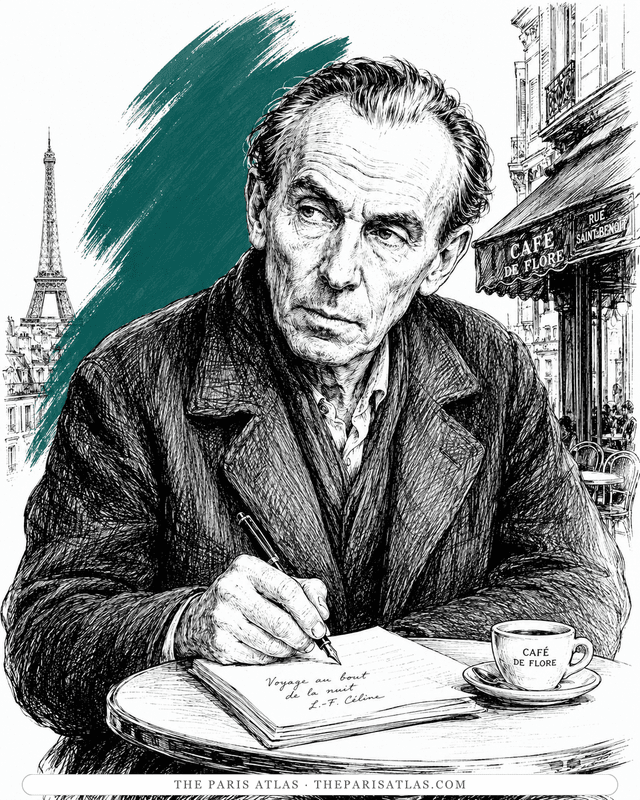
The doctor of the Paris slums who wrote the century's blackest, funniest novel — and changed the sound of French prose.
View author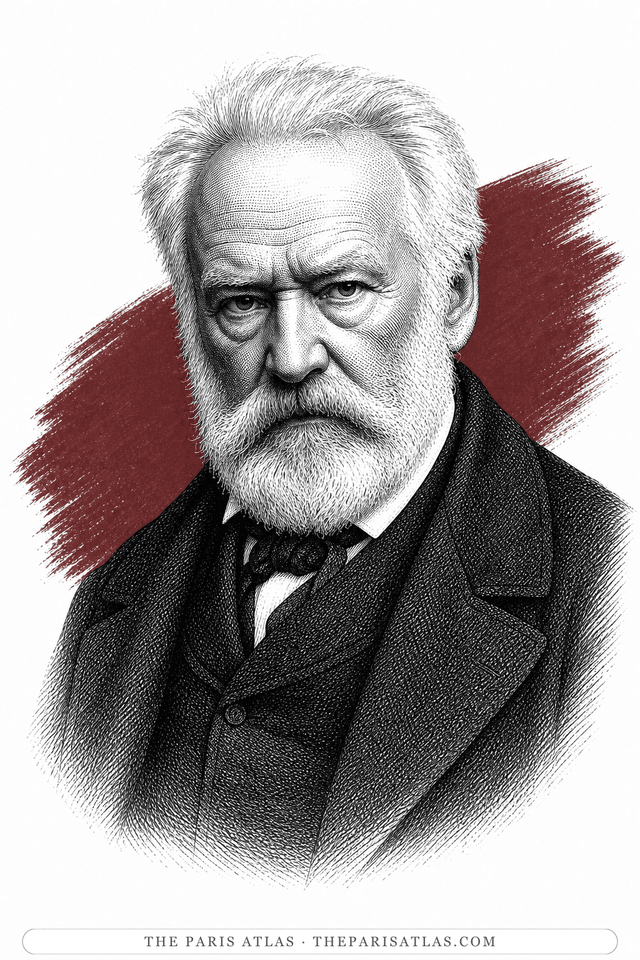
Poet, novelist and playwright who spent sixteen years in an apartment on the Place des Vosges that is now his museum, wrote a novel about Notre-Dame that shamed France into repairing the cathedral, spent nineteen years in exile for opposing the emperor Napoleon III, and was buried in the Panthéon — the Paris monument where France buries its most honoured dead — in 1885 after a funeral that brought roughly two million people into the streets of Paris.
View author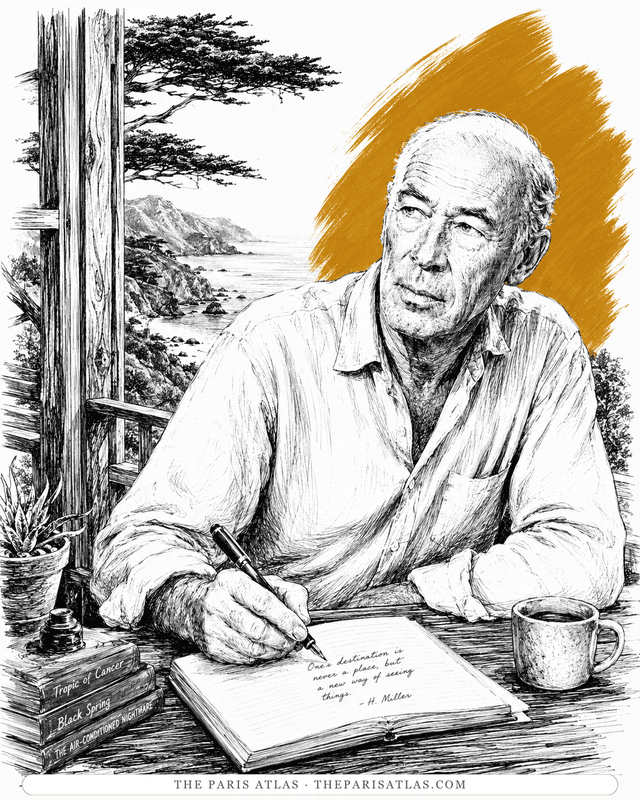
The Brooklyn dropout who arrived in Paris broke at thirty-eight and wrote the exuberant, banned books that ended American censorship.
View authorThe sources below include the primary text, editions, scholarship, archival materials, and other records that informed this page. They document Dred, its publication, and its place in literary history.

The family biography, for the writing of the book, the Nat Turner connection, the British sales and reviews, and Stowe's letters from Paris in the winter of 1856 to 1857.
Library catalogue records, for the 1856 Boston and London editions and the modern ISBNs.
The National Park Service, for Denmark Vesey's life and his execution in July 1822.
The primary text represented by this page, used for descriptions of the work’s contents and for any quoted passages shown here.
The primary text is the baseline reference for every book page. Additional references document publication history, interpretation, and historical context where that evidence is available.
 Explore more resources